 GRI Institute
Recalibrating Resi Real Estate: GRI Living Assets Europe 2026 Spotlight Report
Pan-European market insights on how elevated borrowing costs, regulatory friction, and shifting demographic demand are reshaping European housing investments
July 29, 2026Real Estate
Written by:Rory Hickman
Executive Summary
At the recent GRI Living Assets Europe 2026 conference in London, top industry decision-makers gathered to examine how macroeconomic pressures, severe structural housing shortages, and shifting capital allocation are impacting residential real estate across the continent.
While robust demographic demand underpins a structural shift towards operational housing, severe development headwinds from high interest rates, construction inflation, and regulatory friction are steering capital into defensive subsectors that demand operational alpha, digital integration, and adaptable execution.
As we approach Europe GRI 2026 Summer Edition - Incorporating GRI Hospitality summit in Paris on 9th-10th September, featuring a number of dedicated discussions on the living sector, this report examines the critical themes, capital trends, and operational strategies defining European housing.
From commercial retrofits and debt recapitalisations to the evolution of build-to-rent, flexible living, senior housing, and branded residences, we explore how market leaders are unlocking value in a recalibrated investment landscape.
► Learn more about the living sector panels at Europe GRI 2026 in Paris on 9th-10th September
While robust demographic demand underpins a structural shift towards operational housing, severe development headwinds from high interest rates, construction inflation, and regulatory friction are steering capital into defensive subsectors that demand operational alpha, digital integration, and adaptable execution.
As we approach Europe GRI 2026 Summer Edition - Incorporating GRI Hospitality summit in Paris on 9th-10th September, featuring a number of dedicated discussions on the living sector, this report examines the critical themes, capital trends, and operational strategies defining European housing.
From commercial retrofits and debt recapitalisations to the evolution of build-to-rent, flexible living, senior housing, and branded residences, we explore how market leaders are unlocking value in a recalibrated investment landscape.
► Learn more about the living sector panels at Europe GRI 2026 in Paris on 9th-10th September
Key Takeaways
- Elevated borrowing costs and high construction expenses are redirecting European real estate capital away from traditional core assets towards value-add, flexible, and operational living strategies.
- Severe development headwinds and regulatory delays are restricting new supply, which is driving a major market shift towards commercial retrofits, refinancings, and recapitalisations.
- While underlying demographic tailwinds remain strong across student, workforce, and senior sectors, tenant affordability limits mean future investment returns will depend on operational scale, technology, and local expertise.
► Living Investment Strategies

(GRI Institute)
Investment Dynamics and Subsector Strategies
The European living real estate sector has experienced a structural shift in capital allocation, driven by resilient cash flows, long-term demographic demand, and severe underlying supply-demand imbalances.While historical peaks in capital raising heavily favoured core and core-plus strategies, recent macroeconomic pressures, including elevated interest rates, inflation, and political uncertainty, have redirected investor focus towards value-add, opportunistic, and repositioning plays.
Subsector attractiveness is increasingly asset- and city-specific rather than purely thematic. High construction expenses and debt costs have accelerated the popularity of flex-living, hybrid, and co-living models that fit functional features into smaller, more efficient footprints to address tenant affordability.
Simultaneously, traditional formats such as purpose-built student accommodation (PBSA), single-family rentals, and mass-market multi-family housing remain fundamentals-driven options, provided they align with local market demand, accretive debt structures, and discount-to-replacement-cost opportunities.
Regional Disparities and Regulatory Impacts
Investment conditions across Europe remain highly fragmented due to differing monetary conditions, regulatory regimes, and local municipal interactions.- Southern European markets such as Spain, particularly Madrid, continue to show strong growth momentum and capital interest across flexible and PBSA formats.
- Germany represents a deep, liquid market undergoing price stabilisation, offering attractive value-add opportunities and supportive debt financing, despite ongoing political debates around rent regulation and social housing.
- Conversely, the UK faces operational delays linked to complex planning processes, fire safety regulations, and political shifts towards price controls, which can extend pre-development timelines and inflate bridging costs.
- At the same time, regions experiencing deregulation or possessing accretive financing environments, such as Ireland and Denmark, are demonstrating renewed transaction momentum.
Operational Alpha and Capital Outlook
As yield expansion narrows and exit cap rates remain uncertain, future investment performance will depend heavily on operational alpha rather than cap-rate compression alone.Living assets demonstrate strong inflation-hedging properties due to frequent lease turnover and regular revenue adjustments, yet managing these properties requires sophisticated data platforms, scaled operations, and hands-on local management.
Although European real estate has repriced faster than markets in the US or Asia-Pacific, institutional core capital remains cautious, leading some owners to explore alternative liquidity routes such as unit-by-unit residential privatisation.
Looking forward over the next 12 months, broader transaction activity and capital flows back into living assets are expected to remain steady but constrained, with major shifts likely depending on broader macroeconomic shocks, equity market recalibrations, or adjustments in alternative asset yields.
► Financing in European Living
(GRI Institute)
Sector Allocation and Geography
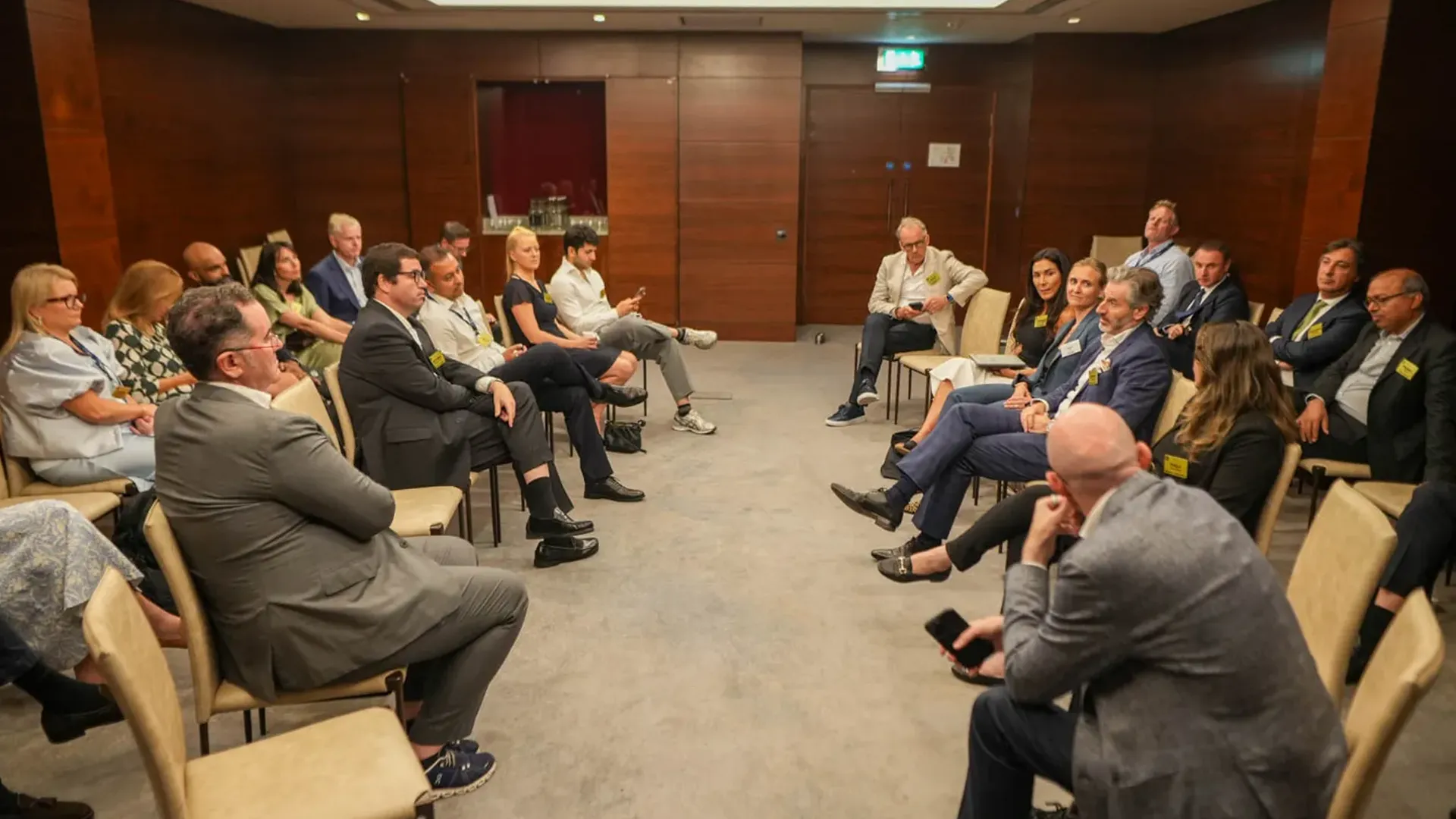
Capital deployment across European real estate credit markets reflects clear sector preferences and regional divergence.Lenders maintain strong demand for living subsectors, such as single-family rentals, PBSA, and co-living, as well as hospitality assets, whereas office debt remains constrained by risk aversion.
Southern European markets present active refinancing and acquisition opportunities, while regions such as the Nordics pose distinct underwriting challenges due to local rent controls, inappropriate unit sizing, and dominant relationship-banking models.
Across most jurisdictions, credit providers prioritise proven sponsor track records over asset specifics alone, frequently following established partners into secondary or cross-border markets.
Underwriting and Structural Safeguards
Ground-up development and conversion projects face persistent headwinds from contractor insolvencies, volatile material expenses, and compressed equity yields.Consequently, transaction volume has shifted heavily toward refinancings, bridge financing, and equity recapitalisations, allowing asset owners to generate liquidity or meet investor distribution targets without selling into repriced markets.
To mitigate completion and cost risks on active schemes, credit managers mandate stringent structural protections, including liquid equity commitment letters, parental guarantees, and third-party cost-overrun insurance, rather than relying solely on contractor withholding funds or performance bonds.
Valuations and Regulatory Frameworks
Debt providers increasingly conduct independent internal underwriting rather than relying on external appraisals or reliance letters, given the shortage of recent transactional comparables.While alternative debt funds provide higher loan-to-value ratios and flexible amortisation profiles, ultimate exit viability is assessed against sustainable net operating income and debt-yield thresholds.
Regulatory uncertainty regarding planning classifications or flexible residential uses continues to restrict senior bank lending in specific jurisdictions.
Furthermore, strict central bank oversight in traditional banking sectors forces rigid capital controls and dual-valuation models, widening the operational gap between regulated banks and private debt funds.
► Value-Add, Repurposing, and Retrofits
(GRI Institute)
Conversion Feasibility
Converting obsolete commercial assets, particularly heritage office stock, into residential or hospitality accommodation requires stringent upfront screening to establish physical viability.Deep floor plates, static load restrictions, layout inefficiencies, and fire safety compliance mean only a small fraction of candidate properties can be successfully repurposed.
Heritage assets frequently command up to a 15% rent premium in living sectors, but execution requires perimeter window access, sufficient ceiling heights, and independent access points to separate mixed uses.
Due to the fact that preliminary technical reviews and regulatory checks incur substantial working capital expenses, operators rely heavily on internal expertise and spatial instinct rather than third-party surveys to evaluate potential acquisitions early.
Capital Market Friction
A widening gap between legacy book valuations and realistic market clearing prices continues to stall transaction activity across Europe. Institutional asset managers frequently resist write-downs or capex commitments on vacant commercial assets, resulting in operational paralysis and stranded inventory.Construction costs, reaching GBP 300 to GBP 500 per square foot in primary locations such as London compared to EUR 2,000 per student unit in Madrid, further compress development margins and render traditional procurement routes unviable.
To bypass inflated contractor pricing and avoid public valuation markdowns, institutional owners increasingly utilise joint-venture structures with opportunistic capital partners, enabling off-market repositioning while sharing operational risk.
Impacts of Automation
The rapid deployment of artificial intelligence (AI) and automated workflow systems is fundamentally restructuring tenant business models, leading to leaner headcounts and reduced demand for traditional commercial floor space.Emerging technology enterprises generate substantial corporate revenue with minimal staffing, creating long-term structural headwinds for office space absorption in secondary locations and central business districts.
However, this ongoing contraction in office demand steadily expands the pipeline of convertible stock for living sectors. Because physical proximity, social interaction, and high-density agglomeration remain essential for living sectors, capital continues to shift away from traditional office assets toward well-located housing and short-stay accommodation.
► Build-to-Rent (BTR)
(GRI Institute)
Market Dynamics and Development Headwinds
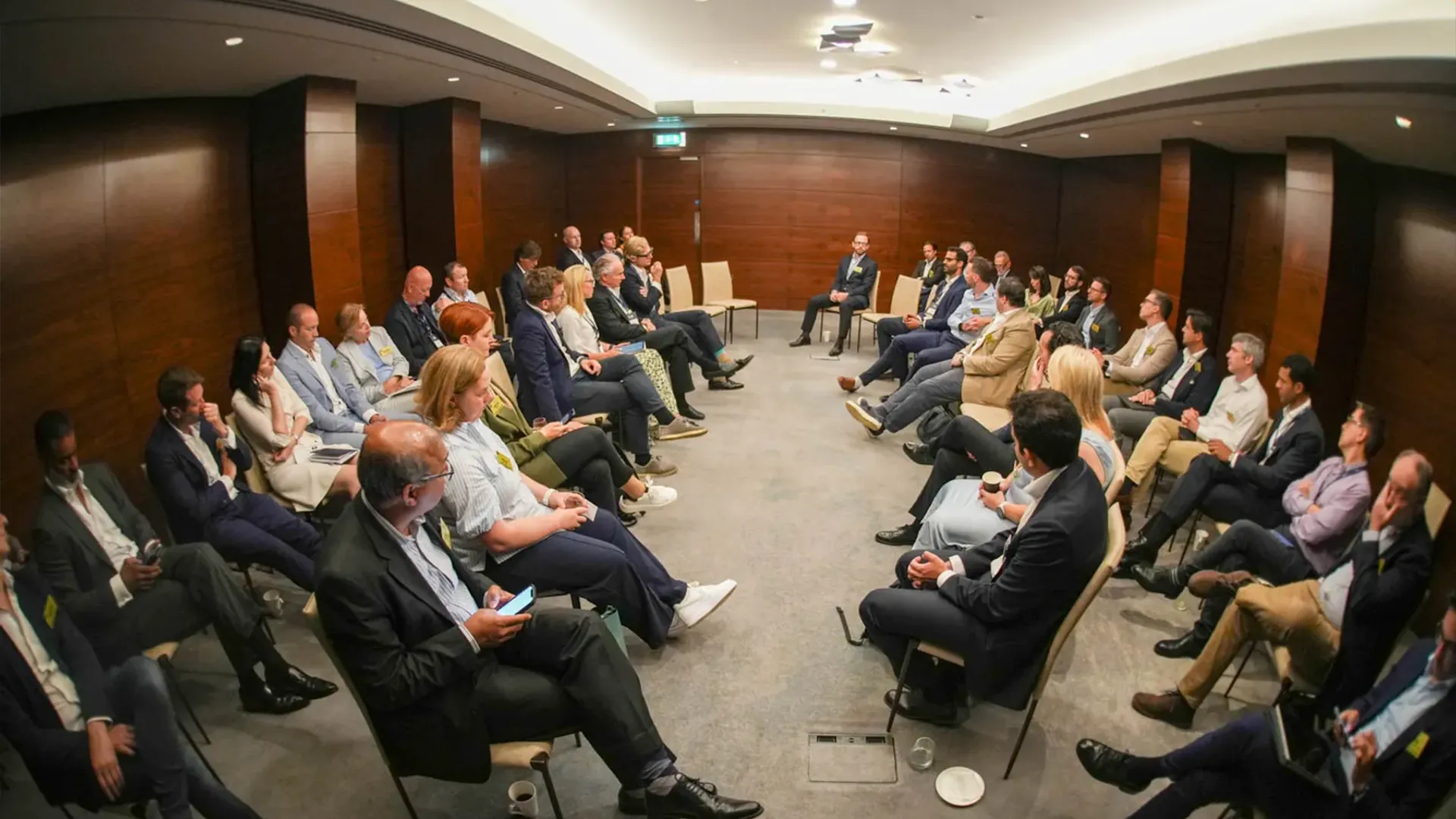
The residential build-to-rent (BTR) sector across Europe presents strong occupational demand and inflation-hedged income, yet development faces severe headwinds from macroeconomic conditions.In mature markets like Germany, high construction and debt costs compress development margins to narrow spreads over borrowing costs, making new schemes financially challenging.
In the UK, while potential risk-adjusted returns remain higher, viability is constrained by sticky land values, high interest rates, expanding yields, and operational leakage rising from 25% to over 30%.
Furthermore, regulatory uncertainties, such as rent caps and proposed tenant rights legislation, introduce risk into underwriting, while a lack of transactional data creates a bid-ask spread that stalls capital deployment.
Operational Housing Strategies
Addressing structural shortages requires a paradigm shift that views middle-income rental housing not as high-risk commercial real estate, but as essential economic infrastructure suited for long-duration, lower-cost capital.With higher interest rates reducing the relative attractiveness of real estate against risk-free assets, success relies on building operational platforms, achieving scale, and driving efficiencies through technology and automation to lower operational expenditure.
Subsectors such as co-living are proving viable by offering standardised studio products with high occupancy levels between 95% and 97%.
However, cross-border expansion requires navigating distinct local regulatory environments, as flexible living concepts face tax and usage constraints in Germany while finding clearer planning frameworks in the UK.
Planning, Capital, and Workforce
Unlocking meaningful housing supply across Europe depends on replacing slow, discretionary planning regimes with standardised, rules-based systems that provide timing certainty for delivery.Capital flows are evolving beyond traditional institutional channels to include private wealth aggregators, infrastructure debt, and long-term pension structures willing to accept lower preferred returns in exchange for stable duration.
Concurrently, severe local affordability shortages have driven a trend toward corporate and workforce housing. Employers, healthcare providers, and defence bodies are increasingly taking master leases or acquiring developments directly to secure accommodation for essential staff, serving as an alternative demand driver in constrained European markets.
► Flex and Hybrid Models

(GRI Institute)
Operational Efficiency and Technology
Flexible and hybrid accommodation models bridge the gap between traditional residential assets and short-stay hospitality, offering stay lengths ranging from single-night visits to multi-month occupancies.Operational success in this subsector hinges on tech-enabled, digital-first platforms that automate customer check-ins, guest support, and property maintenance.
By eliminating traditional front-desk staffing and outsourcing capital-intensive amenities, such as on-site dining or fitness facilities, operators significantly reduce wage and utility overheads.
Outsourcing food, beverage, and leisure services to nearby local partners can be a positive option to prevent margin erosion while maintaining high guest satisfaction scores and standardised service delivery.
Market Selection and Financials
Investment strategies diverge between targeting high-density primary cities with proven overnight demand and expanding into secondary urban hubs where limited competition allows operators to secure substantial market share.Asset selection prioritises properties capable of undergoing efficient conversion from commercial or legacy hotel space, typically targeting conversion costs between EUR 90,000 and EUR 120,000 per key to maintain underwriting viability.
By maintaining lean operational cost structures, flexible living assets insulate cash flows against wage inflation, generating gross operating profit margins in excess of 60% alongside stable occupancy rates above 90%.
Lease Structures and Valuation
Real estate transactions within the flexible living domain predominantly utilise long-term master leases, incorporating double-net structures across continental Europe and triple-net terms within the UK.Lease terms frequently combine fixed base rents with revenue-share upside mechanisms, aligning the interests of asset owners and operators.
Institutional investors evaluate asset quality, operational stability, and exit cap rates through sustainable rent coverage ratios rather than top-line rent maximisation, with exit yields settling in a corridor between residential and hotel asset classes, typically from 4.9% to 6.2%.
Additionally, the demonstrated resilience of standardised, operator-led platforms during corporate restructuring events has solidified institutional confidence in flexible accommodation as a permanent asset class.
► Branded and Luxury Residences

(GRI Institute)
Global Pipeline and Geography
The global branded residential sector is undergoing rapid expansion, with pipeline volume set to surpass total historical completed inventory within five years.While North America historically dominated completed stock, future supply demonstrates widespread geographic rebalancing across Europe, the Middle East, Latin America, and APAC.
Primary destinations such as Dubai lead global pipeline expansion, while emerging urban centres including São Paulo gain ground alongside established hubs such as Miami and New York.
In Europe, project growth is outpacing the global average, heavily concentrated in southern and eastern European markets.
Unlike the wider global market where luxury schemes represent 68% of developments, European pipelines feature a higher concentration of upper-upscale, mid-market, and non-hotel lifestyle concepts.
Brand Models and Premiums
Development concepts divide between hotel-backed properties and non-hotel brands spanning automotive, fashion, and food and beverage sectors.Hotel operators almost universally integrate property management, operational staffing, and concierge services, whereas non-hotel brands primarily provide design aesthetics and marketing momentum unless paired with third-party operators.
Globally, branded developments achieve an average pricing premium of 41% over unbranded counterparts, ranging from 34% in dense urban centres to 52% in resort locations where competing luxury amenities are scarce.
While brand associations drive initial sales velocity and buyer confidence during construction, long-term capital preservation relies on delivering tangible, high-quality post-occupancy services rather than relying solely on brand licensing.
Asset Resilience and Governance
Branded real estate demonstrates greater price resilience during economic downturns than unbranded stock, underpinned by a high proportion of cash buyers and lower secondary transaction turnover.However, delivering new schemes in mature European gateway cities remains severely restricted by land assembly hurdles, rigid tenant protections, social housing obligations, and tight development margins.
Sustaining long-term asset value requires early alignment between developers, operators, and homeowners' associations regarding reserve funds, soft services, and ongoing capital expenditure.
Overspecified amenities hold the risk of inflating recurring service charges, making financial discipline and clear operational governance essential to maintain secondary market liquidity.
► Senior Living and Healthcare

(GRI Institute)
Investment Profile Divergence
Healthcare and senior living sectors display distinct risk-return profiles and attract different investor bases. Healthcare assets, including nursing homes, hospitals, and specialised clinics, function as core or core-plus social infrastructure.These properties provide long-term leases, derisked forward-funding structures, and resilient commercial stability, maintaining occupancy levels consistently above 90%.
However, healthcare investments carry elevated reputational risk tied to care delivery standards and strict regulatory oversight. In contrast, independent senior living operates as an operational living asset class aligned with value-add strategies.
While independent schemes present development exposure and higher operational intensity, they benefit from lighter regulatory constraints while combining private housing with social amenities.
Tenure and Regional Execution
Cross-border expansion reveals significant legal, cultural, and structural divergence across European jurisdictions.In the UK, senior housing predominantly uses a leasehold for-sale model supported by deferred event fees, underpinned by over-65s holding GBP 3 trillion in housing equity.
Conversely, continental European markets rely on rental structures using master leases or direct consumer tenancies, driven by legal frameworks that lack leasehold concepts.
Operational success across all regions requires a care-forward continuum that adapts to changing health needs, enabling residents to age in place and delaying transitions into high-acuity care homes.
Beyond this, these schemes require central urban micro-locations with retail within 200 to 300 metres, strong transport links, and access to local labor pools to ensure community integration and prevent resident isolation.
Demographics, Technology, and Scale
Expanding aging demographics, such as retiring baby-boomer generations and rising chronic health conditions, generate long-term structural demand across healthcare and specialised housing.Institutionalising the sector requires standardised consumer contracts, inflation-indexed revenue streams, and scaled operational platforms capable of managing reputational and care risks.
Furthermore, technology and AI are transforming operational delivery. Applications ranging from diagnostic tools and automated clinical workflows to health-monitoring wearables and robotics reduce hospital stay durations, optimise preventive care, and ease persistent staffing constraints without compromising resident dignity.
► Investment Recalibration
(GRI Institute)
Yield Spreads and Allocations
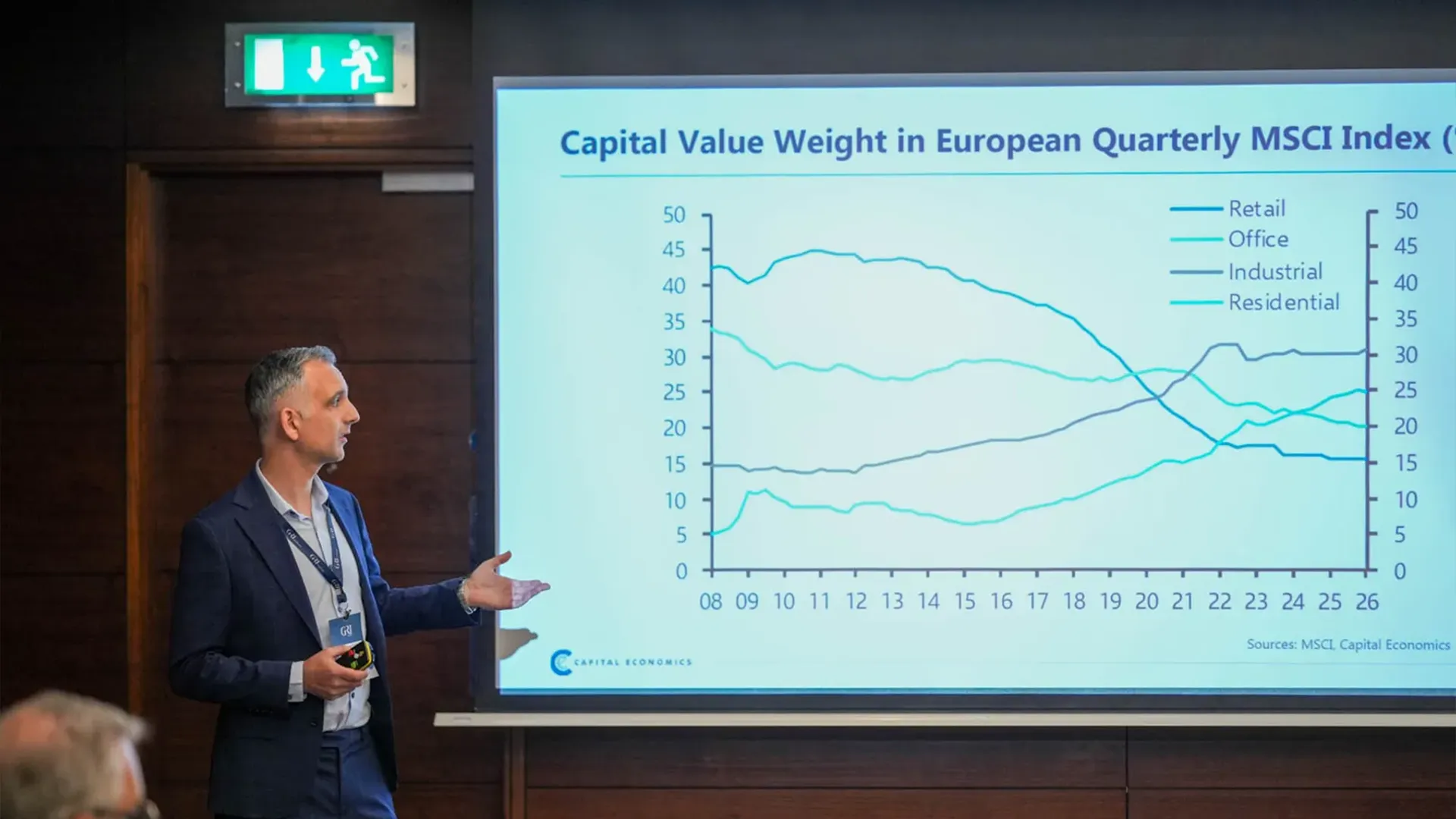
Institutional allocation to European living sectors continues to expand, following US market trends where residential assets represent nearly 30% of core real estate indices.This capital shift is supported by structural demand drivers, including low urban vacancy rates and a persistent divergence between rental affordability and high homeownership costs across major European cities.
Within the living umbrella, investment yields vary significantly by subsector and operational intensity.
Core multi-family and single-family schemes command tighter net initial yields due to stable cash flows and inflation-hedging properties, whereas PBSA and senior housing offer wider yield spreads to compensate for higher operational complexity and gross-to-net leakage.
Development Viability and Valuations
New residential development across Europe faces major viability constraints driven by elevated borrowing costs, persistent construction inflation, and complex regulatory frameworks such as the UK Building Safety Act.These factors have pushed operating expenditure leakage on high-rise multi-family assets to between 30% and 40% of gross income.
A pronounced disconnect exists between lagging valuation indices and real-time transaction pricing. While valuation data often reflects historic low-yield benchmarks, active market transactions clear at wider cap rates or substantial discounts to replacement cost.
To overcome stalled delivery pipelines and maintain scheme viability, developers and institutional investors rely on creative land-structuring models, public-private partnerships, and standardised rules-based planning systems modelled on successful European municipal frameworks.
Evolving Residential Demand
While strong demographic fundamentals, including expanding 18-to-24-year-old cohorts in Europe and rapidly growing over-75 populations, support underlying housing demand, end-user affordability is reaching a structural ceiling.Compounded rental growth is bounded by real wage expansion, forcing tenant cohorts facing high monthly housing costs to shift toward alternative living formats.
This transition drives demand toward single-family suburban rentals, co-living schemes, and flex-housing models that optimise space and reduce overheads.
In order to ensure long-term income durability and insulate portfolios against future regulatory rent controls, institutional capital increasingly prioritises tenure-agnostic platforms, integrated affordable housing components, and socially inclusive mixed-income developments.
► Continue the conversation at the dedicated living sector panels at Europe GRI 2026 - Incorporating GRI Hospitality in Paris on 9th-10th September
► These insights were shared during industry leader discussions at GRI Living Assets Europe 2026.
► Check out all upcoming GRI Institute Europe gatherings here.