 Credit: Freepik
The New Economic Order in an Era of Political Instability
How the affordability crisis and eroding institutional trust are shifting government priorities towards economic resilience and capital nationalism
February 13, 2026Real Estate
Written by:Helen Richards
Key Takeaways
- The cumulative effect of high prices for essentials is driving a profound affordability crisis and state of discontent, fuelling global populist movements.
- A widening trust gap in global institutions has created a vacuum being exploited by anti-establishment and populist actors.
- Global trade is shifting from a model of hyper-efficiency towards capital nationalism and state-led economic resilience.
The veneer of global economic stability is thinning, giving way to a volatile landscape where the price of a loaf of bread carries as much political weight as a national election.
During the GRI Chairmen’s Retreat Europe 2026, David Stubbs, Chief Investment Strategist at AlphaCore, laid out a sobering map of our current trajectory. We are no longer merely discussing market fluctuations; we are witnessing a fundamental rewiring of the global contract, driven by a profound state of discontent that stretches from the supermarket aisle to the halls of power.
The developed world is currently gripped by a cumulative cost-of-living crisis where the absolute price levels of essentials - rent, energy, and food - have reset at a height that outpaces the modest growth of wages.
This has created a bifurcated reality: while headline growth persists, the bottom half of income earners finds their real purchasing power in a state of managed decline. It is this specific, unequal burden of inflation that has turned the kitchen table into a site of radicalisation.
Stubbs notes that this movement is defined by a visceral rejection of mainstream politics and a craving for the "strong leader" archetype - someone willing to bypass traditional institutional norms to deliver simple, sweeping solutions to dauntingly complex global problems.
Across Europe and the United States, the ballot box is increasingly used as a tool for demolition rather than incremental change, as voters opt for anyone standing outside the perceived "failed" circle of the elite.
The roots of this distrust are deep and remarkably resilient. Much of the current anger can be traced back to the sluggish, uneven recovery following the Global Financial Crisis. That era planted a seed of doubt regarding the competence of economic leaders and the inherent fairness of the global system.
In the years since, perceived government inaction during subsequent crises has allowed that doubt to bloom into a full-scale erosion of trust. This vacuum of authority has been efficiently filled by populist actors who frame themselves not just as politicians, but as the only honest critics of a system they label as fundamentally broken.
This internal friction is frequently exacerbated by foreign actors engaging in sophisticated information warfare designed to inflame domestic tensions. As a result, the coming years are likely to see a significant legislative reckoning for big tech companies as governments scramble to reclaim a foundation of factual discourse and social cohesion.
Governments are shifting their priorities towards economic resilience, encouraging domestic investment and intervening more aggressively in markets to ensure social justice and the security of essential needs. This transition marks a pivot from a world optimised for cost to one optimised for stability.
In this new economic order, the hand of the state will be felt more frequently, and the trade systems of old will be rewired to protect the national interest against an increasingly unpredictable global backdrop.
Thank you to David Stubbs for his insights presented during the GRI Chairmen’s Retreat Europe 2026.
Read more high-level industry insights in the full GRI Chairmen’s Retreat Europe 2026 Spotlight report.
During the GRI Chairmen’s Retreat Europe 2026, David Stubbs, Chief Investment Strategist at AlphaCore, laid out a sobering map of our current trajectory. We are no longer merely discussing market fluctuations; we are witnessing a fundamental rewiring of the global contract, driven by a profound state of discontent that stretches from the supermarket aisle to the halls of power.
Affordability Crisis
At the heart of this transformation lies a deceptive calm in the macroeconomic data. While central bankers may point to cooling inflation figures as a sign of success, the reality on the ground remains starkly different.The developed world is currently gripped by a cumulative cost-of-living crisis where the absolute price levels of essentials - rent, energy, and food - have reset at a height that outpaces the modest growth of wages.
This has created a bifurcated reality: while headline growth persists, the bottom half of income earners finds their real purchasing power in a state of managed decline. It is this specific, unequal burden of inflation that has turned the kitchen table into a site of radicalisation.
Surge in Populism
This economic pressure has acted as a primary catalyst for a global surge in populism. As traditional economic levers appear to fail the average citizen, the allure of the anti-establishment candidate grows irresistible.Stubbs notes that this movement is defined by a visceral rejection of mainstream politics and a craving for the "strong leader" archetype - someone willing to bypass traditional institutional norms to deliver simple, sweeping solutions to dauntingly complex global problems.
Across Europe and the United States, the ballot box is increasingly used as a tool for demolition rather than incremental change, as voters opt for anyone standing outside the perceived "failed" circle of the elite.
The roots of this distrust are deep and remarkably resilient. Much of the current anger can be traced back to the sluggish, uneven recovery following the Global Financial Crisis. That era planted a seed of doubt regarding the competence of economic leaders and the inherent fairness of the global system.
In the years since, perceived government inaction during subsequent crises has allowed that doubt to bloom into a full-scale erosion of trust. This vacuum of authority has been efficiently filled by populist actors who frame themselves not just as politicians, but as the only honest critics of a system they label as fundamentally broken.
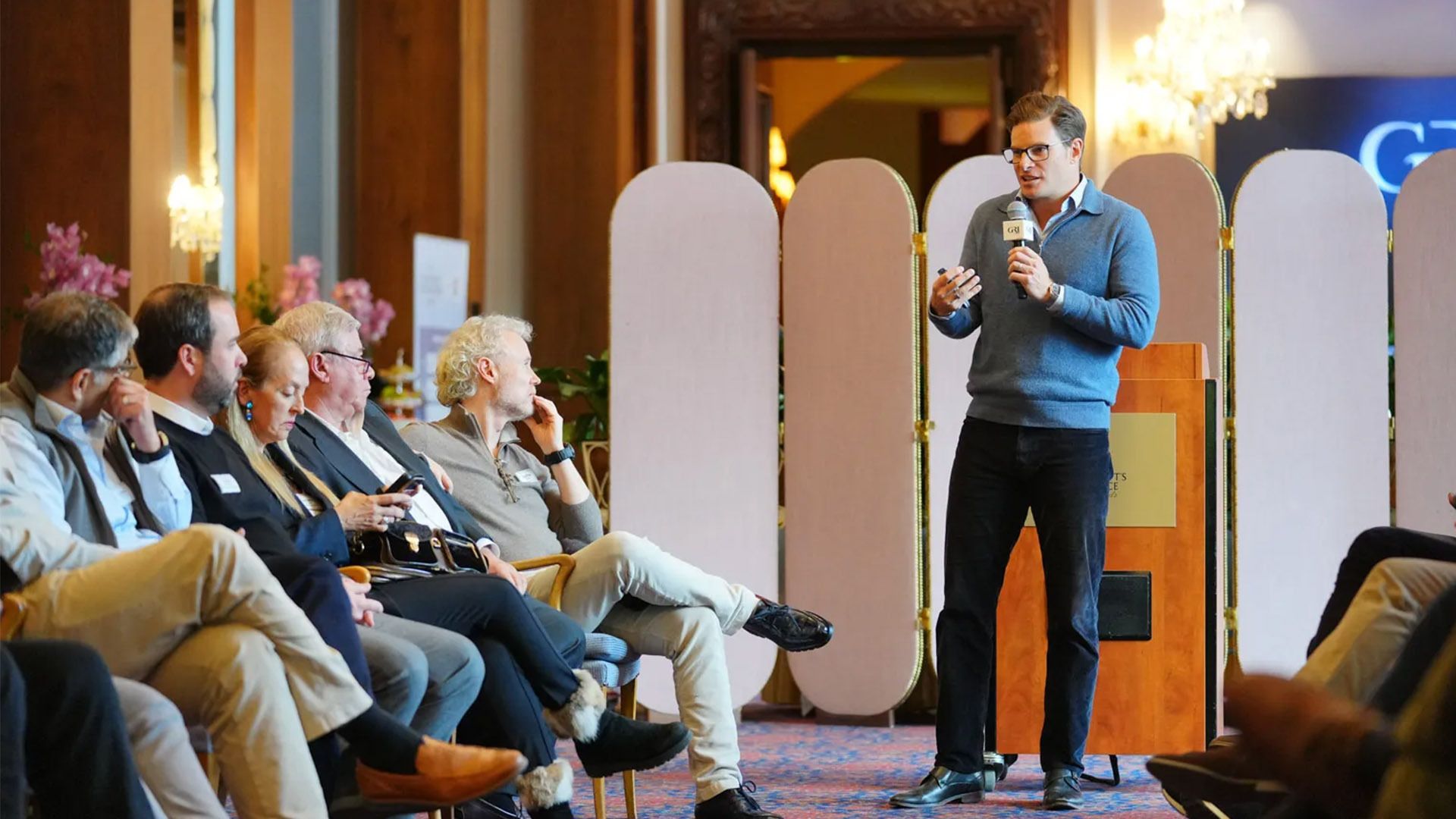
David Stubbs, Chief Investment Strategist at AlphaCore, addressed global real estate leaders at the GRI Chairmen’s Retreat Europe 2026 in St Moritz. (Credit: GRI Institute)
Information Warfare
Adding fuel to this fire is the digital fragmentation of our shared reality. The role of social media in amplifying social discord has moved from a peripheral concern to a central challenge for the next decade. We now inhabit an information environment where individuals are often led toward the affirmation of their existing biases rather than a common set of objective facts.This internal friction is frequently exacerbated by foreign actors engaging in sophisticated information warfare designed to inflame domestic tensions. As a result, the coming years are likely to see a significant legislative reckoning for big tech companies as governments scramble to reclaim a foundation of factual discourse and social cohesion.
Capital Nationalism
Looking ahead, the era of hyper-globalisation - once defined by a relentless pursuit of efficiency and just-in-time supply chains - is reaching its sunset. In its place, a new doctrine of capital nationalism is emerging.Governments are shifting their priorities towards economic resilience, encouraging domestic investment and intervening more aggressively in markets to ensure social justice and the security of essential needs. This transition marks a pivot from a world optimised for cost to one optimised for stability.
In this new economic order, the hand of the state will be felt more frequently, and the trade systems of old will be rewired to protect the national interest against an increasingly unpredictable global backdrop.
Thank you to David Stubbs for his insights presented during the GRI Chairmen’s Retreat Europe 2026.
Read more high-level industry insights in the full GRI Chairmen’s Retreat Europe 2026 Spotlight report.