 Credit: GRI Institute
Resilience Over Returns: Is Europe entering a new real estate renaissance?
Exclusive C-suite insights on the reversal of historic tailwinds and the future of European real estate from the GRI Chairmen’s Retreat Europe 2026
January 26, 2026Real Estate
Written by:Helen Richards
Executive Summary
The GRI Chairmen's Retreat Europe 2026, held in St. Moritz, brought together the world’s most influential real estate leaders to address an era defined by geopolitical instability and technological disruption. While 61% of leaders remain optimistic, the industry is hyper-vigilant regarding a potential deep recession and the "K-shaped" labour market impact of AI. Key discussions highlighted a fundamental shift from efficiency to resilience, as capital flows move toward Europe to mitigate US and Asian policy uncertainty.
The report explores the "hollowing out" of traditional banking in favour of non-bank lending, the rise of the living sector as the dominant European asset class, and the critical power shortages threatening the data centre boom. From the bifurcation of the office market to the evolution of hotels into "cash flow multipliers," this analysis provides a strategic roadmap for navigating the structural transformations of the next decade.
The report explores the "hollowing out" of traditional banking in favour of non-bank lending, the rise of the living sector as the dominant European asset class, and the critical power shortages threatening the data centre boom. From the bifurcation of the office market to the evolution of hotels into "cash flow multipliers," this analysis provides a strategic roadmap for navigating the structural transformations of the next decade.
Key Takeaways
- Investors are moving away from hyper-globalisation toward "capital nationalism," prioritising stable European safe havens and high-conviction sectors.
- Rapid AI adoption is transforming real estate operations, with the potential to double GDP growth in leading economies while drastically reducing costs.
- Both living and commercial sectors are facing challenges including power constraints, regulatory risks, and shifting consumer preferences.
Download the PDF of this 'GRI Chairmen's Retreat Europe 2026 Spotlight' report here.
The State of Discontent: Macroeconomic Pressures and Political Instability - David Stubbs
Inflation and the Affordability Crisis
Plenary speaker David Stubbs, Chief Investment Strategist at AlphaCore, argues that the developed world is facing a profound cost of living crisis driven by cumulative price increases in essential goods such as rent, food, and energy. While inflation may be cooling, the overall price level remains high, leading to significant wage stagnation and a decline in real purchasing power.This unequal distribution of inflation has particularly burdened the bottom half of income cohorts, who struggle to maintain basic standards of living despite broader economic growth in some sectors.
Populism and Anti-Establishment Sentiment
Prolonged economic stagnation and inequality have fuelled a global surge in populism. David identifies three primary tenets of this movement: an anti-establishment sentiment that rejects mainstream politics, a preference for simple solutions to complex global issues, and a demand for strong leadership over traditional institutional norms.Voters are increasingly rejecting the status quo in favour of any candidate outside the mainstream, a trend evident in recent elections across the United States and Europe.
Erosion of Trust in Global Institutions
A deepening erosion in the trust of institutions has stemmed from perceived government inaction and the failure of elites to manage crises effectively.The slow recovery from the Global Financial Crisis (GFC) led many to question the competence of economic leaders and the fairness of the system. This loss of confidence has undermined the acceptance of institutional norms, creating a vacuum that populist actors exploit by positioning themselves as critics of a "broken" system.
Media and Information Warfare
The role of social media in amplifying social discord is a critical challenge for the coming decade. The fragmentation of the information environment sees individuals seek affirmation of existing biases rather than objective facts.Meanwhile, there are increasing instances of information warfare conducted by foreign actors to inflame domestic tensions, such as during the Brexit campaign. As governments attempt to restore a common ground of factual discourse, a significant legislative backlash against big tech companies can be expected.
Economic Resilience and Capital Nationalism
Looking toward the future, David predicts a transition from a world optimised for efficiency to one prioritising resilience. This shift involves rewiring the trade system and a move towards capital nationalism, where governments encourage domestic investment to ensure economic stability.While hyper-globalisation defined the previous decade, the current era is marked by retrenchment and more frequent government intervention in markets that fail to deliver social justice or essential needs.
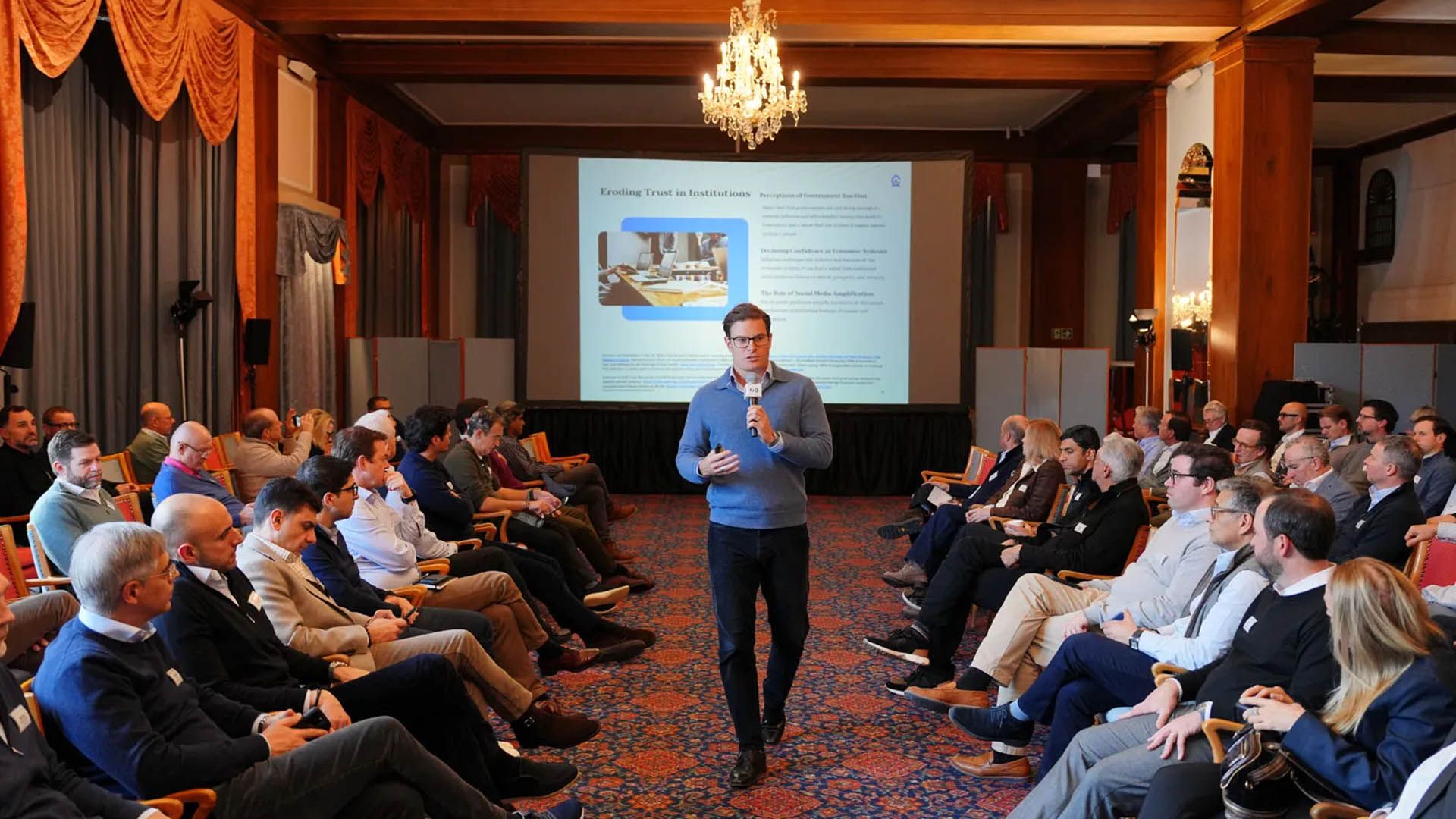
David Stubbs warns that persistent inflation, inequality, and institutional distrust are driving populism and a shift toward economic resilience. (GRI Institute)
Artificial Intelligence (AI) - Are you ready?
Accelerated Adoption and Economic Growth
The speed of recent AI adoption has been unprecedented, with tools like ChatGPT reaching 100 million users in a fraction of the time required by previous technologies. This rapid penetration into enterprise functions suggests a potential for a massive productivity boom that could result in double GDP growth in leading economies over the next five years.As AI becomes cheaper and more capable, its integration into professional workflows is no longer optional but a fundamental shift in how business is conducted.
Disruption of the Labour Market
The impact of AI on employment can be seen more specifically in the "K-shaped" reality, where high-level white-collar roles are being disrupted before blue-collar trades.While traditional entry-level analyst roles are under threat due to AI's ability to automate complex research and administrative tasks, physical trades such as plumbing and electrical work remain shielded as current technology lacks human-like dexterity.
However, this displacement is expected to reach the physical world within five years as humanoid robotics and autonomous systems mature.
Transformation of Real Estate Operations
AI is significantly altering real estate through the automation of valuation models, due diligence, and property management. Market leaders report using AI to reduce the need for legal and architectural services by over 90%, completing complex design and documentation tasks in hours rather than weeks.Furthermore, the emergence of "autonomous buildings" is expected to optimise energy consumption and operations, potentially reducing costs by 30-60% while turning assets into active participants in the energy grid.
Critical Energy and Infrastructure Challenges
The surge in AI development has created a power race, as data centres and AI training require immense amounts of electricity. Europe faces a significant challenge due to its ageing grid and volatile energy prices, which may hinder its ability to compete with the United States.Experts argue that the solution must come from technology itself, using AI to manage grid capacity more efficiently and exploring off-grid or modular nuclear solutions to meet the projected two-to-threefold increase in power demand by 2030.
Strategic Divergence Between the US and Europe
There is a widening gap between the US and European AI ecosystems, driven by differences in investment levels and regulatory burdens. The US is currently investing nearly ten times more in AI than the EU, with faster enterprise adoption and fewer restrictions on infrastructure development.Consequently, the transformative impacts on real estate and the labour market are expected to occur much more rapidly in the US, while Europe may face a slower, more regulated transition that risks a brain drain of top technical talent.

The Chairmen's Retreat, held in St. Moritz, gave industry leaders a chance to discuss how rapid AI adoption is reshaping productivity, labour markets, real estate operations, and energy infrastructure. (GRI Institute)
Lending - Lend and prosper or lend and regret?
Non-Bank Lending
The European real estate lending landscape is transforming, as non-bank lenders largely fill the void left by heavily regulated traditional banks. Since the regulatory changes following the 2008 financial crisis, banks have increasingly moved away from primary debt origination in favour of providing back leverage to private credit shops.This "hollowing out" of the banking sector has allowed the non-bank lending market to grow into the trillions, with projections suggesting the sector could double in size over the next five years as it becomes the primary source of liquidity for the real estate market.
Convergence of Debt and Equity Returns
The current inversion of the traditional risk-return hierarchy is witnessing real estate debt frequently outperform equity on a risk-adjusted basis. As equity values have corrected from their peak, credit has emerged as a safer and more attractive allocation, often yielding returns of 10-20% that were historically reserved for opportunistic equity. This has effectively eliminated the "core-plus" equity investor, as these stakeholders now prefer the downside protection and consistent yields offered by senior secured debt.Increasing Intermediation and the Role of Advisors
Despite the rise of automated platforms, the power of debt brokers and intermediaries has increased, particularly in the complex European market. While American borrowers are culturally accustomed to using advisors, European markets are now trending in a similar direction, with brokerage penetration growing as deals become more difficult to structure.Intermediaries are increasingly valued not just for driving competitive tension, but for their ability to "clean up" deals, provide market insights, and offer credibility when navigating unforeseen hurdles during the due diligence process.
Risk Rating and Regulatory Capital Pressure
Stringent risk-based capital requirements are dictating bank behaviour, particularly regarding construction lending. With risk ratings for construction loans reaching as high as 200%, banks must hold significantly more regulatory capital against these assets, making them less profitable than securitised products.Consequently, banks are incentivised to lend to non-bank entities that can achieve better capital treatment through securitisation buckets, further cementing the partnership between traditional institutions and private credit funds.
Real Estate Debt vs. Corporate Credit
Real estate debt should be clearly distinguished from the broader corporate private credit market, which has recently faced concerns over fraud and over-leverage.Real estate lenders maintain that their sector offers superior security compared to corporate credit, which is currently perceived as overvalued and excessively leveraged.
Unlike corporate leveraged buyouts or high-yield bonds where investor rights are often weaker, real estate debt is secured by tangible assets, allowing lenders to seize the physical property in the event of a default. This direct control over the underlying collateral provides a robust safety net and a more predictable outcome than the complex financial structures found in the corporate market.

Discussions on lending revealed how non-bank lenders are now the main source of real estate liquidity in Europe as banks retreat under post-GFC regulatory pressure. (GRI Institute)
Europe - Can crisis lead to renaissance?
Resilience of the European Investment Market
Despite transaction volumes remaining below historical peaks, the European real estate market is showing clear signs of a recovery with investment expected to reach EUR 215 billion in 2025.Momentum is building as fundraising recovers, marked by a nearly 30% year-on-year increase in global private real estate fundraising. While capital remains available, investors have become more disciplined and selective, resulting in longer fundraising periods and a sharper focus on specific execution strategies.
European Safe Haven
There is a notable shift of capital allocations moving away from the United States and Asia towards Europe. Investors from regions such as Japan and Canada are diversifying their portfolios to mitigate risks associated with US policy uncertainty, potential wealth taxes, and trade tariffs.Europe is increasingly viewed as a safe haven due to its robust legal frameworks and the perception that real estate assets are currently priced more attractively than over-heated US sectors like data centres.
Growth in the Living and Defense Sectors
Capital is pivoting towards the living sector - including rental housing, student accommodation, and alternative living - which is projected to overtake offices as the largest share of European real estate.Additionally, a significant increase in European defense spending to 2.1% of GDP is expected to create substantial opportunities in industrial logistics, R&D, and manufacturing facilities. This shift reflects a move from optimality to reality as investors align with structural demographic pressures and new geopolitical requirements.
AI and Infrastructure Demands
The acceleration of AI has transitioned data centres from a niche real estate play into a primary infrastructure category. AI-driven demand for data centre capacity in Europe is forecast to triple by 2030, placing immense pressure on power grids and resilient infrastructure. Consequently, access to energy has evolved from an operational concern to a critical investment consideration, with ESG standards now deeply embedded in the financing and regulation of these assets.Regulatory Challenges
Market leaders express concerns around whether Europe is regulating itself into irrelevance. Heavy regulation and high state quotas, particularly in countries like Germany, often stifle the private sector and discourage risk-taking compared to more agile geographies.This regulatory environment has contributed to a widening innovation gap in the technology sector between Europe and the United States, leading to concerns that European nations are struggling to catch up with global competitors
Europe's highly regulated and fragmented market also makes scale difficult to achieve without deep local knowledge. While systemic inefficiencies persist, particularly in construction and labour rights, there are signs that the return of international capital is driving constructive pressure for policy reform and improved execution speeds.
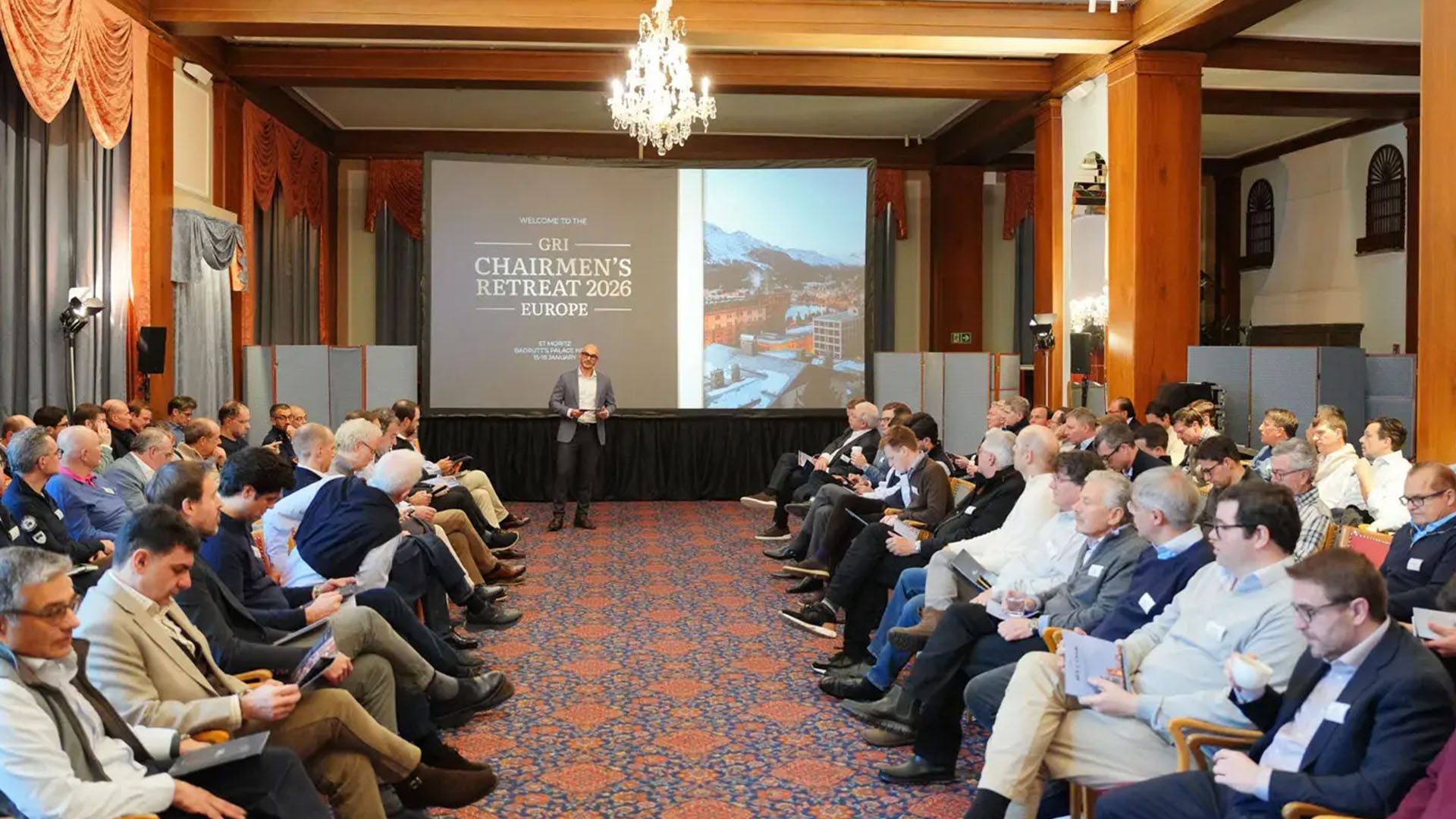
The future of European real estate will be shaped by resilient recovery in investment, rising global capital inflows, and ongoing tension between regulatory constraints and the need for competitiveness. (GRI Institute)
Logistics - Yield or yield trap?
Market Sentiment
The logistics sector has experienced a notable softening in investor sentiment over the last three years, with yields widening and remaining stubbornly high despite improvements in financing markets.While interest rates have begun to decrease, logistics yields have not yet tightened accordingly, leading to a debate on whether the sector is currently at a cyclical bottom or simply moving sideways.
Tenant Demand
Tenant demand presents a mixed outlook, with a clear distinction between geographies and asset types. While the UK and German markets are particularly challenging for big-box leasing due to economic stagnation, southern European markets like Spain and Italy have shown more resilience. Urban logistics and smaller mid-box units are generally outperforming larger regional distribution centres as occupiers prioritise proximity to population centres.The sector is also expected to benefit from long-term trends in infrastructure and defence spending, with green shoots appearing as occupier demand begins to recover from recent geopolitical uncertainty.
Capital Flows
There is a significant lack of core capital returning to the logistics sector, as many major institutional investors remain on the sidelines waiting for valuations to stabilise. Considering a shift in relative value, some investors are refocusing on retail and offices now that those asset classes have repriced significantly and are, once again, viewed as investable.Supply Dynamics and Development
A primary catalyst for future growth is the current supply-demand imbalance, driven by a sharp reduction in new development activity over the past two years. Existing portfolios are benefiting from a significant discount to replacement cost, as the expense of new construction has risen by an estimated 30%, making established assets with a lower cost basis highly competitive.ESG and Technological Evolution
ESG standards have transitioned from a discussion point to a mandatory prerequisite for securing long-term tenants and core buyers. Looking ahead, the integration of AI and the potential of quantum computing are expected to enhance supply chain efficiency and margins, though there are concerns that these advancements may eventually impact traditional location requirements and lead to a revaluation of existing distribution systems.
Investor insights reveal that the logistics sector is grappling with elevated yields and cautious capital, while mixed tenant demand, limited new supply, and rising ESG standards shape its recovery. (GRI Institute)
Living - Should living still win global allocations?
Global Allocation and Local Execution
There is a fundamental debate among real estate market players on whether the living sector should be managed through global or regional allocations. While some argue that diversification across geographies and currencies is a prudent way to mitigate risk, others maintain that the sector is inherently local.The most effective strategy involves global allocation with local execution, allowing for high-level capital deployment while ensuring that specific market dynamics, such as municipal regulations and resident behaviour, are managed by experts with deep regional knowledge.
Market Liquidity and Valuation
Interest rates remain the primary driver of market activity and share prices, particularly for standing assets. Core capital has been slow to return to the living sector as investors remain cautious of long-term interest rate volatility and government borrowing needs.There is a growing sentiment that until interest rates stabilise or begin a clear downward trend, a significant gap will remain between net asset values (NAV) and share prices, creating continued insecurity for institutional investors.
Regulatory Risks and the Burden of Rent Controls
The increasing prevalence of rent controls and the political nature of residential real estate is bringing increasing scrutiny across Europe. Regulatory authorities often do not fully understand the long-term impacts of rent caps, which can stifle new supply and lead to the degradation of existing stock.In markets including Germany and Portugal, there is a fear that populist political solutions are prioritising short-term election goals over the structural necessity of encouraging development to solve affordability crises.
Core Rental Hold to Opportunistic Development
The traditional model of holding residential assets for long-term rental income is under pressure due to rising operational costs, energy investment requirements, and regulatory headwinds. Consequently, many investors are shifting their focus toward opportunistic development.While development carries higher planning and construction risks, it currently offers significantly better margins (often between 20% and 25%) compared to the yield on standing rental properties, which increasingly resemble low-yield government bonds.
Supply Constraints and the Evolution of Operational Real Estate
The persistent, widespread shortage of housing across major European capitals continues to underpin the sector's fundamentals despite macroeconomic challenges. Investors are increasingly looking at operational real estate, including student housing and mixed-use assets, to diversify income streams and achieve better cap rate compression.By integrating flexible living components and hospitality elements, developers hope to bypass some of the stricter regulations associated with traditional residential housing while meeting the high demand for modern, urban living spaces.

With living remaining structurally undersupplied, investors are moving away from core rental holds toward globally allocated, locally executed development and operational strategies. (GRI Institute)
Data Centres - Do the numbers make sense?
Power Constraints
The most critical challenge facing the data centre industry across Europe is the severe lack of available power and the resulting delays in grid connectivity. In established markets like Frankfurt, grid providers are quoting lead times as long as 15 years for additional capacity, with some requests for power extension not projected for fulfilment until 2040.This scarcity has forced developers to explore alternative power strategies, such as on-site generation using natural gas turbines or small-scale nuclear projects, though these face significant political and bureaucratic hurdles in Europe compared to the United States.
Regional Market Dynamics
While traditional FLAP-D (Frankfurt, London, Amsterdam, Paris, and Dublin) markets face extreme constraints, there is a burgeoning interest in Tier 2 markets and specific regions including Spain, Poland, and the Nordics. However, even these regions are rapidly approaching capacity as announced projects begin to kick off, leading to concerns that they will soon mirror the difficulties found in the rest of Europe.To navigate these regional bottlenecks, some firms are pivoting their strategies to focus on locations where they can secure energy plots - securing and legalising land specifically for its energy capacity rather than just its physical location - or leverage existing industrial power infrastructure, such as decommissioned factories.
Evolving Workforce
A secondary but significant constraint is the acute shortage of specialised talent and a qualified workforce capable of developing and operating complex data centre facilities. This issue is particularly pronounced in Germany and other European hubs, where the industry is forced to pull professionals from other sectors such as infrastructure and nuclear energy.While India reports a growing talent pool in technical areas, the global demand for experienced engineers who understand the specific nuances of data centre construction remains a barrier to scaling the sector at the required pace.
Financing Risk Management
Investment in the data centre sector is increasingly characterised by high-leverage construction financing and a heavy reliance on pre-letting agreements with hyperscale tenants such as Amazon, Google, and Microsoft. Banks are becoming more cautious, scrutinising the ratio of capacity under development versus actual demand to avoid overdeveloped markets.Developers must often navigate complex legal clauses, including walk-away rights for customers in the event of grid delays, which shifts significant risk onto the builder and the financing institution.
The AI Bubble
There is an ongoing debate regarding whether the current surge in data centre demand, driven largely by the AI macro-trend, is a sustainable shift or a potential bubble reminiscent of 2006-2007.While the demand for AI factories and high-density computing is undeniable, the speed of the market and the pressure to sign deals without traditional levels of due diligence have raised concerns among seasoned investors. Despite these uncertainties, the consensus remains that the risk of being left behind in the AI race currently outweighs the perceived risks of over-investment.

From an investor perspective, European data centres offer AI-driven upside but are constrained by power scarcity, execution risk, and increasingly complex financing. (GRI Institute)
Hotels - CapEx black hole or cash flow multiplier?
Diversification of Investment Structures
The narrative around the hospitality sector is shifting from a perceived "capital expenditure black hole" to a potential "cash flow multiplier". Hotels have thus moved up the priority list for real estate investors, evolving from a niche interest to a prominent asset class.Investments in the sector are accessible to a broad spectrum of investors, provided the structure aligns with their specific risk-return profiles. The merits of various models are debated, with preference among investors ranging from greenfield developments to institutional leases.
While management agreements are historically viewed as restrictive for owners, modern iterations often include incentive structures such as owner priority returns or gross operating profit (GOP) guarantees to ensure an equitable alignment of interests.
Brand Value and Proliferation
There is further debate among market players regarding the strategic value of branding versus the risks of brand proliferation. A number of major operators manage dozens of niche brands in order to capture independent hotel supply.While some owners express concern that this causes market confusion and potential internal competition, operators argue that global brands provide essential benefits, including reduced distribution costs, procurement efficiencies, and access to extensive loyalty programmes that drive direct bookings.
Experiential Consumer Demand
Consumer demand in the hospitality sector is changing. This is particularly seen among the millennial generation, who increasingly prioritise unique and "Instagrammable" experiences over standardised hotel products.To remain competitive, modern hotel concepts are moving away from rigid corporate aesthetics in favour of designs that reflect the local community and offer genuine regional culinary experiences. This shift requires owners and operators to focus capital expenditure on customer-facing elements that directly enhance guest reviews and property ratings.
Operational Efficiency Through Technology
In response to rising labour costs and inflationary pressures, operational efficiency is a critical success factor. Strategies such as staffless operations, the removal of complex food and beverage (F&B) requirements, and the deployment of AI-driven management systems are among the ways to protect margins. By streamlining the operating concept at the design stage, investors can reduce complexity and mitigate the bottleneck of increasing operating expenses.Mixed-Use and Branded Residences
Mixed-use developments are increasingly emerging as a hedge against market volatility and high debt costs. Integrating branded residences or extended-stay units within a hotel project can provide a 30% premium in residential value and ensure base occupancy levels.These diversified structures also allow for more flexible exit strategies, as owners adjust to different asset cycles by liquidating individual components of the real estate as market conditions dictate.

Bifurcation is being seen across sectors, with hospitality gaining momentum as a flexible, experience-driven income play, while offices face a quality reset where only prime assets remain viable. (GRI Institute)
Offices - Yields and risks misaligned?
Office Market Bifurcation
The office market is experiencing a sharp divide between high-quality properties and the rest of the sector, with approximately 90% of properties still facing significant challenges regarding quality and value.This bifurcation is driven by the fact that only Class A office buildings in prime locations are expected to meet future demand, while a vast majority of secondary or poorly located stock is now considered underwater or effectively obsolete.
Successful office investments are now closely tied to the offering of amenities and products that align with modern tenant demands, as well as local factors such as commuting times and regional unemployment rates.
Impact of Regulatory and Financing Constraints
Lenders are increasingly risk-averse, adopting stringent views on manager business plans and placing significant financing constraints on developers for new constructions. This pressure is exacerbated by heightened regulatory oversight, such as the European Central Bank (ECB) reporting on hidden risks and improper valuations within bank loan books, which continues to stress developers and managers across the industry.Return to the Office
The "return to office" trend is viewed as a genuine shift, but it depends heavily on employers delivering new types of products that align with contemporary tenant demands. Old, unrenovated products have a low chance of recovery, as modern employees require high-quality environments and amenities to remain productive and motivated to leave their home-working setups.There is a consensus that employees are more likely to return to the office when amenities are improved to make the destination more attractive, and when showing up in person is perceived as vital for career stability or visibility in front of management.
Limited Viability of Conversions
Despite the high level of obsolescence in the sector, adaptive reuse or converting offices to alternative uses is not seen as a universal solution. Such projects are only deemed viable when fundamental factors - specifically floor plate designs, local zoning laws, and specific city-by-city market support - are perfectly aligned to support a change of use.Thank you to our speakers, moderators, co-chairs, and all participants for their contributions to the valuable discussions that unfolded at the GRI Chairmen’s Retreat Europe 2026.