 Credit: Freepik
Freezing Rents: Quick fix or impending urban setback?
GRI Institute’s Global CEO Gustavo Favaron on global rent-freeze outcomes and how short-term fixes worsen long-term urban issues
November 24, 2025Real Estate
Written by:Gustavo Favaron
Key Takeaways
- Rent freezes offer quick political appeal but consistently worsen housing supply, quality, and long-term affordability.
- Global evidence shows that strict rent controls reduce investment, shrink rental stock, and ultimately push prices higher once lifted.
- Sustainable solutions require expanding supply through long-term planning, incentives, and public-private collaboration, not price freezes.
The election of Zohran Mamdani as mayor of New York has reignited a debate that seems cyclical, resurfacing whenever housing costs soar: rent freezing. Mamdani’s promise is simple in form and powerful in political appeal: to freeze rents for four years in order to contain the largest price surge in the city’s history.
The context that brought Mamdani to power also helps explain the strength of this message. New York is facing an unprecedented combination of post-pandemic inflation, rising interest rates, a housing shortage, falling real incomes, and widespread dissatisfaction with urban management.
Middle-class families have been pushed out of traditional neighbourhoods, young people have been forced to leave the city, and the perception that “the market no longer works for working people” has become dominant. This frustration created space for a candidacy built on strongly interventionist policies and proposals that, at first glance, sound like immediate protection for the poorest.
But what appears simple to the voter contrasts with the economic complexity of the measure. Freezing rents functions as an aggressive intervention in one of the most sensitive, regulated and heterogeneous markets in the world. And the question that arises is: why do measures with strong electoral appeal keep reappearing, even when decades of results show negative outcomes?
The answer lies in the mismatch between the sense of urgency and empirical evidence. Populations pressured by real increases in housing costs look for quick solutions; politicians, in turn, benefit from popular short-term proposals, even when their impact is limited or even harmful in the medium and long term.
In this environment, freezing rents sounds like a direct and immediate response. The reality, however, is that price is only the visible symptom of a structural imbalance between supply and demand, and policies that act on the symptom rather than the causes tend to generate significant side-effects.
This is precisely what the most emblematic cases around the world show.
The problem emerged immediately afterwards. In less than a year:

The GRI Institute, which brings together members in more than 100 countries and maintains direct contact with leaders and operators in the global property market, monitors these movements closely, observes their impacts in real time, and uses this data to understand patterns, risks and consequences of each regulatory choice.
This international perspective makes it possible to identify consistent trends that help anticipate what could unfold in New York.

Among them:
It is also important to stress that this is not about rejecting all forms of regulation. Well-designed regulation plays an important role in urban balance. The critical point is that policies of this magnitude must be technically sound, widely debated with all relevant sectors, and calibrated to avoid distortions that harm precisely the groups they aim to protect.
We need to build more, plan better, and adopt policies that outlive the next election. Rent freezing has immediate political appeal but negative structural impact. It treats the fever, not the infection. It reduces prices in the short term but destroys the city’s ability to expand supply and ensure mobility, diversity, and economic dynamism.
Cities that work are cities that grow - which means building more, investing more, and removing barriers to intelligent densification.
History shows there are no shortcuts: freezing prices does not create homes. On the contrary, it freezes opportunities, investments, and urban futures.
Solving the housing deficit requires bold public policy, modern urban planning, and collaboration between governments and markets. And above all, it requires recognising that the enemy is not the rent itself - it is the lack of housing.
The context that brought Mamdani to power also helps explain the strength of this message. New York is facing an unprecedented combination of post-pandemic inflation, rising interest rates, a housing shortage, falling real incomes, and widespread dissatisfaction with urban management.
Middle-class families have been pushed out of traditional neighbourhoods, young people have been forced to leave the city, and the perception that “the market no longer works for working people” has become dominant. This frustration created space for a candidacy built on strongly interventionist policies and proposals that, at first glance, sound like immediate protection for the poorest.
But what appears simple to the voter contrasts with the economic complexity of the measure. Freezing rents functions as an aggressive intervention in one of the most sensitive, regulated and heterogeneous markets in the world. And the question that arises is: why do measures with strong electoral appeal keep reappearing, even when decades of results show negative outcomes?
The answer lies in the mismatch between the sense of urgency and empirical evidence. Populations pressured by real increases in housing costs look for quick solutions; politicians, in turn, benefit from popular short-term proposals, even when their impact is limited or even harmful in the medium and long term.
The context of the crisis and the political appeal of rent freezing
The median price of a one-bedroom flat in New York now exceeds USD 4,400 per month, double the national average. The United States faces a shortage of four million housing units. Post-pandemic pressure, combined with recent years of inflation and rising interest rates, has pushed middle-class families to the brink of financial infeasibility.In this environment, freezing rents sounds like a direct and immediate response. The reality, however, is that price is only the visible symptom of a structural imbalance between supply and demand, and policies that act on the symptom rather than the causes tend to generate significant side-effects.
This is precisely what the most emblematic cases around the world show.
When freezing turns against itself: international lessons
Berlin, Germany (2020-2021): the experiment that lasted little and cost a lot
Berlin is perhaps the most widely studied case. In February 2020, the city implemented the Mietendeckel, freezing and reducing rents for five years. The initial impact was visible: a 6% to 10% drop in prices, especially in smaller flats.The problem emerged immediately afterwards. In less than a year:
- The supply of rental properties plummeted by between 50% and 70%;
- Thousands of owners withdrew their units from the market, waiting for the law to end;
- Conversions to for-sale units rose sharply;
- Investment in maintenance and renovations practically stopped.
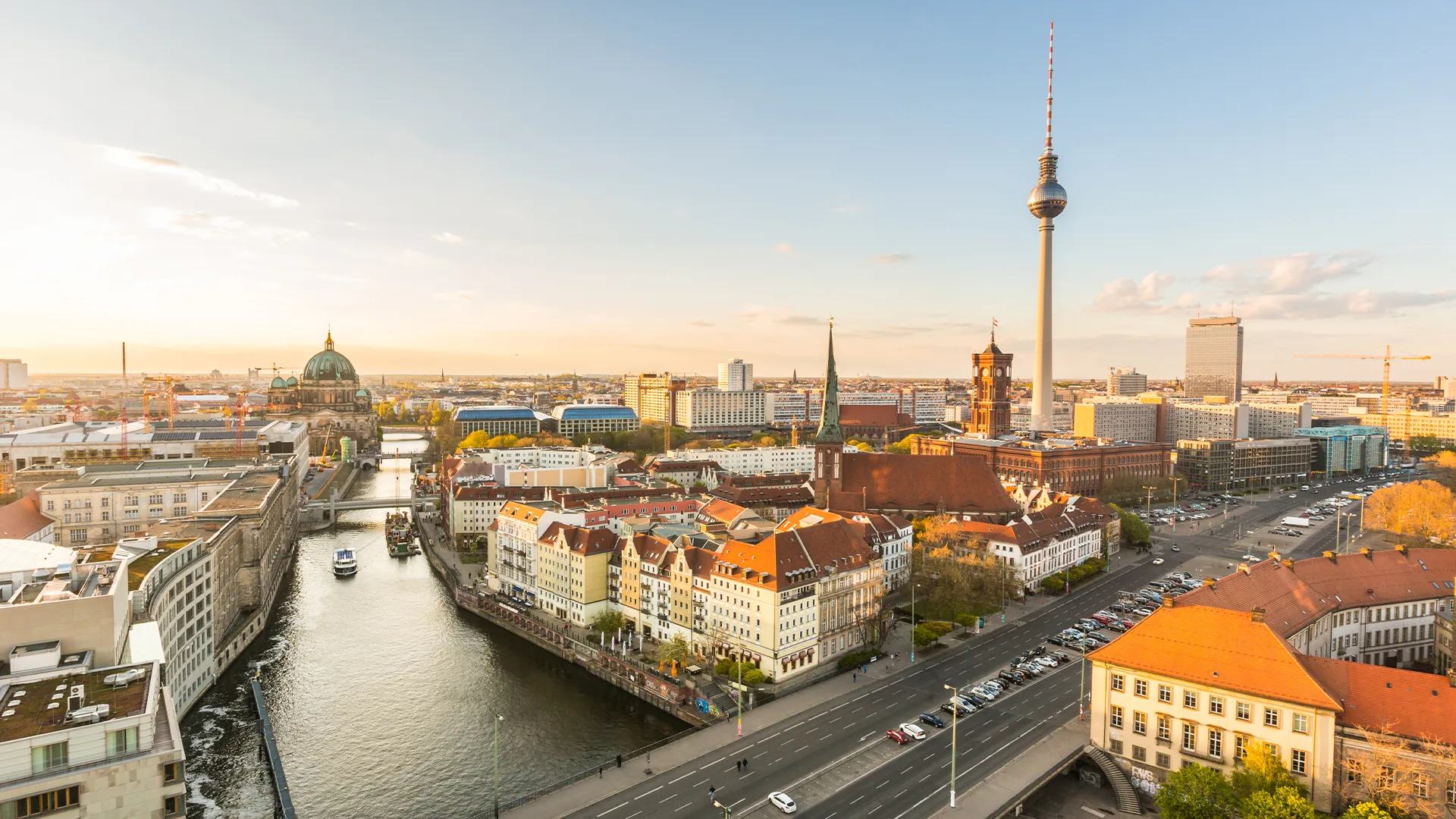
After being introduced in 2020, Berlin’s five-year rental freeze was quickly annulled the following year as a result of the disastrous impacts it had on the property market. (Adobe Stock)
Catalonia, Spain (2020-2022): a policy with short-lived effects and an even sharper rebound
Catalonia introduced strict rent caps in September 2020. The initial result was similar: a 4% to 6% drop in prices in regulated areas. But the hidden cost appeared quickly:- The available stock shrank by around 10%;
- The volume of new rental contracts fell by 20%;
- Residential construction in the region declined, while the rest of Spain grew by 12%.
Paris, France (2019-present): limited impact and benefits concentrated among the wealthy
Paris reinstated rent controls in 2019, after an earlier failed attempt in 2015. The average initial effect was modest: a 3% to 5% reduction, especially in smaller properties, but the French Cour des Comptes found that:- The biggest beneficiaries of the controls are in high-income districts;
- The measure did not increase supply;
- The informal market exploded, with off-record contracts and illegal subletting.
St Paul, Minnesota, USA (2021-2022): the strictest freeze in the US, which lasted less than a year
In November 2021, the state capital of Minnesota, St Paul, approved an almost absolute freeze: a 3% annual cap, with no exceptions, not even for new builds. The effect was dramatic:- Real-estate development fell by 80% within months;
- Multifamily properties lost up to 13% of their value;
- Renovations and structural investment collapsed.
The almost absolute freeze in St Paul, Minnesota, led to significant setbacks to the city’s real estate market and was partly rolled back only a few months after its implementation. (Adobe Stock)
Seoul, South Korea (2020-2022): when rigidity creates scarcity and inflation at the same time
Seoul introduced a 5% cap on rent increases per contract and guaranteed automatic renewal. The result was paradoxical:- The number of transactions dropped abruptly;
- New contracts rose by up to 14% immediately before the law, as owners “anticipated” the freeze;
- Vacancy increased in peripheral districts, while central areas became even less accessible.
Historical experiences: Italy, Argentina, Turkey, and the US
International literature on other strict controls - especially freezes - shows repeated conclusions:- In Italy (1915-1978), the policy led to the collapse of the rental market and accelerated urban decay.
- In Argentina, up to 45% of landlords abandoned the rental market in certain periods.
- In the US, cities like New York and San Francisco saw benefits concentrated among high-income households who had lived in their flats for decades, while newcomers faced record prices.
The GRI Institute, which brings together members in more than 100 countries and maintains direct contact with leaders and operators in the global property market, monitors these movements closely, observes their impacts in real time, and uses this data to understand patterns, risks and consequences of each regulatory choice.
This international perspective makes it possible to identify consistent trends that help anticipate what could unfold in New York.
Why does this happen? The economic mechanics behind the measure
Rent freezing interferes directly with risk pricing, returns, and the maintenance of real-estate assets. When price no longer reflects cost and demand:- The incentive to invest in maintenance decreases;
- Retrofit projects and structural renovations disappear;
- Developers shift capital to segments with no risk of price control;
- Landlords withdraw units from the market or switch them to for-sale stock;
- Turnover drops: those already inside stay; those outside cannot get in.
In Seoul, South Korea, the 5% cap on rent increases implemented in 2020 was quickly softened by 2022. (Adobe Stock)
There are alternatives - but they require political courage
There are viable ways to address the housing crisis, but they take time, and that is precisely what makes them unattractive to politicians seeking immediate impact.Among them:
- Increasing supply through public-private partnerships, zoning reforms, and greater flexibility in land use.
- Encouraging the creation of affordable housing with clear and predictable counterpart requirements.
- Subsidising the tenant directly, not the property, as housing vouchers do in several countries.
- Stimulating build-to-rent (BTR) development with legal certainty and long-term incentives.
- Planning urban densification with a focus on transport, infrastructure and efficiency.
It is also important to stress that this is not about rejecting all forms of regulation. Well-designed regulation plays an important role in urban balance. The critical point is that policies of this magnitude must be technically sound, widely debated with all relevant sectors, and calibrated to avoid distortions that harm precisely the groups they aim to protect.
Conclusion
Freezing prices may ease the pain, but it does not cure the illness. The housing crisis can indeed be tackled, but not through shortcuts that erode supply and destabilise the market.We need to build more, plan better, and adopt policies that outlive the next election. Rent freezing has immediate political appeal but negative structural impact. It treats the fever, not the infection. It reduces prices in the short term but destroys the city’s ability to expand supply and ensure mobility, diversity, and economic dynamism.
Cities that work are cities that grow - which means building more, investing more, and removing barriers to intelligent densification.
History shows there are no shortcuts: freezing prices does not create homes. On the contrary, it freezes opportunities, investments, and urban futures.
Solving the housing deficit requires bold public policy, modern urban planning, and collaboration between governments and markets. And above all, it requires recognising that the enemy is not the rent itself - it is the lack of housing.