 Starching
Luxury real estate strategies across Italy’s residential and hospitality sectors
How destination-led development and experience-driven tourism are reshaping investment priorities and customer expectations
April 23, 2026Real Estate
Written by:Isabella Toledo
Executive Summary
At the GRI Institute’s Italian Luxury Hotels & Branded Residences roundtable in Rome, co-hosted by Starching, industry leaders explored the evolving dynamics of Italy’s high-end real estate and hospitality sectors, highlighting resilient demand fundamentals alongside increasing complexity in development, financing, and long-term asset positioning.
Setting the stage for Italia GRI 2026 in Milan on 14th May, discussions in the first panel examined the growth potential of the branded residences sector, focusing on pricing premiums, scalability constraints, and the need for bespoke, service-led concepts carefully aligned with local market conditions.
Meanwhile, the second panel addressed sustained international demand and expanding development pipelines across luxury hospitality, emphasising the importance of destination-led strategies, disciplined investment, and alignment with long-term tourism and infrastructure trends.
Setting the stage for Italia GRI 2026 in Milan on 14th May, discussions in the first panel examined the growth potential of the branded residences sector, focusing on pricing premiums, scalability constraints, and the need for bespoke, service-led concepts carefully aligned with local market conditions.
Meanwhile, the second panel addressed sustained international demand and expanding development pipelines across luxury hospitality, emphasising the importance of destination-led strategies, disciplined investment, and alignment with long-term tourism and infrastructure trends.
Key Takeaways
- Branded residences in Italy remain at an early stage of development, with strong investor interest driven by premium pricing potential, but long-term success increasingly depends on delivering service-led, experience-driven value.
- Scalability and financing represent the main structural challenges, as the bespoke nature of projects and the limited availability of comparable transactions require customised development strategies and alternative capital structures.
- Across luxury hospitality, resilient international demand continues to support premium pricing, yet future competitiveness will rely on disciplined investment and destination-led development.
Branded Residences in Italy: Asset Class or Luxury Niche?
Although branded residences are gaining traction across global real estate, in Italy the segment remains at an early stage of development within the more established living and hospitality markets.As investor interest increases, the key question facing the market is whether these projects can evolve into a scalable asset class or remain a highly specialised luxury niche.
At the core of this discussion lies the value premium associated with branded residential developments. In many markets, branded properties can command prices up to 30% higher than comparable unbranded assets.
However, sustaining this premium over time requires more than brand recognition alone. Today’s customers increasingly expect distinctive experiences, curated services, and a strong sense of identity that extends beyond architecture and location.
 Industry leaders explored how branded residences and luxury hospitality models are redefining scalability, destination competitiveness, and guest expectations across Italy’s high-end property sectors. (GRI Institute)
The shift towards experience-led value
Historically, the appeal of branded residences was closely linked to prestige, design quality, and location. While these elements remain fundamental, they are now widely considered baseline expectations rather than differentiators.Buyers are no longer purchasing only physical space; they are investing in a lifestyle that includes access to services, community experiences, and a broader sense of belonging associated with the brand.
For developers, this shift represents both an opportunity and a challenge. While branding can accelerate sales absorption and enhance positioning within competitive markets, delivering meaningful experiential value requires careful alignment between brand identity, local context, and end-user expectations.
Projects launched in international markets have demonstrated strong demand dynamics, with some achieving more than 70% sales within the first month of launch - reflecting the continued appetite for differentiated residential products, particularly when supported by recognised brand equity and strong operational concepts.
The scalability challenge
One of the most debated aspects of branded residences concerns scalability. While brand expansion across multiple projects is achievable, scalability from an investment perspective remains considerably more complex.This stems from the inherently bespoke nature of these properties. Each project is typically designed around specific market conditions, cultural influences, and target demographics - limiting the applicability of standardised development models.
Unlike hotel formats, which rely on consistent operating frameworks, branded residences require extensive adaptation to local expectations. Design configurations, amenity structures, and service offerings often vary significantly between markets and geographies, reflecting distinct lifestyle patterns and residential preferences.
For example, in certain international markets, large communal areas are considered essential, supporting social interaction and shared experiences. In many European countries, however, residential layouts tend to prioritise privacy, resulting in more compact shared environments and a greater emphasis on individual living spaces.
At the same time, product configurations are evolving in response to shifting urban lifestyles. While large, high-end apartments remain central to many developments, there is growing interest in smaller, service-oriented units designed to support convenience and flexibility.
This shift reflects a broader redefinition of luxury within the residential sector. Increasingly, value is associated with service quality, operational efficiency, and lifestyle convenience, rather than physical size alone.
Within the Italian market, this evolution may create new development pathways, particularly in urban environments where demand patterns favour adaptable living formats and integrated service offerings.
In this context, branded residences cannot be replicated through a uniform template. Instead, each project requires a customised approach that carefully aligns brand identity with regional characteristics and market-specific expectations.
Financing considerations and market maturity
Financing remains a key factor shaping the pace of branded residence development in Italy, particularly given the limited availability of comparable transactions.Without established benchmarks to assess risk and long-term performance, funding structures often depend on alternative lending solutions or equity partnerships.
Despite these constraints, investor interest remains strong among private capital sources such as family offices - which often demonstrate greater confidence in brand-driven propositions.
At the same time, the cost structure of branded developments requires careful management. While exit pricing may benefit from premium positioning, construction and operational standards are typically higher, placing pressure on overall margins.
A market at an inflection point
While the segment is still evolving, early indicators suggest strong long-term potential. The combination of cultural heritage, global brand appeal, and growing investor interest creates a compelling foundation for future growth.The path forward will depend on addressing key structural challenges, including financing frameworks, project scalability, and the integration of service-led residential models.
Luxury Hospitality in Italy: Strong demand with increasing complexity
Italy’s luxury hospitality market continues to benefit from resilient global demand, yet investors and operators are entering a phase where disciplined execution and destination strategy are becoming as critical as brand positioning.While pricing power remains strong across prime locations, the long-term performance of assets is increasingly linked to infrastructure quality, destination management, and the ability to deliver differentiated experiences.
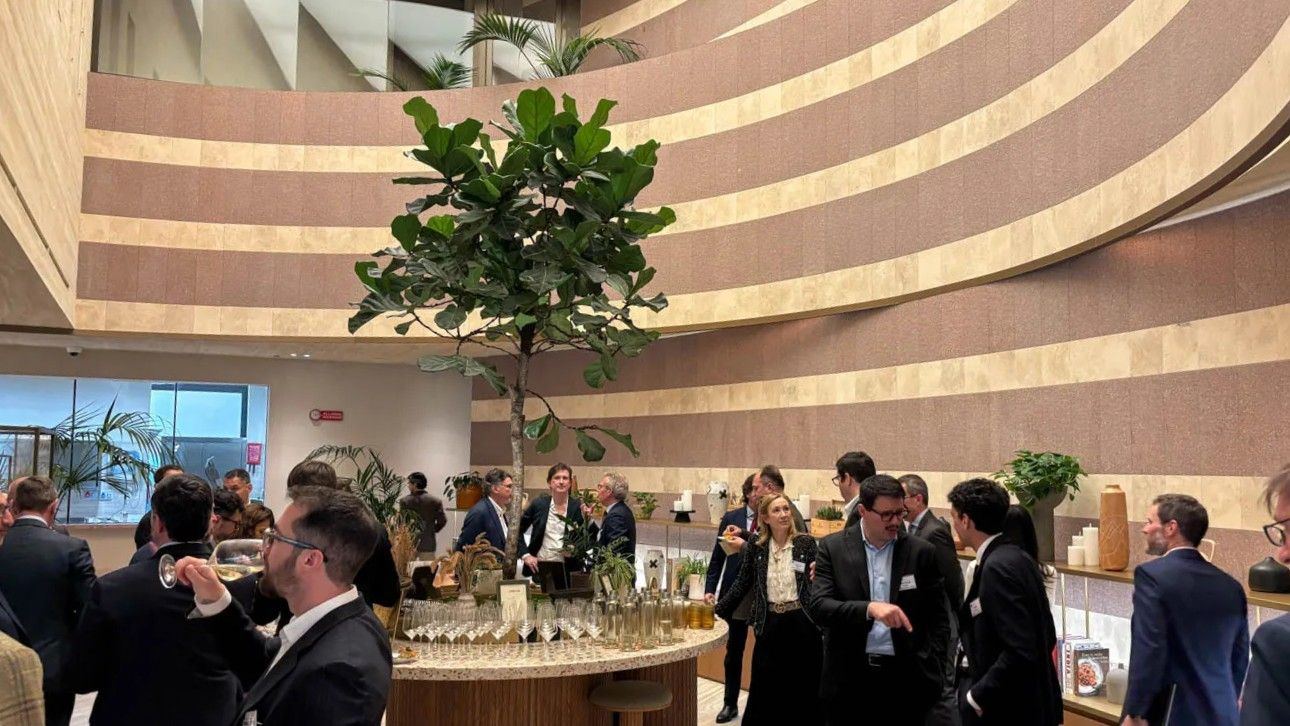
During a GRI Roundtable, market participants highlight that Italy’s luxury hospitality next stage of growth is expected to prioritise quality over quantity. (GRI Institute)
Demand resilience supports premium pricing
Luxury hospitality demand in Italy remains supported by sustained international tourism and the growing presence of affluent travellers seeking culturally rich destinations, enabling operators to maintain elevated pricing and reinforcing the sector’s long-term investment appeal.However, the sustainability of premium pricing is becoming increasingly dependent on the overall visitor experience rather than room quality alone, with luxury travellers expecting seamless accessibility, curated services, and integrated infrastructure that enhances the broader destination offering.
As a result, asset performance is now more closely tied to the strength of the surrounding ecosystem, including transport connectivity, urban planning, and the availability of complementary hospitality and leisure amenities.
Destination development as a central growth strategy
While iconic cities such as Rome and Venice continue to attract consistent investment, increasing focus on secondary and emerging locations is creating opportunities to unlock value through destination-led development rather than standalone asset expansion.Developing new high-end destinations requires more than constructing standalone hotels - long-term success depends on building coherent narratives that combine cultural assets, natural landscapes, and hospitality infrastructure into integrated experiences.
This approach is increasingly viewed as a defining element of future growth across Italy’s luxury hospitality sector, allowing investors to diversify risk and reduce dependency on saturated prime markets, where development constraints and competition are intensifying.
Supply dynamics reflect investor behaviour
The pipeline of luxury hospitality projects in Italy continues to expand, supported by resilient international demand and sustained interest from both institutional and private investors.However, the underlying drivers of new supply are becoming increasingly nuanced, reflecting a market where development activity is shaped not only by financial fundamentals but also by long-term strategic positioning and legacy considerations.
In Italy’s fragmented ownership landscape, high-end hotel assets are frequently acquired by private families and high-net-worth individuals (HNWIs) as prestige holdings or generational investments, rather than purely yield-driven opportunities.
This dynamic can introduce additional complexity into supply patterns, particularly in markets where development momentum is influenced as much by status-driven investment behaviour as by underlying operational demand, raising the potential for localised oversupply in certain destinations.
Consequently, rigorous evaluation of demand fundamentals, competitive landscape, and long-term destination viability is becoming essential to achieving sustainable investment outcomes.
Rather than pursuing large-scale expansion, many investment strategies are shifting toward the development of smaller portfolios of distinctive assets that reinforce each other within a defined geographic or thematic framework.
This portfolio-driven approach enables stronger brand coherence and improves long-term operational resilience, reflecting a broader recognition that luxury hospitality success depends as much on experience design as on physical infrastructure.
Long-term outlook favours disciplined investment
Italy’s luxury hospitality next stage of growth is expected to prioritise quality over quantity. Investment strategies are likely to favour assets that combine strong location fundamentals with integrated destination planning, operational excellence, and differentiated guest experiences.Competitive advantage in this environment will increasingly depend on aligning development decisions with long-term tourism trends and infrastructure capacity, while disciplined capital allocation and strategic positioning are expected to define the most successful projects in the sector.
► Don't miss the Italia GRI 2026 conference on 14th May
These insights were shared during the GRI Roundtable “Italy Luxury & Branded Residences”, co-hosted by Starching, and the discussion sessions “The Capital Case for Branded Residences in Italy”, featuring industry leaders Marcello Cerea (Starching) and Tanya Byls (Tonino Lamborghini Spa), and “Luxury Hospitality in Italy”, featuring contributions from Angelica Corsini (Arsenale Group), Corrado Trabacchi (Orion Capital Managers), Domenico Giusti (Castello), Fabio Valentini (CVHP Capital), and Martina Martino (Belmond Italy).