 GRI Institute
Balancing Boom and Bureaucracy: Portugal GRI 2026 Spotlight Report
Revealing industry leader insights on the structural shifts, capital trends, and operational realities defining the current Portuguese investment cycle
June 26, 2026Real Estate
Written by:Rory Hickman
Executive Summary
Following the high-level discussions at Portugal GRI 2026 in Lisbon, a clear picture emerges of a real estate market caught between exceptional investor demand and severe operational friction. While underlying structural fundamentals remain strong across the living, commercial, and hospitality sectors, execution challenges are mounting.
Deep-seated bureaucratic hurdles, protracted municipal licensing delays, and 40% tender inflation have restricted new supply, driving an intense bifurcation between prime and peripheral assets. Navigating this environment successfully now demands greater operational agility, public-private partnerships, and highly flexible underwriting.
Ahead of Europe GRI 2026 Summer Edition in Paris on 9th-10th September, where industry leaders will gather to continue the conversation, we take a look at the core trends and realities shaping the Portuguese investment landscape.
Deep-seated bureaucratic hurdles, protracted municipal licensing delays, and 40% tender inflation have restricted new supply, driving an intense bifurcation between prime and peripheral assets. Navigating this environment successfully now demands greater operational agility, public-private partnerships, and highly flexible underwriting.
Ahead of Europe GRI 2026 Summer Edition in Paris on 9th-10th September, where industry leaders will gather to continue the conversation, we take a look at the core trends and realities shaping the Portuguese investment landscape.
Key Takeaways
- Robust cross-border investor interest in Portugal remains heavily constrained by deep-seated bureaucratic hurdles, prolonged licensing timelines, and conservative bank financing criteria.
- The living and hospitality sectors are grappling with acute labour shortages and 40% tender inflation, forcing a strategic shift towards public-private partnerships and automated digital operations.
- Commercial sectors are defined by a sharp flight to quality, triggering severe prime office shortages, rapid data centre growth, and a 50% rental surge across core logistics corridors.
► Investing in Portugal
Investor Interest
Portugal's real estate market is experiencing a significant boom, offering relatively low property pricing when compared to similar jurisdictions such as Spain. Cross-border capital is increasingly attracted to the country due to its stable economy, safe-haven status, and beneficial geopolitical and geographic tailwinds.However, international investors must navigate a market where execution takes substantially more time than initially anticipated due to deep-seated bureaucratic hurdles and protracted municipal licensing procedures.
The severe restriction of new supply influx resulting from these licensing delays has left incumbent asset owners heavily insulated, allowing them to capture significant rental uplifts and capital appreciation by refurbishing or revamping existing commercial and residential buildings.
This strong performance among institutional portfolios is heavily anchored by low-basis acquisitions executed during a high-growth period between 2015 and 2019, when entry pricing was lower than in the current environment. Consequently, obtaining local advice is considered essential for navigating these administrative and tax minefields successfully.
Sectoral Sentiments
In the living sector, a middle-class build-to-rent (BTR) segment is emerging in cities such as Porto, utilising innovative industrial and modular construction methods to mitigate execution risks and bypass traditional development constraints.Meanwhile, large-scale mixed-use developments are viewed as the future for suburban hubs, though they face substantial challenges regarding scale, inadequate public transport, and complex exit strategies
Across the commercial sectors, a familiar scenario seen across Europe is playing out in Portugal as a distinct bifurcation emerges in the office market between high-quality, prime city centre assets and lower-quality suburban locations.
The logistics sector is seeing structural demand far outstrip supply, driven by e-commerce, stocking pressures in an inflationary environment, and corporate consolidation trends. This supply shortage has triggered a 50% rental growth over a six-year period in primary corridors, with rents rising from EUR 4 to EUR 6, while the retail sector simultaneously benefits from high consumer spending propensities among local salary earners.
Data centres represent a rapidly growing institutional focus, with demand from cloud computing and artificial intelligence heavily outweighing available infrastructure.
In the hospitality and lifestyle sectors, standalone luxury hotels are increasingly difficult to justify financially, leading to a prevalent model where hotel developments are coupled with branded residences to mitigate risk, secure pre-sales, and support the initial capital stack. Consumer tastes are shifting away from uniform, traditional luxury towards experiential lifestyle concepts, ecotourism, and private, hidden experiences in secondary resort zones.
International Appeal
While the small geographic and population scale of the country makes storytelling and attracting capital to unproven concepts more difficult, this limited scale functions as a distinct competitive advantage for targeting ultra-luxury US consumers.This consumer base is increasingly active, fueled by a historic macroeconomic shift where, for the first time in over a century, more people have migrated out of the US than into it, prompting wealthy citizens to seek currency diversification, stable geopolitical hedges, and second homes abroad.
To sustain this growth, destination management must prioritise quality over quantity - drawing on successful low-volume global models such as those in Costa Rica and Bhutan - to mitigate local pushback against over-tourism.
This is particularly critical as the cautionary regional example of Barcelona demonstrates that localised anti-tourist sentiment often prompts governments to impose rent ceilings, which counterproductively harm the market by defending incumbents rather than resolving fundamental housing supply shortages.
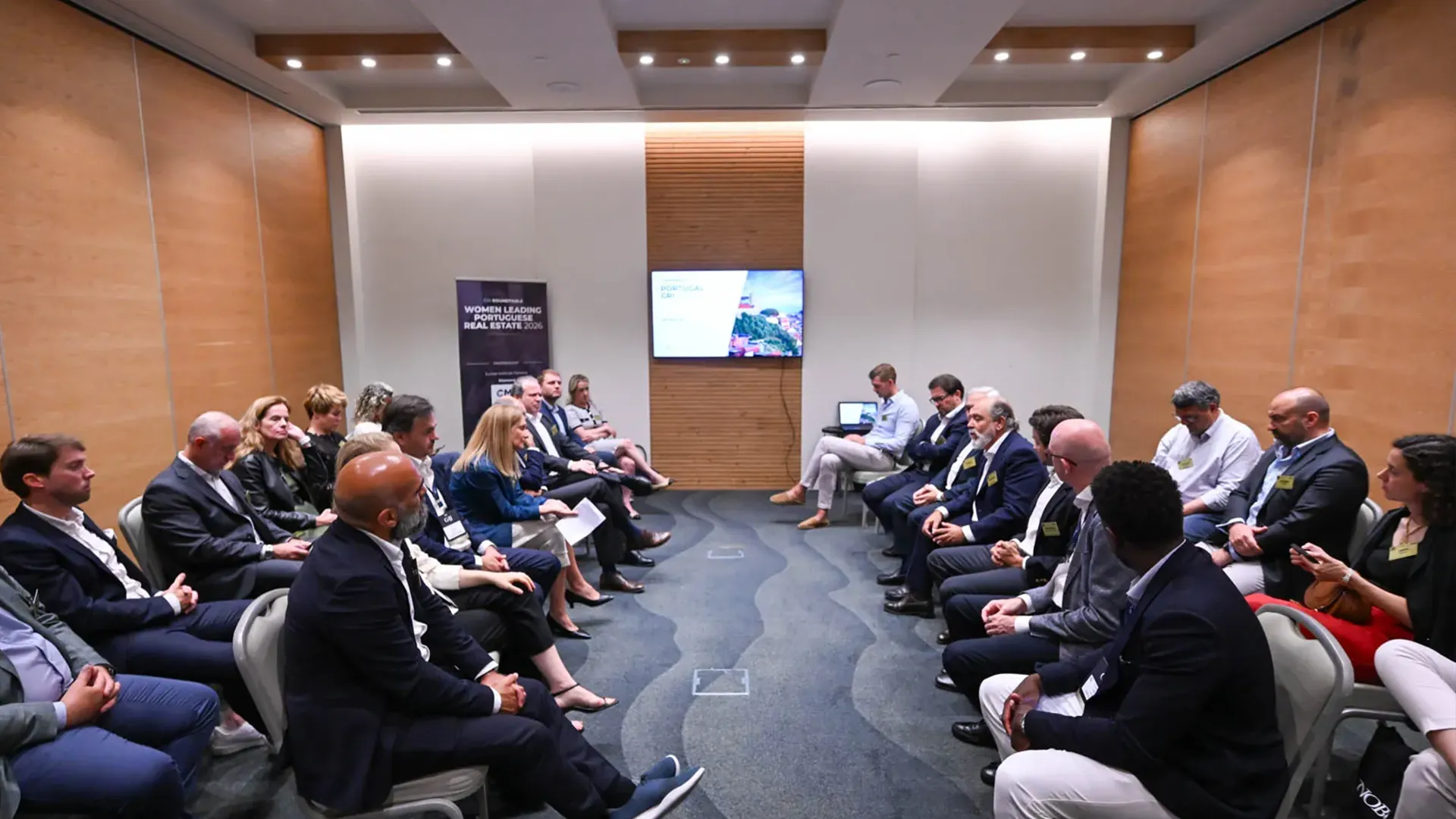
(GRI Institute)
► Living Assets in Portugal
Luxury Residential Risks
The high-end residential build-to-sell (BTS) market in Portugal remains a highly attractive asset class, characterised by rapid off-plan sales in premium regions such as the Algarve. However, the domestic middle-class market faces an underlying economic squeeze and a tightening mortgage landscape, which has slowed down the absorption of final affordable units.Land acquisition costs and restrictive municipal regulations that systematically reduce buildable square metres present substantial upfront hurdles. These challenges are compounded by protracted licensing timelines that frequently stretch from an estimated two years to an actual four years, freezing investor capital and inflating final property prices.
Although residential prices in Portugal’s top cities are relatively less expensive when compared to other European hubs, the market still faces a significant qualitative gap in delivering true global standards of quiet luxury, even as affluent international and domestic buyers display virtually no price sensitivity.
Affordable Housing and Regulation
While BTR frameworks represent the ultimate long-term solution to domestic affordability issues, they are heavily restricted by legacy municipal planning laws that enforce counterproductively large minimum unit sizes, averaging 110 to 120 square metres.To combat legal unpredictability and the frequent shifting of national tax and rent guidelines, institutional investors are increasingly entering public-private partnerships with progressive municipalities. Under these 25-year agreements, the local government guarantees long-term regulatory stability while managing the leasing, maintenance, and subletting of affordable assets, often cross-subsidised by allowing up to 25% of the project to be BTS.
Furthermore, environmental and well-being certifications are becoming mandatory requirements for institutional portfolios, as European banks tie green and social mandates to lower financing rates.
Modular and industrialised construction solutions offer potential for managing smaller living spaces and shared community amenities, but they currently fail to compress timelines enough to offset higher hard costs due to severe local supply chain constraints, a lack of specialised contractor experience, and lingering end-consumer prejudice.
Execution Challenges
The execution of living projects faces severe operational bottlenecks, particularly an acute deficit of skilled construction labour and supervisory engineering staff. Major construction firms are overextending their operational capacities, causing projected timelines of 25 to 30 months to drag out to 40 months, which frequently triggers intense contract litigation.This domestic labour crisis is intensified because skilled Portuguese tradespeople can as mdouble their wages by moving to neighbouring countries such as Spain, while the local workforce faces a critical shortage of affordable accommodation, ultimately driving a heavy reliance on low-skilled foreign labour.
Additionally, global geopolitical conflicts have fuelled severe material price inflation, with volatile commodity costs causing project tender bids to surge by as much as 40%, moving from bulk estimates of EUR 50 million to final offers of EUR 70 million within a six-month window.
On the capital side, domestic banks are exceptionally well-capitalised with robust core ratios, rendering them the most efficient and cost-effective option for construction debt leverage. Conversely, equity financing remains dependent on international investors who provide the required scale for major living platforms while leveraging the on-the-ground knowledge of local partners.

(GRI Institute)
► Mixed-Use: Live, Work, Play
Why Mixed-Use?
Although massive, pure mixed-use developments are rare and difficult to find, they generate superior returns by creating continuous daily and weekly consumer traffic through the commercial synergy of retail, offices, residences, hospitality, and leisure.However, executing these large-scale projects requires managing severe municipal constraints, as local authorities frequently impose heavy restrictions on land use, often prioritising economic activities over much-needed housing. Municipal licensing remains an unbelievable hurdle, with some landmark schemes taking over 20 years to fully secure permissions.
To mitigate these moving targets, institutional funds must strictly underwrite business plans against volatile construction capital expenditure and time variables, frequently opting to bypass projects that require extensive new licensing to avoid losing years in development.
Mixed-Use Success
Successful execution requires a careful blending of residential components to generate immediate BTS revenue with stable income-producing commercial assets.Within the retail ecosystem, investment momentum is heavily focussed on convenience-driven assets including retail parks, neighbourhood supermarkets, pet shops, and opticians.
While prime high-street retail yields have compressed below 4% due to aggressive bidding, secondary shopping centres facing zero localised competition remain highly attractive to income-focussed open-ended funds due to their defensive consumer traffic and near-zero vacancy rates.
In the office market, demand is exceptionally strong for central locations featuring massive floorplates and strict environmental, social, and governance compliance, as international corporate occupiers prioritise carbon-neutral, certified buildings.
Additionally, the logistics sector exhibits robust fundamentals with occupancy rates reaching up to 99% in key hubs.
For high-end luxury and hospitality integrations, co-located hotels serve as vital commercial catalysts that anchor branded residences, enhance community experiences, and drive long-term brand equity, provided developments prioritise regional authenticity and cultural heritage over generic modern designs.
Latin American Links
South American capital, particularly from Brazil and Peru, is increasingly moving across the Atlantic into Iberia due to deep historical, linguistic, and cultural affinities.Portugal presents a distinct structural advantage over Spain, remaining comparatively cheaper as the Spanish real estate market has historically been more expensive over the past 25 years. This pricing gap allows incoming investors to secure high-quality core assets with less market competition and a larger delta for final profitability.
Private family offices that historically favoured low-risk, small-ticket standalone assets, such as neighbourhood supermarkets or high-street units, are shifting their strategies up the risk curve toward large-scale urban regeneration and mixed-use opportunities.
This capital is heavily attracted to the comprehensive refurbishment of historic downtown areas in Lisbon and Porto, which offers an exciting niche for securing prime, long-term investments.

(GRI Institute)
► Hospitality in Portugal
Evolving Demand and Travel Patterns
Geopolitical instabilities across the Eastern Mediterranean and Middle East have triggered a sharp contraction in traveler demand from traditional European source markets, causing capital and consumer interest to redistribute toward safer Western European Mediterranean destinations.Within this landscape, the regional hospitality market is transitioning through a necessary period of normal consolidation and stabilisation, moving past a frantic historical discovery phase.
While revenue per available room (RevPAR) growth has flattened recently in major hubs, the broader macroeconomy supports a stable 2% real gross domestic product expansion. Crucially, sector RevPAR has surged by approximately 40% since 2019, easily outpacing a 20% cumulative inflation rate to manifest genuine economic growth.
Although a fluctuating US dollar and an undervalued British sterling have constrained spending from primary external demand drivers, overall consumer profiles are diversifying as secondary cities attract a resilient mix of domestic and international travelers.
Globally, rising airline costs and broader energy concerns are shifting short-term leisure patterns toward earthbound destinations reachable by car for key source markets such as Germany, Austria, Switzerland, and Benelux, yet vacations have evolved into an inelastic consumer necessity, with travelers opting to economise on internal expenditures rather than cancel holidays entirely.
Hospitality’s Digital Divide
The hospitality industry is experiencing a severe polarisation, dividing into ultra-luxury models and highly automated, tech-enabled operations, which leaves traditional mid-scale establishments economically vulnerable to rising labour and operational costs.Modern digital hospitality operators focus strictly on lean, digitised frameworks that fully automate the back-end guest journey, removing manually handled reservations and on-site receptions to deliver a flawless consumer experience.
This digital approach aligns perfectly with a younger core traveler demographic, averaging 37 years old, who are heavily digitised and actively reject over-priced traditional hotel services, choosing instead to procure food via mobile delivery applications rather than paying EUR 20 for a hotel club sandwich.
To defend market share, tech-forward operators deploy aggressive dynamic pricing algorithms that require recalculation every three to six months to optimise average daily rates and shifting occupancy levels.
Ultimately, these streamlined operations generate highly efficient profit margins of 60% to 62%, vastly outperforming the 40% to 50% margins seen among traditional incumbents - a level of financial outperformance that provides a major competitive advantage when securing property leases from landlords, making digital operators highly resilient against potential increases in value-added tax or localised tourism fees.
Mass-Market Resort Dynamics
For mass-market and standardised holiday operators, profitability remains intrinsically tied to regional seasonality and proximity to international airport infrastructure.Markets offering extended seasons of 10 to 12 months remain highly attractive, drawing a robust pipeline dominated by three-star projects. However, investors face significant physical bottlenecks, specifically a scarcity of beachfront plots featuring a minimum of two to three hectares necessary to build at least 200 rooms.
Intense corporate competition has also driven property asking prices to unfeasible heights, while municipal planning permissions routinely require 12 to 36 months to clear.
Consequently, international players must leverage strong on-the-ground local knowledge and partner with experienced asset managers to navigate emotional family-owned assets and avoid overpaying.
To protect equity over long development cycles, modern resort theses increasingly rely on integrated residential components and second-home rental programs to capitalise on long-term travel trends.
While advanced automation and artificial intelligence will compress transactional backend costs, mid-term living models such as co-living are expanding rapidly to satisfy an increasing social demand for human connection, peer-to-peer networking, and community management among young professionals and digital nomads.

(GRI Institute)
► Commercial Real Estate in Portugal
CRE Market Conditions
The Portuguese commercial real estate market is experiencing a significant boom, offering relatively low property pricing when compared to adjacent jurisdictions.Cross-border capital is heavily drawn to the country due to its stable economy, safe-haven status, and beneficial geopolitical tailwinds. However, international institutional equity has slightly retracted due to rising interest rates, shifting the market profile toward value-add strategies, private wealth aggregators, and opportunistic configurations.
Execution takes substantially longer than initially expected due to deep-seated bureaucratic hurdles, prolonged municipal licensing, and complex tax frameworks. This friction is exacerbated by retroactive or inconsistent regulations, such as a 2% indexation cap on contractual inflation, which dampens market liquidity and compresses capital value protections.
Furthermore, the domestic REIT framework has failed to achieve meaningful scale due to overly restrictive structural details, leaving the market reliant on unlisted corporate vehicles and specialised funds.
On the financial side, local banks are exceptionally well-capitalised with robust core ratios. However, strict anti-money laundering audits require international entities to include a domestic partner on account structures to ensure smooth credit execution.
For development financing, commercial lenders enforce highly conservative criteria, routinely demanding a projected gross internal rate of return of at least 20% to buffer against material cost inflation and project delays.

(GRI Institute)
Offices
The office market is characterised by a profound flight to quality, driving an intense divergence between prime city centre assets and lower-quality suburban locations. Net new supply in central business districts is contracting or negative as obsolete offices are demolished or converted into alternative uses.This supply deficit allows insulated, premium incumbents to capture double-digit rental growth. Conversely, out-of-town peripheral hubs are hindered by inadequate public transport connections, commanding a higher yield premium from investors.
Modern corporate occupiers are aggressively overhauling workspaces, moving away from uniform desks toward collaborative, social layouts, which has compressed fit-out lifecycles to a rapid two-year rotation. This structural shift drives intense tenant demand for rare corporate facilities that provide flexible floorplates of up to 5,000 square metres to handle future technological and workplace requirements.
Beyond this, environmental, social, and governance (ESG) technical specifications and carbon-neutral certificates are heavily scrutinised by international corporations during the site-selection process.

(GRI Institute)
Retail
The retail sector exhibits exceptional operational resilience, insulated by a massive marginal propensity to spend among domestic salary earners.Prime shopping centres across major metropolises are operating at virtually zero vacancy, making it nearly impossible for expanding international brands to secure large spaces inside existing configurations. This baseline congestion has accelerated a structural shift toward localised, convenience-driven ecosystems such as retail parks, street malls, and standalone grocery units.
These retail park formats are expanding rapidly into secondary and tertiary cities, efficiently dominating catchment zones of 50,000 to 60,000 people where standard shopping centre infrastructure is non-existent within a ten-to-fifteen-minute drive.
To maximise land values and balance risk, developers are deploying mixed-use solutions that integrate peripheral commercial space with surrounding infrastructure.
Major global tenants are tracking regional data and online consumer patterns to anchor standalone stores in these regional hubs, frequently resulting in retail projects reaching 100% pre-let capacity well ahead of their completion dates.

(GRI Institute)
Logistics
In the logistics sector, structural demand heavily outstrips available supply, driven by the expansion of e-commerce, localised stocking pressures in an inflationary environment, and corporate consolidation trends.This persistent supply shortage has triggered an extraordinary 50% rental growth over a six-year period in primary logistics corridors, with rents climbing from EUR 4 to EUR 6 per square metre in prime zone-one sectors.
Finding actionable mid-range properties remains highly difficult due to intense market competition, keeping asset pricing elevated and compressing regional cap rates near or below central European benchmarks.
Operationally, energy efficiency represents a critical cost-saving factor for tenants managing refrigerated or specialised logistics footprints.
While compact office structures face layout constraints that limit renewable energy retrofits, massive logistics developments with continuous 10,000-to-20,000 square metre rooftops are ideally positioned to deploy scaled solar panel arrays, directly decreasing overall occupier operational expenditures.
Data Centres
Data centres represent a rapidly growing institutional asset class within the domestic commercial infrastructure.Driven directly by the explosive growth of cloud computing architecture and artificial intelligence processing requirements, demand for these specialised digital facilities is heavily outstripping the available domestic infrastructure supply.
To capitalise on these powerful macroeconomic tailwinds, major regional real estate trusts are actively expanding their development pipelines, launching large-scale data centre projects engineered to scale up processing capabilities over multi-year horizons.
These insights were shared during industry leader discussions at Portugal GRI 2026 with additional takeaways from Ibero GRI 2026.
Check out all upcoming GRI Institute Europe gatherings here.