 GRI Institute
Spain’s Growth-Regulation Tension: España GRI 2026 Spotlight Report
Exclusive insights on the strategic evolution of Spanish real estate, including operational excellence, alternative liquidity, and the flight to quality
May 27, 2026Real Estate
Written by:Rory Hickman
Executive Summary
Spain’s real estate market is moving through a period of distinct dualism. On one side sits a structural investment case that is increasingly difficult to ignore - characterised by GDP growth exceeding 2%, a population expanding to almost 50 million, and a growing reputation as a "safe haven" for pan-European capital. On the other sits an environment shaped by regulatory uncertainty, political noise regarding rent controls, and a selective debt market where traditional banks have yet to fully reopen.
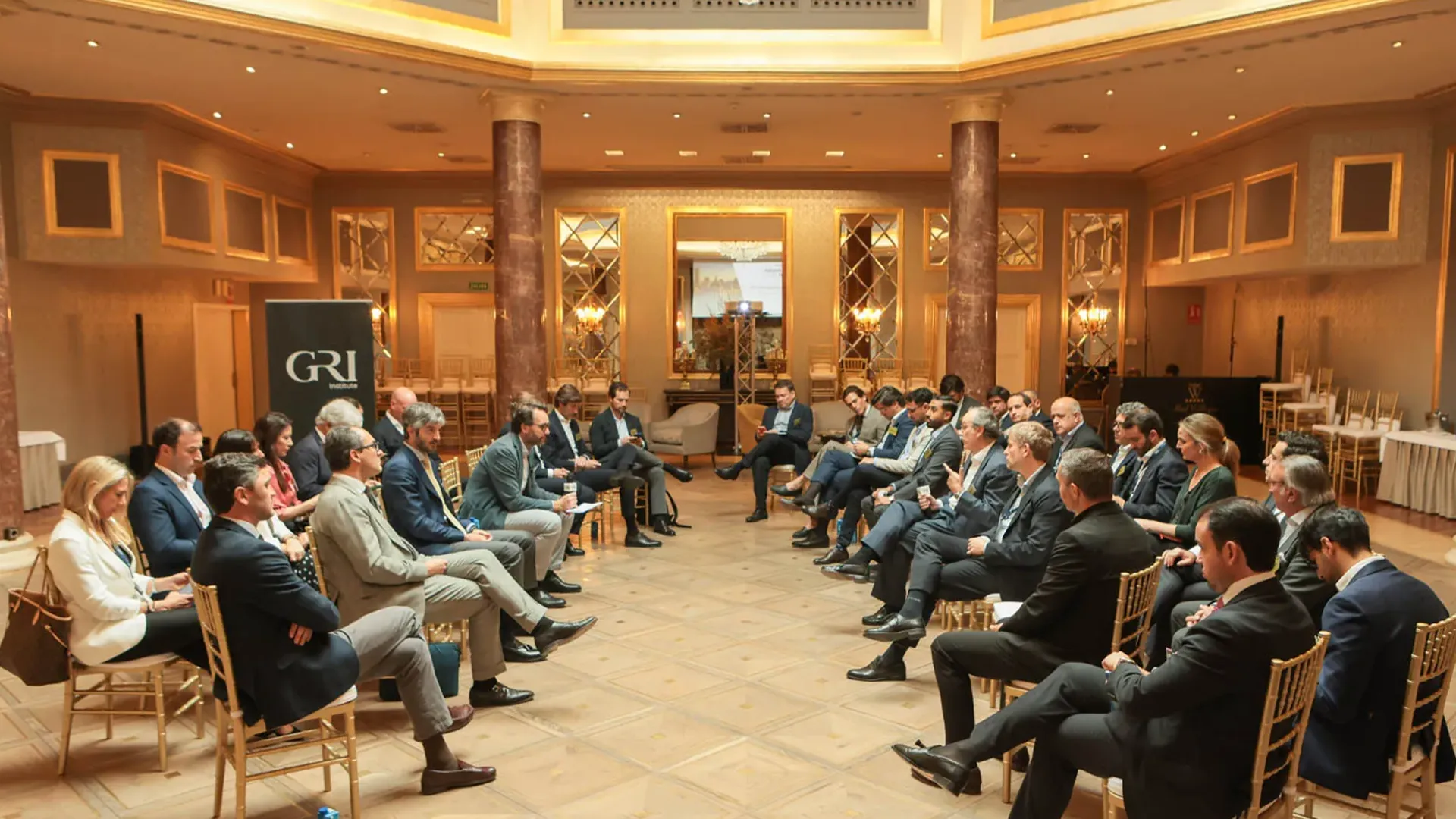
This tension was central to the insights shared at España GRI 2026 in Madrid, where top investors, developers, and lenders gathered to deconstruct the risks and rewards of the Iberian landscape. What emerges is a high-conviction outlook for the living, logistics, and luxury hospitality sectors, provided sponsors can solve for operational complexity and navigate the "flight to quality" currently defining the office and data centre markets.
Ahead of Europe GRI 2026 Summer Edition on 9th-10th September in Paris, which will serve as the primary venue to continue the conversation, we take a look at the trends, hurdles, and capital shifts defining the market today.
This tension was central to the insights shared at España GRI 2026 in Madrid, where top investors, developers, and lenders gathered to deconstruct the risks and rewards of the Iberian landscape. What emerges is a high-conviction outlook for the living, logistics, and luxury hospitality sectors, provided sponsors can solve for operational complexity and navigate the "flight to quality" currently defining the office and data centre markets.
Ahead of Europe GRI 2026 Summer Edition on 9th-10th September in Paris, which will serve as the primary venue to continue the conversation, we take a look at the trends, hurdles, and capital shifts defining the market today.
Key Takeaways
- Spain is increasingly regarded as a defensive safe haven for pan-European capital, supported by resilient GDP growth and a rapidly professionalising alternative debt market.
- Acute supply shortages and rising land costs are driving high conviction in the living sectors, with a growing focus on institutional BTR models and granular exit strategies.
- A definitive flight to quality is creating a sharp market bifurcation, with demand concentrated in tech-enabled luxury hospitality, ESG-compliant offices, and automated logistics hubs.
Pan-European Investment
The Spanish economy currently provides a robust defensive investment environment, characterised by GDP growth exceeding 2% while much of Europe faces stagnation or potential recession.This economic resilience is supported by significant demographic trends, including a population that has grown to 49.5 million inhabitants, creating a stable foundation for long-term demand across all real estate sectors.
Although international investors have historically requested a higher risk premium for Spain, the market has become increasingly institutionalised, transparent, and integrated into pan-European capital allocation strategies.
Consequently, many funds remain underweighted in this geography compared to the UK, Germany, or France, presenting opportunities to capture returns in a market that is less crowded and offers a more favourable risk-adjusted profile.
Demand is particularly concentrated in the living sectors, where acute supply shortages and shifting demographics fuel high conviction for housing, student accommodation, and flexible living models. Logistics also remains a high-conviction asset class, particularly in major hubs such as Madrid and Barcelona that have effectively absorbed the structural shifts of e-commerce.
In the hospitality sector, there is a clear trend toward luxury and ultra-luxury developments, with branded residences often commanding price premiums of 35% to 40%. These high-end projects are increasingly focusing on lifestyle ecosystems that integrate accommodation with premium food and beverage services, allowing some destinations to achieve average daily rates exceeding EUR 1,000 even in secondary cities or more remote coastal areas.
Despite this optimistic outlook, political noise and regulatory uncertainty remain primary concerns, particularly regarding rent controls and housing legislation that have previously restricted stock in certain regions. There is a growing consensus that the only viable solution to the current housing crisis is to increase supply through public-private partnerships rather than imposing price caps, which often deter long-term investment.
The current market environment is also marked by a scarcity of pure core institutional capital, leading to a rise in activity from value-add players, family offices, and owner-operators who prioritise operational excellence over yield compression.
These investors are focusing on strategic CapEx programmes, efficient management platforms, and niche segments such as senior living, though the latter faces unique cultural hurdles and longer ramp-up periods than traditional residential products.
Debt & Finance
Spain is currently being re-evaluated by international capital as a safe haven, marking a dramatic shift from its status during previous financial crises. While traditional bank lending remains selective and has not fully reopened, the alternative debt market is young and rapidly professionalising, with some estimates suggesting it could double in size annually.This growth is supported by Spain's high level of transparency and internal capitalisation compared to other continental European markets. Although geopolitical pressures and local political shifts introduce uncertainty, the current window for deployment is viewed positively, particularly as high liquidity provides comfort for investors looking to enter or exit the market.
New lending activity is increasingly moving beyond core assets into operationally intensive sectors such as hospitality, self-storage, and data centres. While prime offices within major hubs including the M30 remain financeable, assets in peripheral locations are often viewed as unviable.
For alternative lenders, the reputation and deep pockets of a sponsor are critical conditions for entry, as they often finance value-creation stages that banks avoid due to higher leverage requirements or complex execution risks. The focus is predominantly on the exit strategy, with repayment typically secured through the transition to a core bank loan or an orderly sale once an asset is stabilised.
Refinancing has emerged as a primary exit route as core capital for acquisitions has dried up due to interest rate uncertainty. A significant trend in the market is the rise of back-leverage, with a growing number of international providers quote rates below 2%, enabling debt funds to be more competitive on pricing for large tickets.
However, this aggressive competition has led to tighter margins and concerns regarding the sustainability of some greenfield development financing. To mitigate the risks of slow local legal systems, many institutional lenders now mandate complex security structures, such as "double Luxco" pledges, to ensure efficient enforcement in the event of a default.
(GRI Institute)
Residential Build-to-Sell
Spain's build-to-sell (BTS) market is currently underpinned by strong fundamental demand driven by demographic shifts, immigration, and significant social changes.However, a persistent shortage of approximately 500,000 housing units per year has led to a dramatic scarcity of land, particularly within major urban peripheries, which is driving up prices. In some prime areas, land costs now represent as much as 60% of total development expenses, forcing developers to look toward gentrifying neighbourhoods, rural areas, or new locations to maintain feasible price points.
While middle-class buyers remain active, they are largely individuals selling existing properties to upgrade, as first-time buyers are increasingly priced out by high savings requirements and a lack of government incentives compared to neighbouring Portugal.
Product innovation is increasingly focused on sustainability and industrialised construction methods, such as timber structures, which have transitioned from niche concepts to fully bankable assets in recent years. High-efficiency buildings can offer substantial monthly energy savings, with some modern units seeing average electricity bills as low as EUR 15, although environmental credentials currently resonate more with institutional investors than the general public.
Beyond energy efficiency, design priorities have shifted post-pandemic to favour outdoor terraces, balconies, and flexible common areas. Co-working spaces within residential buildings are highly utilised due to the rise of remote work, whereas traditional amenities such as gyms often suffer from lower engagement, highlighting a need for more professionalised long-term management of communal facilities.
The financial landscape for residential development is marked by conservative lending standards and a unique cultural profile of buyers. Developers typically secure senior bank financing only after reaching pre-sale ratios of approximately 60%, with interest rates currently hovering between 4.5% and 5%. For end-users, mortgage rates have risen to nearly 4% recently, further straining affordability.
Despite this, Spanish buyers retain a deep cultural preference for investing savings into bricks and mortar, insurance products, and personal banking funds, often opting for low leverage or even cash purchases for transactions up to EUR 400,000. Regional variations in transaction taxes, such as the 6% rate in Madrid compared to 10% in Catalonia, also play a significant role in determining market liquidity and investment appeal.
Residential Built-to-Rent
The Spanish build-to-rent sector (BTR) is increasingly viewed as a safe haven for international capital, particularly as political volatility in the US and economic distress in Germany prompt a reallocation of funds toward Southern Europe.Market fundamentals remain exceptionally robust, driven by shrinking household sizes and a young population that faces significant barriers to homeownership due to high equity requirements. While core institutional capital has become more selective - now demanding yields in the 4.5% to 5% range compared to historical lows of 3% - global interest from Asia, the Middle East, and North America continues to support the sector.
A significant shift in exit strategies has emerged through the privatisation of portfolios, where institutional owners sell units granularly to retail investors or end-users rather than as bulk standing assets.
This individual sales approach can generate an upside of 22% to 28% over institutional valuations, particularly for units priced under EUR 200,000 that offer attractive gross yields for individual purchasers. Consequently, many large developers are transitioning toward asset-light manager models and joint ventures, focusing on generating dividends and fees through third-party management rather than pursuing high-risk land acquisitions.
Regulatory and political risks remain the primary concerns for long-term investors, with regional disparities in rent controls and "vulnerability" decrees creating substantial reputational and operational challenges.
In markets such as Catalonia, perceived instability and interventionist policies are viewed as irreversible hurdles that limit liquidity, often forcing capital to favour the more stable regulatory frameworks found in Madrid.
To mitigate these risks, major landlords have implemented highly sophisticated tenant screening processes, resulting in application rejection rates as high as 80%, while also establishing dedicated social departments and payment plans to manage vulnerable tenants and reduce reputational noise.
Hospitality
Hospitality operations are increasingly dominated by technology-enabled models that combine hotel and serviced apartment features with short-term rental flexibility. In the post-pandemic landscape, technology has transitioned from a competitive advantage to a matter of survival, allowing operators to offset labour cost inflation through the automation of 85% to 90% of the reservation lifecycle.By integrating proprietary back-office systems with outsourced maintenance and cleaning services, firms can manage international portfolios with minimal on-site teams, focusing on operational efficiency and high guest review ratings. This shift enables higher-paid, more specialised roles that leverage data to anticipate preventive maintenance and optimise resources, rather than relying on traditional, staff-intensive structures.
The guest journey is evolving away from administrative friction toward a seamless, experience-driven model where digital check-ins and verified identities are considered basic commodities. Operators are increasingly using automation to eliminate "boring" reception tasks, such as passport scanning and manual credit card processing, allowing staff to transition into experience-focused roles.
While third-party booking platforms often restrict direct communication, operators are finding technical workarounds, such as automated messaging and direct app integration, to reclaim the guest relationship and provide upselling opportunities.
Furthermore, the emergence of sophisticated AI agents has transformed customer service, enabling automated systems to handle complex and sensitive guest interactions with a degree of accuracy that often rivals traditional front-desk support.
Financial alignment between owners and operators is becoming more critical, particularly within management agreements where technology serves as a primary driver for cost reduction and profit growth.
Sustainability and ESG standards have also become fundamental prerequisites, as major multinational corporations increasingly require green certifications for corporate bookings. While complying with these standards can increase asset value by up to 20% upon exit, implementation remains challenging when automated environmental controls conflict with guest preferences for manual comfort.
Ultimately, the industry views sustainability as being in a similar phase to revenue management twenty years ago - an initially misunderstood cost that is rapidly becoming an indispensable, value-adding standard for all hospitality assets.

(GRI Institute)
Offices
The office market in Spain remains remarkably resilient, with vacancy rates in Central Business Districts (CBDs) staying exceptionally low-often falling below 2% in prime locations. Rental growth is robust, with prime rates reaching EUR 41 per square metre in Madrid and EUR 31 in Barcelona, driven by a definitive "flight to quality".Tenants are increasingly prioritising the specific functionality, technological integration, and quality of space over mere square footage as they seek to support complex business plans.
While Class A assets with high sustainability credentials see intense demand, a clear bifurcation is emerging, leaving older, lower-quality buildings in peripheral areas with poor connections to face significant vacancy or potential change-of-use scenarios.
Investment strategies are currently varied, with some players focusing on value-add refurbishments in urban centres while others target long-term income by following established occupiers to peripheral locations.
There is a concerted effort by many corporations to bring staff back to the office to address productivity concerns associated with remote work, leading to a redesign of spaces to be more collaborative and amenity-rich.
The continued rise of AI is expected to further evolve the landscape, shifting demand toward sophisticated, technology-connected ecosystems and "war rooms" rather than isolated workstations.
Alternative sectors, particularly education, are providing new sources of take-up as universities and master's programmes seek to establish comprehensive urban campuses within traditional office structures.
ESG has transitioned from an era of perceived over-regulation to becoming a fundamental prerequisite for attracting top-tier international tenants and institutional capital. In prime locations, sustainability credentials are no longer just a "tick-box" exercise but a driver of rent increases and capital preservation, with Net Zero buildings seeing significant interest.
Financing remains accessible for performing assets through local banks at moderate leverage levels, typically around 55%, though alternative lenders are utilised for more complex or over-rented scenarios.
Overall, Iberia is currently regarded as one of the most attractive regions for investment in Europe, benefiting from population growth, stability, and a growing reputation as a global talent hub that continues to draw attention from international markets.
Retail
The retail sector across Southern Europe, particularly in Spain and Portugal, is experiencing a resurgence in liquidity after a period of relative stagnation. Specialist investors and opportunistic value-add players have been key drivers of recent activity, taking advantage of repricing to acquire schemes that still benefit from strong regional consumer spending habits.Unlike Northern European markets where consumer interest in malls has waned, the social culture in Iberia continues to support shopping centres as primary destinations for both retail and leisure. Large-scale portfolio transactions are expected to set new benchmarks, potentially drawing in more cautious institutional core and core-plus investors, such as pension funds, provided assets meet rigorous ESG standards and modern CAPEX requirements.
Total returns for Spanish shopping centres have reached double digits in recent years, though the market remains bifurcated between prime schemes and a saturated second tier.
Prime high street units and shopping centres are increasingly viewed as separate asset classes with distinct valuation drivers. High street investments in major cities - Madrid and Barcelona especially - often function as long-term capital preservation or "generational wealth building" tools for luxury groups and private buyers, with pricing frequently dictated by flagship prestige rather than traditional yield models.
In contrast, shopping centres are prized for their active asset management potential, allowing owners to control the environment, drive footfall, and constantly refresh the tenant mix to add value.
While some mega-malls have historically displaced high street retail in colder climates, Spanish city centres remain highly competitive due to their aesthetic appeal and walkable nature, making it difficult for isolated malls to capture high-end luxury tenants without a highly differentiated destination strategy.
Structural drivers such as tourism, immigration, and local consumption remain vital for sustaining long-term retail performance. Although record tourism figures provide a significant seasonal boost, particularly in coastal and destination malls, sustainable growth is heavily dependent on local consumption and well-managed immigration, which provides both a stable workforce and a younger demographic.
To maximise footfall, developers are increasingly turning to mixed-use models that integrate offices, residential units, and healthcare facilities to ensure consistent weekday traffic and longer "dwell times". Technology also plays an essential role in modern operations, with AI and sensory data used to profile consumer behaviour, optimise maintenance, and bridge the gap between digital marketing and the physical shopping experience.
Mixed-Use Opportunities
Mixed-use developments in Spain are transitioning from traditional single-use models toward more complex, hybrid structures that integrate offices, retail, and hospitality. Success in this segment relies heavily on flexible urban zoning, as rigid regulations often hinder the ability to adapt to changing occupier needs or to attract institutional investors.There is a growing trend of repurposing established but aging assets, such as retail centres from the 1980s, into multi-functional hubs that include residential units, student housing, and healthcare facilities. This strategy requires a careful balance between designing for specific technical targets and maintaining the flexibility needed to ensure the asset remains liquid and relevant in the long-term.
The operational complexity of these developments demands a higher level of cross-disciplinary expertise to navigate varied technical regulations, such as fire safety, insulation, and natural light requirements for different uses.
While mixed-use projects enhance urban vitality and create "city-within-a-city" environments near major transit hubs, they can simultaneously complicate exit strategies. Institutional buyers often operate under sector-specific mandates and may be reluctant to enter condominium structures or manage diverse tenant bases, potentially narrowing the pool of bidders compared to single-use assets.
Consequently, developers must weigh the higher potential returns of hybrid models against the liquidity challenges and management intensity associated with multi-sector portfolios.
Spain is currently perceived as a resilient market and a safe haven for international capital, benefiting from favourable tailwinds in sectors such as tourism and logistics. Private debt has become a vital component of the capital stack, particularly for financing value-creation phases where traditional banks may lack the flexibility to address construction or lease-up risks.
However, the proliferation of back-leverage providers is intensifying competition and driving more aggressive pricing structures. While this liquidity facilitates faster deal execution and higher leverage for sponsors, it also narrows the margin for error and necessitates a more rigorous focus on the track record of the sponsor and the fundamental quality of the underlying asset.

(GRI Institute)
Logistics
The Spanish logistics market is currently experiencing significant growth, particularly in secondary hubs such as Zaragoza and Castilla-La Mancha, where administrative willingness and faster permitting processes contrast with the 75% land protection and six-year development timelines common in Madrid and Barcelona.While prime locations remain highly sought after, the scarcity of industrial land in urban centres is pushing major players toward peripheral areas and economic corridors.
A similar trend is visible in Portugal, where developments are moving closer to the Spanish border to leverage highway access and maritime ports, while in emerging markets such as Mexico, logistics potential is currently limited by the government's inability to provide sufficient power infrastructure.
Demand is increasingly concentrated in high-intensity sectors such as cold storage, pharmaceuticals, and a burgeoning defence industry focused on drones and advanced engineering. This evolution is driving a radical change in technical specifications, with standard warehouse heights rising from 12 metres to 20 or even 25 metres to accommodate large-scale automation and robotics.
These advancements allow for greater storage density and operational efficiency, although they introduce new licensing complexities and require significant power commitments that often put the logistics industry in direct competition with the renewable energy sector for available land.
Although speculative development accounts for approximately 70% to 80% of current activity, there is a clear preference for build-to-suit projects that align with the precise operational requirements of end-users.
Investors are cautioned against hyper-specific designs for major global retailers, as these massive facilities can become "non-financial" assets if a tenant decides to vacate, leaving the owner with a building that has no alternative use.
The financing landscape remains robust, with established players accessing traditional bank debt while alternative lenders bridge the gap for value-add stages, Greenfield projects, and smaller newcomers who require more flexible terms and higher risk tolerance than institutional banks.
Data Centres
The Spanish data centre market is undergoing a significant regulatory transition following the 2026 decree, which introduced upfront reservation payments to structure grid access and eliminate speculative "land banking". This shift is designed to bring discipline to the sector, ensuring that power is allocated to serious developers rather than parties merely holding land to profit from electrical capacity.By requiring projects to be electrified within a three-year term, the region is aligning itself with established Tier 1 markets such as France and Ireland, where similar discipline has been a standard for years.
This new clarity allows public administrations to focus limited resources on high-impact strategic projects while fostering closer public-private cooperation to resolve infrastructure challenges related to energy and water consumption.
Demand in the sector is increasingly bifurcated between massive 200 MW facilities for AI training and smaller 10 to 20 MW facilities located near urban centres for AI inference. Technical requirements are shifting rapidly toward direct liquid cooling (DLC) to accommodate the extreme density of high-performance chips, though retrofitting older air-cooled facilities remains prohibitively complex and expensive.
Modern developments are prioritising future-proof designs that include larger halls and flexible infrastructure to allow for the eventual transition back to traditional cooling if needed; however, this flexibility adds approximately 15% to total construction costs.
Additionally, while Spain remains competitive due to favourable energy prices, long-term concerns persist regarding the reliance on renewable energy strategies that lack stable baseload capacity without substantial investment in battery storage.
Investment strategies in the region are heavily reliant on speculative development, as hyperscale tenants and NeoCloud providers typically do not sign contracts until construction has visibly commenced, and major geopolitical risks - particularly potential supply chain disruptions for GPUs manufactured in Taiwan - remain a primary concern for the hardware side of the industry.
Spain continues to be viewed as a secondary market compared to hubs in Germany or France, yet it remains highly attractive for delocalised demand due to its connectivity, time-to-market visibility, and established cloud regions in Madrid, Barcelona, and Zaragoza.
Meanwhile, the broader Iberian market is bolstered by Portugal's emerging role, which offers unique connectivity to South America - particularly Brazil - and Africa to complement the regional digital ecosystem.
► Don’t miss our upcoming AI & Real Estate and Data Centres in Europe virtual roundtables
Outlook
The long-term horizon for Spanish real estate suggests a market maturing beyond its historical role as a cyclical recovery play and into a permanent, institutional heavyweight on the European stage.Success in the coming years will hinge on the sector’s ability to synchronise its rapid technological pivot-leveraging AI-driven infrastructure and automated hospitality-with a political landscape that remains somewhat hesitant to fully embrace supply-side solutions.
As Iberia cements its status as a global talent hub and a vital link in the digital supply chain, the future belongs to those who can look past the immediate regulatory static to build the sophisticated, large-scale, and tech-forward ecosystems that a modernised workforce and a globalised capital pool increasingly demand.
► Don’t miss Europe GRI 2026 Summer Edition on 9th-10th September in Paris
These insights were shared during the discussions at España GRI 2026.