 GRI Institute
Execution is the New Alpha: Value-add and mixed-use strategies in Spain's property market
Discover how industry leaders are navigating inflated entry prices through alternative assets, public-private partnerships, and flexible financing solutions
April 8, 2026Real Estate
Written by:Rory Hickman
Executive Summary
Spain's real estate market is moving through a pivotal transition. On one side sits a structural investment case driven by persistent housing shortages and strong tourism. On the other sits an execution environment complicated by elevated land prices, rising construction costs, and severe bureaucratic friction, forcing investors to reassess traditional models.
These shifting dynamics defined discussions among top industry leaders at the GRI Institute's Spanish Value-Add & Mixed-Use Investments roundtable gathering in Madrid.
What emerged is a market where capital remains abundant but highly selective, increasingly pivoting towards alternative asset classes, infrastructure-style affordable housing concessions, and flexible alternative lending.
As the industry looks ahead, the conversation will continue at our upcoming Madrid-based events; GRI Living Assets Southern Europe 2026 on 29th April, including site visits; and España GRI 2026 on the 30th. In this new phase, success will depend less on market timing and far more on pricing discipline, risk management, and precise execution.
These shifting dynamics defined discussions among top industry leaders at the GRI Institute's Spanish Value-Add & Mixed-Use Investments roundtable gathering in Madrid.
What emerged is a market where capital remains abundant but highly selective, increasingly pivoting towards alternative asset classes, infrastructure-style affordable housing concessions, and flexible alternative lending.
As the industry looks ahead, the conversation will continue at our upcoming Madrid-based events; GRI Living Assets Southern Europe 2026 on 29th April, including site visits; and España GRI 2026 on the 30th. In this new phase, success will depend less on market timing and far more on pricing discipline, risk management, and precise execution.
Key Takeaways
- Value creation in the Spanish property market now depends on precise execution, risk management, and operational discipline rather than market timing.
- Investors are pivoting from traditional models towards alternative asset classes, infrastructure-style affordable housing, and tertiary-use conversions.
- Abundant but highly selective capital is driving the growth of flexible alternative lenders capable of navigating complex, early-stage project risks.
From Growth to Execution
Spain's real estate market is entering a new phase defined less by expansion and more by discipline, particularly in Madrid, which was selected as the number one European city for investment in the recent GRI Barometer results.Rising land prices, escalating construction costs, and higher interest rates are reshaping investment strategies, forcing developers and capital providers to reassess traditional models and adopt more selective approaches to deployment.
Despite these pressures, capital availability remains substantial. The key constraint today is not liquidity, but the scarcity of projects capable of delivering appropriate risk-adjusted returns.
At the same time, macroeconomic and geopolitical instability continue to shape investor sentiment, with some capital exploring alternative regions, including the Middle East, in search of diversification.
Against this backdrop, value creation is increasingly tied to execution, risk management, and strategic positioning rather than market timing alone.
BTR Scalability Challenges
Traditional build-to-rent (BTR) models have become increasingly difficult to execute under current market conditions. The sharp rise in land costs, combined with higher construction expenses and interest rate concerns, has significantly reduced profitability margins.In addition, the availability of large development plots has become more limited, further restricting opportunities to scale traditional rental schemes.
The investment logic that once supported BTR portfolios has also shifted. Yield compression, previously relied upon as a key exit strategy, has not materialised as expected, leading some portfolio owners to sell individual assets rather than exiting portfolios in bulk, while others are transferring the final margin to third-party investors.
Affordable Housing as Infrastructure
In response, attention has shifted towards affordable housing delivered through concession-based frameworks. These models typically rely on public-private collaboration and differ fundamentally from free-market rental developments.Affordable housing concessions are increasingly viewed as infrastructure-style investments rather than traditional real estate assets.
While conventional real estate capital often targets return cycles of five to seven years, infrastructure capital is structured to remain invested for 25, 50, or even 75 years. This longer-term perspective allows returns to accumulate through operational performance rather than speculative exit pricing.
Public authorities have also refined procurement processes over time, improving tender structures and encouraging broader participation. Importantly, profitability remains a prerequisite for attracting private-sector involvement, as without sufficient returns, capital simply does not enter the market.
Most funding directed towards affordable housing concessions remains international, highlighting the continued reliance on foreign capital to address structural housing shortages.
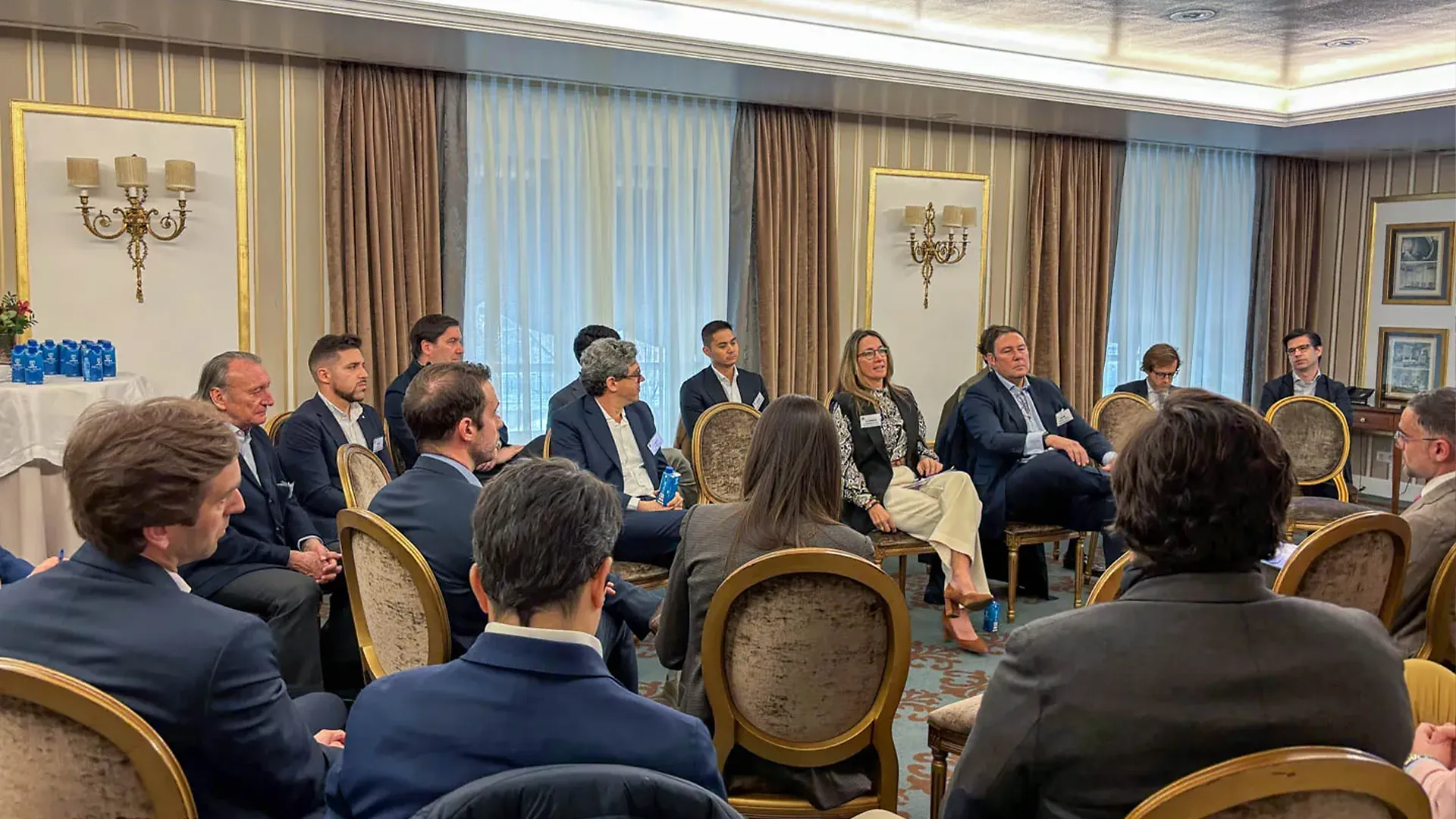
Top industry leaders discussed the outlook for Spain’s real estate markets at the Spanish Value-Add & Mixed-Use Investments roundtable in Madrid. (GRI Institute)
Luxury Resi Remains Resilient
The luxury residential market continues to attract interest, although clear signs of moderation are emerging. Absorption periods are lengthening, and in certain prime locations, time-to-sell has increased noticeably.A central challenge lies in pricing discipline, with entry pricing becoming the most significant risk factor in luxury development. Many property owners are attempting to sell assets at premium levels regardless of quality, location specifics, or refurbishment requirements.
In several cases, assets requiring full refurbishment have been marketed at extremely high prices per square metre, effectively equating the purchase cost to raw land acquisition. Such pricing structures make profitable exits increasingly difficult, particularly when factoring in financing costs, refurbishment expenses, and investor returns.
Despite these pressures, demand remains strong for well-executed luxury assets, as high-quality developments with strong layouts, premium amenities, and unique characteristics continue to command significant attention, while ultra-prime assets - particularly those offering exclusivity and superior design - retain their resilience.
However, the widening gap between acquisition pricing and realistic end-user demand is becoming a defining factor in determining project viability.
Urban Regeneration: Upside vs Risk
Urban regeneration remains one of the most compelling long-term strategies for value creation, offering the potential to unlock significant land value through transformation and redevelopment.Large-scale regeneration initiatives such as Madrid Nuevo Norte can generate substantial returns, particularly when land positions are secured early in the development cycle. In some cases, long-held land assets have demonstrated the capacity to multiply in value several times over as urban frameworks evolve.
However, these projects carry considerable risk. Bureaucratic complexity remains one of the primary obstacles to execution, since urban planning processes often involve multiple layers of government, lengthy approval cycles, and the possibility of legal challenges from environmental groups or other stakeholders.
Planning timelines can extend significantly beyond initial expectations. In some instances, delays of several years have occurred, creating uncertainty that complicates financing and investor alignment.
For many investors, timeline certainty is essential. Without clear development schedules, capital deployment becomes more difficult to justify, regardless of long-term upside potential.
Evolving Financing Structures
Financing structures across Spain's real estate market are evolving in response to increased complexity and risk sensitivity.Alternative lenders have emerged as a critical component of the capital ecosystem, providing flexible funding solutions across the capital stack, ranging from senior loans to equity positions. Their decision-making processes are typically faster and more adaptable than those of traditional banks.
In many cases, alternative lenders are willing to assume earlier-stage risks, including planning uncertainty and development exposure, particularly when supported by strong business plans and experienced sponsors.
Traditional banks, by contrast, remain more conservative in their lending approach. They generally enter projects later in the lifecycle, once building permits are secured, sales programmes are underway, and development risks have been reduced.
This shift in financing dynamics has also contributed to greater professionalism across the sector. Business plans have become more detailed and financially structured, reflecting increased scrutiny from lenders and investors alike.
However, divergent views remain regarding capital availability. Some industry leaders anticipate a slowdown in deployment as inflation and geopolitical uncertainty increase perceived risk. Others report an abundance of capital actively seeking opportunities, highlighting the persistent mismatch between available funding and suitable investment products.

Madrid was selected as the number one city for investment by industry leaders in the recent GRI Barometer, continuing to attract capital despite a number of challenges being faced. (Unsplash)
Alternative Living and Operational Assets
Alongside traditional residential sectors, alternative asset classes are gaining increasing attention from investors seeking diversified income streams, as seen in their number two position behind the residential sector in the latest GRI Barometer.Operational real estate segments such as student housing, hospitality-linked residences, and flexible living formats are being explored as viable growth areas. These models respond to evolving lifestyle patterns and demographic shifts, particularly in urban environments where conventional residential supply remains constrained.
Flexibility in usage has also become a defining characteristic of modern development strategies. In several cases, projects have been structured to accommodate shifting demand patterns across residential, hospitality, and mixed-use environments.
This diversification reflects a broader trend towards operational assets that generate recurring income rather than relying solely on capital appreciation.
Tourism, Hospitality, and Over-Conversion Risk
Tourism continues to play a central role in Spain's real estate landscape, driving demand for hospitality and short-stay accommodation.However, the expansion of tourism-linked residential conversions presents a growing policy challenge. Converting residential units into short-term rental formats risks reducing long-term housing supply, exacerbating affordability challenges and increasing social tension.
As a result, greater emphasis is being placed on converting tertiary-use buildings, such as office assets, into hospitality or serviced accommodation formats. This approach allows cities to expand tourism infrastructure without removing residential stock from the market.
Balancing tourism growth with housing availability is becoming an increasingly important consideration in long-term urban planning strategies.
Execution Capability Drives Value
Perhaps the most significant shift in Spain's value-add landscape is the growing importance of execution capability as the central determinant of success.In previous cycles, profitability often relied heavily on favourable acquisition pricing or rapid market appreciation. Today, value creation depends far more on operational excellence, disciplined risk management, and precise development execution.
Project timelines have become more critical, with delays carrying substantial financial penalties. Even relatively short delays can erode significant portions of projected profit margins.
Alignment between capital providers and developers has therefore become essential. Investors increasingly prioritise sponsors with proven track records, robust planning frameworks, and realistic delivery assumptions.
As development complexity rises, the ability to execute efficiently has become the defining competitive advantage in the market.
Outlook: Structural Demand Supports Long-Term Confidence
Despite the challenges facing the market, long-term fundamentals remain supportive of continued investment activity.Structural housing shortages continue to underpin demand across multiple residential segments. Population growth, urbanisation trends, and sustained tourism flows all contribute to long-term demand stability.
At the same time, external risks remain present. Geopolitical instability, inflationary pressures, and shifting regulatory frameworks all contribute to an environment that requires careful capital allocation.
While some investors anticipate periods of caution, others continue to report strong interest from private and institutional capital seeking exposure to Spanish real estate.
Ultimately, the market is transitioning from an era defined by expansion and yield compression to one characterised by discipline, selectivity, and execution-driven value creation.
► Join top real estate leaders in Madrid for GRI Living Assets Southern Europe 2026 on 29th April, including site visits, and España GRI 2026 on the 30th
These insights were shared during the GRI Institute’s Spanish Value-Add & Mixed-Use Investments roundtable, featuring contributions from moderator Alejandro Bermúdez (Atlas Real Estate Analytics), as well as Carmen Panadero Reyes (Impar Asset Capital Management), Emilio Silvestre (Maslow Capital), and José Manuel Lorite (DeA Capital).