 Credit: Adobe Stock
Gambling on the Gulf: Who are the true winners of billion dollar GCC real estate bets?
From stellar 2025 gains to the uncertain outlook for 2026, cross-border investors must prepare for the trends and risks shaping GCC property markets
February 26, 2026Real Estate
Written by:Rory Hickman
Key Takeaways
- GCC real estate’s rapid growth in 2025 is driving global investment, but risks like land scarcity and regulatory changes loom over the 2026 outlook.
- As GCC investors turn global, the region's evolving market and strategic projects like NEOM create both high rewards and significant challenges for 2026.
- The GCC real estate market is shaping up for long-term growth, but navigating land shortages, complex regulations, and geopolitical shifts will be crucial in 2026.
GCC Real Estate Transformation
The GCC real estate market is undergoing a transformative shift, driven by economic diversification, large project pipelines, and evolving ownership and tax regimes, particularly in Saudi Arabia and the UAE.Valued at USD 141.2 billion in 2025, the market is expected to grow at a compound annual growth rate (CAGR) of 7.03%, reaching USD 260.3 billion by 2034.
The UAE holds the largest share, with over 61.1% of the market, while Saudi Arabia is gaining attention as an emerging hub for international investment, particularly in residential, logistics, and educational facilities.
Key drivers of growth include government infrastructure initiatives, such as the UAE’s Masdar City and Saudi Arabia's smart city developments under Vision 2030. There is also a rise in demand for smart homes, sustainable properties, and integrated communities.
Furthermore, the region’s focus on tourism and hospitality, spurred by high-profile events, government incentives, and the increasing popularity of short-term rentals, continues to drive market activity.
Key Trends in 2025
Real Estate Investment and Market Activity
In 2025, the UAE saw significant growth in residential property prices, particularly in Dubai, where prices rose by 19.46%, while Abu Dhabi’s prices increased by 10.16%.Major real estate transactions, including luxury property sales surpassing those in New York and London, highlight Dubai’s growing appeal among high-net-worth individuals (HNWIs).
The shift from development to investment-driven cycles, especially in hospitality assets, underscores the changing dynamics of the UAE market.
Hospitality and Branded Residences
The GCC hospitality sector, led by Dubai, performed strongly in 2025, with branded residences in particular commanding high price premiums. This aligns with the region's broader focus on luxury, eco-friendly, and smart properties.Dubai’s appeal for billionaires and celebrities like Mukesh Ambani and Cristiano Ronaldo further enhances its status as a global property hub.
Private Credit and Real Estate Funds
The region’s investment landscape has seen a rise in private credit as a significant funding source, facilitating acquisitions and development.Real estate M&A remains strong, with a focus on platform and portfolio investments, particularly in hospitality, logistics, and industrial sectors. A large residential REIT in the UAE reflects the growing capital market appetite for real estate assets.
Public-Private Partnerships (PPPs)
PPPs have accelerated, particularly in Saudi Arabia and Abu Dhabi, where infrastructure projects, including stadiums and rail, are progressing.These projects, combined with over USD 5 billion in data centre investments, highlight the growing role of digital infrastructure in the region’s economy.
Regulatory and Tax Reforms
Saudi Arabia and the UAE are continuing to enact significant reforms to attract even more foreign investment in the region.Saudi Arabia's new foreign ownership laws and tax frameworks are positioning the country as a growing investment destination, while the UAE's federal corporate tax law is reshaping asset-holding and operating structures.
Along with the Real Estate Regulatory Agency (RERA) in Dubai, Abu Dhabi’s international financial centre, the Abu Dhabi Global Market (ADGM), has expanded its real estate services and regulatory framework to support transparent, investor‑friendly property transactions and attract global capital to the UAE.
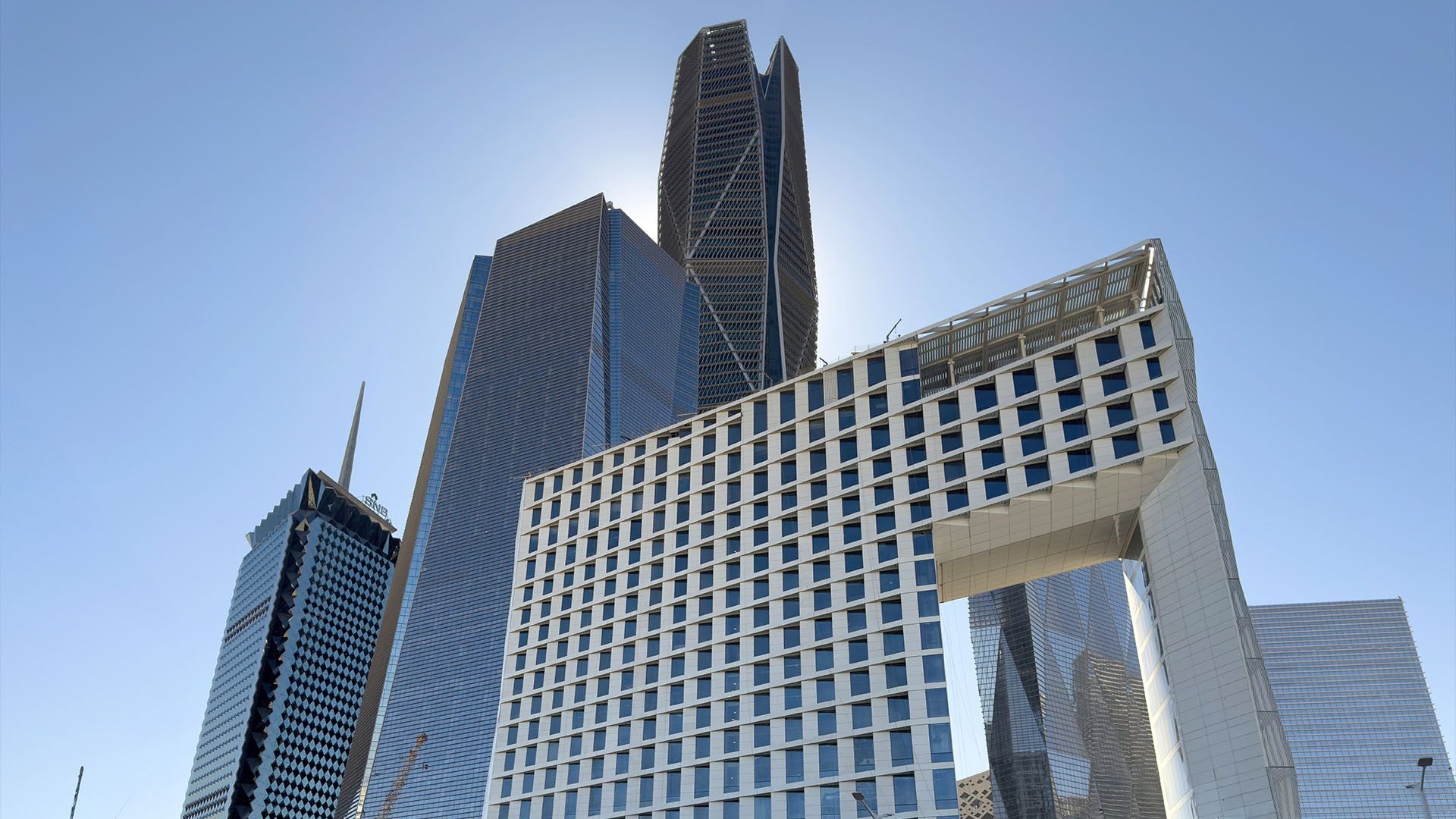
In Riyadh, a combination of Vision 2030 reforms, surging demand from a growing population, and expanding commercial sectors is transforming the city’s real estate landscape. (Adobe Stock)
Emerging Opportunities and Risks
Urban Land Scarcity
As urban expansion drives steady long-term value appreciation, land availability is becoming increasingly limited in the UAE, making the ability to secure prime plots for development a critical factor for success.In Saudi Arabia, urban land scarcity is driving a surge in apartment construction, with Vision 2030 land-release schemes and off-plan regulation reforms expanding market access and boosting affordable housing through subsidies and faster approvals.
However, foreign ownership reforms may introduce more interventionist measures, such as the Riyadh rent freeze, which could impact market dynamics.
Evolving Investment Landscape
The GCC is transitioning from being a source of institutional capital to a major destination for international real estate investment, attracted by its transparent and developer-friendly environment.Institutional capital in the region is predominantly sourced from government-backed organisations, though private capital involvement is on the rise, especially in commercial real estate.
Despite challenges such as the scaling back of Saudi Arabia’s NEOM megaproject due to budget overruns, the region remains attractive due to stable geopolitical conditions, economic diversification efforts, and regulatory reforms.
Population Growth
Increasing fertility rates and expatriate immigration are fuelling housing demand, particularly in cities like Riyadh and Jeddah. Saudi Arabia’s population is projected to grow by 32% by 2050, further driving demand for residential properties.Meanwhile, by 2050, the UAE’s population is expected to grow from over 11 million in 2025-26 to approximately 15.4 million, with long-term projections suggesting it could reach as high as 26 million by 2100.
Sector Selections
Saudi Arabia’s real estate market is dominated by the residential sector, driven by high population growth, urban migration, and government homeownership initiatives.Commercial, logistics, and tourism-driven hospitality sectors are also expanding rapidly, fueled by Vision 2030 projects, with key investment hubs in Riyadh, Dammam, NEOM, and the Red Sea regions.
The UAE real estate market is primarily driven by strong demand in the luxury residential, prime commercial, and hospitality sectors, particularly in Dubai, Abu Dhabi, and Ras Al Khaimah (RAK).
Government initiatives like the Golden Visa and economic diversification into tech, along with high-profile areas such as Business Bay, Palm Jumeirah, and Al Reem Island, fuel this growth, with investors focusing on high-end apartments, flexible office spaces, and mixed-use developments.
Across the GCC region, demand for high-quality office space is growing, leading to an increase in the development of A-grade office spaces, which are selling quickly and at higher prices. Developers have capitalised on this demand, launching commercial projects that are rapidly snapped up.
Tourism-Driven Demand
The region’s tourism sector continues to drive demand for both residential and hospitality assets. Government initiatives, such as support for major events and tourism growth, contribute to the increasing need for short-term rental properties.Saudi Arabia’s tourism sector is rapidly expanding, aiming to attract 150 million annual visitors by 2030, with a goal to contribute 10% to GDP, bolstered by Vision 2030 and major events like the 2034 FIFA World Cup.
At the same time The UAE aims to attract 40 million overnight visitors by 2030, with a focus on luxury hotels, cultural sites, and adventure tourism, while expanding its hotel supply to 304,000 keys.
Technological Focus
The UAE’s focus on AI and cloud services is driving its rapid rise as a global data centre hub, with ongoing investments in hyperscale facilities, but land and power constraints in key locations, especially Dubai, pose significant challenges to future growth.Meanwhile, Saudi Arabia’s data centre market is set to surge from USD 1.33 billion in 2024 to USD 3.9 billion by 2030, driven by Vision 2030, AI advancements, and hyperscale investments.
This focus on innovation is also impacting real estate, with proptech and smart building technologies becoming key considerations for developers.
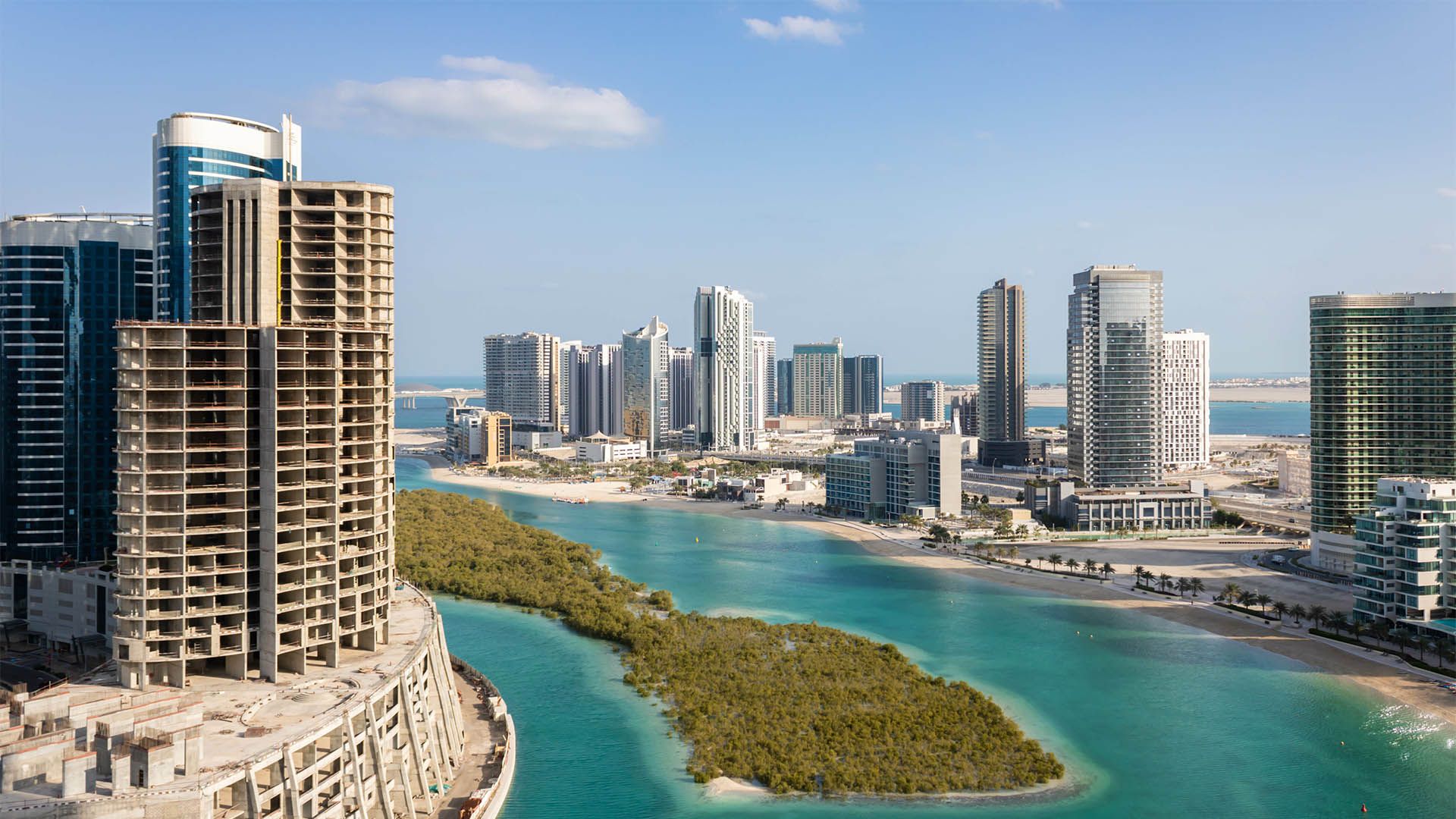
Projects like Al Reem Island, a man-made island featuring high-rise residential towers, commercial spaces, and waterfront living, are shaping Abu Dhabi’s real estate growth and attracting global investment. (Adobe Stock)
GCC Investing Globally
GCC investors are actively seeking opportunities abroad, having already made substantial investments into global real estate funds and platforms, particularly in the US, UK, and various parts of Europe, as well as expanding interest in India.Adopting a global approach to capital flows - forming partnerships with players from the US, APAC, and Europe - the region's investors are focused on diversifying their portfolios to include residential and commercial investments. They have become increasingly engaged in global cities, prioritising long-term returns over quick profits.
As a result, GCC investors have established a robust presence in a range of global markets, leveraging local expertise and seeking stable, high-return investments in infrastructure, logistics, and commercial real estate.
GCC-India Investment Corridor
The GCC-India real estate investment corridor has evolved significantly, with a shift from volatile, relationship-based investments to a more institutionalised and structured approach.Policy stability in India has made it an essential destination for Gulf wealth, with capital now flowing through global platforms and private credit structures, addressing financing gaps left by traditional banks.
This shift reflects a broader recognition of India as a core emerging market, with a growing belief among GCC investors that India is no longer just a high-growth opportunity, but a necessary diversification strategy.
Despite strong optimism and substantial institutional capital flows into Indian real estate, challenges remain. FX risk and high hedging costs continue to create uncertainty, while taxation and legal complexities deter some offshore investors.
As India’s role in global trade corridors strengthens, understanding the geopolitical landscape has become crucial for GCC investors looking to navigate the evolving market dynamics.
2026 and Beyond
As we move deeper into 2026, institutional investors in the GCC are expected to focus on sectors with robust structural demand, such as logistics, residential, and digital-adjacent assets.The shift towards platform-style investments, prioritising scale and long-term growth, is set to continue, supported by the increasing interest in private credit and real estate funds.
While the GCC real estate sector is well-positioned for continued growth due to diversification efforts, demographic trends, and a robust investment environment, challenges such as land scarcity, regulatory changes, and evolving mega-projects like NEOM must be carefully navigated.
The GCC has also transitioned from a source of institutional capital to a major destination for international real estate investment, attracting interest from global markets. This shift is driven by its transparent, developer-friendly environment, bolstered by regulatory reforms and strategic economic diversification.
Additionally, with a growing presence in global markets, GCC investors are diversifying their portfolios across both geographies and sectors, leading the region's long-term growth potential, both locally and internationally, to remain compelling for investors seeking stable, high-return opportunities.
However, as GCC investors look beyond their borders, the need for understanding geopolitical shifts and the evolving investment landscape, particularly in emerging markets, will become increasingly critical.
Learn more about the GCC-India real estate capital flows in our full report, and don’t miss the opportunity to connect with industry leaders active in the GCC region at our upcoming gatherings.