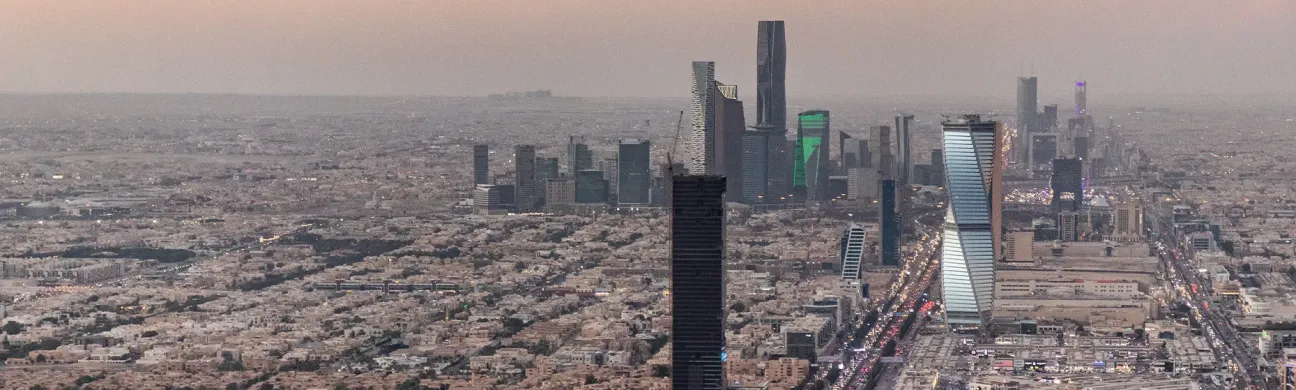
 Credit: Adobe Stock
The Trillions Myth: What the Narrative Around the Saudi Market Fails to Show
GRI Institute’s Global CEO Gustavo Favaron on navigating the realities behind Saudi Arabia’s Vision 2030 and investment issues
December 18, 2025Real Estate
Written by:Gustavo Favaron
Key Takeaways
- While Saudi Arabia's Vision 2030 is highly ambitious, the execution faces substantial challenges, requiring a more cautious approach from investors.
- The UAE has emerged as a key destination for global capital, shifting the dynamics of investment in the GCC region.
- Growing concerns over regulatory risks and slow progress are making investors more cautious about Saudi Arabia’s real estate market.
From time to time, a ready-made narrative resurfaces in the specialised media about the Saudi real estate market: USD 1.25 trillion in investments, cities rising from the desert, linear growth through to 2033.
It is a powerful story for headlines, but one that quickly unravels when confronted with the reality faced by those who actually allocate capital, negotiate land, structure joint ventures, and, above all, compare returns and risks across the Gulf’s financial centres.
The objective here is not to dispute Saudi Arabia’s transformation. On the contrary, it is to treat it with the seriousness it deserves. And that requires distinguishing ambition from execution and risk, something that rarely appears in analyses produced from a distance.
In 2025, Saudi Arabia’s Public Investment Fund (PIF) made relevant accounting adjustments and reassessed several giga-projects in light of execution challenges, prioritising smaller and more financially sustainable phases. This is not failure. It is internal risk repricing, something natural in programmes of continental scale, but which cannot be ignored.
This does not diminish Saudi ambition, but it reinforces a basic reality: there is no infinite boom without fiscal trade-offs. These nuances rarely appear in remote analyses. For those who, like the GRI Institute, follow the region closely, engage directly with sovereign funds, family offices, developers, and local banks, the reading is different.
Being in the Gulf, observing execution on the ground and listening to those who actually make decisions allows one to separate narrative from reality, and that distinction is decisive in understanding what is truly happening.
Global capital now favours Abu Dhabi and Dubai for immediate execution. According to the Dubai Land Department, real estate transactions reached AED 761 billion in 2024, a historic record. In 2025, the first half of the year maintained strong momentum, with AED 431 billion in transactions. According to the United Nations Conference on Trade and Development (UNCTAD), the UAE received USD 30.7 billion in FDI in 2023, leading the region.
Data released by the UAE government and corroborated by international rankings indicate that the country attracted more than USD 45 billion in FDI in 2024, consolidating its position as one of the world’s leading destinations for productive capital and further strengthening its leadership in the Middle East. By comparison, Saudi Arabia recorded USD 31.7 billion in FDI in 2024, with net declines in some flows.
Over the past five to six months, however, something even more relevant has occurred, and few traditional analyses have captured it. For decades, the UAE was seen as a global fundraising hub: investors travelled to Abu Dhabi and Dubai to raise capital to be deployed in the United States, Europe or Asia.
That dynamic has now reversed. Increasingly, American and European managers are establishing entities in the UAE not only to raise funds, but to invest locally in Abu Dhabi and Dubai. This represents a real inflow of capital, unprecedented in the region’s recent history, marking a structural shift in the geography of global real asset flows.
This shift gained further momentum with the recent announcement of a new Mubadala fund designed to attract foreign capital and channel it into domestic investments within the UAE, a symbolic and strategic milestone that reinforces the country’s transition from a capital source to a destination sought by global investors themselves.
At the same time, what is heard behind closed doors, both in the UAE and in New York and London, is that fundraising in Saudi Arabia has become far more difficult than the market initially expected. The number of managers arriving in Riyadh seeking to raise capital and leaving without a cheque has visibly increased. Many describe genuine frustration with the process.
There is a reason for this. The total capital required to finance Vision 2030 is now significantly greater than the amount the PIF itself wishes to allocate directly. As a result, the sovereign fund has intensified its signalling, albeit without formal requirements, that global GPs should invest locally in the Kingdom, participating in Saudi projects as a demonstration of strategic alignment.
From an international perspective, however, a perception is gaining ground: Vision 2030 is far from being delivered in the format originally conceived.
Among global investors, it has almost become a consensus that the plan will require adjustments, phasing, or reconfiguration. This view does not come from reports, but from closed-door conversations with investors who have been active in the region for decades.
1) Alignment with Vision 2030 and sovereign scrutiny
Projects that are well aligned enjoy greater political backing, but are not immune to scope revisions.
2) Governance and partnership
The country values reciprocity: external capital, external expertise, and local commitment.
3) Comparison with the UAE
Dubai and Abu Dhabi offer liquidity, regulatory transparency, and more predictable execution. Riyadh offers scale, but also higher regulatory risk, greater state dependence, and volatility in urban policy.
Here lies a point rarely stated publicly, but widely acknowledged in private conversations: even investors who are deeply optimistic about Saudi Arabia’s potential agree that the country will need decades, not years, to approach the level of institutional maturity, operational efficiency, and business environment seen in Dubai and Abu Dhabi.
Cultural, bureaucratic, and state-driven differences continue to pose a significant challenge when compared not only with the UAE, but even with smaller neighbours such as Oman and Bahrain.
As a concrete example, a GRI executive with residency in the UAE, a Brazilian passport and an extensive international travel history, without any prior issues, recently had his Saudi visa denied without explanation. It may seem like a minor episode, but it illustrates a deeper issue: how can one conduct global-scale business when access to the country itself is unpredictable? For many investors, this symbolises the gap between Saudi Arabia’s aspirations and its current operational reality.
While distant analyses continue to describe the country through a 2021 lens, the real market has already moved into another phase: less hype, more disciplined capital; less “perfect boom”, more risk-adjusted allocation; less narrative, more on-the-ground insight. I reiterate my belief that the country has every chance of achieving its ambitions, and I will be the first to celebrate such a transformation. I simply believe the process will be more costly and slower than initially anticipated.
In the Gulf of 2026, the future will not be shaped by those who decode press releases, but by those who understand capital flows, sovereign dynamics, and the new geography of regional competition. The future belongs to those with a seat at the table where decisions are truly made. And at that table, the illusion of trillions has no place.
It is a powerful story for headlines, but one that quickly unravels when confronted with the reality faced by those who actually allocate capital, negotiate land, structure joint ventures, and, above all, compare returns and risks across the Gulf’s financial centres.
The objective here is not to dispute Saudi Arabia’s transformation. On the contrary, it is to treat it with the seriousness it deserves. And that requires distinguishing ambition from execution and risk, something that rarely appears in analyses produced from a distance.
What is true about the “Saudi boom” and deserves recognition?
The scale of Vision 2030 is real
Saudi Arabia has set in motion more than USD 1.3 trillion in urban and infrastructure projects linked to Vision 2030, a figure reported by Bloomberg in 2024 when analysing the country’s consolidated portfolio of giga-projects.Housing policy has delivered tangible progress
According to the Housing Program Annual Report 2024, published on the official Vision 2030 portal, the homeownership rate rose to approximately 65% in 2024, moving closer to the 70% target set for 2030. In other words, there is indeed a serious and measurable public policy agenda in place.
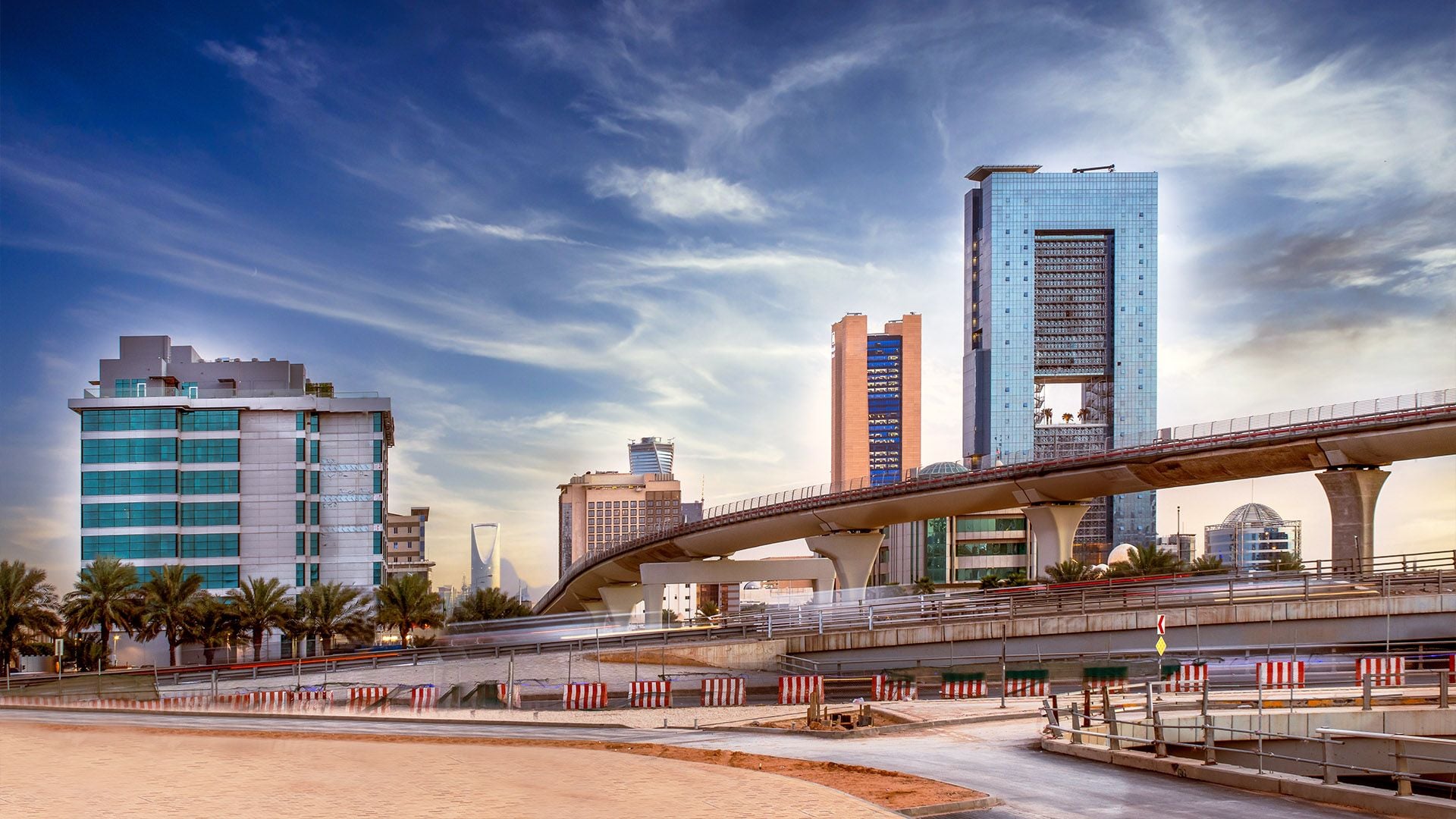
Saudi Arabia has set in motion more than USD 1.3 trillion in urban and infrastructure projects linked to Vision 2030 (Wiki Commons)
Where the optimistic narrative ends and reality begins
NEOM, The Line, and the execution constraint
In 2024, Bloomberg confirmed that The Line, the most emblematic sub-project within NEOM, previously announced as a 170-kilometre linear city designed to house 1.5 million people by 2030, underwent a major revision, with initial delivery now expected to cover only a few kilometres.In 2025, Saudi Arabia’s Public Investment Fund (PIF) made relevant accounting adjustments and reassessed several giga-projects in light of execution challenges, prioritising smaller and more financially sustainable phases. This is not failure. It is internal risk repricing, something natural in programmes of continental scale, but which cannot be ignored.
The fiscal environment has tightened
The IMF Article IV 2025 highlights that Saudi Arabia is projecting rising fiscal deficits through to 2026 and has increased debt issuance to finance part of its Vision 2030 investments. The same report shows that the government became the largest US-dollar debt issuer among emerging markets in 2024.This does not diminish Saudi ambition, but it reinforces a basic reality: there is no infinite boom without fiscal trade-offs. These nuances rarely appear in remote analyses. For those who, like the GRI Institute, follow the region closely, engage directly with sovereign funds, family offices, developers, and local banks, the reading is different.
Being in the Gulf, observing execution on the ground and listening to those who actually make decisions allows one to separate narrative from reality, and that distinction is decisive in understanding what is truly happening.
Riyadh: Where the real estate boom became an urban problem
Sale and rental prices have surged
Since 2020, house prices in Riyadh have risen by 81%, while apartment prices increased by 56%. Knight Frank reports show double-digit annual growth in the residential sector and sub-markets with price appreciation exceeding 40% in 2024.The rent freeze exposed regulatory risk
In September 2025, the government announced a five-year rent freeze in Riyadh. For any investor, this immediately alters the income thesis: when the State freezes rents, regulatory risk ceases to be theoretical.The part almost no one discusses: Regional competition has changed
There is a critical dimension systematically overlooked in superficial analyses: regional competition and the radical reconfiguration of capital flows. The true engine of the Gulf today is not an isolated country, but the dynamic between the United Arab Emirates and Saudi Arabia.Global capital now favours Abu Dhabi and Dubai for immediate execution. According to the Dubai Land Department, real estate transactions reached AED 761 billion in 2024, a historic record. In 2025, the first half of the year maintained strong momentum, with AED 431 billion in transactions. According to the United Nations Conference on Trade and Development (UNCTAD), the UAE received USD 30.7 billion in FDI in 2023, leading the region.
Data released by the UAE government and corroborated by international rankings indicate that the country attracted more than USD 45 billion in FDI in 2024, consolidating its position as one of the world’s leading destinations for productive capital and further strengthening its leadership in the Middle East. By comparison, Saudi Arabia recorded USD 31.7 billion in FDI in 2024, with net declines in some flows.
Over the past five to six months, however, something even more relevant has occurred, and few traditional analyses have captured it. For decades, the UAE was seen as a global fundraising hub: investors travelled to Abu Dhabi and Dubai to raise capital to be deployed in the United States, Europe or Asia.
That dynamic has now reversed. Increasingly, American and European managers are establishing entities in the UAE not only to raise funds, but to invest locally in Abu Dhabi and Dubai. This represents a real inflow of capital, unprecedented in the region’s recent history, marking a structural shift in the geography of global real asset flows.
This shift gained further momentum with the recent announcement of a new Mubadala fund designed to attract foreign capital and channel it into domestic investments within the UAE, a symbolic and strategic milestone that reinforces the country’s transition from a capital source to a destination sought by global investors themselves.
At the same time, what is heard behind closed doors, both in the UAE and in New York and London, is that fundraising in Saudi Arabia has become far more difficult than the market initially expected. The number of managers arriving in Riyadh seeking to raise capital and leaving without a cheque has visibly increased. Many describe genuine frustration with the process.
There is a reason for this. The total capital required to finance Vision 2030 is now significantly greater than the amount the PIF itself wishes to allocate directly. As a result, the sovereign fund has intensified its signalling, albeit without formal requirements, that global GPs should invest locally in the Kingdom, participating in Saudi projects as a demonstration of strategic alignment.
From an international perspective, however, a perception is gaining ground: Vision 2030 is far from being delivered in the format originally conceived.
Among global investors, it has almost become a consensus that the plan will require adjustments, phasing, or reconfiguration. This view does not come from reports, but from closed-door conversations with investors who have been active in the region for decades.
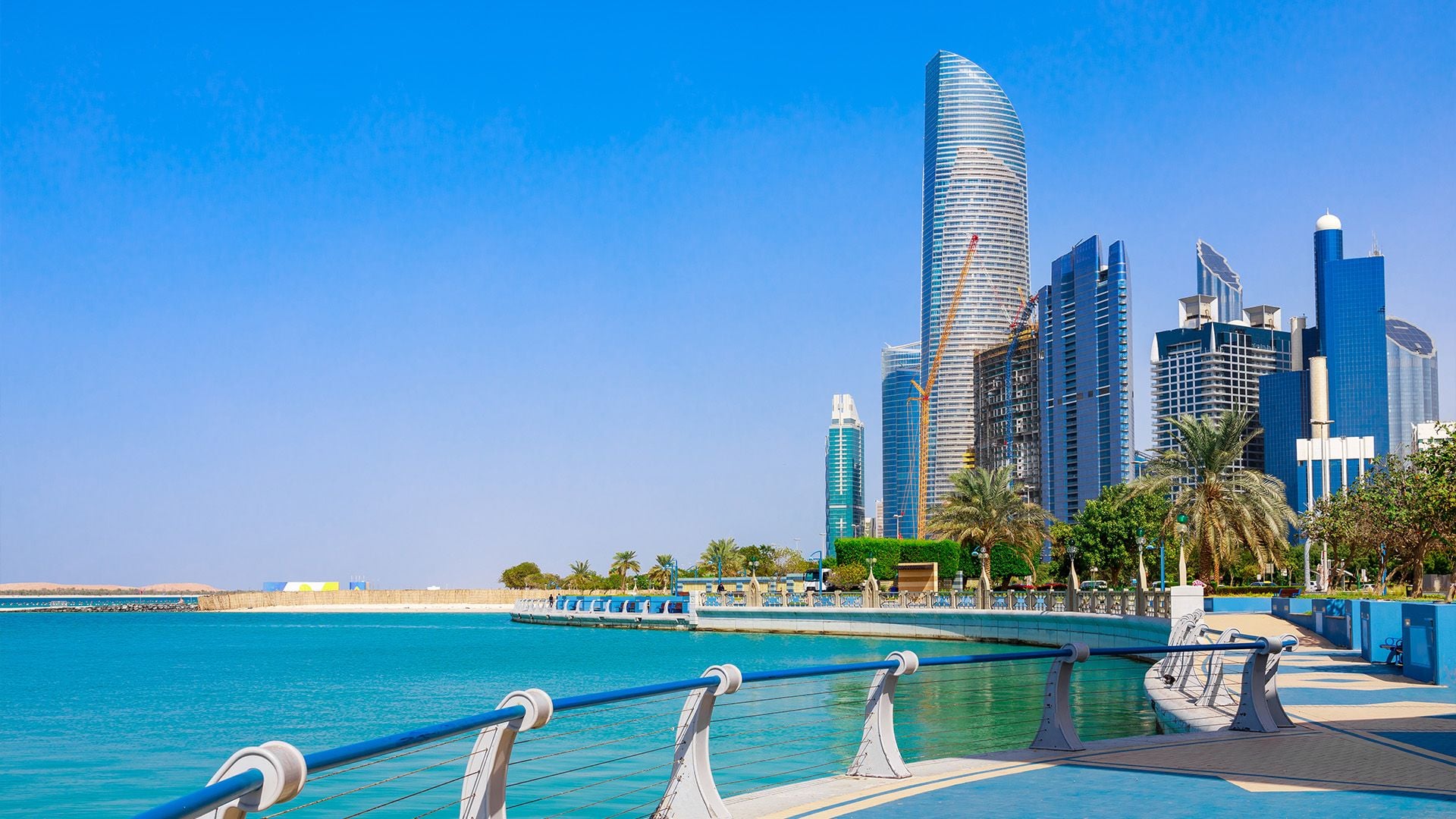
Increasingly, American and European managers are establishing entities in the UAE not only to raise funds, but to invest locally in Abu Dhabi and Dubai. (Adobe Stock)
A mature reading: Saudi Arabia is not “yes or no”, but “how, where, and with whom”
Serious investors need three filters:1) Alignment with Vision 2030 and sovereign scrutiny
Projects that are well aligned enjoy greater political backing, but are not immune to scope revisions.
2) Governance and partnership
The country values reciprocity: external capital, external expertise, and local commitment.
3) Comparison with the UAE
Dubai and Abu Dhabi offer liquidity, regulatory transparency, and more predictable execution. Riyadh offers scale, but also higher regulatory risk, greater state dependence, and volatility in urban policy.
The conclusion few dare to write
Saudi Arabia is indeed one of the most ambitious urban transformations of the twenty-first century. But reality is far more complex than the Vision 2030 blueprint suggests. Cultural barriers remain significant, particularly when compared with its neighbour, the United Arab Emirates. Riyadh openly seeks to replicate Dubai’s model, but this is not something that can be achieved as quickly as Mohammed bin Salman’s ambition might suggest.Here lies a point rarely stated publicly, but widely acknowledged in private conversations: even investors who are deeply optimistic about Saudi Arabia’s potential agree that the country will need decades, not years, to approach the level of institutional maturity, operational efficiency, and business environment seen in Dubai and Abu Dhabi.
Cultural, bureaucratic, and state-driven differences continue to pose a significant challenge when compared not only with the UAE, but even with smaller neighbours such as Oman and Bahrain.
As a concrete example, a GRI executive with residency in the UAE, a Brazilian passport and an extensive international travel history, without any prior issues, recently had his Saudi visa denied without explanation. It may seem like a minor episode, but it illustrates a deeper issue: how can one conduct global-scale business when access to the country itself is unpredictable? For many investors, this symbolises the gap between Saudi Arabia’s aspirations and its current operational reality.
While distant analyses continue to describe the country through a 2021 lens, the real market has already moved into another phase: less hype, more disciplined capital; less “perfect boom”, more risk-adjusted allocation; less narrative, more on-the-ground insight. I reiterate my belief that the country has every chance of achieving its ambitions, and I will be the first to celebrate such a transformation. I simply believe the process will be more costly and slower than initially anticipated.
In the Gulf of 2026, the future will not be shaped by those who decode press releases, but by those who understand capital flows, sovereign dynamics, and the new geography of regional competition. The future belongs to those with a seat at the table where decisions are truly made. And at that table, the illusion of trillions has no place.