 GRI Institute
GCC-India Real Estate Capital Flows 2026
An analysis of the evolving India-GCC investment corridor, institutional capital flows, private credit, and strategic expansion in offices and data centres
February 10, 2026Real Estate
Written by:Jorge Aguinaga
Executive Summary
The investment corridor between the Gulf Cooperation Council (GCC) and India has reached a structural milestone, transitioning from foundational groundwork to sophisticated cross-border institutionalisation. Policy stability has created a vital outbound diversification strategy for Gulf wealth, which is increasingly deployed through global platforms and private credit structures to fill financing gaps created by traditional bank retrenchment.
The GRI GCC-India Week 2026, sponsored by JLL, convened industry leaders to interrogate these shifting dynamics, highlighting a critical need for the professionalisation of developer operations and deeper geopolitical awareness. This report synthesises these insights to serve as an essential guide for professionals navigating the immense opportunities within the evolving GCC-India landscape.
The GRI GCC-India Week 2026, sponsored by JLL, convened industry leaders to interrogate these shifting dynamics, highlighting a critical need for the professionalisation of developer operations and deeper geopolitical awareness. This report synthesises these insights to serve as an essential guide for professionals navigating the immense opportunities within the evolving GCC-India landscape.
Key Takeaways
- GCC investors now represent approximately USD 11 billion of the institutional pool in India with a growing appetite for private capital structures and joint ventures.
- The office sector remains a primary pillar of investment as Global Capability Centres account for 40% of all leasing activity across the country.
- Data centres have emerged as a significant frontier for Gulf capital following government incentives such as potential 20-year tax exemptions.
Evaluating India as the Next Real Estate Investment Frontier
GCC Capital Allocation Strategies for India
The prevailing sentiment regarding India's real estate sector is one of robust optimism, characterised by a strengthening belief among Gulf Cooperation Council (GCC) investors that the country has become a core emerging market allocation.This shift is fueled by a decade of significant groundwork aimed at improving the investment climate and addressing historical operational hurdles that previously made the market difficult to navigate.
The current landscape is defined by an accelerating investment corridor between India and the GCC that is becoming structurally vital to global portfolios, moving away from the volatility that characterised earlier decades.
Investors now view India not merely as a high-growth opportunity, but as a necessary outbound diversification strategy as local UAE markets enter a more selective phase.
Key Investment Trends
Institutional capital flows into Indian real estate have reached a staggering USD 95 billion over the last two decades, with a remarkable 72% of that total occurring between 2015 and 2025.Of this institutional pool, GCC investors represent approximately USD 11 billion, indicating a consistent and growing appetite for Indian assets. In the near term, private capital structures such as funds, joint ventures (JVs), and specialised platforms are expected to dominate the landscape over exposure led by real estate investment trusts (REITs).
Furthermore, there is a notable appetite for debt and credit strategies, with investors exploring bridge loan funds to occupy the lending gaps left by traditional banks, targeting high-teen equity internal rates of return (IRRs) in USD terms to compensate for currency and tax complexities.
Geographic Hotspots
While the broad urbanisation story across India remains a key consideration, the strategic focus remains centred on established hubs and emerging high-growth corridors.Major conferences and institutional activities continue to be concentrated in primary cities such as Mumbai, Delhi, Bangalore, Hyderabad, and Chennai. However, there is a clear push toward wider geographic coverage, with smaller, targeted events taking place in cities like Ahmedabad to capture localised growth.
This expansion is driven by the need to find institutional-grade platforms in Tier 2 and Tier 3 cities, where developers are encouraged to standardise their operations to attract international capital that might otherwise remain focused solely on the largest metropolitan areas.
Dominant Themes and Sector Insights
The office and residential sectors currently stand out as the most bullish areas for investment, driven by strong fundamentals and high demand.Logistics also remains a high-conviction theme, though many investors find that development risk must be embraced to make the returns sufficiently attractive compared to rent-generating assets.
Data centres have emerged as a massive frontier, particularly following government incentives such as potential 20-year tax exemptions for foreign investors, which is expected to accelerate an already intense interest from the Middle East.
Additionally, niche segments like student accommodation, school-related real estate, and senior living are being evaluated as compelling opportunities that mirror successful strategies used in Europe.
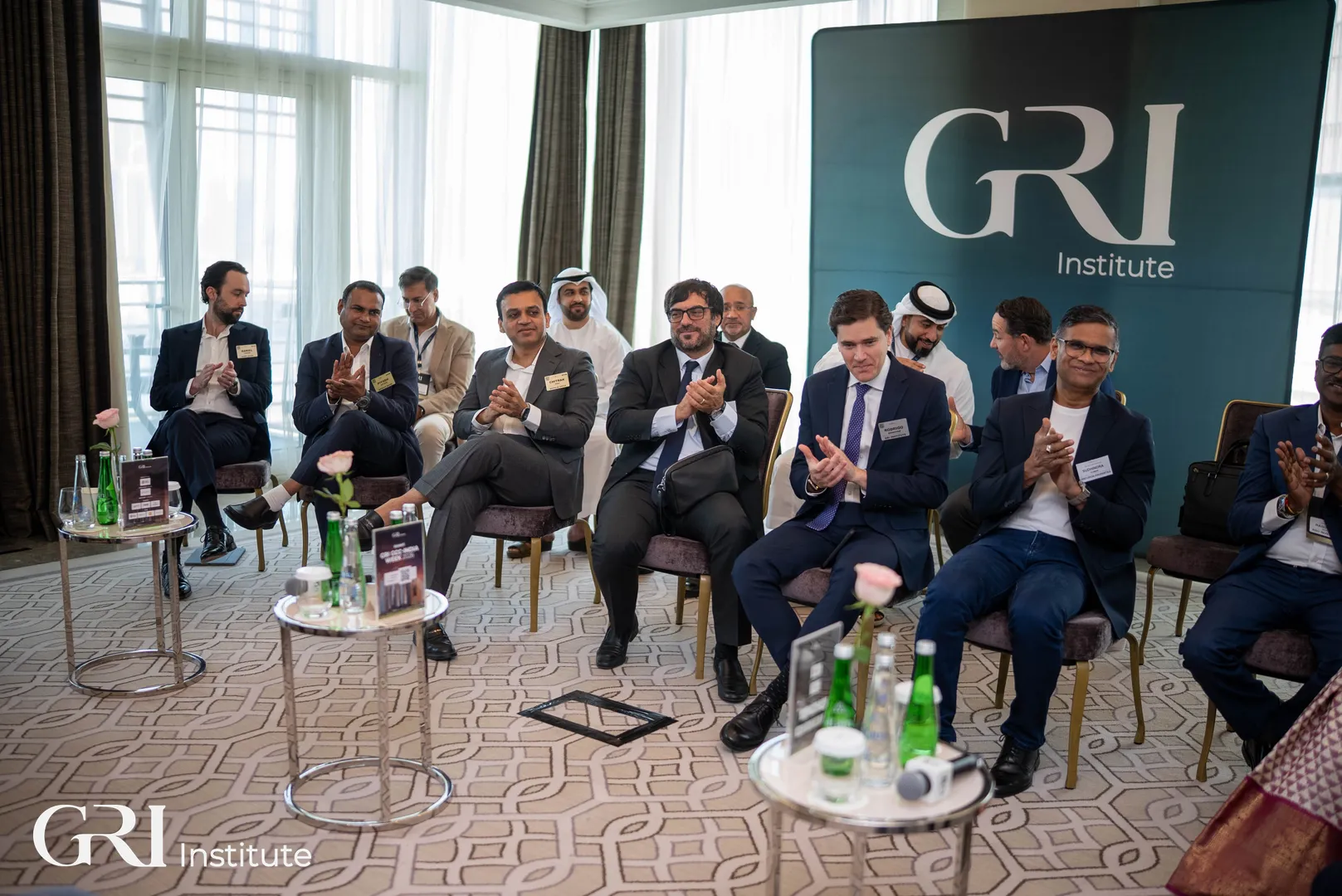
Offices were identified as a pillar and data centres as the new frontier, bolstered by potential 20-year tax exemptions. (GRI Institute)
Major Challenges
The path to investment is still hampered by significant structural concerns, most notably FX risk and the high cost of hedging, which often forces investors to underwrite deals assuming certain levels of rupee depreciation.Taxation and legal complexities also remain a deterrent, with many offshore investors struggling with structures that feel tailored primarily for the domestic market.
Furthermore, some investors maintain caution due to unsuccessful projects experienced between 2005 and 2015 that have not yet fully recovered in terms of perception.
These issues are compounded by the difficulty of navigating development risk in a market where predictability of outcomes can sometimes feel less certain than in the more formulaic environments of the UAE.
Strategic Imperatives for Investors
To succeed in this evolving market, the consensus among executive leaders is that investors must prioritise a partner-led approach rather than attempting to go it alone.Selecting the right local partner is essential for managing execution risks and navigating the highly structured but complex regulatory frameworks of cities like Mumbai.
Investors are also advised to move toward fund formats to ensure diversification across multiple assets, rather than taking a transactional approach on single-asset deals.
Finally, there is a strong call for developers to institutionalise their platforms to attract global capital; if a platform is strong enough to attract domestic capital, international institutional interest will naturally follow.
High-Growth Sectors in India
From broad macro-strategies to a granular focus on India’s transition into a strategic, long-duration investment destination, the Indian market is no longer just an emerging opportunity but is now rapidly consolidating its position through institutional maturation and predictable macro-environments.While historical write-offs from the 2008 era remain a point of discussion, the consensus is that India now plays a central, independent role in a fragmenting global economy, bolstered by strengthening corridors with the GCC and Europe.
Key Investment Trends
Institutional capital is flowing into India through sophisticated global platforms rather than just direct, isolated investments. Major American and global entities such as Blackstone and Brookfield have become the largest owners of office and retail space, providing a tested route for regional investors in the GCC to gain exposure to the Indian market.There is a growing appetite for development capital, evidenced by Japanese investors pumping over USD 2 billion into equity for hard development projects over the last three years.
Furthermore, listed real estate and REITs are becoming preferred vehicles for those seeking liquidity and institutional transparency without sacrificing returns.
Geographic Hotspots
While major metros like Mumbai, Delhi, and Bangalore continue to lead in office absorption - frequently exceeding 55 million square feet annually - the investment lens is widening.Panellists highlighted significant potential in Tier 2 cities that act as regional talent hubs, as these areas offer opportunities for both high-end residential and commercial development.
Strategic interest is heavily influenced by infrastructure connectivity; cities that successfully implement proposed transport links are expected to pull ahead in the race for capital.
Additionally, coastal regions are being viewed through a new lens for potential sea-route logistics infrastructure to complement traditional trade routes.
Sector Insights
Commercial Office & Flex Space
The office sector remains a primary pillar, with Global Capability Centres (GCCs) accounting for 40% of all leasing activity. Despite the global trend of working from home, the physical office remains essential in India due to domestic living constraints and a culturally ingrained preference for office-based work.Data Centres & Digital Infrastructure
Digital infrastructure is viewed as the next major battlefield for global domination, with India’s IT literacy providing a unique ecosystem for growth. However, experts cautioned that data centres are moving away from pure real estate towards infrastructure plays, where power availability and grid stability are more critical than the physical shell of the building.Logistics & Warehousing
Logistics is a high-conviction sector as the world adopts a China-plus-one strategy, positioning India as a key manufacturing and export alternative. Warehousing absorption is consistently clocking over 50 million square feet per year, driven by a consumption-led economy of 1.5 billion people.Mixed-Use Ecosystems
There is a rising trend toward creating self-sustaining urban environments that integrate high-quality housing with commercial and hospitality components.This model establishes controlled ecosystems where different sectors support one another to mitigate the risks of single-sector market cycles. These peripheral hubs rely heavily on proposed transport links and metro expansions to drive long-term value and attract institutional capital.
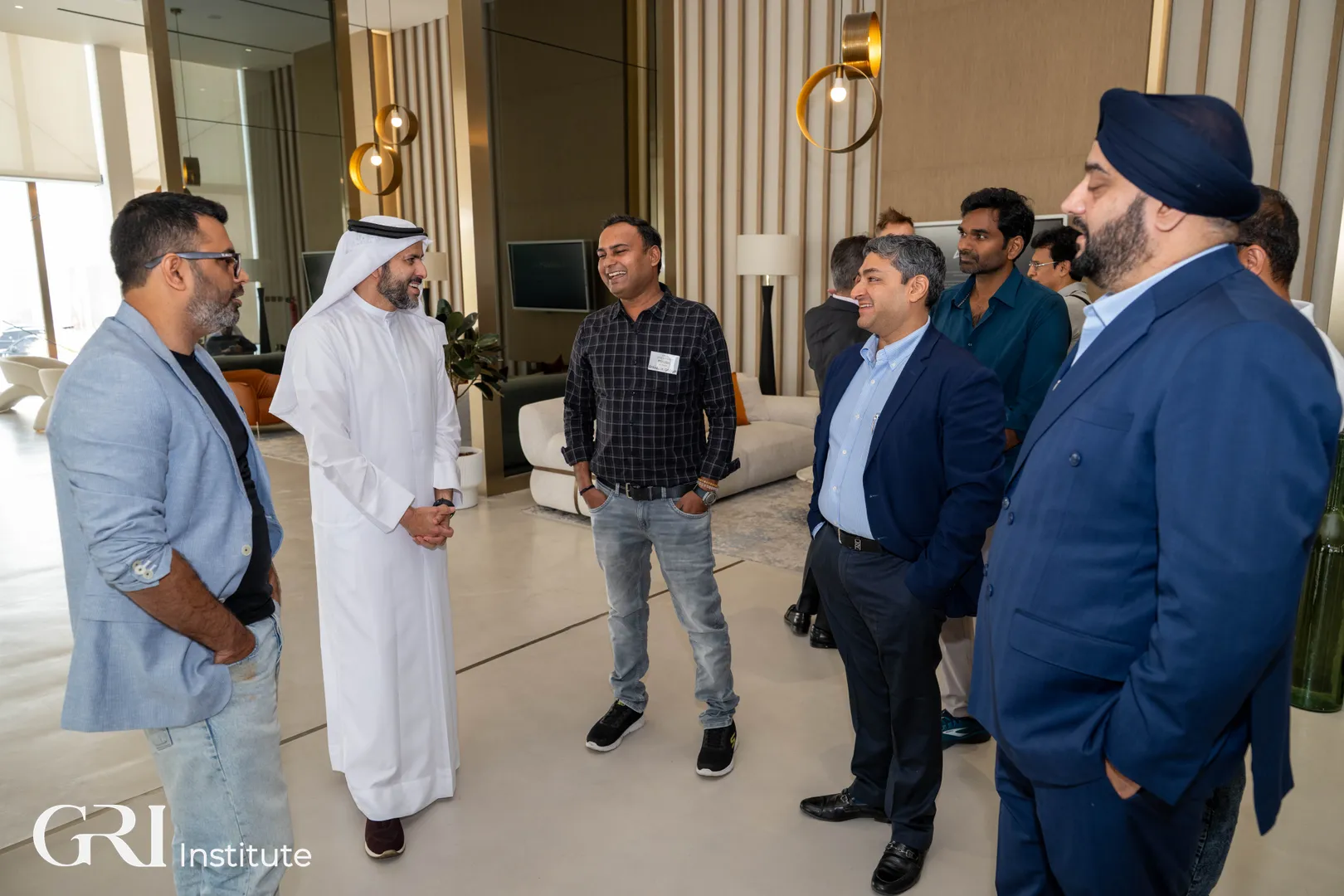
GCC-India Week in Abu Dhabi served as a strategic bridge for international flows, convening global decision-makers to institutionalise the corridor between India and the Gulf. (GRI Institute)
Major Challenges
- Currency Management: While the rupee’s depreciation remains a factor, experienced fund managers argue it is a manageable risk through active hedging and currency overlays rather than a reason to avoid the market.
- Approval Timelines: Despite digitisation efforts, the approval process in India can still be stalled by a lack of coordination between multiple authorities and a tendency for developers to seek exceptions to the rulebook.
- Power & Infrastructure: For high-growth sectors like data centres, the strain on the national power grid is a significant concern, leading to discussions about the necessity of modular nuclear reactors to ensure stability.
- Industry Mortality: The real estate sector in India still faces a high mortality rate for non-institutionalised, smaller developers who fail to survive market cycles.
Strategic Imperatives for Investors
To succeed in the current market, Indian developers must prioritise the professionalisation of their operations by moving away from traditional family-run models toward fully institutionalised business structures.This shift is essential for attracting and retaining global capital, as international investors increasingly seek the transparency and governance found in mature markets.
Furthermore, strategic allocation now requires a deep understanding of geopolitical shifts, which have overtaken traditional macroeconomics as the primary driver for investment decisions.
Recognising India’s independent role within global trade corridors and its growing links with Europe and the GCC is now a fundamental requirement for successful capital placement.
For private or high-net-worth investors (HNWIs), the most effective playbook involves investing through established global platforms that offer robust capital preservation and liquidity. By leveraging these institutional vehicles, investors can access Indian assets while benefiting from the risk management expertise of global managers.
Finally, long-term value is increasingly found in projects directly aligned with government-backed infrastructure and connectivity plays; capital should be directed toward these growth corridors, as the integration of modern transport links is what ultimately determines which developments will outperform in the regional race for value.
Evolving Residential Markets
Opportunities for GCC and Indian developers in the housing spectrum
The residential real estate sectors in both India and the GCC are currently navigating a significant transition in capital structures. A major trend is the retrenchment of traditional banking institutions from real estate fund financing, with banks remaining highly selective and focused primarily on lower-risk, asset-backed lending.This financing gap has accelerated the rise of private capital solutions, with developers increasingly turning to private credit, JV equity, and alternative providers such as family offices and sovereign-linked platforms to unlock their development pipelines.
While some semi-government entities in the GCC region maintain strong liquidity and low leverage, private developers often operate under stringent escrow regulations that require substantial upfront equity - often up to 20% of the project cost - to fund land acquisition and initial design phases.
Residential Market Segments
The housing spectrum is witnessing a distinct divergence between luxury and affordable segments. Premium and aspirational residences are currently performing well, driven by a shift from pure investment to lifestyle and wellness-centric developments.In contrast, the delivery of affordable housing remains constrained not by a lack of developer interest, but by structural economic pressures.
Sharp increases in construction material costs, rising labour expenses, and compressed margins have made affordable projects commercially difficult to sustain without government subsidies or public-private partnership (PPP) models.
Consequently, many developers are redirecting their focus toward mid-income and premium residential projects where margins are more sustainable.
Branded Residences and Quality Assets
Branded residences have emerged as a significant trend, particularly in Dubai, though it is important to distinguish between authentic trophy assets and white-labelled marketing exercises.Authentic branded projects involve intense collaboration with designers and hospitality operators to create a soulful identity and a premium lifestyle experience, which helps command higher prices and retain long-term value.
However, the process is far more complex than standard development, often taking up to eighteen months to move from concept to construction due to the rigorous design and approval requirements of the participating brands.
Developers cautioned that while these assets are resilient, buyers must discern whether they are paying for a high-quality asset or merely for inflated marketing costs.
Supply Chain and Macroeconomic Risks
Looking toward the future, the residential market faces several operational headwinds, most notably a capacity deficit in the delivery infrastructure.The sheer volume of project launches has created a shortage of grade-A contractors, skilled manpower, and essential machinery. Supply chain disruptions have caused construction costs to rise by as much as 35-40% over the last two years, with basic materials like concrete and steel often requiring upfront cash payments at premium rates.
Furthermore, there is an imminent expectation of a global economic correction, which panellists noted would serve as an important stabiliser to prevent a more catastrophic market crash.
Strategic Takeaways
- Private Capital Primacy: The move toward private credit and alternative capital is no longer optional but essential for scaling residential supply in high-growth emerging markets.
- Aspirational Focus: Developers should target the mid-to-upper-middle-class segments, as these represent the mass market where demand remains most resilient and traction is highest.
- Infrastructure Alignment: Residential growth, particularly in Indian Tier 2 and Tier 3 cities, is inextricably linked to infrastructure development, which acts as a catalyst for value appreciation.
- Operational Vigilance: Success in the current cycle requires rigorous risk mitigation, including ensuring projects are sufficiently sold before rushing into construction to protect against inflationary pressures.

Global leaders convened at the Four Seasons Abu Dhabi to explore how private credit is filling the gap left by traditional bank retrenchment.
Cross-Border Investment Between India & GCC
Cross-Border Investment Dynamics
The investment landscape between India and the GCC is currently defined by a sharp contrast in funding structures and market maturity.While Dubai's real estate market is frequently compared to Singapore as it was thirty years ago, it is primarily driven by non-institutional capital and private developers, with institutional funding representing only a marginal percentage of the market.
In contrast, the Indian market has spent the last two decades evolving through structural cycles, now boasting over thirty-five listed REITs and Infrastructure Investment Trusts (InvITs) that have institutionalised and democratised access to real estate.
Although Gulf capital has historically been cautious due to previous cycles where investments failed to yield expected returns, the current era is marked by improved infrastructure, policy stability, and a more robust regulatory framework in both regions.
Pricing and Return Expectations
Profitability benchmarks vary significantly across regional markets, reflecting different stages of development and risk profiles. In Dubai, developers are targeting IRRs of approximately 25%, with rental yields consistently ranging between 5% and 8%.India offers a more linear and stable growth trajectory; while rental yields remain lower at 2% to 3%, the market provides strong capital appreciation and high-credit returns that can reach nearly 20% in prime segments.
Other regional markets, such as Malaysia and Indonesia, present more modest or even negative returns in dollar terms, positioning India and the UAE as the primary engines for regional growth and capital deployment.
Regulatory Evolution and Governance
The implementation of rigorous regulatory frameworks, particularly the Real Estate Regulatory Authorities (RERAs) in both India and the GCC, has fundamentally transformed investor confidence.A key structural difference lies in capital management: India's RERA allows developers to withdraw 30% of project capital to cover landowner payments and corporate overheads, whereas some GCC jurisdictions require far more stringent escrow controls to protect buyer funds.
Furthermore, Indian fund structures are now governed by sophisticated Alternate Investment Fund (AIF) rules introduced over the last decade, requiring custodians, quarterly reporting, and strict audits. These advancements ensure that the market is better prepared to handle global financial shocks and prevent the evergreening of bad debts.
Liquidity and Digital Innovation
The future of finance in regional real estate is increasingly tied to digital liquidity and institutionalisation.Tokenisation - the process of converting property ownership into digital tokens on a blockchain - is emerging as a credible opportunity to allow fractional ownership and secondary market trading.
In Abu Dhabi, major programs are already being launched to create forward-sale tokenisation models valued at - or more than - USD 1 billion.
This digital shift, combined with the entry of global institutional heavyweights like BlackRock and Brookfield, signals a transition toward a more mature, transparent, and globally accessible real estate market.
Strategic Takeaways
- Platform Credibility: International allocators prefer investing through diversified platforms with established fund managers rather than transactional, project-specific deals.
- Infrastructure Connectivity: Long-term value in India is increasingly driven by rural connectivity and the expansion of infrastructure into Tier 2 towns, creating fresh entry points for patient capital.
- Local Partnerships: GCC developers and investors entering the Indian market - or vice versa - benefit significantly from local JVs to navigate specific state bylaws and sales velocity nuances.
- Exit Predictability: Before committing capital, institutional investors are now prioritising clear exit visibility through secondary markets, REIT listings, or public market accessibility.
Thank you to everyone who participated in the GRI GCC-India Week Summit.