 Freepik
Residential India Q4/2025: Market Outlook & Key Trends
Navigating the pivot to execution, urban renewal, and new capital drivers shaping the Indian residential outlook for 2026
December 2, 2025Real Estate
Written by:Jorge Aguinaga
Executive Summary
India’s residential sector is executing a decisive pivot from potential to delivery as 71% of investors plan increased capital allocation over the next 18 months, an optimism now driven by infrastructure connectivity and wealth creation rather than demographics despite acute labour shortages hampering execution. This report distils the strategic insights shared at GRI Residential India 2025, exploring how the market focus has shifted towards urban renewal in land-constrained cities and operationally driven branded luxury where future success requires bridging the gap between long-term projects and institutional capital via master developer models and technology .
Key Takeaways
- Infrastructure projects and rising household incomes have firmly eclipsed demographics as the primary catalysts for demand while investors seeking risk-adjusted returns rotate capital towards Tier 2 and 3 growth corridors over saturated Tier 1 markets.
- With massive land parcels unlocked in cities like Mumbai, redevelopment has transitioned into the dominant source of prime supply alongside branded luxury where long-term value preservation depends on resolving the friction between premium service demands and operational costs.
- To solve the structural mismatch between fifteen-year township gestation periods and shorter institutional fund cycles, the market is adopting a master developer model that separates land aggregation from vertical execution to accelerate monetisation.
The Strategic Outlook for 2026
The residential real estate market in India currently presents a landscape of exceptional opportunity defined by a decisive pivot from cautious observation to active capital deployment.As the sector navigates this dynamic environment, the narrative has fundamentally shifted from celebrating demographic potential to addressing the tangible realities of execution and resource mobilisation.
This profound transformation is driven by robust economic fundamentals where infrastructure connectivity and rising household incomes have emerged as the dominant forces shaping long-term value creation.
Reinforcing this strategic optimism, the results of the GRI Residential India 2025 Barometer Q4 reveal that 71% of firms plan to expand their residential investment volumes over the coming 12-18 months.
The data highlights a structural evolution in demand drivers as industry leaders now cite infrastructure projects and affordability improvements as catalysts that outweigh traditional demographic dividends by a factor of three to one.

Infrastructure projects and rising incomes have surpassed demographics as the primary drivers of residential demand in India. (GRI Institute)
Infrastructure-Led Housing Transformation
Building the Next-Generation India
The overarching sentiment within the Indian real estate and infrastructure sectors is currently defined by a pragmatic shift: while the market once relied heavily on the narrative of demographic dividends and demand potential, the primary challenge has now evolved into a critical resource constraint regarding execution.Although the necessary market depth and growth fundamentals are firmly in place, finding the skilled resources to deliver projects at scale has become the single most significant hurdle for the sector.
This creates a complex landscape where optimism is tempered by the physical realities of construction delivery.
This friction exists against a backdrop of unprecedented capital flows. The central government is currently committing approximately INR 11 lakh crore annually to infrastructure, with the total market build - including state and private investment - estimated between INR 20 lakh crore and INR 25 lakh crore.
Notably, India is investing between 8% and 9% of its GDP in infrastructure, a figure cited as being the largest percentage globally.
These massive injections of capital are fundamentally altering valuation dynamics, moving the industry away from the traditional mantra of “location, location, location” toward a new paradigm of connectivity.
The impact of this shift is visible in comparative market performance. It was noted that while established markets such as Powai have seen modest appreciation of 10% to 15% over the last decade, emerging nodes such as Ulwe have witnessed property values quadruple, driven entirely by major interventions such as the Atal Setu bridge which link them to the economic mainland.
Consequently, modern consumers are demonstrating a willingness to pay significant premiums - up to INR 100 crore for apartments in hubs such as Gurgaon - for ecosystem-led living that offers superior connectivity and integrated workspaces, rather than mere physical proximity to transit hubs.
Parallel to the residential transformation, the logistics landscape is being reshaped by an investment of INR 1.2 lakh crore in dedicated freight corridors along the eastern and western coasts.
These corridors are expected to decongest road networks and lower logistics costs, thereby creating new hotspots for warehousing development. However, the delivery of these ambitious projects is threatened by low on-site productivity and an acute shortage of labour.
With regulatory frameworks such as the Real Estate Regulatory Authority (RERA) compressing schedules and demanding higher compliance, the industry is urged to move beyond traditional methods.
To counteract these headwinds, the strategic imperative for investors and developers is the adoption of integrated technologies, specifically 3D and 4D Building Information Modelling (BIM), to merge technical design with rigorous planning schedules.
Furthermore, there is a pressing need to transition toward off-site precast construction and factory-finished steel structures to mitigate labour shortages and accelerate project timelines.
Finally, sustainability must evolve from corporate rhetoric to tangible asset strategy, with future value linked to net zero carbon and net zero energy standards, ensuring that the massive infrastructure currently being built remains viable for future generations.
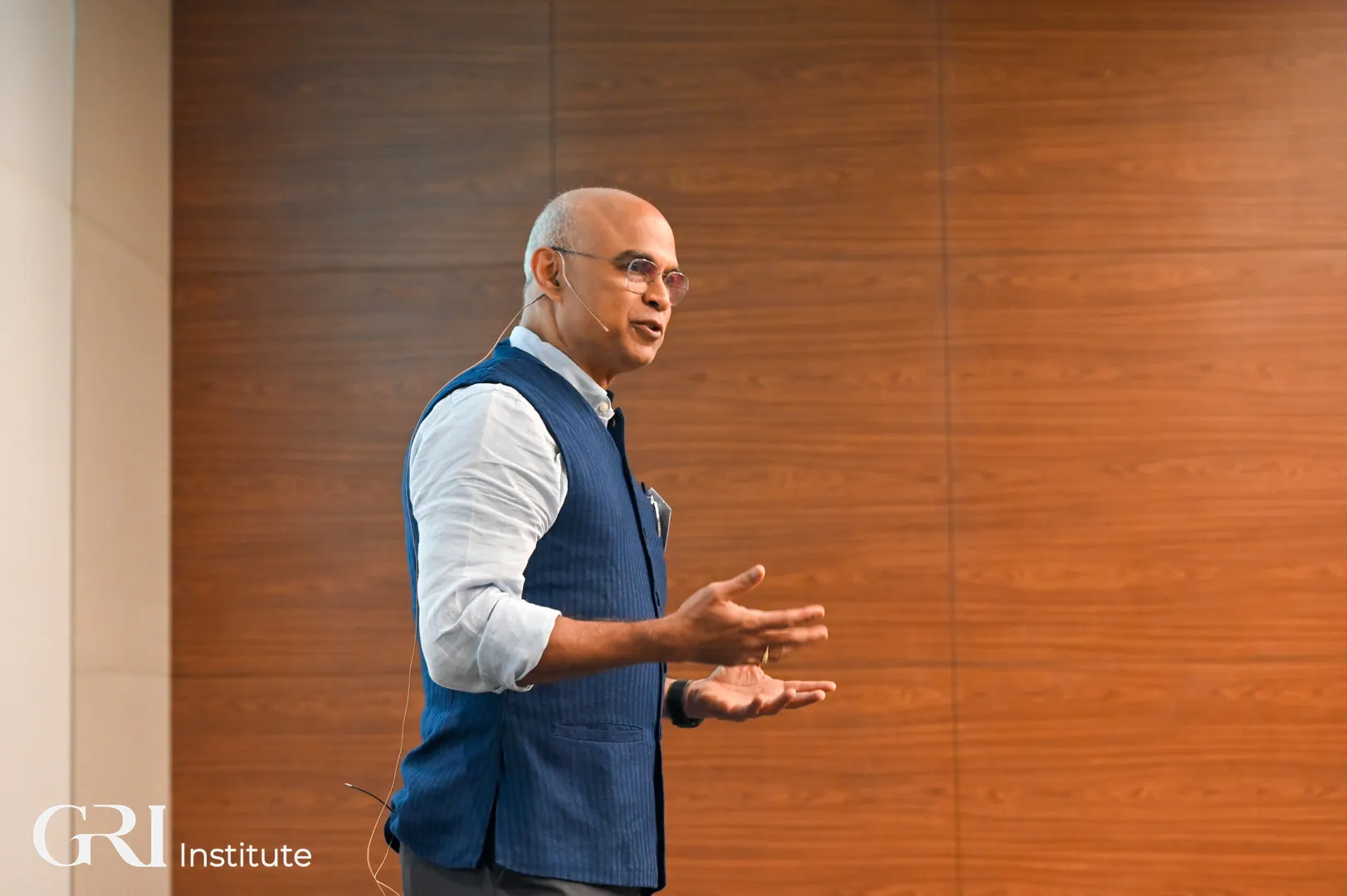
Infrastructure connectivity has now eclipsed demographics as the primary driver of residential value creation. (GRI Institute)
Residential Market
Bankable or just Bullish?
The residential sector is currently navigating a phase characterised by intense exuberance, yet industry veterans warn that this upcycle is not infinite. While headline absorption numbers breed confidence, the consensus dictates that strategic discipline is now the primary safeguard against inevitable cyclical turns.The durability of this momentum is inextricably linked to macroeconomic health; experts posit that as long as GDP growth exceeds 7%, the sector remains insulated, but a dip below this figure could rapidly reintroduce inventory overhangs reminiscent of past downturns.
Consequently, the market is advised to rely less on marketing claims and more on raw 3-7 year absorption data to gauge true demand pricing power.
To mitigate risk and reduce the financial rigour required for land acquisition, developers are employing strict analytical frameworks where land cost is capped at 20% to 25% of Booking Value (BV) for city-centric luxury projects, though this ratio may scale up to 60% for speculative or fast-churn plotted developments.
This discipline is critical because traditional distress signals have evolved; the cost of sales is now the truest barometer of project health.
While efficient operations can maintain sales costs between 3.3% and 4.5%, a spike towards 8% or 14% reveals a reliance on heavy broker incentivisation, often masking underlying weakness regardless of sales volume.
The capital landscape remains a complex paradox. With regulatory barriers preventing banks from funding land acquisition since 2006, the industry remains dependent on private credit - described vividly as both "oxygen" and "cholesterol" depending on the leverage levels.
Although public listings are viewed as a "vitamin" for growth rather than a "stent" for debt relief, the equity markets have become increasingly sophisticated.
Investors are no longer seduced by top-line growth alone, demanding visibility on free cash flow and collections, thereby placing listed entities under rigorous quarterly scrutiny.
Additionally, a stark divergence in market focus has been observed. Despite affordable housing representing 34% of demand, it remains commercially unviable for private developers due to prohibitive land costs, necessitating government intervention through land auctions at lower reserve prices to make the economics work.
Consequently, capital and development focus have consolidated around the premium and luxury segments, driven by a value trap where domestic discretionary income - estimated at USD 1.2 trillion - is funnelled into real estate due to limited outbound investment avenues.
Looking ahead, this bullish trend is expected to sustain for another 12-24 months before potentially stabilising.
Urban Renewal at Scale
Transformation across Indian Cities
The discourse on urban renewal has shifted from viewing it as a niche activity to recognising it as the central theme of Mumbai’s real estate economy. With approximately 6,500 acres of habitable land recently unlocked - representing nearly 20% of the city's total landmass - the sector is facing an unprecedented opportunity.However, this massive injection of potential supply creates a complex problem statement regarding future pricing power and absorption which the industry has yet to fully solve. The consensus is that while the opportunity is immense, the ability to forecast demand over the decade-long execution cycles required for these mega-projects remains elusive.
A clear example of this can be seen in the sheer magnitude of the Dharavi redevelopment, described as a project with "no parallel" globally.
Involving the rehabilitation of vast populations and the construction of 1.5 lakh homes, the project aims to transcend simple housing to create a multi-modal transport hub akin to Hong Kong Central.
However, master planners warn that such large-scale renewal must avoid the trap of creating gated enclaves or silos derived from archaic bungalow typology planning codes; instead, it is essential that these developments integrate seamlessly into the existing urban fabric to maintain the city's vitality.
Operational reality also presents stark challenges. The peri-urban areas of the Mumbai Metropolitan Region (MMR) suffer from a disconnect between planning and infrastructure; developers effectively acquire agricultural land that requires a labyrinth of permissions to convert, often building infrastructure such as Elevated Service Reservoir (ESR) water tanks only to be told by authorities that there is no water to fill them.
Furthermore, the construction ecosystem is grappling with a severe shortage of skilled labour, specifically masons, forcing a strategic pivot towards monolithic concrete construction using aluminium formwork that eliminates brickwork entirely to ensure delivery speed and safety.
Technology stands out as the necessary enabler to bridge these gaps, yet its application remains fragmented. While tools such as Building Information Modelling (BIM) are prevalent, they often stall at the design stage (LOD 300) because the necessary vendor data for supply chain integration is missing, rendering the models less effective for lifecycle management.
Additionally, regulatory mandates - such as compulsory IoT integration in rehabilitation tenements or the enforcement of monopoly-controlled fire evacuation lifts - have faced criticism for adding cost and complexity without delivering practical value to the end-users.
Despite these execution headwinds, the investment thesis for urban renewal remains high-conviction.
With traditional banks constrained by regulation, Alternative Investment Funds (AIFs) have stepped in, with some portfolios allocating up to 90% of their capital to redevelopment projects where tenant vacation risks have been mitigated.
The overarching sentiment is that in land-constrained island cities such as Mumbai, redevelopment is not merely an option but the only viable avenue for growth, creating a multi-year story that global and domestic capital is eager to back.
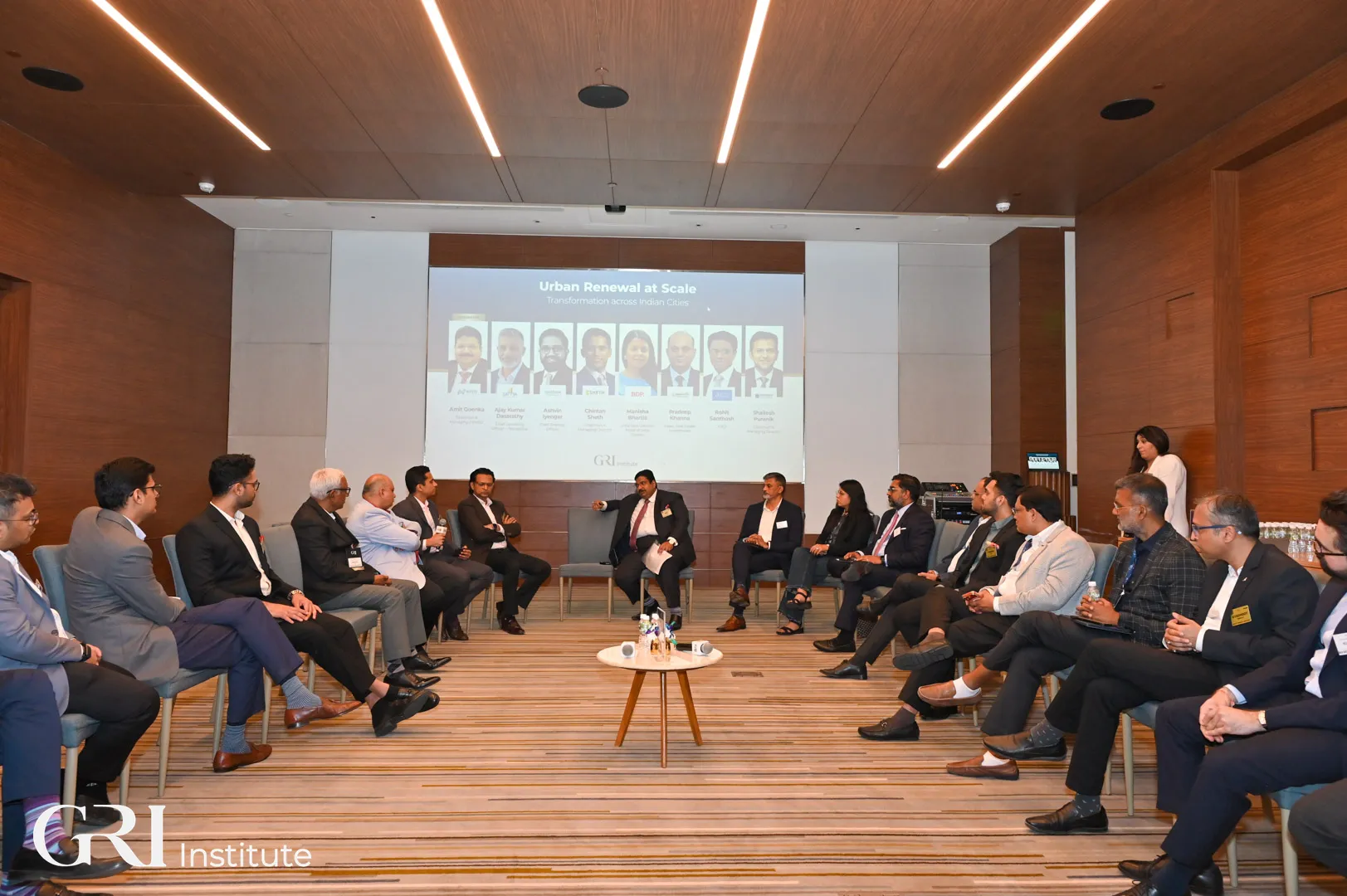
Success in branded living depends on resolving the friction between premium service demands and operational costs. (GRI Institute)
Townships Innovation
Mixed-Use Living Meets Investable Returns
Integrated townships are suffering from a fundamental structural disconnect: the mismatch between the decade-plus-long gestation period of large-scale developments and the rigid timelines of institutional capital.While a township project realistically demands a 15-year horizon to reach maturity, private equity funds operate on strict 6-7 year cycles, necessitating an exit in the fifth year to buffer against unforeseen delays.
Consequently, early-stage land aggregation and horizontal infrastructure development are ill-suited for institutional funding; instead, patient developer equity must bridge the gap until entitlement risks are fully mitigated and the project is ready for vertical construction.
To navigate this capital inefficiency, many industry leaders advocate for the adoption of a "Master Developer" model. Rather than a single entity attempting to execute every vertical across hundreds of acres, the master developer should focus exclusively on land aggregation, zoning, and horizontal infrastructure.
By subsequently inviting specialised sub-developers to execute distinct asset classes - such as hospitals, schools, retail, or data centres - the project can leverage multiple balance sheets simultaneously.
This strategy hedges execution risk and accelerates monetisation, preventing the capital stagnation that occurs when a single developer attempts to deliver millions of square feet over two decades using a solitary balance sheet.
Township Operational Challenges
Operational realities in the urban periphery present their own set of fiscal challenges, with developers venturing into township projects often facing a double burden regarding infrastructure. Despite paying significant statutory development charges to authorities, they frequently find themselves forced to fund and construct basic utilities - including water access, electricity, and rail overbridges - due to the lag in municipal delivery.Amidst these hurdles, the concept of livability is seen as the primary catalyst for value creation. The first 20% of habitation is the critical tipping point; establishing a functioning ecosystem for the initial 100-300 families triggers the social momentum and word-of-mouth validation necessary to drive long-term absorption and price appreciation.
Operating at scale now necessitates a transition from manual management to integrated technology. With modern gated communities witnessing thousands of daily external footfalls - driven by the explosion of quick commerce and service delivery - manual security processes are no longer viable.
Technology platforms have thus become essential for managing asset operations, security, and community engagement at scale.
Ultimately, however, the non-negotiable foundation for any investable township remains clear land entitlement; any ambiguity regarding title or ownership is viewed as an immediate destroyer of Internal Rate of Return (IRR), effectively locking out institutional participation regardless of the project's architectural ambition.
The New Homebuyer Wave
Hospitality-Led Premium Living & Branded Residences
The nascent market for hospitality-led real estate is currently navigating a fundamental identity crisis regarding the distinction between service apartments and branded residences; while the domestic market often conflates service apartments with sale-and-leaseback products for retail investors, the global standard defines them as long-stay hotel assets retained by a single entity.In contrast, branded residences operate as pure real estate assets owned by the end-user which are distinguished either by a service-led operational model, such as Four Seasons, or a design-led aesthetic identity like Trump.
The commercial rationale for this integration is compelling, as historical data from projects like the Trump Tower indicates a price premium of 20% to 30% over comparable non-branded stock within the same development phase.
Beyond immediate sales velocity, the strategic value of a brand lies in its ability to permanently reposition a developer into the top quartile of market pricing by altering the micro-market’s perception of quality and luxury.
This premium is driven by the assurance of standardised delivery, particularly for first-time homebuyers who have accumulated significant wealth but lack experience in luxury asset ownership.
Operational reality introduces significant friction regarding Common Area Maintenance (CAM) charges, creating a tension where buyers desire the prestige of a luxury hotel brand yet remain resistant to the associated operational costs.
One renowned premium residence in Bangalore commands a maintenance charge of approximately INR 26.5 per square foot - nearly double the market standard of INR 10 to 15 - which is necessary to fund shared engineering infrastructure and higher-calibre staff.
Consequently, operators are increasingly cautious about these partnerships, fearing that future Resident Welfare Associations might vote to remove the brand to reduce costs, thereby diluting the asset’s long-term value.
From an investment perspective, the mid-market service apartment model has struggled to gain traction in India due to compressed residential rental yields hovering between 2.5% and 3.5%, which erodes margins compared to commercial office assets yielding 10% to 11%.
However, the sector is witnessing the emergence of institutional rental living models where managed portfolios are generating unlevered yields of 13% to 15% on a PropCo basis, suggesting that while India remains a culturally deep ownership market, the evolution of premium services is the necessary precursor to the eventual institutionalisation of residential assets.
Thank you to everyone who participated in the GRI Residential India 2025 conference.