 Adobe Stock
The Hotelification of Indian Real Estate
How office and retail assets are adopting hospitality principles to maximise returns and stay competitive
November 17, 2025Real Estate
Written by:Jorge Aguinaga
Key Takeaways
- Modern offices are increasingly being run as services, adopting hospitality principles to create a frictionless daily experience that improves tenant retention.
- Retail's survival now depends on selling an intangible experience, as technology has disrupted traditional anchors such as cinemas and hypermarkets.
- This hotelification trend is customer-driven, as people now demand the same high-quality service from their office or mall as they do from a premium hotel.
A profound convergence is underway in real estate, merging the once-sharp distinctions between the design, function, and service of offices, hotels, and retail malls.
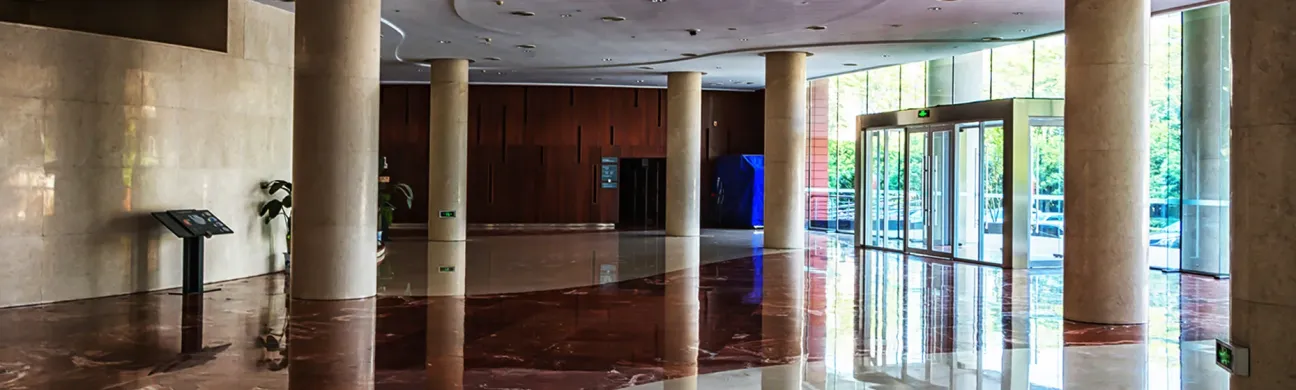
Today, an office lobby rivals that of a 5-star hotel, featuring the same high-end marble, designer furniture, and even butler service.
This is not a superficial trend but a fundamental market shift, a “hotelification” of all asset classes - driven not by developers, but by customers.
A customer who experiences a seamless, high-class environment in one part of their life now demands that same level of service from their workplaces and their shopping centres.
Consequently, the principles of hospitality are no longer a nice-to-have for office and retail; they are a core survival strategy.
The core principle, as one panellist from India GRI 2025 with a hospitality background noted, is solving the basic hospitality challenges that exist in every business.
Success is no longer just about the address, it is about creating a seamless and easy experience for the end-user, which is defined by perfecting the fundamentals.
This includes ease of access with good parking, seamless function so a user can get to their desk and log on to Wi-Fi immediately, and quality basics like clean, well-stocked restrooms without queues.
This service-led approach extends even to large-scale business parks, with one CEO describing a new 2 million square foot office campus where blocks are tucked into an urban forest.
This design features boardrooms within this natural environment, not as a gimmick, but as a hospitality-driven tool to boost productivity.
The philosophy is simple: if you service your tenant with all the facilities, why would they leave you? This convergence is even reshaping the business model, with predictions that the flex-space industry will eventually migrate to a truly asset-light model, identical to hotel brands, where developers incorporate them to manage the tenant experience.
Technology has ruthlessly attacked the mall's traditional anchors, from streaming services like Netflix disrupting cinemas to 11-minute quick-commerce delivery making the hypermarket trip obsolete for many urban consumers.
With its core functions under threat, the mall must sell something that cannot be digitised: experience.
The iPhone provides a perfect case study, as a customer can buy the exact same product from a small local shop or a flagship store in a premium mall. The product and warranty are identical, so the only differentiator is the whole experience of buying it.
This pressure to perform is coming from all directions, with one mall CEO noting that after visiting the new Bangalore T2 Airport, his first thought was: “if that's the airport, my mall has to be even better."
This hotelification is now expressed through massive investments in experience, such as building malls with 5.85-metre floor heights simply to give retailers the canvas for an experience and to create a sense of awe.
The traditional silos between asset classes are irrelevant to them, as they demand service, convenience, and a high-quality experience whether they are working, travelling, or shopping.
The lesson from the hospitality industry, once defined by service excellence and now by intelligent luxury, is that the return on square feel is just as critical as the return on square feet.
For office and retail assets, embracing this principle is no longer a choice; it is the only way to remain relevant.
These strategic insights were shared during the panel discussion on the "Strategic Blueprint of Retail & Hospitality's Evolution - Branded Vs. Boutique & Global Investor Preferences".
The session was moderated by Pankaj Renjhen, COO, ANAROCK Retail, and featured reflections from leading experts including Anshu Sarin, Chief Executive Officer, 91 Springboard; Karthik Krishna, Co-founder & Managing Partner, EverVantage; Rahul Pandit, MD & CEO, Advent Hotels International; Rajneesh Mahajan, CEO, Inorbit Malls; Ranvir Bhandari, President, Miros Hotels & Resorts; Rao Munukutla, CEO & Executive Director, BACL; and Zubin Saxena, Sr. Vice President, Region Head – South Asia, Hilton.
Access the full takeaways and C-level insights in the exclusive India GRI 2025 Spotlight.
Today, an office lobby rivals that of a 5-star hotel, featuring the same high-end marble, designer furniture, and even butler service.
This is not a superficial trend but a fundamental market shift, a “hotelification” of all asset classes - driven not by developers, but by customers.
A customer who experiences a seamless, high-class environment in one part of their life now demands that same level of service from their workplaces and their shopping centres.
Consequently, the principles of hospitality are no longer a nice-to-have for office and retail; they are a core survival strategy.
The Office: A New Service-First Approach
The modern office is being completely reimagined as a hospitality-first product, a necessary evolution to draw employees back and justify premium rents.The core principle, as one panellist from India GRI 2025 with a hospitality background noted, is solving the basic hospitality challenges that exist in every business.
Success is no longer just about the address, it is about creating a seamless and easy experience for the end-user, which is defined by perfecting the fundamentals.
This includes ease of access with good parking, seamless function so a user can get to their desk and log on to Wi-Fi immediately, and quality basics like clean, well-stocked restrooms without queues.
This service-led approach extends even to large-scale business parks, with one CEO describing a new 2 million square foot office campus where blocks are tucked into an urban forest.
This design features boardrooms within this natural environment, not as a gimmick, but as a hospitality-driven tool to boost productivity.
The philosophy is simple: if you service your tenant with all the facilities, why would they leave you? This convergence is even reshaping the business model, with predictions that the flex-space industry will eventually migrate to a truly asset-light model, identical to hotel brands, where developers incorporate them to manage the tenant experience.
Retail: Competing with Tech Through Experience
If the office is adopting hospitality principles for productivity, the retail sector is doing so for pure survival.Technology has ruthlessly attacked the mall's traditional anchors, from streaming services like Netflix disrupting cinemas to 11-minute quick-commerce delivery making the hypermarket trip obsolete for many urban consumers.
With its core functions under threat, the mall must sell something that cannot be digitised: experience.
The iPhone provides a perfect case study, as a customer can buy the exact same product from a small local shop or a flagship store in a premium mall. The product and warranty are identical, so the only differentiator is the whole experience of buying it.
This pressure to perform is coming from all directions, with one mall CEO noting that after visiting the new Bangalore T2 Airport, his first thought was: “if that's the airport, my mall has to be even better."
This hotelification is now expressed through massive investments in experience, such as building malls with 5.85-metre floor heights simply to give retailers the canvas for an experience and to create a sense of awe.
The Customer-Driven Convergence
Ultimately, this hotel-ification of real estate is the market's response to a newly empowered customer who doesn't differentiate at all.The traditional silos between asset classes are irrelevant to them, as they demand service, convenience, and a high-quality experience whether they are working, travelling, or shopping.
The lesson from the hospitality industry, once defined by service excellence and now by intelligent luxury, is that the return on square feel is just as critical as the return on square feet.
For office and retail assets, embracing this principle is no longer a choice; it is the only way to remain relevant.
These strategic insights were shared during the panel discussion on the "Strategic Blueprint of Retail & Hospitality's Evolution - Branded Vs. Boutique & Global Investor Preferences".
The session was moderated by Pankaj Renjhen, COO, ANAROCK Retail, and featured reflections from leading experts including Anshu Sarin, Chief Executive Officer, 91 Springboard; Karthik Krishna, Co-founder & Managing Partner, EverVantage; Rahul Pandit, MD & CEO, Advent Hotels International; Rajneesh Mahajan, CEO, Inorbit Malls; Ranvir Bhandari, President, Miros Hotels & Resorts; Rao Munukutla, CEO & Executive Director, BACL; and Zubin Saxena, Sr. Vice President, Region Head – South Asia, Hilton.
Access the full takeaways and C-level insights in the exclusive India GRI 2025 Spotlight.