 Adobe Stock
India Office Market 2026 Strategic Outlook
Insights from the Bangalore RE 2026 roundtable on the pivot from commodity space to experience led assets where social infrastructure drives long term demand
January 22, 2026Real Estate
Written by:Jorge Aguinaga
Executive Summary
This report synthesises the critical insights from the Bangalore Real Estate Roundtable 2026, where industry leaders convened to discuss the future of office assets. The Indian office market is currently witnessing a historic upcycle, characterised by record absorption and a fundamental shift in occupier priorities. The discussion revealed that the market has moved beyond simple rental arbitrage, with talent availability and infrastructure connectivity now serving as the primary decision levers. However, a significant operational gap remains between design intent and actual sustainability performance, necessitating a new era of landlord-occupier collaboration to unlock true asset value.
Key Takeaways
- Occupiers are prioritising locations based on talent density and commute capability rather than cost alone.
- A critical lack of transparency in building performance data is hampering sustainability goals, prompting the need for a shared responsibility model.
- While Tier 1 cities remain the primary hubs for rapid salary growth, Tier 2 locations are emerging as successful satellites for inclusivity.
Market Momentum
Record Absorption Driven by Global Capability Centres
The Indian office sector is currently experiencing a period of unprecedented growth, having absorbed approximately 170 million square feet over the last two years.This surge is largely fuelled by the expansion of Global Capability Centres (GCCs) and a robust domestic talent base that continues to attract international corporates despite global economic headwinds.
This growth is underpinned by a significant cost arbitrage, not just in real estate rentals but in the total cost of operations relative to global benchmarks. However, this momentum brings a challenge of scale, as occupiers now demand space as a service rather than traditional leases, seeking the flexibility to expand without heavy capital deployment.
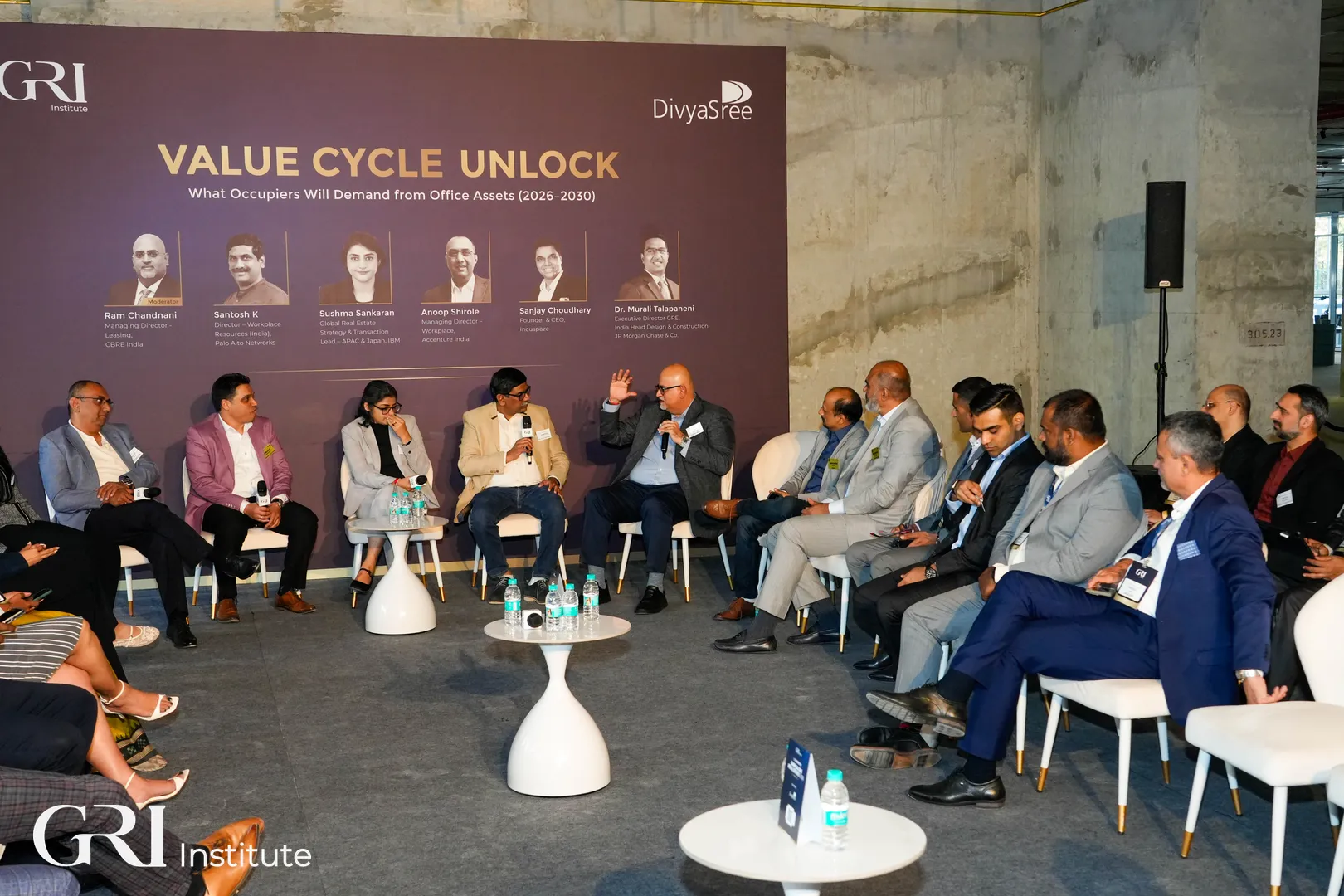
Panelists at the Bangalore RE 2026 roundtable agreed that the true value cycle unlock has shifted, with occupiers now prioritising social infrastructure and talent density over simple rental arbitrage. (GRI Institute)
Location Strategy
The Primacy of Talent and Social Infrastructure
The criteria for site selection have evolved significantly. While rent remains a factor, the primary drivers for 2026 and beyond are talent availability and connectivity.Modern employees, particularly the younger demographic, demand instant gratification regarding their commute and workspace environment. Consequently, the social infrastructure of a campus - access to food courts, amenities, and public transport - has become as critical as the office building itself.
This shift is forcing developers to look beyond the asset to the broader ecosystem, ensuring that workspaces are integrated with the city's public transport networks to mitigate the friction of daily travel.
The Tier 2 Paradox
Inclusivity versus Career Growth
The narrative around Tier 2 and Tier 3 cities is nuanced. While these markets have successfully served as hubs for workforce inclusivity - specifically enabling higher participation from women who prefer remaining in their hometowns - they face structural limitations.While opportunities exist, the career mobility sought by Gen Z talent often drives them back to metros like Bangalore, Mumbai, or Hyderabad to access higher wage growth.
Furthermore, a lack of compliant, institutional-grade real estate in smaller cities acts as a brake on rapid corporate expansion, meaning the shift to these markets will be a gradual evolution rather than an immediate revolution.
Sustainability and Operations
Bridging the Gap from Certification to Performance
Sustainability has transitioned from a "tick-in-the-box" certification exercise to a core operational mandate. However, a significant disconnect persists between design intent and operational reality.While buildings may be designed for efficiency, actual consumption often deviates due to a lack of data transparency. The industry is calling for a shared responsibility model where landlords and tenants move beyond opaque Common Area Maintenance (CAM) billings to real-time data sharing.
This requires a digital integration where Building Management Systems (BMS) communicate directly with occupier systems to optimise energy loads, such as air conditioning, based on real-time occupancy rather than static schedules.
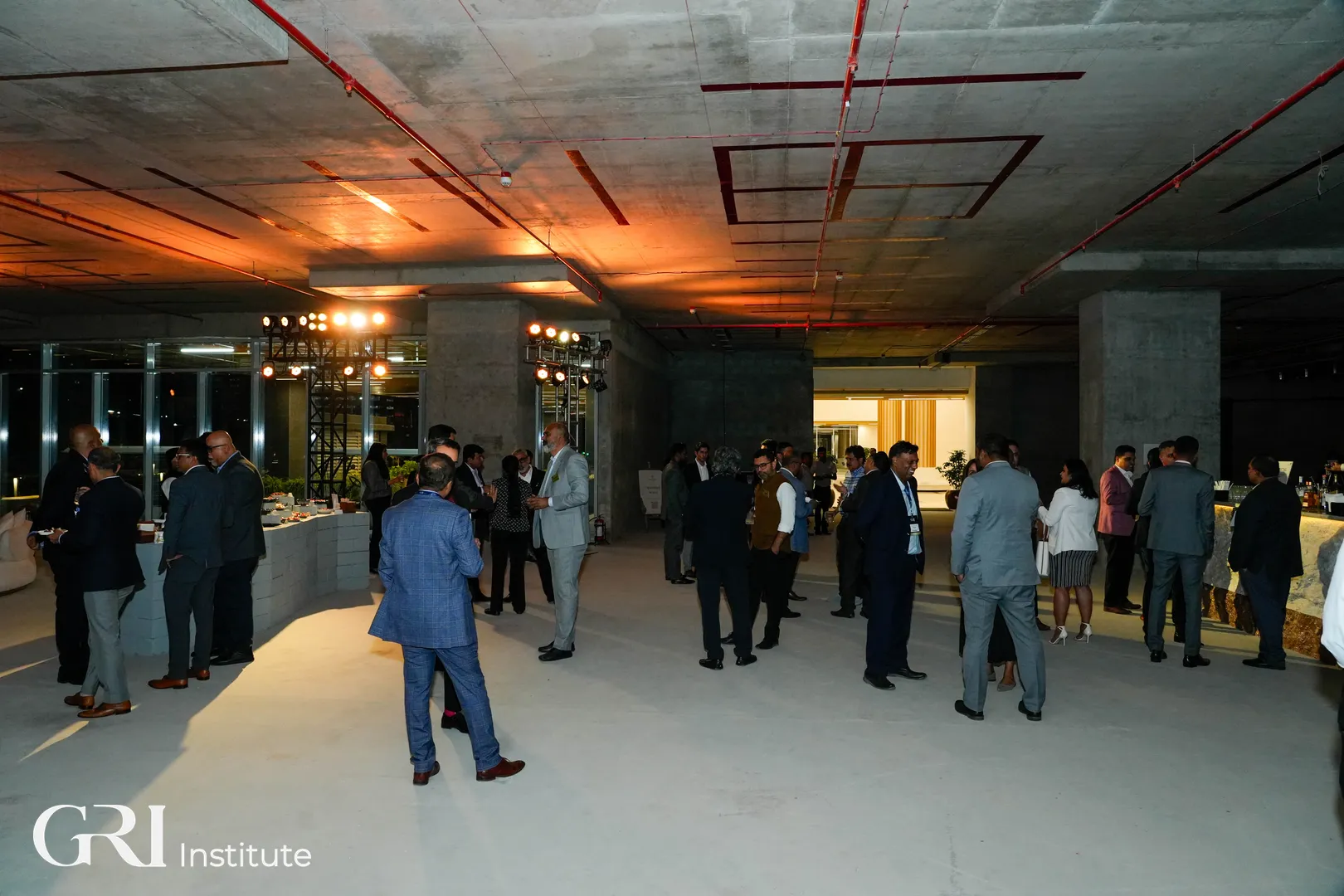
Co-hosted with DivyaSree Developers at 77 Town Centre, we broke the boardroom mould by transforming a live construction site into an immersive, raw backdrop for honest industry dialogue. (GRI Institute)
Future Design Imperatives
The Digital Core and Asset Relevance
Looking towards 2030, the definition of a prime asset is shifting towards digital-first infrastructure. Basic utilities now include robust mobile connectivity and digital backbones, which are often overlooked in current developments.There is a pressing need to upgrade the existing stock of approximately 437 million square feet, which risks becoming irrelevant if it fails to meet modern standards for air quality and digital readiness.
Future-ready workspaces must blend physical and digital experiences, ensuring that buildings are not just shells but responsive environments that adapt to the hybrid work patterns of the modern occupier.
Strategic Outlook for 2026
Collaboration as the Catalyst for Value
The path forward requires a dismantling of the traditional adversarial relationship between landlords and occupiers. True value unlock will occur when both parties collaborate on capital investments and operational strategies.Whether through green leases that penalise inefficiency on both sides or through integrated technology platforms that facilitate transparent, real-time data access for utility consumption, the market is moving towards a partnership model.
As the industry matures, the focus is shifting from simply building square footage to creating curated, compliant, and connected ecosystems that can sustain the next decade of India’s economic growth.
Thank you to everyone who participated in the Bangalore Real Estate Roundtable 2026.