 Adobe Stock
The 2026 Outlook for Indian Data Centres
How speed, supply chain resilience, and energy security will define the winners in India's AI-driven market in the year ahead
January 12, 2026Real Estate
Written by:Jorge Aguinaga
Executive Summary
As the initial land grab subsides, the Indian data centre sector is entering a definitive survival of the fittest phase. The 2026 outlook reveals a market pivoting from speculative entry to operational rigour. While demand is fuelled by AI and cloud adoption, the barrier to success has risen, transforming capital depth and technical precision into prerequisites. The coming year will be defined by a migration to Tier 2 markets, a critical test of supply chain resilience against record breaking construction speeds, and a strategic move towards holistic master planning to solve the energy security challenge.
Key Takeaways
- The edge concept has graduated from concept to construction, with substantial 10 to 20 megawatt facilities now emerging across over 20 secondary cities to serve local data and AI inferencing needs.
- As India builds at three times the global pace, the primary risk for 2026 is no longer land acquisition, but ensuring zero error quality within a stretched manufacturing supply chain.
- Sustainability has evolved into master planning, where the vertical integration of power generation and transmission alongside water stewardship is the only viable strategy for long term growth.
The Great Consolidation
Throughout 2025, the sentiment across the Indian real estate sector was unanimous: everybody wanted a piece of the data centre pie. From traditional developers to global funds, the allure of the sector was driven by undeniable tailwinds - cloud adoption, general data usage, and the explosive rise of artificial intelligence (AI) - fuelling predictions of upwards of 30% year-on-year growth.However, as we look towards 2026, the market is beginning to distinguish between enthusiasm and execution. While many real estate players have attempted to enter the space over the last several years, very few have found genuine success.
The primary hurdle remains a fundamental misunderstanding of the asset class. Unlike commercial or residential projects, where mechanical, electrical, and plumbing (MEP) might constitute 10-20% of the spend, in data centres, this ratio is reversed: approximately 80% of capital expenditure is dedicated to complex technology and infrastructure.
The industry is now entering a phase of natural selection. The focus is shifting from simply acquiring land to the operational rigour required to manage high-density computing. As new capacity floods the market, balance sheets will be tested, and the ability to weather industry cycles will separate the serious operators from the opportunistic entrants.
The Geography Shift
For years, the industry’s gaze was fixed firmly on the metropolitan giants - Mumbai, Chennai, Bangalore, Delhi, and Hyderabad - where hyperscalers drove the development of massive campuses. While these gigawatt-scale investments remain a cornerstone of the market, 2026 will likely be defined by a significant geographical pivot: the rise of the Tier 2 city.The rationale is driven by data consumption patterns. With approximately 80% of users located outside the primary US and developed markets - and a vast portion of Indian users residing in Tier 2 cities - the data gravity is shifting.
This dispersal creates an urgent need for local internet exchanges and points of presence (PoPs) to serve content closer to the consumer. Furthermore, the specific inferencing needs of AI are fuelling the demand for distributed processing power.
However, edge in this context is often misunderstood as referring to the telecom tower model. Instead, the market is witnessing the emergence of substantial 10 to 20-megawatt facilities in previously overlooked cities.
Major operators are already moving from strategy to execution in this regard, with land already acquired and construction underway across more than 20 distinct Tier 2 markets.
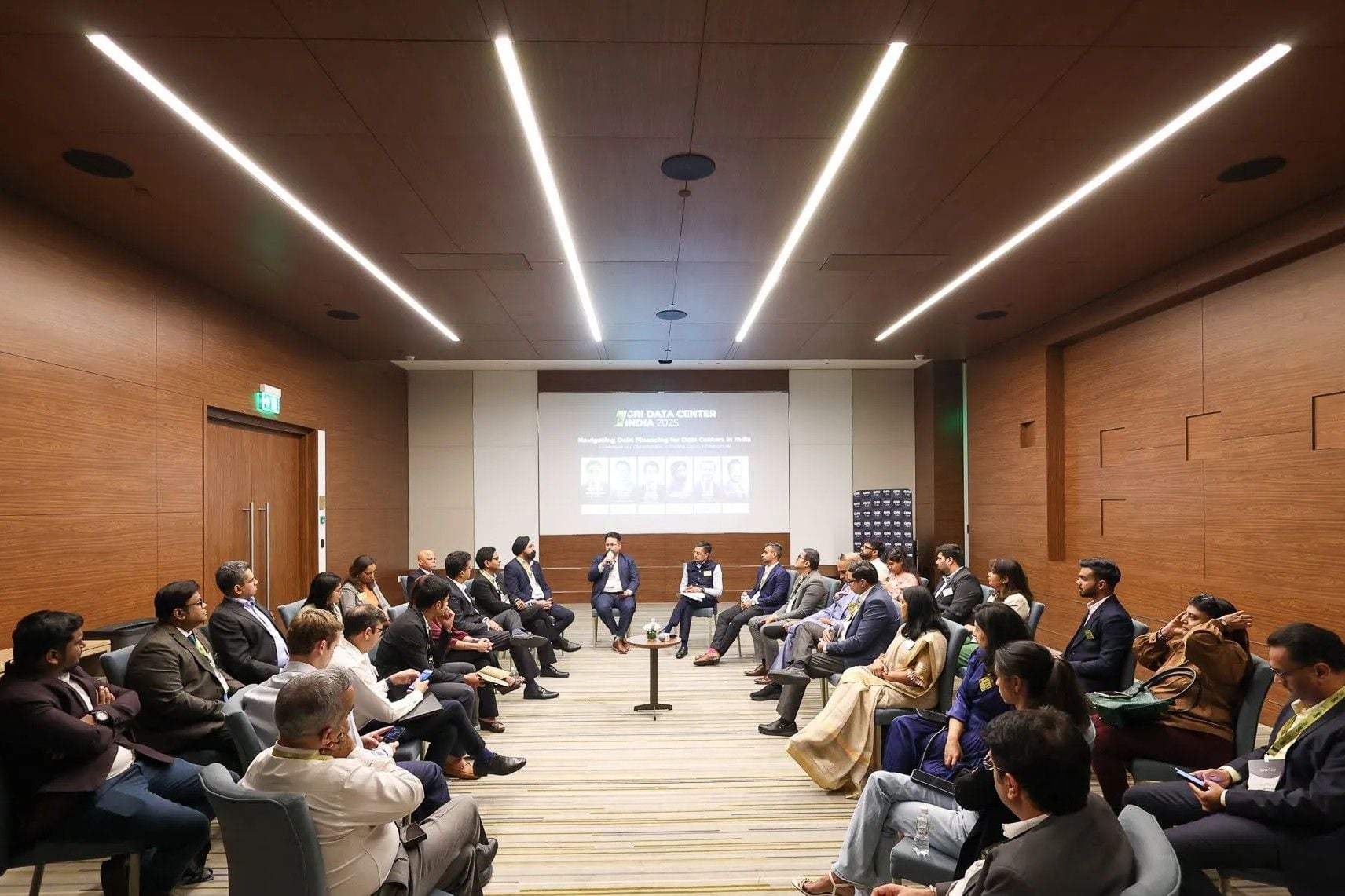
These critical themes will define the discussions at GRI Data Center India 2026, taking place on 10th February at the Grand Hyatt Mumbai. (GRI Institute)
The Execution Challenge
India’s data centre sector has established a global reputation for velocity. The market is currently building capacity at 2-3x the speed of other global regions, with some operators delivering functional hyperscale capacity of up to 8.5 MW in as little as four to six months.Yet, this blistering pace introduces a critical risk: the resilience of the supply chain. The primary concern for 2026 is not land availability or construction capability, but whether the manufacturing ecosystem - producers of transformers, generators, chillers, and bus bars - can scale their output without compromising quality.
In traditional industries, a minor manufacturing defect might be tolerable. In the data centre environment, however, there is effectively zero margin for error. A single batch of defective components from a shop floor struggling to meet volume demands can lead to catastrophic availability incidents across multiple facilities.
Moving forward, this speed must be balanced against rigorous global specifications to ensure that rapid deployment does not come at the cost of long-term reliability.
Energy Security and Master Planning
While the demand for digital infrastructure is undeniable, the ability to supply it is increasingly governed by a single constraint: energy security.Globally, data centres currently consume approximately 2% of the world’s energy, a figure projected to rise towards 8% as new technologies accelerate. In this context, sustainability is no longer just a corporate social responsibility (CSR) metric; it is a fundamental operational requirement.
The conversation has evolved from simply procuring green energy to comprehensive master planning. The most forward-thinking operators are now looking at vertical integration, securing their future not just through power purchase agreements, but through the development of dedicated power plants and transmission infrastructure.
Furthermore, the resource conversation is expanding beyond electricity. Water stewardship has emerged as a critical element of the social license to operate. Integrating water management strategies - ensuring the facility supports rather than drains the local ecosystem - is becoming essential for community integration and long-term viability.
The successful data centre of 2026 will be one that has solved the energy and water puzzle through holistic, long-term infrastructure planning rather than ad-hoc solutions.
Navigating the Era of Consolidation
The outlook for 2026 is clear: the Indian data centre market is transitioning from a phase of explosive speculation to one of industrial maturity. While the sector promises significant growth - fuelled by cloud adoption and the AI revolution - it is not a tide that will lift all boats equally.With so many players having entered the market, a period of consolidation was inevitable. The coming years will test balance sheets, favouring those with the capital depth to weather economic cycles and the technical expertise to manage complex, high-stakes infrastructure.
Success in 2026 will not be defined by who can announce the largest capacity, but by who can deliver it with the highest speed, the strictest quality control, and the most secure energy infrastructure.
Join the most preeminent leaders, developers, and investors in Mumbai on February 10th for GRI Data Centre India 2026.