 Unsplash
Pan-European Living Outlook H2 2026 - GRI Institute Report
Collected industry leader insights on the future of residential sectors across UK and European markets from 20+ GRI gatherings so far this year
May 7, 2026Real Estate
Written by:Rory Hickman
Executive Summary
As we approach the second half of 2026, it is worth looking back at the sentiments and strategic intelligence shared so far amongst the industry leaders paving the way forward in the European living real estate sector amid a complex mix of international, regional, and local shifts.
This report features the insights shared by these senior decision-makers at the 20+ GRI Institute events that have already taken place this year, with direct assessments of the housing markets in Germany, France, Spain, Portugal, Italy, Central & Eastern Europe, and the United Kingdom.
We will be continuing our coverage of the region’s residential sectors at GRI Living Assets Europe 2026 on 24th-25th June in London, and the broader market at Europe GRI 2026 Summer Edition on 9th-10th September in Paris - don’t miss the chance to be part of the conversations shaping the future of the built environment.
This report features the insights shared by these senior decision-makers at the 20+ GRI Institute events that have already taken place this year, with direct assessments of the housing markets in Germany, France, Spain, Portugal, Italy, Central & Eastern Europe, and the United Kingdom.
We will be continuing our coverage of the region’s residential sectors at GRI Living Assets Europe 2026 on 24th-25th June in London, and the broader market at Europe GRI 2026 Summer Edition on 9th-10th September in Paris - don’t miss the chance to be part of the conversations shaping the future of the built environment.
Key Takeaways
- Across Europe, capital is rotating from traditional equity into alternative operational "beds" and defensive credit to capture higher resilience and margins.
- Severe viability hurdles are driving a transition from ground-up construction towards the strategic conversion of obsolete urban office buildings.
- Success in this fractured landscape is being led by domestic players using tech-led operational agility to navigate complex local regulatory friction.
► Living markets brace for a decisive H2
A forensic appraisal of the fundamental drivers within the UK and European residential sectors reveals a market in which chronic supply-demand imbalances continue to provide robust investment cases.However, these opportunities exist against mathematical realities that have been fundamentally altered by the collision of high construction costs, the return of inflation, and stagnant local affordability - dramatically disrupting the deployment of capital.
In response, institutional funds are pivoting from traditional equity-heavy projects to alternative operational assets - such as student, senior, and flexible living - and defensive credit strategies as part of a broader move toward "beds" that offer higher resilience and operational margins.
These developments are increasingly led by domestic investors who are better equipped to navigate local regulatory friction than international core capital - further entrenching the need to transition from passive property ownership to professionalised, sustainable, tech-led operational agility to achieve success in this fractured landscape.
► Germany
Powerhouse Paralysed by Regulation and Capital Shifts

Germany’s residential market is pivoting toward alternative operational assets as a hostile regulatory landscape and high costs paralyse traditional development. (Unsplash)
Germany’s real estate market in 2026 is defined by a striking divide in sentiment between global capital and local players active on the ground.
International investors view the country’s residential fundamentals as a macroeconomic powerhouse, drawn by a massive structural imbalance where housing demand far outstrips available supply.
Domestic players, conversely, are mired in pessimism, citing political stagnation, soaring energy prices, and a crippling regulatory environment.
With traditional building permissions plummeting to historic lows not seen since before the fall of the Berlin Wall, capital is aggressively pivoting away from standard residential development. Instead, investors are seeking refuge in unregulated operational assets, alternative living formats, and complex urban conversions.
The Core Paradox
The German core housing market is buckling under the pressure of continuous immigration, demographic shifts, and the simple reality that developers cannot build cheaply enough. Construction costs have stabilised but remain trapped at a painfully high benchmark of EUR 4,000 to EUR 4,300 per square metre.Consequently, even supposedly "inexpensive" new builds require rents between EUR 3,000 and EUR 4,000 per month, entirely pricing out middle-class families and forcing a mass exodus to the suburbs to escape city-centre rent hikes of up to 40%.
This chronic lack of affordable homes has sparked a fundamental debate over the country’s urbanisation strategy. Industry leaders are increasingly questioning the logic of massive, centralised building programmes, such as the push for 200,000 new flats in Berlin.
A growing chorus of developers argues that capital would be better spent on high-speed rail infrastructure, seamlessly connecting saturated major hubs to outlying areas such as Cottbus, where 30,000 to 50,000 flats currently sit vacant.
A Hostile Regulatory Minefield
For institutional capital, Germany’s regulatory landscape is the single greatest deterrent to traditional residential investment. Intensive intervention in property rights has created a climate of deep insecurity.In Berlin, the ongoing political debate regarding the "socialisation" or outright expropriation of large housing portfolios exceeding 3,000 units continues to terrify core buyers, regardless of the ultimate legality of such measures.
Furthermore, strict national rent caps and "rent price brakes" are achieving the exact opposite of their intended social goals, strongly incentivising existing tenants to remain in large, heavily subsidised apartments, locking up valuable space and preventing growing families from stepping up the property ladder, while blocking newcomers entirely.
Modernisation efforts offer little relief - in Berlin's 32 protected areas, upgrades are strictly limited, with basic features such as hanging toilets or double bathroom sinks bizarrely classified as prohibited "luxury" additions.
Because the rent control system largely only permits market-rate yields in new-build properties constructed after 2014, investors are increasingly skeptical of acquiring existing stock.
The Broader "Beds" Ecosystem
To bypass these draconian rent controls, opportunistic capital is flooding into alternative, non-regulated "service residential" niches.PBSA and co-living concepts for young professionals are now established, highly competitive asset classes. Because German state universities do not typically provide student housing, the private market enjoys a captive audience.
However, operators stress that scale is critical. Boutique projects of 60 to 100 units lack the necessary economies of scale and are often deemed useless due to high management costs.
Similarly, the senior living sector is viewed as a massive, under-exploited frontier as investors slowly uncouple the asset class from heavy medical regulation to target a glaring void in the mid-market of modern seniors aged 70+ who actively reject isolated nursing homes - driving demand for well-connected, independent urban apartments.
This broader convergence of hospitality and residential models is creating a dynamic "beds" ecosystem, where developers are aggressively converting under-utilised industrial land, obsolete offices, and non-prime hotels into flexible living spaces, despite the severe technical complexities involving building-services infrastructure and floor plate depth.
Capital Realities and ESG Mandates
Underpinning this entire market shift is a radically altered financing landscape. The era of residential developments being propped up by cheap equity from pension funds accepting a 5% internal rate of return is definitively over.With traditional banks becoming highly risk-averse regarding large portfolios, mezzanine and whole-loan funds are stepping into the breach to finance complex schemes.
Simultaneously, ESG standards have transitioned from a marketing bonus to a hard financial requirement. Non-compliant "brown" assets now face punitive financing rates or a total lack of liquidity.
To survive the tightening margins and high capital expenditure costs associated with green retrofitting, operators are abandoning standard product formulas. Instead, they are integrating AI for energy management and standardising back-end processes - professionalising residential real estate into a lean, operational business where asset-level performance outweighs brittle, long-term rent commitments.
► France
Institutional Contraction Meets Retail Resilience

Institutional investors in France are pivoting toward conversions and senior living to navigate a sharp contraction, even as private homeownership begins to stabilise. (Unsplash)
The French living real estate market in 2026 presents a stark dichotomy. On the retail front, private homeownership is experiencing an active stabilisation fuelled by aggressive banking sector lending and recovering transaction volumes.
Conversely, the institutional landscape is navigating a severe contraction. Buffeted by geopolitical shocks, resurgent inflation, and tightening credit conditions, institutional investors are pulling back, demanding stronger repricing.
To survive in this fractured environment, capital is pivoting toward office conversions, mature senior living models, and creative legislative frameworks to bypass traditional residential constraints.
A Tale of Two Markets
For everyday homebuyers and private landlords, the French residential market has turned a corner. Following a significant correction period, national property prices initiated a modest recovery of between 1% and 1.8% in 2025, with steady growth persisting into 2026.Existing property transactions have rebounded to a healthy volume of approximately 950,000 per year - largely driven by an aggressive banking sector eager to attract new customers, stabilising 20-year mortgage rates between 3.2% and 3.4%.
Detached houses remain the primary aspiration for the population, further anchoring private market confidence.
In sharp contrast, the institutional investment arena is defined by a lack of depth, fluidity, and regularity. First-quarter figures for 2026 reveal a severe 47% year-on-year drop in institutional investment, totalling just EUR 1.9 billion.
This deceleration was exacerbated by the outbreak of conflict in the Middle East in late February, which caused oil prices to surge and reignited inflation. Consequently, the 5-year SWAP rate spiked by 50 basis points in a single month, and the 10-year Government Bond yield hit 4%.
With the real estate risk premium squeezed to less than 40 basis points, capital deployment has stalled. Buyers are broadly questioning current pricing, demanding a new phase of yield decompression to push risk premiums back into the 75 to 100 basis point range.
Navigating a Frozen Secondary Market
This macroeconomic turbulence has left the institutional secondary market for traditional residential properties completely frozen, with virtually no large-scale portfolio transactions taking place.To maintain cash flow and avoid granular residential stock, investors are diversifying into larger collections of operational assets, such as student housing and professional shared apartments.
Developers are leaning on new legislative models to circumvent the stagnation, with frameworks that allow for the creation of employment-focused accommodations which bypass many stringent requirements to provide near-social housing solutions that benefit from lower tenant churn and stable performance metrics.
Parisian Conversions and Rental Tension
Geographically, Paris is widely acknowledged as a harder market in which to execute compared with other European urban centres, yet it compensates by being significantly more liquid, transparent, and secure.A major strategic play within the capital involves targeting B and C locations to acquire obsolete office buildings at below replacement costs and systematically convert them into highly lucrative residential or student housing complexes.
These operational assets are deeply insulated by historic levels of tension in the national rental sector. An ongoing imbalance between high tenant demand and the sluggish delivery of new construction means private landlords are experiencing virtually zero rental vacancies.
There are also growing opportunities to optimise returns through strategic, energy-efficient renovations, even if strict environmental mandates are perceived by cautious investors as a potential risk to near-term market stability.
The Senior Living Advantage
Where France truly outpaces its Southern European counterparts is in the maturity of its senior living sector. Unlike the culturally resistant markets of Italy or Spain, France boasts a highly established and structured senior residential model.Facilities are intricately tiered by dependency levels and routinely integrate robust healthcare infrastructure, including on-site doctors conducting regular rounds.
This creates a resilient, care-led asset class that continues to draw institutional interest, providing a safe harbour for capital seeking reliable, long-term operational yields amidst broader market volatility.
► Spain
The Chasm Between Demand and Reality

Spain’s robust residential demand is driving a strategic pivot toward privatisation and flexible living as investors navigate a severe housing and affordability crisis. (Unsplash)
Spain currently boasts the strongest real estate fundamentals in Southern Europe, driven by robust household formation, positive immigration, and increasing market maturity.
However, the sector is grappling with a severe structural shortage of approximately 500,000 homes annually.
While deep demand persists, an acute affordability crisis, shifting interest rates, and soaring land costs are forcing investors to rethink their strategies - pivoting from traditional rentals to flexible living, BTS models, and regional diversification.
Affordability and the Supply Deficit
The Spanish housing market remains fundamentally broken when it comes to affordability. There is a stark disconnect between rising property prices and stagnant local wages, which average just EUR 1,200 gross per month.With only 5% of the population earning over EUR 50,000 annually, and mortgage rates having climbed from 2.2% in late 2025 to between 3.4% and 3.9% today, homeownership is increasingly out of reach.
Consequently, between 60% and 67% of adults aged 18 to 36 remain living with their parents due to a lack of bankable end-user demand.
Land costs are exacerbating the crisis, now accounting for up to 60% of total development costs in districts such as southern Madrid.
While some see the delivery of affordable housing as mathematically impossible - given that standard 100-square-metre units require at least EUR 160,000 to construct - others highlight public-private land concessions, cooperative housing models, and the redevelopment of abandoned villages as viable pathways to achieve target rents of EUR 500 to EUR 600.
The Rise of Privatisation and BTS
Against this macroeconomic backdrop, the traditional BTR sector is undergoing a profound structural shift. Facing a landscape where institutional rental models struggle to hit required yields, a wave of mass privatisation is sweeping the market.Investors are increasingly selling off an estimated 40,000 intended BTR units individually to retail buyers as soon as tenants vacate, as selling units on a retail basis generates a premium of 22% to 28% over the valuation of a standing rental block.
Simultaneously, institutional interest in BTS is surging, offering faster capital gains and superior margins compared to rentals in a high-cost environment. This pivot is largely driven by capital realities; core portfolio offers hover around 4.5% to 5.5%, but the market is heavily populated by value-add capital seeking returns of 15% to 17%.
Flex Living and PBSA
As long-term residential leases become less accessible, flexible living has emerged as the crucial "Plan B" for the market.Operating at the intersection of hospitality and residential, flex models offer temporary accommodation tailored to mobile workers, with an average stay of nine months. These efficient flex portfolios are achieving 60% gross operating profit margins, with prime yields trending around 5%.
A similar operational resilience is seen in PBSA, as Spain's student bed provision rate sits at just 9% to 10% - drastically lower than the 30% seen in the UK. This presents massive growth potential, with operators using dedicated teams to manage short-stay summer vacancies to maintain high occupancy and capture higher average daily rates.
Senior Living Complexities
The senior living asset class in Spain remains less mature than in Germany or France, hindered by a cultural resistance to moving out of family-owned homes.Local middle-class demand in primary cities can be exceptionally difficult to capture due to the stigma surrounding "geriatric" facilities, according to some leaders.
Meanwhile, others see highly lucrative opportunities in coastal regions such as the Costa del Sol, where international residents comprise up to 80% of the clientele, driving a strategic shift toward converting existing hotels into BTR senior apartments.
Regional Divergence and Market Innovation
Capital flows within Spain are increasingly dictated by regional regulatory environments and pricing.Madrid vs Catalonia:
- Madrid remains a core focus, benefiting from flexible legislation that unlocks new residential land. Conversely, Catalonia faces significant reputational risk, with constant regulatory changes triggering capital flight from local investors toward other regions or abroad.
- While some see secondary cities such as Valencia and Alicante as challenging due to investors demanding higher yields for the same construction costs, others note exceptional liquidity, citing rapid project sell-outs in Malaga and successful developments in Bilbao.
- To protect margins, developers are embracing "light" property management apps and stringent digital tenant screening, rejecting up to 80% of applicants to mitigate delinquency risks. Furthermore, industrialised timber construction is reducing delivery times by four months while delivering immense energy savings for residents.
► Portugal
Macro Stability vs Structural Deficit

The Portuguese residential sector is defined by a profound affordability crisis, forcing a shift toward suburban expansion and hybrid operational models to bypass a stalled rental market. (Unsplash)
Portugal’s real estate market presents a striking paradox. The country is widely perceived as a macroeconomic safe haven, insulated from wider geopolitical conflicts and bolstered by four consecutive years of budget surpluses.
This stability, coupled with an annual population growth of 1% driven by foreign wealth and nomadic workers, has attracted massive capital inflows from Brazil, Mexico, and the US.
However, beneath this polished macroeconomic veneer lies a profound structural housing crisis, forcing developers to pivot toward suburban expansion, build-to-sell frameworks, and hybrid operational models to survive.
The Supply Crisis and the Affordability Deadlock
The Portuguese market requires approximately 80,000 new dwellings annually to meet current demand, yet production stubbornly hovers between 27,000 and 33,000 units. The result is a crippling affordability deadlock.Over the past five years, residential prices have surged by 90%, entirely eclipsing a modest 43% growth in average incomes.
For developers attempting to build at accessible price points, the underlying mathematics simply do not work. Constructing affordable units requires build costs of EUR 1,000 to EUR 1,100 per square metre, an impossible target in the current inflationary environment.
Compounding this issue, outdated building codes mandate minimum room dimensions that fail to reflect the realities of modern demographics that are rapidly driving a trend toward smaller household units.
Governmental attempts to stimulate supply have largely missed the mark. A recent legislative change reduced VAT on hard costs from 23% to 6% for specific residential projects, but the heavy administrative compliance burden attached to it severely dilutes the benefit.
Furthermore, tax exemptions for young buyers are viewed as insufficient sticking plasters for a market where the social housing pool sits at a dismal 2.8% to 3%, among the lowest in Europe.
Industry leaders increasingly argue for a Belgian-style framework, where a central government entity acts as a primary client, purchasing or leasing large blocks to provide developers with a guaranteed, risk-free counterparty.
The BTR Void and the BTS Boom
This challenging environment has effectively strangled the institutional BTR sector before it could truly mature. Unlike the professionalised portfolios seen in Spain, Portugal has virtually no established BTR market.The asset class is stymied by abysmal net yields of roughly 3.5% to 4%, falling woefully short of the 7% minimum internal rate of return required by institutional funds.
Adding to the friction are restrictive preference laws that grant individual tenants the right to preemptively purchase their units, effectively blocking the seamless sale of large, institutional-grade portfolios.
Consequently, BTS remains the undisputed king of Portuguese real estate as domestic private investors - who make up 80% of the market - eagerly snap up small off-plan apartments, fuelled by local banks offering highly attractive mortgage conditions that heavily favour buying over renting.
Suburban Migration and the Prime Market
With city centres becoming unaffordable battlegrounds, a definitive geographic shift is underway.The historical price gap between Madrid and Lisbon has narrowed significantly, pushing developers and buyers alike to migrate to the Portuguese market with its suburban peripheries and connected regions such as Loures, Alcochete, Oeiras, and Gaia to find viable land.
Even in these outward expansions, developers face critical bottlenecks. Licensing remains a key bureaucratic challenge, frequently requiring two to three years just to move from land acquisition to a viable project.
Meanwhile, a distinct ultra-luxury segment continues to thrive in prime areas, where high-end properties routinely command prices between EUR 2.5 million and EUR 35 million, sitting in stark contrast to the affordability desert in regions such as the Algarve.
PBSA, Flex Living, and the Operational Pivot
To navigate the yield gap in the dense urban centres of Lisbon and Porto, developers are pivoting towards hybrid operational models.Student accommodation represents a massive, untapped frontier. With a student bed provision rate of just 6% to 7%, compared to 25% to 30% in markets such as the UK, pan-European capital is highly motivated to deploy here.
To maximise returns, PBSA operators are designing flexible assets with modular kitchens and 1.40-metre beds, allowing buildings to pivot seamlessly from student housing during the academic term to highly profitable tourist or professional accommodation during the summer.
In the nascent flex living sector, Lisbon-based management contracts are strategically capping short-term stays at 20% to ensure assets remain compliant and attractive to core German capital.
To protect these fragile margins from soaring construction costs, the industry is looking inward. Developers are increasingly internalising architecture teams and leveraging building information modelling and AI to maintain strict budget frameworks.
Yet, from an environmental sustainability perspective, the market remains decades behind the broader European curve. While high-level certifications help secure institutional financing, the reality on the ground is stark: domestic buyers are simply unwilling to pay a premium for green features in an already severely overpriced market.
► Italy
Institutional Transformation Amidst Regulatory Ambiguity

Italy’s living sector is undergoing a rapid institutional transformation, with capital favouring strategic conversions and niche student housing to overcome a complex regulatory landscape. (Unsplash)
Italy's real estate market is undergoing a profound institutional transformation, transitioning from a historically fragmented landscape of privately owned assets into a dynamic investment arena.
After a period of decline, the living sector roared back in the first quarter of 2026, capturing a 15% market share with a total investment volume of EUR 400 million, representing a staggering 124% year-on-year increase.
Despite this momentum, the market is widely considered the least mature in Southern Europe.
Core investors must navigate significant risk indices driven by ownership restrictions, limited regional liquidity, and a notoriously ambiguous regulatory environment that frequently forces capital toward creative conversion strategies and forward-purchase structures.
The BTR Lag and the Conversion Catalyst
The institutional BTR sector in Italy remains in its infancy, heavily overshadowed by the immediate profitability of BTS models - developers currently enjoy a 30% to 35% profit spread favouring BTS projects, making traditional rental development difficult to justify.This imbalance is particularly evident in Milan, where the reconversion of existing assets into BTS dwellings accounted for an overwhelming 83% of the total residential investment volume in early 2026.
Ground-up construction is further deterred by structural operational inefficiencies. A distinct lack of experienced local operators leads to a 150 to 200 basis point leakage between gross and net yields.
To bypass high construction costs and paralysing planning delays, capital is increasingly pivoting toward a refurb-to-rent strategy. Investors are targeting legacy or stranded urban office buildings for residential conversion, a historically complex process that can ultimately triple a property's initial value.
High PBSA Demand Meets 'Grey' Planning
As it increasingly does across European jurisdictions, the Italian PBSA market stands out as a critical growth engine, driven by a glaring 200,000-bed national deficit.Italy offers a mere 4% provision rate, lagging drastically behind the 16% European average. With a student population of two million and international enrolment growing by 15% annually, the sector attracted record investment volumes of EUR 500 million in 2025. Prime yields have compressed accordingly, tightening to 5.0% in top-tier university cities.
However, entering the market requires navigating what developers describe as a "grey" regulatory environment, where municipal approvals are frequently treated as bespoke conversion negotiations rather than standard regulated processes.
Consequently, risk-averse investors heavily favour forward-purchase structures with strict conditions, which recently accounted for 40% of deployed capital. Milan leads the national pipeline, capturing 37% of all planned beds and commanding prime rents of EUR 2,000 per month.
Meanwhile, secondary hubs are gaining rapid traction, with Padua anticipating 15 new large-scale schemes by 2028 as cities including Turin and Bologna report massive student mobility rates that support steady, long-term rental demand.
Senior Living: Healthcare Consolidation and Cultural Barriers
The senior living landscape closely mirrors the dynamics seen in Spain, characterised by a cultural resistance to community housing and a deeply ingrained preference for homeownership.Institutional-grade senior housing remains virtually non-existent, with the average entry age for existing facilities often exceeding 80 years old, as seniors delay moving until they require significant medical care.
Recognising this reality, investors are prioritising the broader healthcare subsector, which successfully collected 56% of total living volumes in early 2026 across eight major consolidation deals. When targeting pure senior living, developers strictly prefer the catchment areas of major cities to guarantee a sufficiently deep pool of potential residents.
Luxury Nomadism and the Flat Tax Catalyst
At the upper echelon of the market, Italy is capturing a wave of global wealth driven by the 2026 Flat Tax regime. Set at EUR 300,000 per year for new residents, the policy acts as a primary magnet for international strategic investment and wealth planning.High-net-worth individuals (HNWIs) are increasingly abandoning static asset purchases in favour of fluid portfolios across multiple prime locations to live and work.
This trend has triggered soaring demand for turnkey branded residences and boutique hotel conversions, allowing buyers to bypass lengthy and painful historic renovations.
Elite hospitality now represents nearly a quarter of all luxury real estate investment. Prices reflect this intense demand, with ultra-prime urban hubs reaching EUR 18,500 per square metre, while highly coveted coastal estates in destinations such as the Costa Smeralda command astronomical premiums of up to EUR 32,000 per square metre.
► Central & Eastern Europe
The Maturation of a Core Asset Class
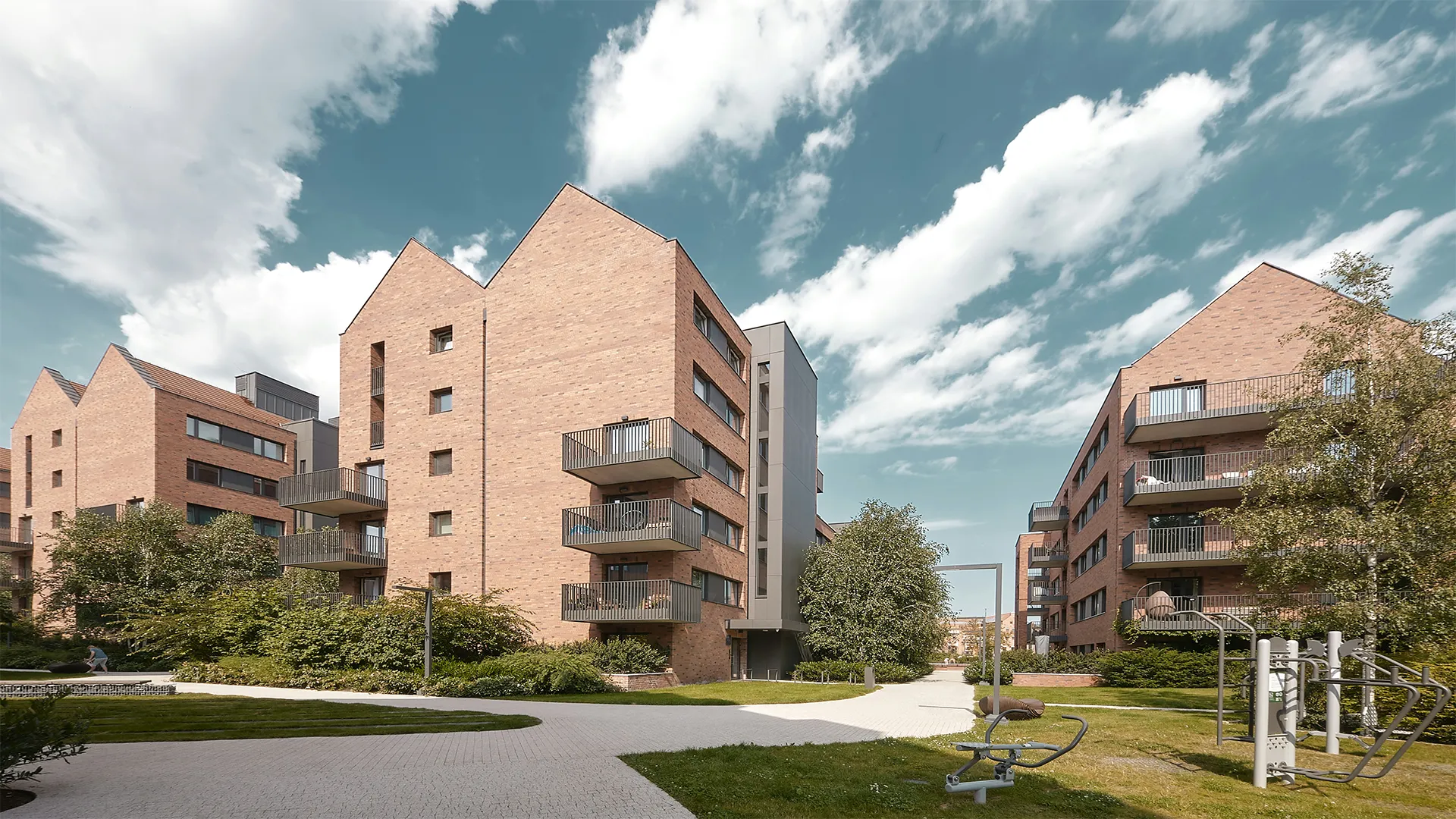
Domestic capital is driving CEE’s maturation into a core asset class, balancing high-yield opportunities in Poland against long-term capital appreciation in the Czech Republic. (Unsplash)
The CEE living sector is undergoing a profound foundational shift, shedding its historical stigma of post-communist block housing, the institutional market has decisively matured from an emerging niche into a core asset class.
This transformation was clearly evidenced in the first quarter of 2026, when the region recorded EUR 2.1 billion in total real estate investment.
A defining feature of this new landscape is the growing dominance of domestic capital, which provides developers with improved execution speed, deep local knowledge, and critical stability against global geopolitical volatility.
Financial Frictions and Valuation Shifts
Despite strong regional performance, international investors face multiple barriers to entry. Prohibitive currency hedging costs of over 300 basis points for the Polish Zloty and Czech Koruna against the Euro act as a primary deterrent for foreign capital.Furthermore, high interest rates have created frequent scenarios of negative leverage, leaving private developers to navigate restrictive loan-to-value ratios of approximately 40% when borrowing in local currencies.
However, successful industry lobbying efforts have recently reduced capital consumption requirements under CRR3 banking regulations, drastically improving the viability of bank financing for residential projects.
Investors are also fundamentally rethinking standard valuation methodologies. Traditional commercial models, such as discounted cash flow, often fail to capture the substantial capital gains driven by systemic regional salary growth and quality-of-life improvements.
Consequently, conservative institutional players are adapting their underwriting to target minimum 4% cash-on-cash yields and total returns exceeding 6% over a 10-year period, with combined rental growth and appreciation frequently reaching double digits.
This resilient profile is prompting a structural shift in capital deployment, transitioning away from short-term opportunistic private equity towards regional banking groups and international insurance providers seeking long-term stabilisation.
Cash Flow vs Capital Appreciation
Investment strategies across the CEE region are sharply bifurcated. Poland has reaffirmed its position as the region's core market, capturing EUR 1.1 billion in first-quarter volume - a 40% year-on-year increase.Driven by robust private rental sector yields that frequently exceed 7%, the Polish market functions primarily as a high-performing cash-flow play. Warsaw currently contains roughly 10,000 modern units, anchoring a broader national pipeline of approximately 20,000 units.
Conversely, the Czech Republic operates as a low-risk capital appreciation play, supported by chronic housing scarcity and notoriously slow construction permitting processes.
Prague faces a severe supply deficit, requiring 9,000 to 10,000 new apartments annually just to stabilise prices. While the city boasts the third-highest GDP per capita in Europe, regulatory fee structures that cap all-in management costs for pension funds at 1% make operationally intensive residential assets economically unfeasible for certain managers.
To navigate this, local institutions are targeting affordable housing projects with rents 20% below market value, heavily supported by European Investment Bank financing. Industry leaders anticipate that property prices and rental rates in Prague will fully converge with the historical trajectory of Vienna over the next 15 years.
Momentum Across the Broader Region
Broader regional momentum remains exceptionally strong outside the primary hubs, with Hungary experiencing its best start to the year since 2018, logging EUR 325 million in volume as Budapest residential prices surged 25% year-on-year, with forecasts projecting an additional 8% nominal growth in 2026.In Bulgaria, the adoption of the Euro on the first of January 2026 successfully removed currency friction, driving Sofia to its strongest first quarter since 2007 with volumes exceeding EUR 100 million, and supporting stable gross yields of 4% to 5%.
Meanwhile, Slovakia's housing market demonstrated robust growth, with prices rising 12% year-on-year as major infrastructure projects, such as the Petržalka tram extension in Bratislava, aggressively boost local demand.
Operational Pivots and the PBSA Gap
As a widespread affordability crisis projects a demographic shift toward a 60/40 split between homeowners and lifelong renters, developers are pivoting heavily toward operational sectors.PBSA and senior living are now recognised as capable of delivering higher, more stable yields compared to traditional office spaces. A glaring supply gap exists for student housing across major university hubs including Prague and Warsaw, mirroring the severe 200,000-bed deficit currently seen in Italy.
To meet this demand amidst high construction costs, capital is increasingly favouring refurb-to-rent strategies, systematically converting obsolete urban offices into modern residential units.
While energy-efficient new builds command significant premiums, the market's sustainable transition remains hampered by a lack of clear legislative definitions for "zero bills" or "managed green" housing across several CEE jurisdictions, underscoring the final regulatory hurdles in a rapidly maturing ecosystem.
► United Kingdom
Navigating the Viability Crisis

The UK’s living market is navigating a severe viability crisis, forcing a radical shift toward credit strategies and resilient regional hubs to bypass soaring costs and planning friction. (Unsplash)
The United Kingdom's living real estate market is facing a critical juncture. The long-term investment case remains rock solid, underpinned by a persistent structural undersupply and durable, daily-use demand that operates independently of broader economic cycles.
However, a toxic cocktail of elevated build costs, rising debt, and crippling planning friction has triggered a severe development viability crisis.
To survive in this fractured landscape, investors are executing a radical reset in capital allocation, pivoting toward debt strategies, bulk acquisitions, and defensive regional markets.
The Macro Reality and Capital Shifts
The macroeconomic outlook has darkened significantly in early 2026. The severe energy price shock from the Middle East crisis has pushed inflation back to 3.3% and completely disrupted previous disinflationary trends.As government bond yields hit multi-year highs, with the 10-year Gilt briefly breaching 5%, capital allocation has pivoted aggressively from equity into credit. Senior debt in single-family housing markets is now generating highly secure returns between 7% and 7.5%.
Conversely, equity investors who previously accepted 7% to 9% are now demanding 9% to 11% to stomach the escalating execution risk.
This risk premium is glaringly evident in the UK's liquidity profile, which remains patchy and highly asset-specific, exposing a wider gap between available product and immediate take-out capital than in most continental European markets.
Global capital continues to view European residential assets as underweight, but the UK market requires extreme precision in underwriting, with many institutional players increasingly skeptical of the country's disjointed housing policies.
Viability Crisis and Regulatory Squeeze
On the ground, the development landscape is brutal. New residential starts plummeted by a staggering 65% year-over-year in the first quarter of 2026. Residual appraisals for built-to-rent projects frequently land at or below zero, strangled by expensive borrowing and soaring construction inflation.The burden is vastly compounded by tightening safety regulations. Mandatory pre-construction approval gateways for higher-risk buildings now demand up to GBP 2.5 million in balance-sheet capital and a grueling 66 weeks for clearance.
Furthermore, the impending Future Homes Standard in 2028 will require all new homes to be zero-carbon-ready, adding an estimated GBP 4,500 in build costs per dwelling. This regulatory weight is aggressively squeezing out small and medium-sized developers who cannot fund up-front design risks, leaving large housebuilders to dominate smaller, oven-ready sites.
Diverging Land Markets
This viability crisis has deeply fractured the national land market. In the South East, South West, and East of England, development activity has plummeted, dragging down both urban and greenfield land values.In London, where new medium to high-density schemes require values exceeding GBP 800 per square foot to break even, residential land values sit 46% below their 2014 peak. While the government announced emergency measures in March 2026 to unlock stalled London sites, landowners largely remain in a holding pattern.
In stark contrast, the North, parts of the East Midlands, and Scotland are demonstrating remarkable resilience. Scotland recorded a 3.3% rise in greenfield values as developers aggressively compete for strategic sites likely to be included in upcoming Local Plans.
Similarly, the North continues to see fierce site competition and rising values, driven by an absolute shortage of supply and a more forgiving development equation.
SFR, Affordable Housing, and PBSA
To navigate these hurdles, investors are actively restructuring their asset targets. The single-family rental (SFR) sub-sector has emerged as a major opportunity, allowing institutions to buy in bulk from struggling housebuilders at double-digit discounts while preserving attractive entry points.Simultaneously, affordable housing is transitioning from a niche into a core investment strategy, leveraging grant support and public-private partnerships to achieve delivery where conventional rental models mathematically fail.
In the PBSA sector, investors are executing a strict "flight to quality". Applications for higher-tariff universities increased by 5.9%, while lower-tier institutions saw a decline.
Facing occupancy headwinds caused by stricter visa rules for international postgraduates and domestic students opting to live at home, capital is ruthlessly focusing on Tier 1 cities and top-tier academic institutions.
Despite these hurdles, PBSA investment totalled a massive GBP 1.5 billion in Q1, heavily dominated by a single GBP 1.15 billion corporate acquisition covering 7,700 beds.
Rental Ceilings and Behavioural Shifts
At the consumer level, affordability constraints are beginning to severely bind the market, as average annual rental growth slowed to 3.4% in March 2026.With institutional affordability benchmarks sitting at 40% of gross income but actual occupier profiles closer to 30%, further drastic rent hikes are virtually impossible to justify.
Tenants are already adapting behaviourally, driving a surge in demand for shared two-bedroom units as occupiers desperately seek to split total housing costs ahead of the Renters' Rights Act implementation in May 2026.
► Check out the full catalogue of GRI Institute Europe reports here
► Join us at GRI Living Assets Europe 2026 on 24th-25th June in London
► Don’t miss Europe GRI 2026 Summer Edition on 9th-10th September in Paris