 Credit: Prism
CEE Living Sector Q1 2026: From local story to institutional thesis
GRI Institute analysis of how Warsaw, Prague, and selective capital flows are redefining Central and Eastern European residential real estate
April 1, 2026Real Estate
Written by:Rory Hickman
Executive Summary
Ahead of the GRI Institute’s CEE Living Assets Forum in Prague on 23rd April and CEE GRI 2026 in Warsaw on 19th May, we take a look at how the region’s living sector is moving from a local, fragmented market towards a more institutional investment theme.
The picture emerging for 2026 is one of progress, but not uniformity. Poland remains the clearest market for scale, with PRS, PBSA, refurbishment, and structured capital all gaining relevance, while Prague stands out as a more mature and liquid market that is still constrained by limited product and stronger domestic competition.
Across the region, the direction of travel is clear, but execution, funding, currency risk, and geopolitics continue to determine how quickly institutional capital can turn long-term housing demand into deployable investment.
The picture emerging for 2026 is one of progress, but not uniformity. Poland remains the clearest market for scale, with PRS, PBSA, refurbishment, and structured capital all gaining relevance, while Prague stands out as a more mature and liquid market that is still constrained by limited product and stronger domestic competition.
Across the region, the direction of travel is clear, but execution, funding, currency risk, and geopolitics continue to determine how quickly institutional capital can turn long-term housing demand into deployable investment.
Key Takeaways
- Poland remains the region’s main scalable living market, with institutional PRS and PBSA moving from niche to credible platform strategies.
- Prague is more mature and liquid, but its rental market is harder to scale and more dependent on domestic capital.
- The sector’s growth path is clear, but execution, currency risk, geopolitics, and funding constraints still shape where capital can move.
CEE’s Increasing Identity Clarity
Central and Eastern Europe’s (CEE’s) residential real estate market entered 2026 with a clearer identity than at any point in the past few years. It is no longer just a story about structural housing need, nor simply a question of whether institutional capital will eventually take the sector seriously.The market is now at an in-between stage - advanced enough to show real depth in selected geographies, but still uneven enough that execution, funding, and local market structure matter as much as headline demand.
The defining feature of the region is divergence. Poland is increasingly seen as the main market where scale is possible, while the Czech Republic stands out as a more mature rental market than most of the rest of CEE, yet one that remains heavily shaped by domestic liquidity and limited product availability.
Elsewhere, the residential case continues to be supported by undersupply, but institutional rental housing remains far less developed, with markets such as Budapest and Bucharest still lacking a meaningful pipeline of real institutional rental projects.
That makes Q1 2026 less a story of one regional market and more a story of three simultaneous transitions:
- First, the residential sector is gaining ground against other uses, especially office.
- Second, Poland is shifting from a build-to-sell market into a more institutionalised living platform environment.
- Third, capital is returning, but selectively, and not without friction from currency, geopolitics, and market structure.
Poland Retains Pole Position
If there is one clear conclusion, it is that Poland remains the core residential growth story in CEE. The reasoning is simple - scale, multiple major cities, strong underlying housing need, and a broader opportunity set than almost anywhere else in the region.Even compared with other CEE markets that offer some secondary-city depth, Poland remains the one market where investors can realistically think in terms of platforms rather than isolated projects.
This conviction is rooted in fundamentals, with deep unmet housing demand, a low number of apartments per capita, high overcrowding, and a demographic base large enough to support multiple residential strategies at once.
It is for this reason why the market continues to be described in strongly structural terms rather than cyclical ones. The sense is that temporary disruptions may change timing or product mix, but not the long-term case for housing.
That said, it is far from being a story of frictionless growth. Poland’s institutional market is expanding, but it is doing so from a base that is still relatively underdeveloped compared with more mature Western European markets. This is precisely why the opportunity feels so large.
Residential is attractive not only because demand is strong, but because the sector remains under-institutionalised, leaving substantial room for professional rental platforms, structured capital, recapitalisations, and operationally driven value creation.
Temporary Slowdown Drives Structural Change
One of the most important nuances in the CEE residential sector is that not all recent rental supply should be interpreted as permanent institutionalisation.There is a clear distinction between genuine PRS expansion and apartments that moved temporarily into rental strategies after the for-sale market slowed following the end of mortgage support measures.
In other words, some of the extra PRS stock seen recently was less a deliberate long-term strategic pivot and more a short-term response from developers faced with weaker sales absorption.
Yet this does not weaken the bigger residential thesis. If anything, it has exposed how quickly the market can reprice and re-route product into institutional channels when the for-sale model becomes less straightforward.
Developers that were used to a long stretch of strong private sales have started considering land disposals to PRS players, sales of completed apartments into rental platforms, and other monetisation routes.
The short-term dislocation has therefore acted as a stress test, revealing both how reliant the market has been on build-to-sell, and how much latent demand there is for alternative living formats.
This is why the current moment matters. The slowdown in private sales looks cyclical, but the institutional learning it has triggered is likely to endure.
Once developers, lenders, and investors have adjusted to alternative exit routes, the market rarely returns fully to its prior structure. The current situation therefore feels like a point where temporary weakness is helping create permanent change.
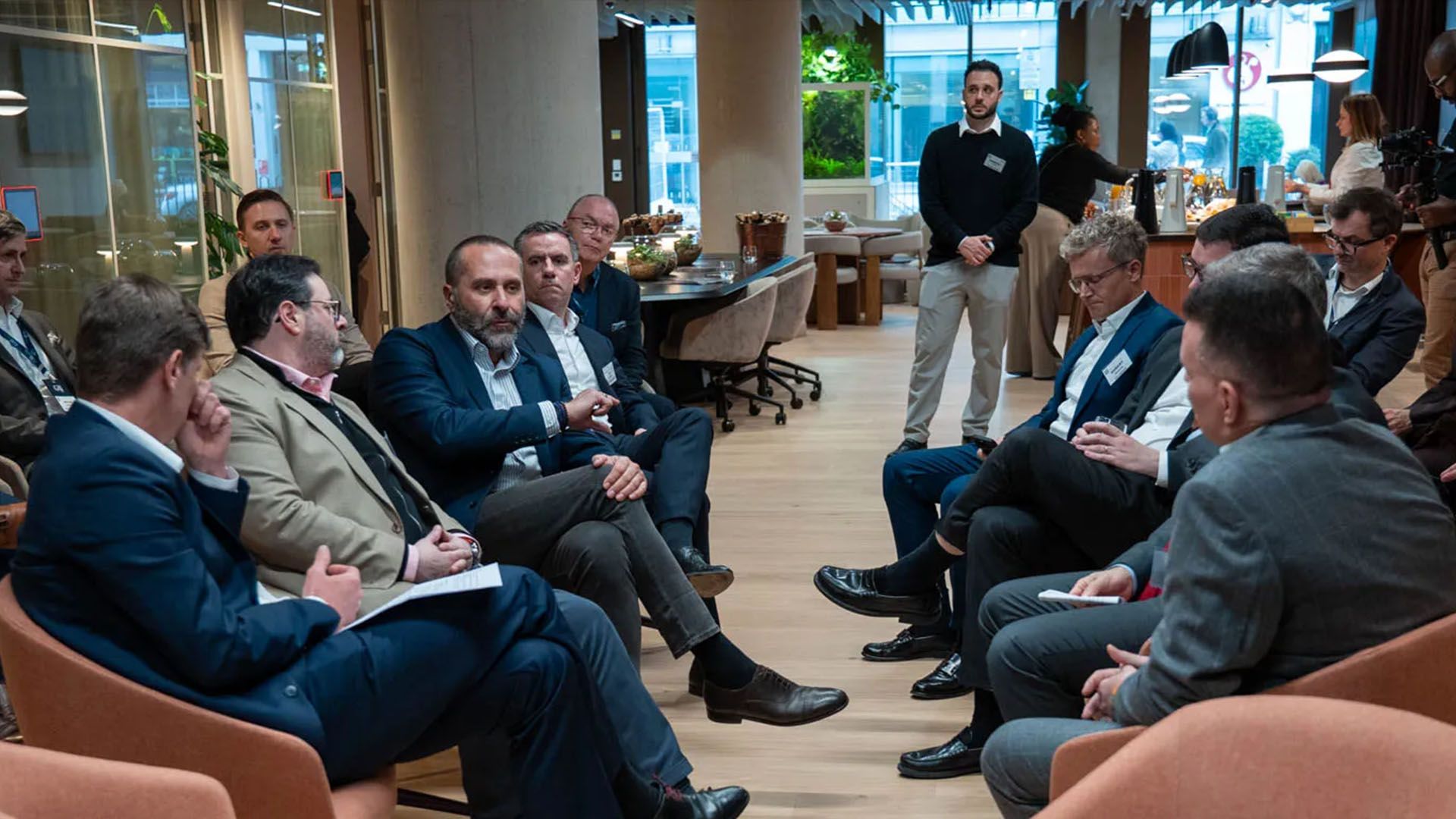
The GRI Institute’s recent CEE & Poland Real Estate 2026 Forum - London Edition, gathered top industry experts to discuss the current state and future trends of the CEE real estate market. (GRI Institute)
Polish Institutional Living Scalability
The strongest evidence that the market is evolving comes from scale metrics, with around 25,000 PRS units and 15,000 PBSA beds in Poland, with supply expected to roughly double in production. Meanwhile, the broader institutional living pipeline is described as having expanded from roughly 6,000 units to around 35,000-38,000.This is no longer a niche story. It is still early relative to Western Europe, but it is already large enough to prove concepts, test liquidity, and attract a wider range of capital.
The operational side is also becoming more credible. Existing platforms manage around 15,000 units and beds across PRS and PBSA, supporting arguments that both products can scale on residential as well as commercial zoning.
That matters because it widens the development funnel and reduces reliance on a narrow subset of sites. It also suggests that institutional housing in Poland is moving beyond the question of whether it can exist, and into the more advanced question of how far and how quickly it can grow.
Pricing signals reinforce that view, with low-6% yield evidence for PRS and PBSA transactions, including single assets as well as larger platform-style trades. That does not mean every investor is satisfied with those levels, especially once currency and execution risk are layered in, but it does show that benchmarks are forming.
In a market where transparency and repeatability are critical to institutional adoption, this is a major step forward.
Prague: More Mature, Less Scalable
The Czech residential story is very different. Prague is clearly one of the few markets in the region where rental housing feels more established, and local capital has helped maintain liquidity when international capital has pulled back.At the same time, the market appears much less scalable than Poland. There are fewer cities of substance, a shallower stock of completed stabilised rental assets, and far fewer institutional residential transactions than headline interest might suggest.
This does not mean the Czech market lacks appeal. On the contrary, its stability and domestic liquidity are part of the attraction, as revealed Prague’s position just outside the top 10 most investable cities in the latest GRI Barometer.
But from a living-sector perspective, it behaves more like a constrained, domestically supported market than a broad institutional growth platform.
Average apartment pricing in Prague is already high, and domestic investors have increasingly looked for alternatives as traditional private residential routes become harder to access at attractive prices. This helps explain why the city feels more mature, but also why opportunities can be harder to assemble at scale.
For international capital, the Czech market therefore offers a paradox. It is more liquid than many peers because of local money, but also more competitive and in some cases more difficult to enter on the right terms.
Poland, by contrast, is less insulated, more volatile, and more dependent on international appetite - yet ultimately offers far greater room for institutional residential expansion.
► Get more insights into the Czech residential real estate market at the CEE Living Assets Forum in Prague on 23rd April
Living takes Land, Capital, and Relevance from Offices
Another major theme is the way residential is now competing directly with office. In Warsaw in particular, residential has become a stronger alternative use for land and redevelopment. This was recently exemplified by a central site in the city valued at around EUR 200 million that was lost to residential capital.More broadly, the thin office pipeline is linked not only to financing constraints, but also to the fact that developers are increasingly choosing residential because the economics are more compelling.
This is not just a matter of land pricing. It is also about end values. Conversions in Warsaw show why residential is increasingly attractive, with older office stock - especially those around 20 years old - now being actively considered for residential repositioning.
In some locations, office stock may trade around EUR 800 per square metre, while refurbished residential can sell for around EUR 4,000 per square metre, with refurbishment costs typically cited in the EUR 2,000-3,500 per square metre range, depending on scope.
The viability obviously depends on building form, permitting, specification, and exit strategy, but the arbitrage is clear enough to be shifting behaviour.
This has broader urban implications. As centrally located plots become scarcer, major Polish cities are increasingly moving towards refurbishment, adaptive reuse, and more complex urban infill.
Simultaneously, younger city-centre demand is strengthening. Smaller households, low fertility, a lower dependence on car ownership, and greater acceptance of ride-hailing and urban convenience all support the case for central living, even in refurbished assets with more constrained parking or non-traditional layouts.
Taken together, these shifts suggest that living in CEE is no longer just about greenfield expansion at the edge of cities. Increasingly, it is also about repositioning existing urban fabric and capturing demand for denser, more central, more operationally sophisticated product.
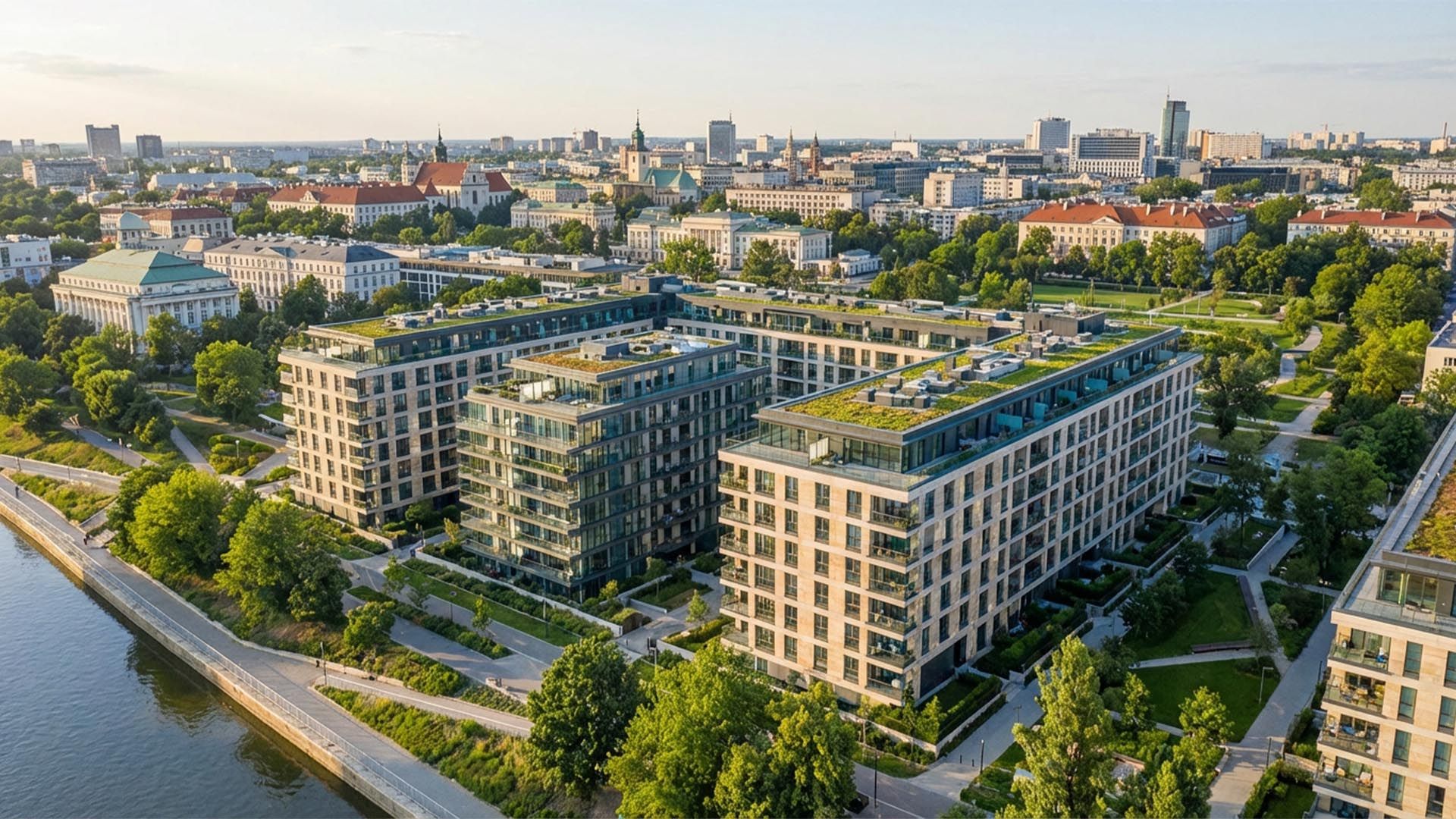
Around 1 million rental units in Poland are privately owned, meaning institutional PRS is professionalising an already large but fragmented market. (Prism)
Uneven Capital Return
The capital story today is more encouraging than it was a year earlier, but it remains selective. There are improving fundraising conditions for living products, growing interest in completed residential assets, and evidence that equity can still be raised for Polish housing strategies despite regional geopolitical concerns.One case cited EUR 300 million of fresh equity raised for the living sector from three separate capital providers across three platforms during the period of the war in Ukraine. That is not the picture of a market that capital has abandoned.
At the same time, the buyer universe remains narrower than it would be in a eurozone market further west, with war-related perception continuing to reduce the pool of active investors, while Poland’s non-euro status limits some mandates entirely and raises the cost of capital for those that do engage.
In practical terms, the market is investable, but not universally investable. There is a meaningful difference between interest and deployable capital.
Local capital is becoming more relevant in this context. Local players insist that deeper domestic participation would make Poland look more mature and more liquid to international investors. This is starting to happen, albeit gradually.
The rise of local capital sources matters not only because it supports pricing and liquidity, but because it reduces the all-or-nothing dynamic that can emerge when cross-border money turns cautious.
There is also growing interest beyond Warsaw as attention on build-to-sell projects in secondary Polish cities grows, including international capital looking at alternative credit rather than only equity. This broadens the investable residential map and suggests the living opportunity is no longer limited to gateway-city PRS.
Execution, Currency, and Market Depth Constraints
For all the optimism, the constraints remain substantial. Financing is one of the clearest. More complex residential strategies, especially refurbishment-led schemes, still face tight bank appetite.Capital for large-scale equity is also not abundant enough to remove execution risk from the equation. This matters because the most interesting residential opportunities in Poland increasingly involve complexity - central locations, adaptive reuse, mixed zoning, or institutional operating strategies - rather than simple commodity development.
Permitting and product preparation also slow delivery. Institutional housing can be developed and sold, but it takes time, and standards are different from straightforward build-to-sell.
In previous years, developers often preferred to sell apartments individually because it was quicker, easier to finance, and more profitable. The trends seen so far in 2026 are changing that logic, but not erasing it.
Currency remains a harder structural issue. Many funds simply cannot invest in non-euro markets, while those that can must price in FX exposure and higher local funding costs.
For a sector like residential, where yields are often relatively tight and operations matter, that becomes a major drag on scalability. The residential case may be compelling, but the capital stack remains more difficult than in euro-denominated peer markets.
Another limitation is fragmentation as the market continues competing with a large private landlord universe, a situation that ultimately slows consolidation.
Roughly 1 million units in Poland are held by private individuals and rented out directly, which means institutional PRS is not entering an empty field. It is trying to professionalise a market that is already very large, but highly atomised.
Local Execution Over Narrative
One of the clearest conclusions from the material is that the success of international capital in CEE residential still depends heavily on local execution.This is not simply about sourcing. It is about understanding when weak sales are a temporary anomaly rather than a structural warning sign, how to navigate permitting and planning, how to underwrite local demand properly, and how to structure product for either sale or long-term operation.
The value of local partners lies in closing that information gap. This is particularly relevant in Poland, where macro conviction is high, but market signals can be misread. A softer for-sale year can look alarming to a commercial real estate investor unfamiliar with local housing dynamics.
In reality, it may say more about the withdrawal of subsidies and a temporary readjustment period than about demand destruction. The difference between those two interpretations is the difference between caution and conviction.
CEE Living Outlook
The outlook for the rest of 2026 is positive, but uneven. The residential sector is supported by structural undersupply across CEE capitals, yet the real institutional momentum is still concentrated in Warsaw, with Prague remaining the other meaningful reference point for established rental housing.Poland’s living market looks set to keep expanding through a mix of PRS, PBSA, selective build-to-sell, and urban refurbishment, even if some recent PRS stock proves cyclical rather than permanent.
The most compelling opportunities appear to sit where long-term housing need overlaps with operational edge - central-city refurbishment, office-to-residential repositioning, PBSA and PRS platforms with real scale, and secondary-city housing plays that can attract structured capital.
The biggest risks remain unchanged - FX, geopolitics, permitting, shallow domestic capital relative to the Czech market, and the challenge of scaling efficiently at return levels acceptable to international investors.
But the direction of travel is now clearer. CEE residential is no longer defined by whether the market has a future. It is defined by how fast that future can be institutionalised, and in which cities, products, and capital structures that process will happen first.
Don’t miss the chance for more expert insights at the CEE Living Assets Forum in Prague on 23 April, co-hosted by Heimstaden, as well as the latest edition of the annual CEE GRI 2026 in Warsaw on 19 May, where senior decision-makers will continue the debate around capital, scalability, and the next phase of real estate growth across the region.