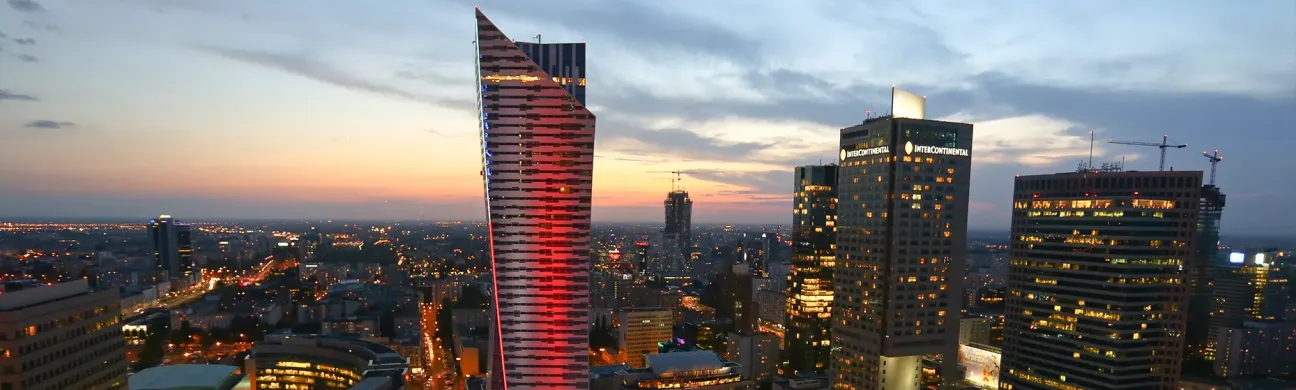
 Credit: Freepik
How Poland’s local real estate players are driving the shift from emerging market to global investment hub
On-the-ground insights on overcoming liquidity shortages, regulatory challenges, geopolitical instability, and other hurdles in Poland’s real estate sector
March 17, 2026Real Estate
Written by:Rory Hickman
Executive Summary
The GRI Institute’s recent CEE & Poland Real Estate 2026 Forum - London Edition, gathered top industry experts to discuss the current state and future trends of the Polish and Central and Eastern European (CEE) real estate markets.
Co-hosted by Gleeds and taking place ahead of the Europe GRI 2026 - Winter Edition summit, the event explored the evolving landscape of local and international investments into CEE, with the second session focusing on the local and global dynamics in the Polish real estate sector.
Co-hosted by Gleeds and taking place ahead of the Europe GRI 2026 - Winter Edition summit, the event explored the evolving landscape of local and international investments into CEE, with the second session focusing on the local and global dynamics in the Polish real estate sector.
Key Takeaways
- The deep market knowledge of local players is essential for bridging information gaps and mitigating risks, especially in complex, geopolitical contexts.
- Poland’s real estate market holds significant growth potential, but liquidity, regulatory hurdles, and political risks urgently need to be addressed.
- Family offices are playing a crucial role in Poland’s real estate investments, offering strategic, long-term capital that aligns well with local expertise.
Local vs. Global Investment in Poland
Historically, CEE was viewed as a region with high local expertise but a lack of international investment. In recent years, however, this perception has shifted, with local players now adopting best practices and collaborating with international capital, and cities like Warsaw and Prague moving up the rankings in the latest GRI Barometer.This evolution has created a more competitive landscape where international investors can choose from a robust pool of local operators who understand local market nuances and have demonstrated successful track records.
Despite this progress, liquidity remains a significant issue. The local capital market is still emerging, and a gap exists between local investors and international capital.
The absence of sufficient local capital has made it difficult for the market to achieve maturity in the eyes of Western European investors, who often view Poland as an emerging market rather than a stable investment destination.
Local players face the challenge of encouraging Polish capital to become more active, which could increase liquidity and help the market mature.
The Importance of Local Knowledge
One of the key advantages of working with local partners is their deep understanding of Poland’s real estate landscape, enabling them to bridge gaps in information and explain market anomalies, such as challenges in the residential market that have surprised international investors.For example, while interest rates were dropping, Poland’s residential market did not perform as expected. Local operators can offer insights into the reasons behind these developments, helping international investors navigate the complexities of the market.
Moreover, local partners can mitigate risks associated with international capital, which may fluctuate based on broader geopolitical or economic conditions. International investors are aware of the risks that can emerge suddenly - such as the ongoing war in Ukraine - and how these risks might impact their investments in Poland.
For this reason, local operators must weigh the pros and cons of partnering with foreign investors and carefully choose those whose capital aligns with Poland’s specific economic and political realities.

Discussions highlighted the challenge of encouraging Polish capital to become more active, which could increase liquidity and help the market mature. (Credit: GRI Institute)
Regulatory Issues and Market Stability
Poland's real estate market is still dealing with regulatory challenges that can impact foreign investments.Notably, issues such as land availability, power infrastructure, and permitting processes can cause delays and create uncertainties for developers and investors. These factors can deter international capital, which is often more risk-averse compared to local investors.
Additionally, Poland’s regulatory environment can be slower to evolve compared to markets like the Czech Republic, where financial institutions are better developed and more sophisticated.
Another issue is the political risk associated with Poland's non-eurozone status, which can make the country less attractive to foreign investors.
Some experts believe that Poland's adoption of the euro could significantly enhance the country's attractiveness by lowering transaction costs and integrating it more fully into the broader European financial system. However, political support for such a move remains limited, and its implementation seems unlikely in the near future.
Geopolitical Risks and Ukraine War Impacts
The geopolitical situation in Eastern Europe, particularly the war in Ukraine, has had a profound impact on Poland’s real estate market. The conflict has made international investors more cautious, with some halting projects due to the perceived risk of further escalation.Even with this situation, there are indications that some American developers are still investing in the region, especially in affordable housing projects. The war’s impact is especially significant for non-European investors, who are particularly sensitive to political risks in countries near conflict zones.
However, despite the war, the general sentiment is that Poland remains an attractive market, and the long-term potential for growth is substantial. As one of the largest economies in the CEE region, Poland offers significant opportunities, particularly in sectors like logistics and industrial real estate.
The local market’s resilience during geopolitical upheavals demonstrates its robustness and capacity to weather external shocks.
The Role of Family Offices and Global Capital
Family offices are increasingly seen as key players in the investment landscape, as they tend to be more nimble and willing to engage in detailed, long-term investment strategies. Their understanding of local markets and ability to establish trust with local partners has made them a vital source of capital in Poland.By focusing on strategic asset management and building strong relationships with local developers, family offices are helping to drive investment in the country, particularly in the residential sector.
On the other hand, global institutional investors often have a broader, more general view of the market and are less focused on the intricate details that can make or break an investment.
While these investors are critical for scaling projects, they typically require local partners who can manage the specific challenges and risks associated with the Polish market.

Participants observed that the war in Ukraine has had a profound impact on Poland’s real estate market, making international investors more cautious. (Credit: GRI Institute)
Future Growth and Potential Outlook
Despite current challenges, the Polish real estate market is seen as having enormous growth potential. The country's strong GDP growth, low vacancy rates in certain sectors, and increasing foreign interest in logistics and industrial spaces position it as one of Europe’s most promising markets.However, for the market to reach its full potential, both local and international players need to work together to overcome barriers related to capital, liquidity, and regulatory issues.
Poland's local operators will continue to play a critical role in attracting international capital, particularly as the market matures and becomes more competitive.
Although a greater focus on strategic asset management and leveraging local knowledge is expected to allow the real estate sector to continue its growth trajectory, the market must address its pressing liquidity challenges and navigate the geopolitical risks that could affect investor sentiment.
Conclusion
Poland's local operating partners are crucial in bridging the gap between local knowledge and global capital. Their expertise, coupled with the country’s robust economic fundamentals, makes Poland an increasingly attractive destination for real estate investment.However, the market's growth is still constrained by regulatory hurdles, political risks, and the lack of sufficient local capital. Overcoming these challenges will require a concerted effort from both local and international investors, with a focus on collaboration, strategic asset management, and market maturity.
The future of Poland’s real estate market remains bright, provided that these obstacles can be effectively addressed.
These insights were shared during the GRI Institute’s CEE & Poland Real Estate 2026 Forum - London Edition. Thank you to our co-hosts, Gleeds, and all participants, including Vladimír Bílý (Gleeds), Dorota Latkowska-Diniejko (REINO Partners), Hubert Michalak (Hillwood), Maciej Tuszyński (Fortress Logistics Real Estate), Marek Obuchowicz (Griffin Capital Partners), and Omar Koleilat (Crestyl), for their valuable contributions to the discussion.