 Credit: GRI Institute
Poland’s economic "locomotive" gains steam amid real estate growth despite liquidity challenges
Real estate leaders explore Poland’s 17% GDP surge vs. liquidity hurdles, rising labour costs, and the shift towards energy assets
January 12, 2026Real Estate
Written by:Helen Richards
Key Takeaways
- Poland’s economy is outperforming the Eurozone with GDP 17% above pre-pandemic levels, driven by stabilising inflation and a shift toward corporate investment.
- The real estate market faces a liquidity mismatch, hindered by a lack of local institutional capital and REIT regulation.
- Investors are increasingly diversifying into infrastructure-adjacent assets like energy to secure stable, government-backed cash flows.
As Poland decouples from Eurozone stagnation, the property sector looks to corporate investment, infrastructure spending, and emerging frontiers to bridge the gap between potential and performance.
Poland is no longer just a convergence story but an outperformer, with a real GDP now around 17% higher than its pre-pandemic levels. At the recent GRI Institute CEE Economic Series roundtable in London, senior real estate leaders and economists gathered to dissect a paradox: a macroeconomy firing on all cylinders while the property investment market remains hindered by liquidity constraints and geopolitical caution.
Crucially for real estate, inflation is expected to stabilise around 2.5%, allowing the central bank to continue cutting interest rates toward a 3.5% equilibrium. This supportive backdrop is expected to bolster purchasing power and create a sustainable foundation for growth through 2026 and 2027.
Within the logistics and industrial landscape, the asset class remains a preferred choice for many, though developers are currently navigating a "clearing up" period as the market adjusts. While new supply is currently constrained, the long-term outlook remains supported by the rise of near-shoring and fundamental shifts in global supply chains that provide a tailwind for Poland’s strategic position.
The office sector, by contrast, is the subject of fierce debate among investors, with a notable flight to quality occurring in Warsaw where some predict a looming lack of prime space. However, others express caution regarding regional cities, particularly as rising Polish labour costs - now reportedly higher than those in Spain - force a strategic re-evaluation of the shared service centre (SSC) model that previously anchored demand.
Finally, the living and residential segment continues to see a heavy concentration of Polish private capital. Individual investors often prefer the direct acquisition of multiple apartments over institutional fund structures, driven by the absence of inheritance tax and a deep-seated belief in the safety of residential capital appreciation.
Furthermore, the lack of local Polish institutional capital, particularly stemming from the ongoing absence of REITs in the country, remains a structural weakness compared to the Czech Republic, where local capital accounts for a vast majority of transactions.
Looking ahead, Poland's fundamental economic strength is undeniable, but the real estate market is still finding its footing in a post-high-inflation world. Success will depend on believing in a specific strategy and remaining persistent, rather than waiting for a general market tide to lift all boats.
Poland is no longer just a convergence story but an outperformer, with a real GDP now around 17% higher than its pre-pandemic levels. At the recent GRI Institute CEE Economic Series roundtable in London, senior real estate leaders and economists gathered to dissect a paradox: a macroeconomy firing on all cylinders while the property investment market remains hindered by liquidity constraints and geopolitical caution.
The Macro Backdrop: Wheels in Motion
During discussions, the Polish economy was described as a "locomotive" with wheels in motion. Unlike previous quarters driven solely by domestic consumption, growth is becoming broader based. Corporate investments are picking up, and exports are accelerating as the German economy begins a fiscal-led recovery.Crucially for real estate, inflation is expected to stabilise around 2.5%, allowing the central bank to continue cutting interest rates toward a 3.5% equilibrium. This supportive backdrop is expected to bolster purchasing power and create a sustainable foundation for growth through 2026 and 2027.
Sector Perspectives: The Yield Gap
Despite the overarching macro optimism, the transition from economic potential to tangible transactions remains complex across various sectors.Within the logistics and industrial landscape, the asset class remains a preferred choice for many, though developers are currently navigating a "clearing up" period as the market adjusts. While new supply is currently constrained, the long-term outlook remains supported by the rise of near-shoring and fundamental shifts in global supply chains that provide a tailwind for Poland’s strategic position.
The office sector, by contrast, is the subject of fierce debate among investors, with a notable flight to quality occurring in Warsaw where some predict a looming lack of prime space. However, others express caution regarding regional cities, particularly as rising Polish labour costs - now reportedly higher than those in Spain - force a strategic re-evaluation of the shared service centre (SSC) model that previously anchored demand.
Finally, the living and residential segment continues to see a heavy concentration of Polish private capital. Individual investors often prefer the direct acquisition of multiple apartments over institutional fund structures, driven by the absence of inheritance tax and a deep-seated belief in the safety of residential capital appreciation.
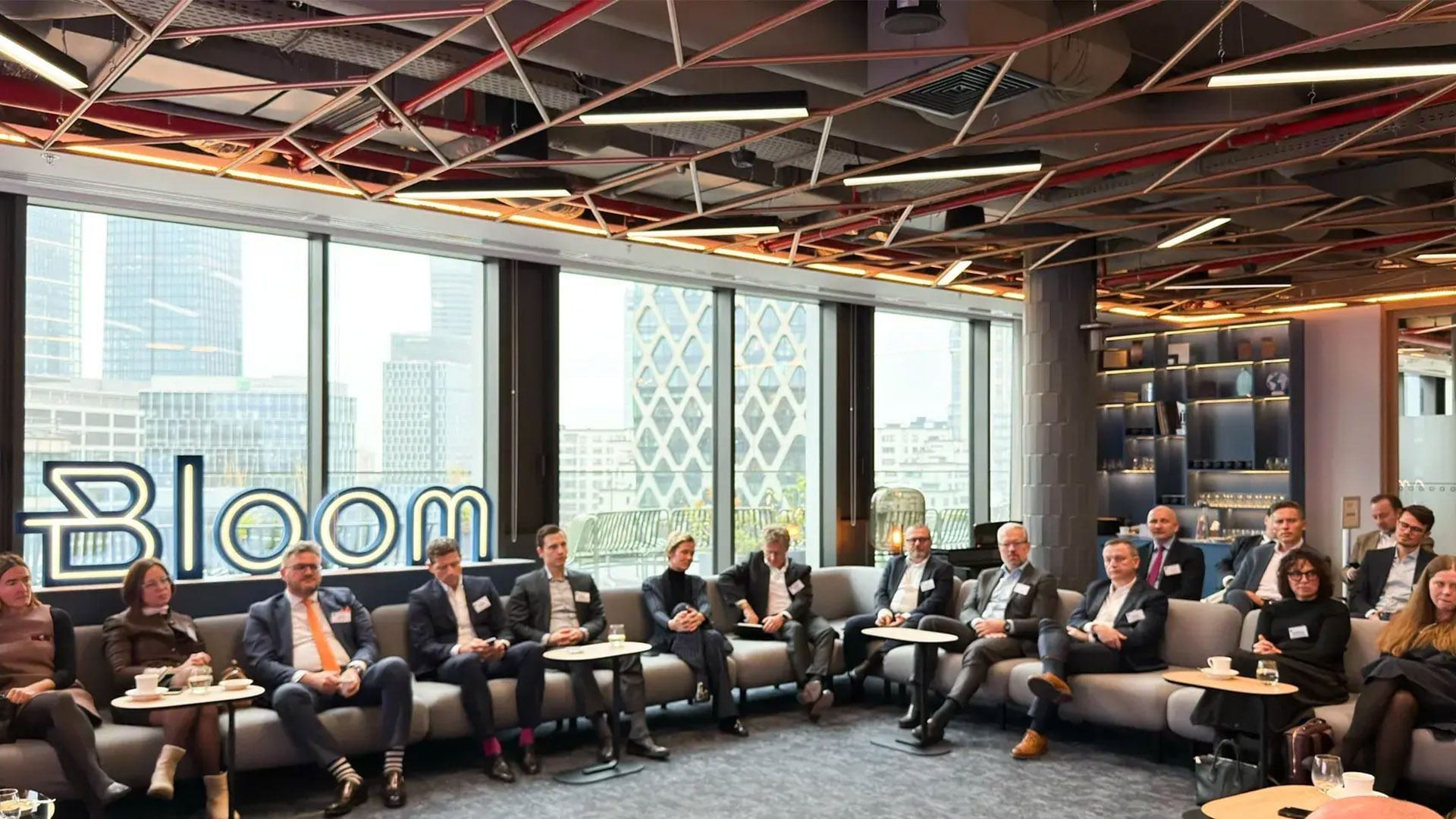
CEE’s most prominent real estate market players gathered for GRI Institute’s CEE Economic Series roundtable in Warsaw. (Credit: GRI Institute)
The Liquidity Challenge: Where is the Capital?
Poland is witnessing a notable capital-product mismatch. While international interest is high, fundraising for Poland-only funds is difficult. Institutional investors are becoming increasingly selective, gravitating toward either mega-funds or highly specialised niche managers, leaving mid-sized generalists squeezed in the middle.Furthermore, the lack of local Polish institutional capital, particularly stemming from the ongoing absence of REITs in the country, remains a structural weakness compared to the Czech Republic, where local capital accounts for a vast majority of transactions.
Emerging Frontiers and Looking Ahead
As traditional real estate faces pricing hurdles, a blend between property and infrastructure is emerging, with several firms diversifying into the energy sector. This shift toward long-income assets with government-backed cash flows is seen as an easier sell for certain institutional investors in the current environment.Looking ahead, Poland's fundamental economic strength is undeniable, but the real estate market is still finding its footing in a post-high-inflation world. Success will depend on believing in a specific strategy and remaining persistent, rather than waiting for a general market tide to lift all boats.
These insights were shared during GRI Institute’s CEE Economic Series roundtable, with participation from Dorota Wysokinska-Kuzdra (Colliers), Grzegorz Sielewicz (Colliers), Hubert Michalak (Hillwood), Karol Pilniewicz (Futureal), Michał Dybula (BNP Paribas Bank), Nebil Senman (Griffin Capital Partners), Nikodem Szumilo (University College London), and Sylvie Geuten - Carpentier (Mitiska Reim).