 Credit: GRI Institute
Let the battle for value begin: German real estate has reached price floor
Reentry of global capital, structural sector shifts in offices, retail, and hospitality, and more insights from Berlin GRI 2025
December 2, 2025Real Estate
Written by:Helen Richards
Key Takeaways
- The German real estate market has largely reached its price floor post-correction, signaling stability and attracting renewed international capital seeking secure, risk-adjusted returns.
- The overarching strategy is shifting from financial engineering and hoping for low rates to a strong emphasis on asset-level performance, operational efficiency, and active asset management over a long-term horizon.
- Major sectors (offices, hospitality, retail) are experiencing non-cyclical, structural transformation, leading to market polarisation where top assets thrive, while un-differentiated properties face devaluation or conversion.
The German real estate market has moved beyond the comfortable “lower for longer” or “lower forever” mindset of the last cycle. The prevailing belief that interest rates and, consequently, real estate yields, would remain exceptionally low indefinitely is long gone, and focus is now unavoidably on asset-level performance, operational efficiency, and selective investment.
With Berlin at its core, the German market is emerging from a period of correction, with industry professionals largely agreeing that the price floor has been reached in most sectors and regions, signalling a shift from declining valuations to stability, and potentially, a moderate upward trend.
These were among the conclusions reached during the series of high-level discussions at the annual Berlin GRI 2025 conference. Further optimism was demonstrated among top German real estate market players as they suggested market resilience is also being bolstered by the re-entry of international capital and the stand-out investment magnet of the country’s residential real estate market.
These cross-border investors are also increasingly comfortable with the more realistic return expectations, citing Europe as a safe inflation hedge that offers better risk-adjusted returns than fixed income or potentially overvalued equities.
Demand is polarised: high-quality, centrally located, and ESG-compliant prime offices command stable-to-rising rents, while older or poorly located buildings face a great risk of devaluation.
Digital communication and storage technologies are reinventing the meaning of an office, with the traditional concept - people coming in for eight hours of screen time - no longer the reality. The future of the office is less about individual desks and more about communication, innovation, and exchange. This shift is also poised to accelerate further as the growth of AI and automation threaten a long-term reduction in overall space demand.
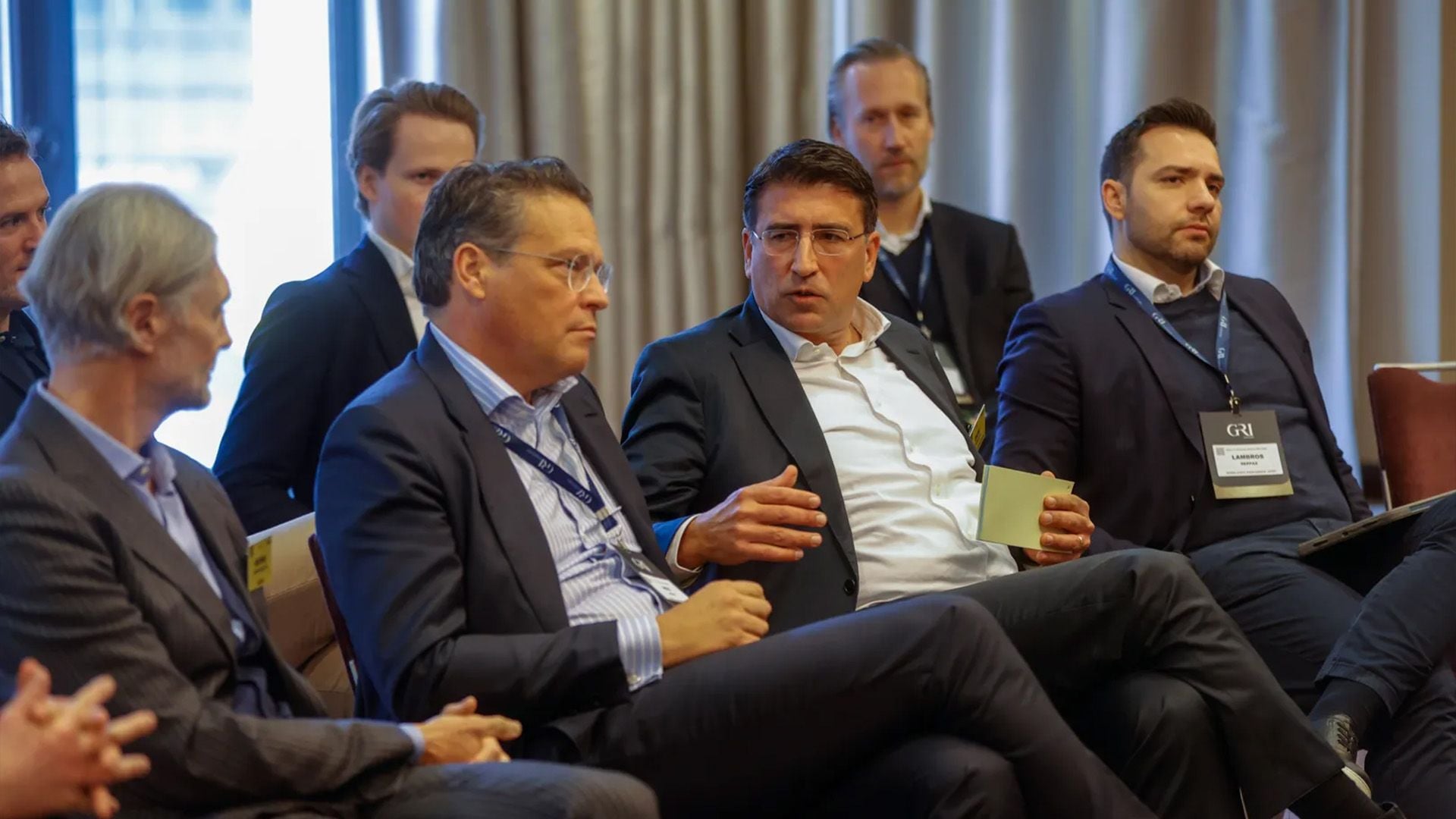 The German market has passed the valuation floor across most investable sectors and is now on a path to rising values. (Credit: GRI Institute)
Demand is rebounding, with occupancy rates close to 2019 levels, however, margins are compressed due to rising operating costs (labour, energy, and inflation), which outpace Average Daily Rate (ADR) growth.
Digital operators are challenging the traditional hotel model by focusing on efficiency and automation. These players argue that digital and automated hotel services are the future, both outsmarting and outpricing traditional modes of operation, including receptionists.
Further automation is also on the horizon, with some discussing the use of infrared scanning robots to check room cleanliness, saving significant manpower.
This style of hotel is also often explicitly preferred by modern guests, especially younger ones and business travellers, who prefer smartphone-controlled, seamless check-in and check-out, and are happy to use local services instead of hotel-internal F&B.
The market is, therefore, polarising between high-efficiency, digital, brand-light operators and upscale, experiential, full-service hotels. In the middle, lie the mid-scale, un-differentiated hotels which may need to convert to alternative uses to remain relevant, with opportunities seen in pivoting to long-stay or furnished residential models.
Food-anchored retail and shopping centres in urban districts with strong local provision are the clear winners, and Berlin reports an average food tenant share in such centres at 18% - significantly higher than the German national average of 11%.
A stable food retail anchor proved particularly crucial during the COVID pandemic, becoming the critical differentiator between retail that remained open and retail that did not.
Meanwhile, shopping centres are transforming into 'marketplaces' with a heavy focus on non-traditional uses such as gastronomy (especially delivery-focused), entertainment (e.g. VR and gaming), and services and health (e.g. medical centres and driving schools).
Another strategy gaining interest is the conversion of large retail spaces into uses such as service apartments, coworking spaces, or health centres. These properties are now generating rents comparable to retail in top locations, making this type of repositioning economically viable for investors.
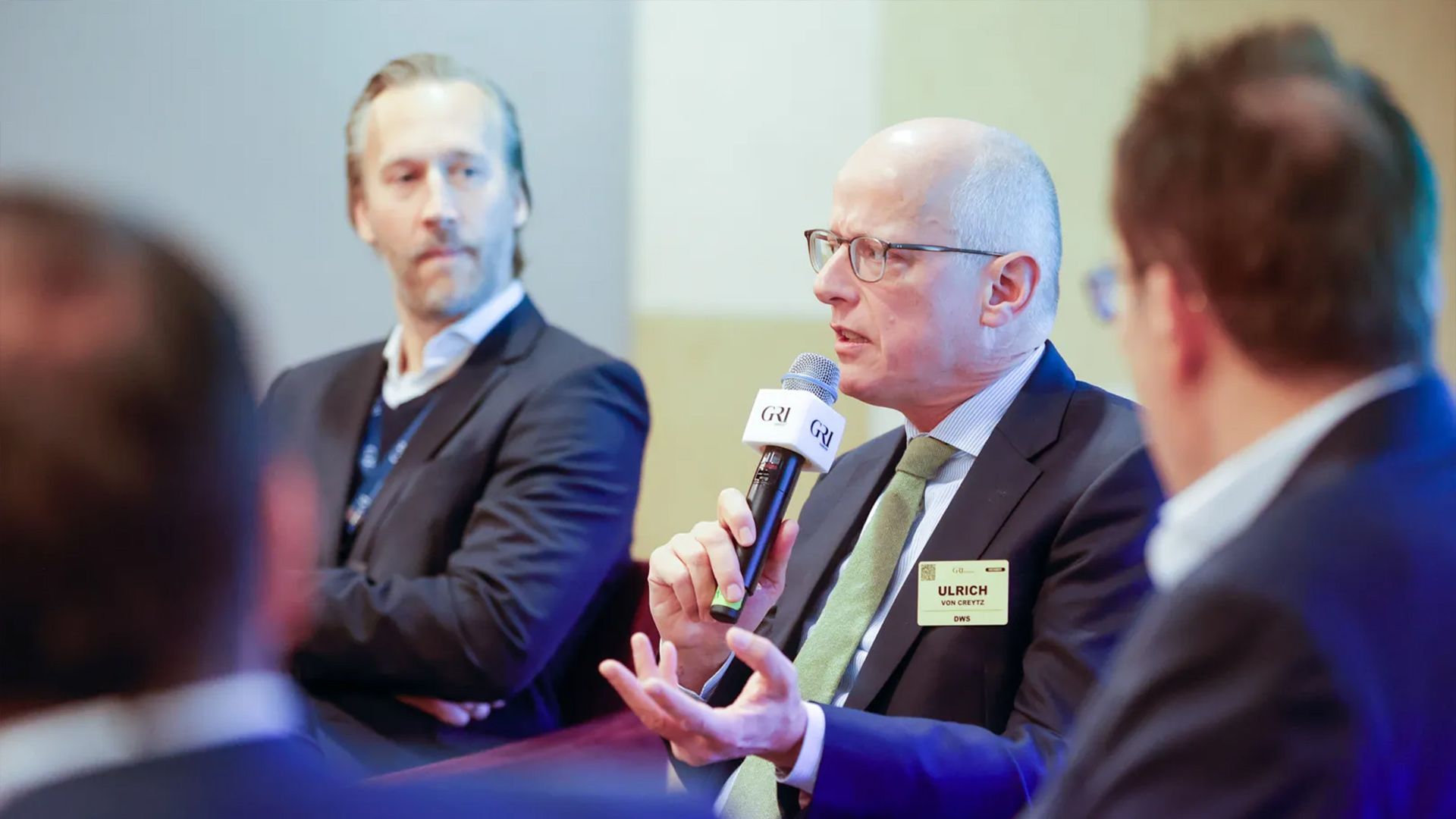 The battle for value has begun, and the focus is now on those assets whose intrinsic story can deliver sustained, resilient returns across the next decade and beyond. (Credit: GRI Institute)
There is a clear sense of renewed risk awareness after years of "easy money”. Investors are seeking to enter markets where risks are at least quantifiable and predictable, a state many feel is returning after a period of intense volatility.
The market has passed the valuation floor across most investable sectors and is now on a path to rising values, driven primarily by rising rents and performance, not an immediate hope for collapsing interest rates.
The current market environment - characterised by moderate returns in fixed income and volatile stock markets - makes real estate, particularly high-performing German Core assets, a uniquely attractive tool for diversification and a secure hedge against inflation, which is seen as a key driver for the renewed inflow of international capital.
The battle for value has begun, and the focus is now on those assets whose intrinsic story can deliver sustained, resilient returns across the next decade and beyond.
These insights were shared during GRI Institute’s Berlin GRI 2025 conference, with participation from Andreas Ewald (Engel & Völkers Hotel Consulting), Ben Lehrecke (Fundament Advisory), Bernd Duda (Berlin Hyp), Holger Weber (ART-INVEST REAL ESTATE), Tom Zeller (Feldhoff & Cie), Ulrich von Creytz (DWS), and more.
With Berlin at its core, the German market is emerging from a period of correction, with industry professionals largely agreeing that the price floor has been reached in most sectors and regions, signalling a shift from declining valuations to stability, and potentially, a moderate upward trend.
These were among the conclusions reached during the series of high-level discussions at the annual Berlin GRI 2025 conference. Further optimism was demonstrated among top German real estate market players as they suggested market resilience is also being bolstered by the re-entry of international capital and the stand-out investment magnet of the country’s residential real estate market.
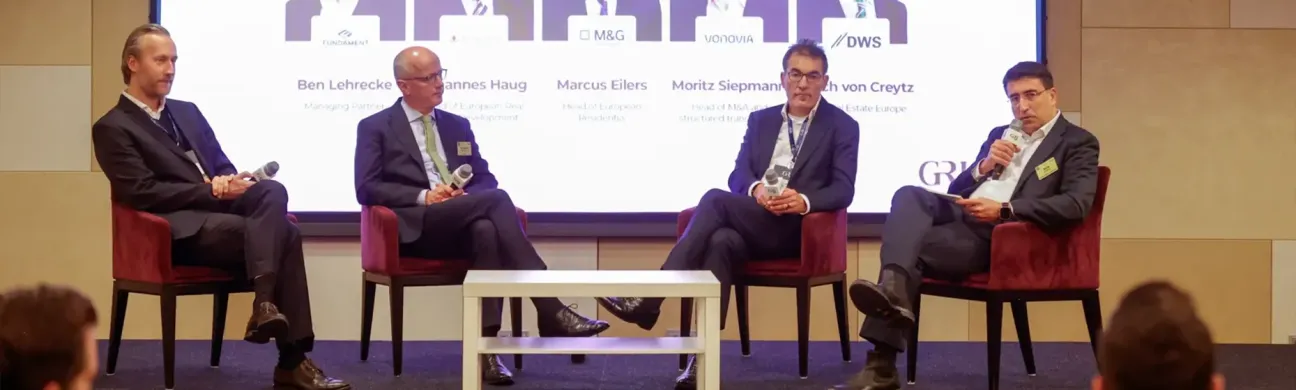
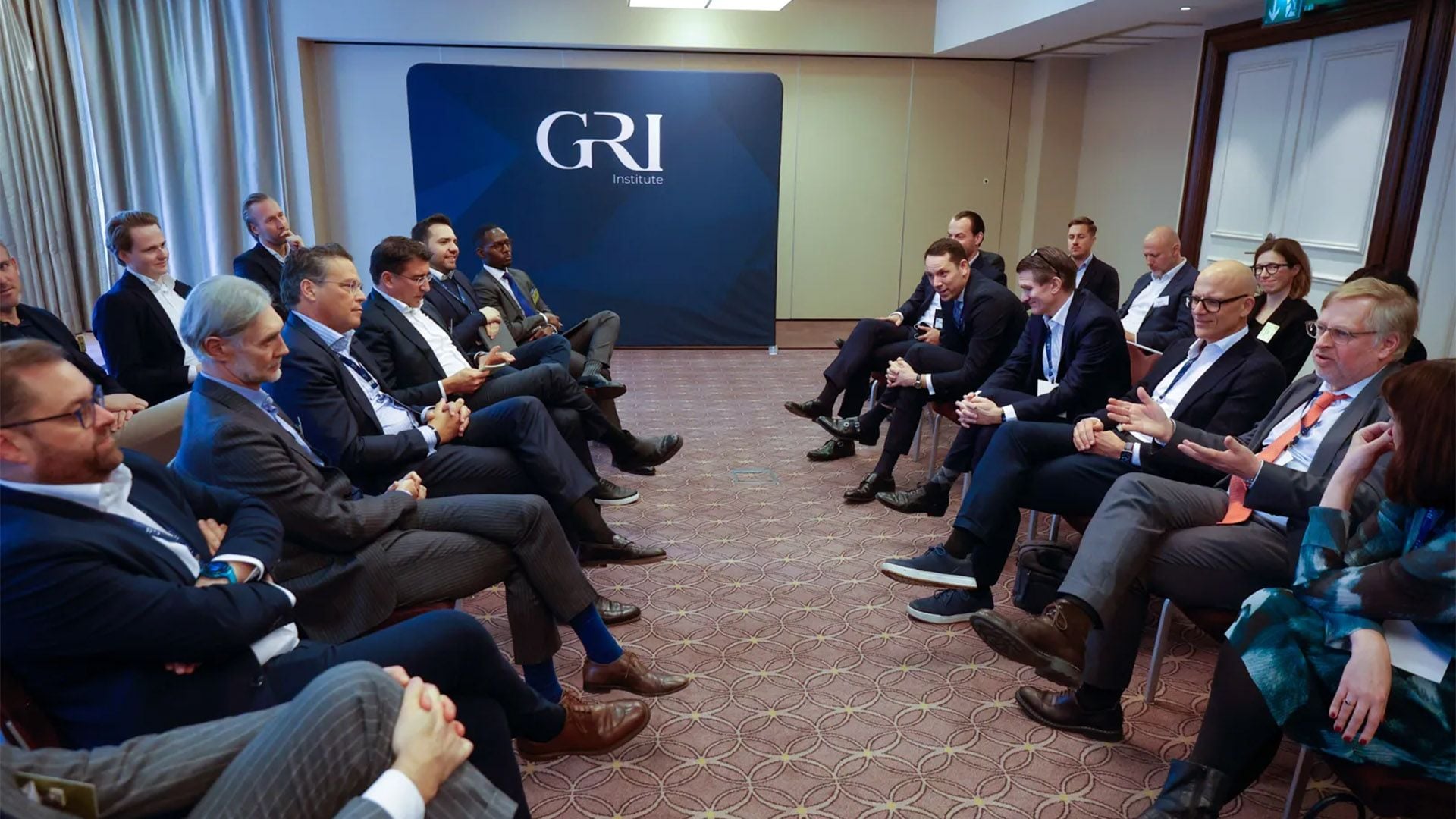
Germany’s most prominent real estate market leaders gathered for the annual Berlin GRI 2025 conference. (Credit: GRI Institute)
The Reentry of Global Capital
Europe is considered the most advanced region in the current correction cycle among global investors, having already experienced significant price adjustments. For capital from Asia, Australia, and the Middle East, Berlin remains the non-negotiable city that represents Germany, offering comparatively attractive pricing despite domestic concerns.These cross-border investors are also increasingly comfortable with the more realistic return expectations, citing Europe as a safe inflation hedge that offers better risk-adjusted returns than fixed income or potentially overvalued equities.
Offices & The Structural Shift
The office market is undergoing a structural, non-cyclical transformation driven by technology, hybrid work models, and ESG demands. Berlin is experiencing the highest office vacancy rate among Germany's top seven cities, and the boom from the city’s start-up scene hasn't been enough to fill the massive supply of newly completed offices.Demand is polarised: high-quality, centrally located, and ESG-compliant prime offices command stable-to-rising rents, while older or poorly located buildings face a great risk of devaluation.
Digital communication and storage technologies are reinventing the meaning of an office, with the traditional concept - people coming in for eight hours of screen time - no longer the reality. The future of the office is less about individual desks and more about communication, innovation, and exchange. This shift is also poised to accelerate further as the growth of AI and automation threaten a long-term reduction in overall space demand.
The German market has passed the valuation floor across most investable sectors and is now on a path to rising values. (Credit: GRI Institute)Hospitality & The Operational Revolution
The hospitality sector in Berlin is back in business but with a radically different operational landscape amid a shift from traditional hotels to modern, tech-driven, often brand-light models.Demand is rebounding, with occupancy rates close to 2019 levels, however, margins are compressed due to rising operating costs (labour, energy, and inflation), which outpace Average Daily Rate (ADR) growth.
Digital operators are challenging the traditional hotel model by focusing on efficiency and automation. These players argue that digital and automated hotel services are the future, both outsmarting and outpricing traditional modes of operation, including receptionists.
Further automation is also on the horizon, with some discussing the use of infrared scanning robots to check room cleanliness, saving significant manpower.
This style of hotel is also often explicitly preferred by modern guests, especially younger ones and business travellers, who prefer smartphone-controlled, seamless check-in and check-out, and are happy to use local services instead of hotel-internal F&B.
The market is, therefore, polarising between high-efficiency, digital, brand-light operators and upscale, experiential, full-service hotels. In the middle, lie the mid-scale, un-differentiated hotels which may need to convert to alternative uses to remain relevant, with opportunities seen in pivoting to long-stay or furnished residential models.
Retail & The Experience Economy
Similar to both the office and hospitality sectors, retail is also experiencing polarisation between its luxury and discount segments, with a vast struggling middle ground.Food-anchored retail and shopping centres in urban districts with strong local provision are the clear winners, and Berlin reports an average food tenant share in such centres at 18% - significantly higher than the German national average of 11%.
A stable food retail anchor proved particularly crucial during the COVID pandemic, becoming the critical differentiator between retail that remained open and retail that did not.
Meanwhile, shopping centres are transforming into 'marketplaces' with a heavy focus on non-traditional uses such as gastronomy (especially delivery-focused), entertainment (e.g. VR and gaming), and services and health (e.g. medical centres and driving schools).
Another strategy gaining interest is the conversion of large retail spaces into uses such as service apartments, coworking spaces, or health centres. These properties are now generating rents comparable to retail in top locations, making this type of repositioning economically viable for investors.
The battle for value has begun, and the focus is now on those assets whose intrinsic story can deliver sustained, resilient returns across the next decade and beyond. (Credit: GRI Institute)The Investment Outlook: Reset, Rebuild, or Rally?
The overall investment sentiment is marked by a return to fundamentals and a greater focus on active asset management over purely financial engineering.There is a clear sense of renewed risk awareness after years of "easy money”. Investors are seeking to enter markets where risks are at least quantifiable and predictable, a state many feel is returning after a period of intense volatility.
The market has passed the valuation floor across most investable sectors and is now on a path to rising values, driven primarily by rising rents and performance, not an immediate hope for collapsing interest rates.
The current market environment - characterised by moderate returns in fixed income and volatile stock markets - makes real estate, particularly high-performing German Core assets, a uniquely attractive tool for diversification and a secure hedge against inflation, which is seen as a key driver for the renewed inflow of international capital.
The battle for value has begun, and the focus is now on those assets whose intrinsic story can deliver sustained, resilient returns across the next decade and beyond.
These insights were shared during GRI Institute’s Berlin GRI 2025 conference, with participation from Andreas Ewald (Engel & Völkers Hotel Consulting), Ben Lehrecke (Fundament Advisory), Bernd Duda (Berlin Hyp), Holger Weber (ART-INVEST REAL ESTATE), Tom Zeller (Feldhoff & Cie), Ulrich von Creytz (DWS), and more.