 Credit: Adobe Stock
Colliers reveals the quiet reset unfolding across Central & Eastern European property markets
A detailed outlook on real estate growth, capital flows, and sector shifts across the CEE-6 - Bulgaria, Czech Republic, Hungary, Poland, Romania, and Slovakia
February 25, 2026Real Estate
Written by:Rory Hickman
Key Takeaways
- CEE-6 real estate proved resilient in 2025, supported by easing inflation, selective growth, and stabilising investment conditions.
- In 2026, limited new supply, nearshoring momentum, and EU-backed investment are expected to shape sector performance across the region.
- Modernisation, ESG alignment, and strategic repositioning are becoming decisive factors in securing tenants, capital, and long-term competitiveness.
As part of the GRI Institute’s ongoing thought leadership initiative with Colliers, we are pleased to share the firm’s latest regional outlook, CEE-6 Real Estate Market: Highlights 2025 & Predictions 2026, a comprehensive review of performance in 2025 and expectations for 2026 across six core Central and Eastern European markets.
Covering Bulgaria, the Czech Republic, Hungary, Poland, Romania, and Slovakia, the report provides a country-by-country breakdown of macroeconomic developments, sector dynamics, and forward-looking real estate forecasts.
Colliers reveals a region navigating global headwinds while continuing to attract capital through structural transformation, infrastructure upgrades, and nearshoring momentum.
Across sectors, industrial and logistics assets continued to benefit from foreign direct investment and supply-chain realignment, while retail parks reinforced their dominant position in several markets.
Office markets showed signs of stabilisation, although new development remained limited in many cities. Meanwhile, the living sector, including institutional rental formats, gained further traction in selected countries.
Investment volumes rebounded in parts of the region, often driven by local capital and value-add strategies, with modernisation and ESG compliance emerging as central themes.

Several structural trends are expected to define the year:
Modernisation, ESG alignment, and adaptive reuse are positioned not as optional enhancements, but as decisive factors in securing tenants, financing, and liquidity.
For investors, developers, lenders, and occupiers assessing opportunities in Central and Eastern Europe, Colliers’ latest outlook offers a timely and nuanced perspective on where resilience has held firm, and where transformation is accelerating.
Read the full report from Colliers to explore how the CEE-6 real estate markets are positioning themselves for 2026 and beyond.
After reading the report, don’t miss the chance for more insights into the region when Colliers hosts our upcoming CEE Commercial Real Estate Forum - details here.
Covering Bulgaria, the Czech Republic, Hungary, Poland, Romania, and Slovakia, the report provides a country-by-country breakdown of macroeconomic developments, sector dynamics, and forward-looking real estate forecasts.
Colliers reveals a region navigating global headwinds while continuing to attract capital through structural transformation, infrastructure upgrades, and nearshoring momentum.
A year of resilience in 2025
2025 marked a year of selective growth for the CEE-6, with regional GDP expanding despite external uncertainty. Inflation moderated compared to prior peaks, enabling central banks to begin cautiously easing monetary policy, which supported financing conditions and investor sentiment.Across sectors, industrial and logistics assets continued to benefit from foreign direct investment and supply-chain realignment, while retail parks reinforced their dominant position in several markets.
Office markets showed signs of stabilisation, although new development remained limited in many cities. Meanwhile, the living sector, including institutional rental formats, gained further traction in selected countries.
Investment volumes rebounded in parts of the region, often driven by local capital and value-add strategies, with modernisation and ESG compliance emerging as central themes.
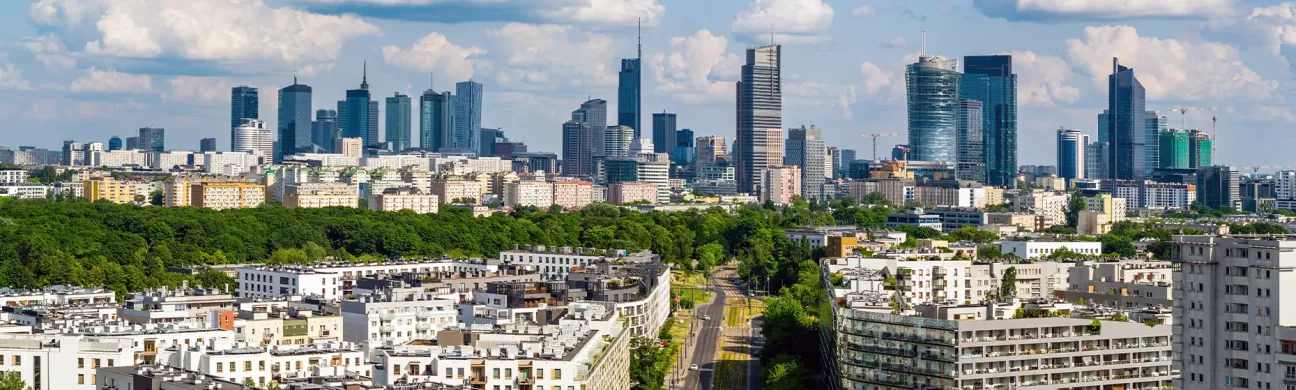
Colliers expects Warsaw to attract continued investment amid limited new supply, rising prime rents, and accelerating modernisation of older office stock. (Credit: Adobe Stock)
2026: structural shifts and strategic repositioning
Looking deeper into 2026, Colliers anticipates moderate economic acceleration this year, supported by EU funds, infrastructure spending, and continued monetary easing. However, growth is expected to remain uneven, shaped by fiscal consolidation, political dynamics, and global trade developments.Several structural trends are expected to define the year:
Office
Limited new supply in prime locations is likely to support rental growth in select cities, while refurbishment and repositioning of older assets gain momentum.Industrial and logistics
Nearshoring, defence-related investment, and Asian manufacturing inflows are set to reinforce demand, although occupiers remain focused on flexibility and cost efficiency.Retail
Retail parks continue evolving into multifunctional destinations, particularly in regional cities, with mixed-use projects reshaping urban centres.Living
Housing shortages and demographic shifts underpin further expansion of build-to-rent (BTR), and purpose-built student accommodation (PBSA), and co-living formats in some markets.Investment
Value-add and opportunistic strategies are expected to remain prominent, with a focus on modernisation, sustainability upgrades, and compliance with tightening environmental standards.Strategic Reset Across the CEE-6
Across the CEE-6, the emphasis is shifting from expansion at any cost to quality, efficiency, and long-term competitiveness.Modernisation, ESG alignment, and adaptive reuse are positioned not as optional enhancements, but as decisive factors in securing tenants, financing, and liquidity.
For investors, developers, lenders, and occupiers assessing opportunities in Central and Eastern Europe, Colliers’ latest outlook offers a timely and nuanced perspective on where resilience has held firm, and where transformation is accelerating.
Read the full report from Colliers to explore how the CEE-6 real estate markets are positioning themselves for 2026 and beyond.
After reading the report, don’t miss the chance for more insights into the region when Colliers hosts our upcoming CEE Commercial Real Estate Forum - details here.