 GRI Institute
Institutional Living in CEE: Maturing from an emerging niche to a core asset class
GRI Institute analysis reveals how CEE real estate leaders are unlocking double-digit returns through professional management and strategic regional positioning
April 29, 2026Real Estate
Written by:Rory Hickman
Executive Summary
The institutional living sector in Central and Eastern Europe (CEE) is currently experiencing a foundational shift, maturing from a fragmented, emerging niche into a highly sought-after core allocation for long-term investors.
Capitalising on this growth, however, requires navigating a complex execution environment, as discussions at the GRI Institute's CEE Living Assets 2026 roundtable, co-hosted by Heimstaden at their Prague office, revealed.
The industry leaders in attendance addressed how prohibitive currency hedging costs, negative leverage, and restrictive regulatory fee caps remain significant hurdles for international capital, paving the way for local institutions to currently lead the market.
As we approach CEE GRI 2026, where these vital conversations will continue on 19th May in Warsaw, the regional outlook shows that while the underlying growth thesis is undeniable, future success will depend on adapting commercial valuation models, overcoming local regulatory bottlenecks, and delivering exceptional operational management.
Capitalising on this growth, however, requires navigating a complex execution environment, as discussions at the GRI Institute's CEE Living Assets 2026 roundtable, co-hosted by Heimstaden at their Prague office, revealed.
The industry leaders in attendance addressed how prohibitive currency hedging costs, negative leverage, and restrictive regulatory fee caps remain significant hurdles for international capital, paving the way for local institutions to currently lead the market.
As we approach CEE GRI 2026, where these vital conversations will continue on 19th May in Warsaw, the regional outlook shows that while the underlying growth thesis is undeniable, future success will depend on adapting commercial valuation models, overcoming local regulatory bottlenecks, and delivering exceptional operational management.
Key Takeaways
- The CEE living sector is maturing from a stigmatised, fragmented market into a professionalised asset class defined by modern developments, high-quality services, and tenant choice.
- Prohibitive currency hedging costs of over 300 basis points, negative leverage, and restrictive regulatory fee caps remain the primary obstacles for international core capital.
- Investors can achieve double-digit total returns by combining rental yields with capital appreciation driven by regional salary growth, supply scarcity, and a high quality of life.
From Stigma to Core
For decades, rental markets in CEE countries including Poland and the Czech Republic were heavily stigmatised, often associated with poorly maintained, post-communist block housing. Rental accommodation was historically viewed as a necessity for those unable to afford homeownership.Today, the narrative has completely transformed. The market is now characterised by professionalisation, modern stock development, and the provision of high-quality, serviced apartments where tenants choose to live based on lifestyle preferences rather than financial constraints.
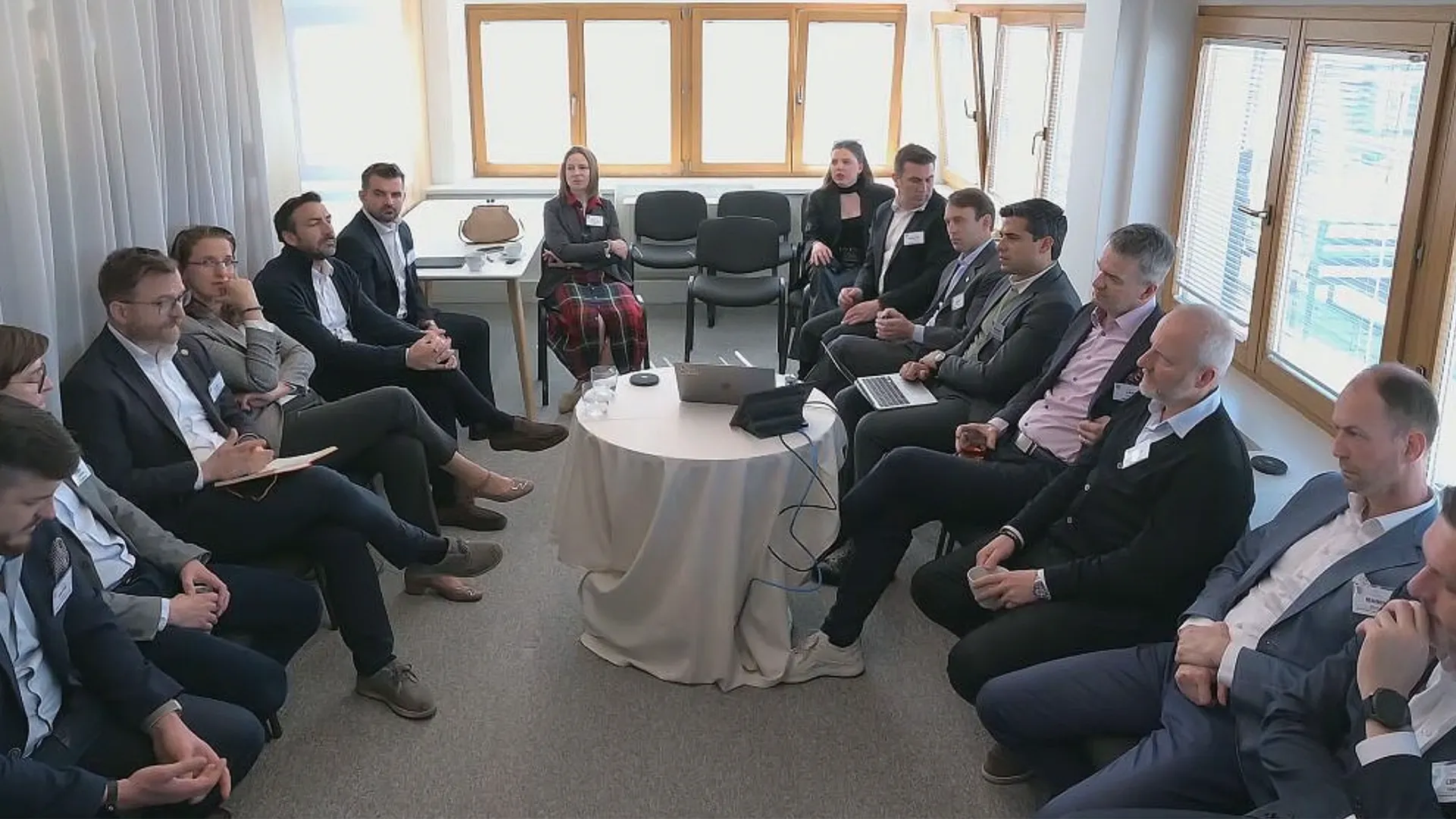
Discussions at the GRI Institute's CEE Living Assets 2026 roundtable revealed a market that has matured from a fragmented, emerging niche into a highly sought-after core allocation for long-term investors. (GRI Institute)
Market Maturity and Project Pipelines
This evolution is strongly reflected in the sheer volume of new developments across the region. Prague currently boasts an inventory of approximately 5,000 modern, purpose-built rental units, supported by a robust pipeline of future projects.The Polish market operates on an even larger scale, containing roughly 10,000 units within Warsaw alone, and a broader national pipeline reaching up to 20,000 units, the vast majority of which have been developed in just the last few years.
Initially, this rapid expansion was driven by private equity firms deploying short-term, opportunistic capital, including prominent names such as Apollo, PIMCO, and Invesco, but the landscape is currently shifting towards long-term stabilisation.
Large local institutions, regional banking groups, and international insurance providers are increasingly entering the space as core, long-term owners, signalling a transition towards a more mature market cycle.
Economic Barriers and Currency Concerns
Despite the strong underlying fundamentals, the transition to a core asset class is not without significant economic friction.One of the most severe barriers for international, EUR-based investors is currency volatility. Hedging local currencies, specifically the Polish Zloty (PLN) and the Czech Koruna (CZK), against the Euro (EUR) is prohibitively expensive, often stripping more than 300 basis points from potential returns. This hedging cost acts as a primary deterrent for foreign capital.
Furthermore, the high interest rate environment has created a scenario where investors frequently encounter negative leverage when financing residential-for-rent projects. In the Czech Republic, this is compounded by high and unpredictable construction costs, making yield-on-cost calculations highly challenging.
Private developers also face stringent financing constraints, often restricted to loan-to-value (LTV) ratios of approximately 40% when borrowing in local currency, which necessitates heavy equity consumption.
To justify these investments, conservative institutional players, such as pension funds, typically target a minimum 4% cash-on-cash yield alongside a total return exceeding 6% over a 10-year hold period.

The CEE Living Assets roundtable was held at Heimstad’s office in Prague, a city which currently boasts an inventory of around 5,000 modern, purpose-built rental units and a robust pipeline of future projects. (GRI Institute)
Valuation Disconnect and Asset Resilience
A persistent structural challenge within the CEE living sector is the fundamental disconnect in valuation methodologies.Many traditional real estate fund managers and professional valuers apply standard commercial real estate models, such as the discounted cash flow (DCF) method, to residential assets. This approach strictly evaluates rental income while failing to capture the substantial capital gains inherent to the residential market.
Unlike commercial sectors, residential real estate is driven by a different set of macroeconomic factors. Capital value growth and cap rate compression in the living sector are intrinsically linked to systemic salary increases and broad improvements in the quality of life, rather than solely being a function of central bank interest rates.
Furthermore, these properties exhibit exceptional resilience during economic downturns. Unlike office spaces, which suffer heavily from tenant vacancies, residential portfolios can be easily liquidated into the retail market through the steady sale of individual apartments, effectively mitigating downside risk.
When factoring in both steady rental growth and capital appreciation, total returns in the housing sector can comfortably reach double digits.
Navigating Regulatory Frameworks
The institutionalisation of the CEE living sector is also heavily reliant on evolving regulatory frameworks, which present both opportunities and roadblocks.At the European level, the implementation of CRR3 banking regulations initially forced financial institutions to hold significant equity against residential investments, acting as a major bottleneck.
However, targeted lobbying efforts have successfully reduced these risk weights, lowering the capital consumption requirements and making these projects far more viable for bank financing.
Within the Czech Republic, local institutions are actively shaping the market by committing to large-scale affordable housing projects, targeting rents 20% below market value. These initiatives are often supported by cheaper financing rates from the European Investment Bank (EIB), contingent upon the establishment of clear legislative definitions.
Conversely, strict local regulations continue to hinder capital flow. Czech pension funds, for example, are severely restricted by a regulatory fee structure that caps all-in management costs at 1% for stable funds.
This low ceiling makes it economically unfeasible for pension managers to book and manage operationally intensive residential assets.
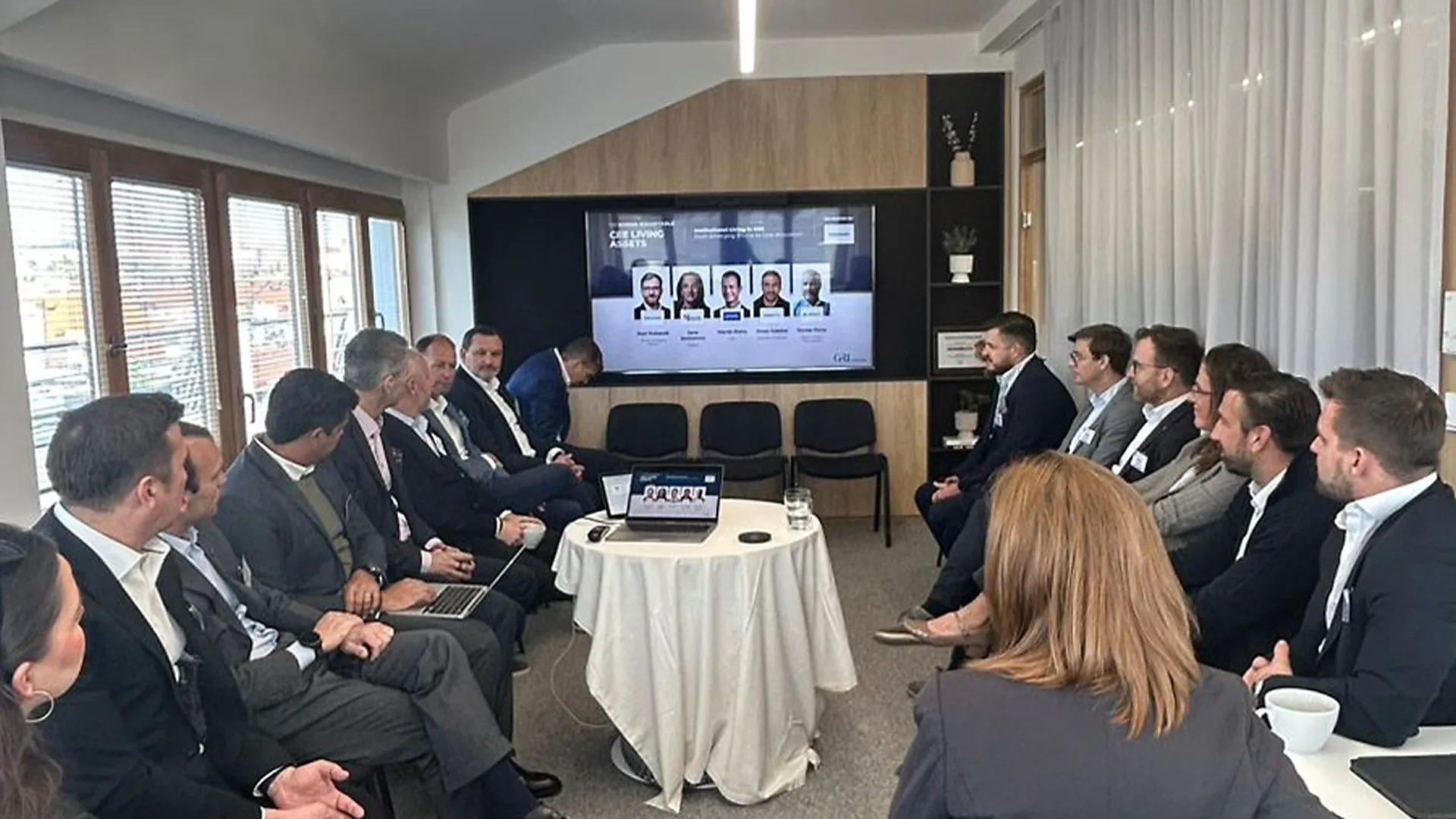
Industry leaders drew direct parallels between the current state of Prague and the historical trajectory of Vienna, arguing that property prices and rental rates will inevitably converge over the next 15 years. (GRI Institute)
Regional Disparities and the Path Forward
Looking ahead, the CEE institutional living market presents divergent regional strategies. Poland continues to attract investors seeking immediate cash flow, offering robust private rental sector yields that frequently exceed 7%.In contrast, the Czech market functions primarily as a low-risk, capital appreciation play. The structural scarcity of housing in major cities, exacerbated by painfully slow construction permitting processes, guarantees sustained demand.
Beyond this, a widespread affordability crisis is systematically locking younger generations out of homeownership, creating a natural demographic shift. Experts project that this dynamic will eventually normalise the regional housing market, shifting the balance toward a 60/40 split between homeowners and lifelong renters.
Conclusion
Ultimately, the long-term outlook for CEE living is exceptionally strong. Prague currently boasts the third-highest GDP per capita in Europe, providing a solid macroeconomic foundation for continued growth.Direct parallels can even be drawn between the current state of Prague and the historical trajectory of Vienna, with experts arguing that property prices and rental rates will inevitably converge over the next 15 years.
While international core capital remains somewhat cautious due to immediate currency and interest rate volatility, local capital - including family offices, regional insurance groups, and eventually, reformed pension funds - is perfectly positioned to dominate the market.
As regulatory hurdles are cleared and valuation models adapt, the CEE living sector is set to solidify its position as an indispensable, core allocation in institutional portfolios.
► Keep the conversation going with the most senior leaders active in the region at CEE GRI 2026 in Warsaw on 19th May
These insights were shared during the Institutional Living in CEE panel at the GRI Institute’s CEE Living Assets 2026 roundtable, co-hosted by Heimstaden, featuring contributions from moderator Stan Kubacek (Heimstaden), as well as Jana Seckarova (Natland), Marek Blaha (Dostupné bydlení České Spořitelny), Omar Koleilat (Crestyl), and Tomas Picha (Invesco).