 GRI Institute
Can CEE's commercial real estate sector overcome its supply crunch?
Discover how CRE investors are navigating market polarisation, infrastructure limits, and shifting tenant demands across Central and Eastern Europe
April 16, 2026Real Estate
Written by:Rory Hickman
Executive Summary
The Central and Eastern European (CEE) commercial real estate market is currently moving through a period of distinct polarisation.
On one side sits a structural investment case that remains robust, defined by resilient retail occupancy and a growing demand for premium workspaces. On the other sits an execution environment shaped by severe supply constraints, soaring construction costs, and a growing divide between prime and secondary assets.
These tensions defined discussions among top industry leaders at the GRI Institute’s CEE Commercial Real Estate Forum in Warsaw, co-hosted by Colliers, and they are now central to how global and regional investors are reallocating capital across the region.
Ahead of CEE GRI 2026, where these critical conversations will continue in Warsaw on 19th May, the regional outlook remains promising but highly nuanced.
The underlying growth thesis for CEE real estate is undeniable, but the winners in this next cycle are likely to be those with operational capability, a focus on meticulous asset selection, and the ability to deliver exceptional, hospitality-driven management.
On one side sits a structural investment case that remains robust, defined by resilient retail occupancy and a growing demand for premium workspaces. On the other sits an execution environment shaped by severe supply constraints, soaring construction costs, and a growing divide between prime and secondary assets.
These tensions defined discussions among top industry leaders at the GRI Institute’s CEE Commercial Real Estate Forum in Warsaw, co-hosted by Colliers, and they are now central to how global and regional investors are reallocating capital across the region.
Ahead of CEE GRI 2026, where these critical conversations will continue in Warsaw on 19th May, the regional outlook remains promising but highly nuanced.
The underlying growth thesis for CEE real estate is undeniable, but the winners in this next cycle are likely to be those with operational capability, a focus on meticulous asset selection, and the ability to deliver exceptional, hospitality-driven management.
Key Takeaways
- Severe power grid limitations, rather than anticipated nearshoring waves, are increasingly the primary constraint dictating the pace of new industrial developments.
- Investment capital is pivoting aggressively from traditional shopping centres toward retail parks to accommodate expanding brands seeking affordability.
- A stagnant development pipeline and intense market polarisation have created a severe supply crunch, driving substantial rental growth for prime office spaces.
► CEE Logistics Sector
Nearshoring: Myth vs Reality
The global supply chain is undergoing a significant transformation, and CEE is emerging as a critical powerhouse for manufacturing, logistics, and nearshoring.While nearshoring has been a major industry buzzword for the past few years, the anticipated massive wave of European re-industrialisation is currently falling short of initial expectations. Instead of a sudden geopolitical shift, the movement is a gradual process driven primarily by specific business needs and underlying cost considerations.
The CEE region increasingly serves as an accessible, cost-effective gateway for Asian capital, particularly from Chinese, Japanese, and Korean investors looking to establish a foothold in the European market.
A significant driver of this inbound demand is not necessarily traditional nearshoring, but rather a strategic response to impending regulatory changes and tariffs. Companies are proactively building up inventory and securing logistics space to mitigate future distribution costs.
Furthermore, the defence sector was highlighted as a potential catalyst for future industrial and logistics demand. However, experts note that heavy defence manufacturing is unlikely to be situated directly on the eastern borders due to the inherent risks associated with frontline locations.
Instead, border areas such as Rzeszów are expected to function more as immediate logistics hubs and support centres for future rebuilding efforts in Ukraine.
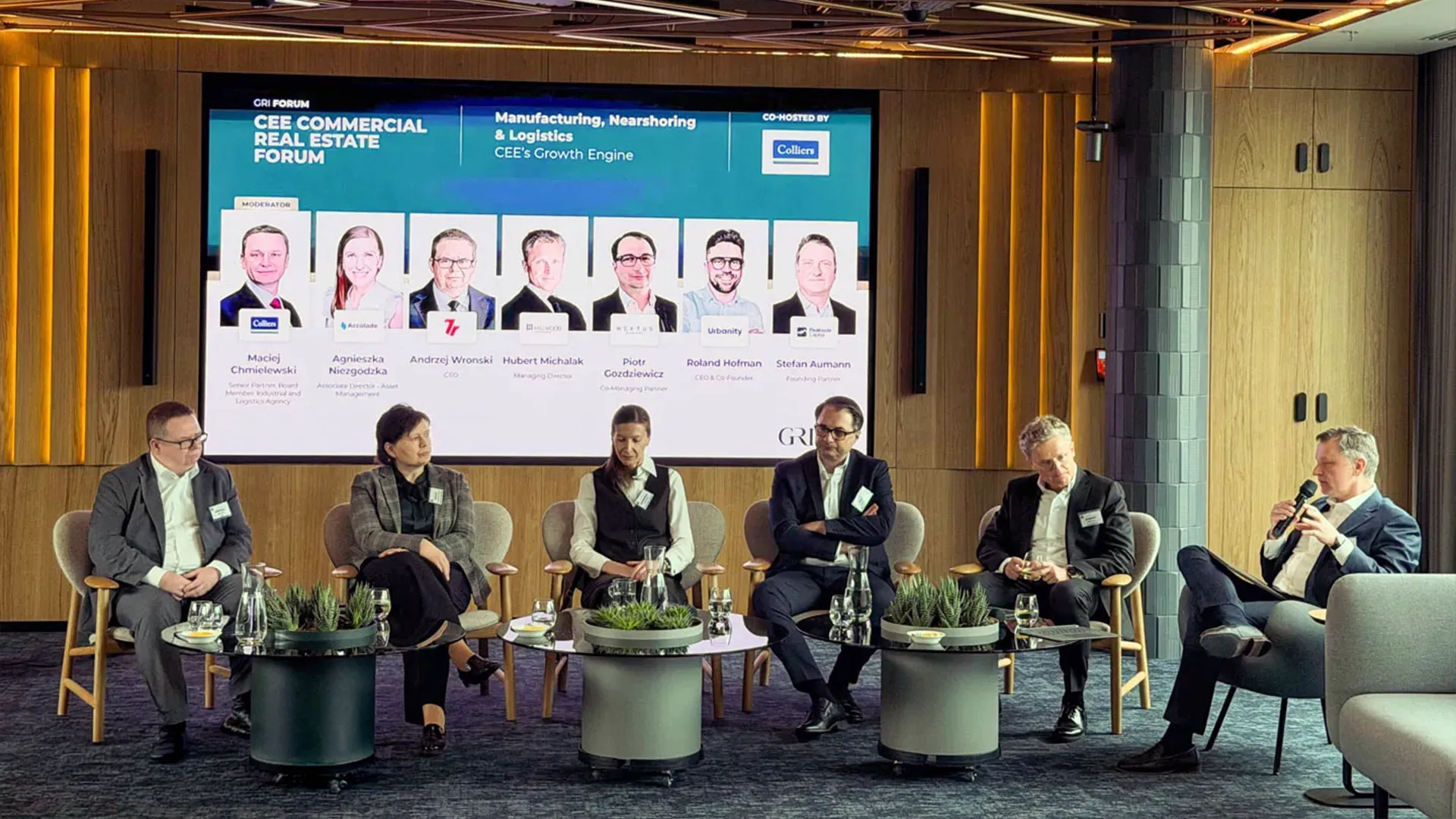
At the CEE CRE Forum 2026, industry leaders discussed how the reality of nearshoring is being driven by strategic foreign investments and tariff responses, not a sudden geopolitical shift. (GRI Institute)
The Power Conundrum
Energy supply and infrastructure are rapidly becoming critical constraints for new industrial developments, especially for high-tech manufacturing and automated warehousing.While Poland is not yet facing the severe power shortages seen in countries such as the Netherlands, securing energy connections remains a growing hurdle. The country generates a substantial amount of power, but the primary bottleneck lies in the distribution grid, which severely limits the creation of new commercial space.
To address these infrastructure challenges, a diversification of energy sources is essential. While solar and wind power are beneficial additions, industrial-scale battery storage is currently viewed as too expensive and inefficient to serve as a standalone solution.
For the long term, particularly given the immense energy demands of future technologies and AI, nuclear energy is seen as the necessary and sustainable answer.
Poland's Logistics Resilience
Despite broader economic headwinds, Poland's logistics market continues to demonstrate robust performance, with gross take-up reaching near-record levels and vacancy rates actively dropping.The country benefits from a large population base, excellent road infrastructure, and a strategic geographic location that successfully serves a vast European catchment area.
Furthermore, Poland's warehouse density per capita is still much lower than in the US or Western Europe, indicating significant room for continued growth.
However, the abundance of available land and relatively straightforward permitting processes for new developments mean that rental growth in Poland remains structurally constrained.
Rents in Poland are currently among the lowest in Europe, which acts as a double-edged sword: it aggressively attracts foreign tenants but limits the yield potential for developers.
A qualitative shift in tenant demands has also been observed, with companies increasingly requiring robust ESG features, energy efficiency, and modern community amenities as conditions for lease extensions.
Stakeholders must strategically navigate infrastructure and geopolitical hurdles to fully capitalise on the CEE logistics sector's undeniable growth potential. (GRI Institute)
Regional Dynamics: Beyond Poland
Beyond the Polish success story, the varying trajectories of other key CEE markets are impacting investor intentions.Czech Republic
In sharp contrast to Poland, the Czech market is characterised by a severe lack of available land and lengthy, complex permitting processes. This scarcity makes it an overpriced market for new developers, but it provides an incredibly stable, high-demand environment for existing asset owners who enjoy consistent rental growth.
Romania
The Romanian market holds substantial long-term promise due to its geographical location and recent improvements in utilising EU funds to boost infrastructure. However, Romania is still hampered by issues surrounding corruption, market transparency, and a lack of capital liquidity, which limits the pool of willing institutional investors and debt providers.
Emerging Alternatives
Due to the developmental constraints and geopolitical complexities in certain established markets, some investors are proactively exploring alternative locations, such as Croatia, to set up operations and accommodate tenant expansions.
CEE Logistics Outlook
The CEE logistics and industrial sector undoubtedly remains a vital growth engine for the wider European economy. However, successfully navigating this landscape requires a nuanced understanding of sub-regional differences, infrastructure limitations, and evolving geopolitical realities.While the underlying growth potential is undeniable, stakeholders must strategically adapt and proactively solve structural challenges in order to capitalise on it - both in this cycle and those to come.
► CEE Retail Sector
Beyond the Apocalypse and into Omnichannel
Despite years of warnings about a looming "retail apocalypse" driven by e-commerce, the physical retail sector in the CEE region has proven remarkably resilient.The market successfully absorbed the shocks of the COVID-19 pandemic, largely because retailers realised that true success requires a robust omnichannel strategy rather than a reliance on digital sales alone.
Undersupply and Shifting Development Demands
Structurally, the Polish market remains undersupplied, possessing roughly half the retail space per capita compared to Western European countries. However, the nature of retail development has shifted.The era of constructing massive new shopping centres has largely ended, with only one major product currently in the pipeline for Warsaw. Instead, development capital has pivoted aggressively toward retail parks.
These parks are particularly successful in secondary cities of over 200,000 inhabitants, offering consumers convenience and an increasingly diverse tenant mix.
Tenant Trends
The tenant composition within both retail parks and shopping centres is also evolving. Due to a historical lack of traditional high streets in major cities, premium and luxury brands are forced to compete for prime space within top-tier malls.This intense competition has driven vacancy rates to near zero in prime assets, pushing asking rents to exceptional heights - sometimes ranging from EUR 130 to EUR 200 per square metre for smaller units.
Consequently, brands requiring scale are increasingly looking toward retail parks, where rents sit at a much more accessible EUR 30 per square metre.
Furthermore, landlords are adapting to shifting demographics. The traditional focus on young families is expanding to capture the "silver generation" - older demographics with significant purchasing power who seek experiential spending, leisure, and high-quality services.
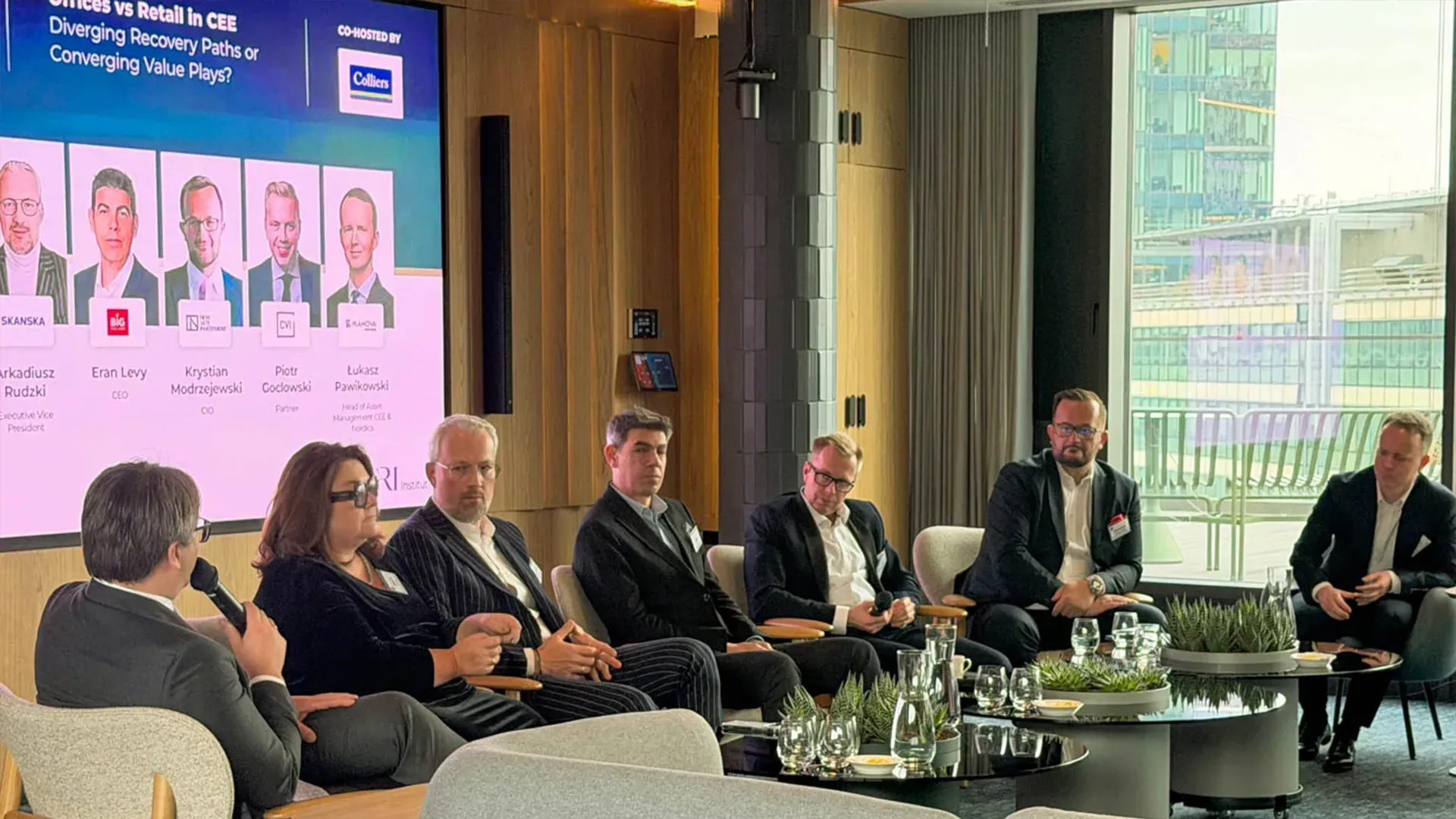
Defying the predicted retail apocalypse, participants noted that the resilient CEE physical market is embracing omnichannel strategies and aggressively pivoting development towards retail parks. (GRI Institute)
► CEE Office Sector
Extreme Polarisation and the Supply Crunch
Mirroring the rest of Europe, the CEE office sector is defined by intense polarisation, creating a distinct divide between prime Central Business District (CBD) assets and secondary locations.In prime locations, the market is severely supply-constrained. For example, prime office space in Krakow's city centre currently has virtually zero availability, with rents approaching EUR 20 per square metre.
In Warsaw, strong demand and a stagnant development pipeline could push prime rents towards EUR 30 or even EUR 40 per square metre in the near future.
Development Delays
The lack of new office development is driven by a combination of macroeconomic headwinds. Surging construction costs, elevated energy prices, and the requirement for substantial pre-leases to secure bank financing have effectively halted speculative development.Additionally, the office sector faces aggressive competition for land from residential developers. In some areas, outdated office plots valued at EUR 1,000 per square metre can be converted and sold for residential use at EUR 2,500 per square metre, strongly disincentivising new commercial projects.
Despite the ongoing presence of hybrid work models - with physical office occupancy hovering around 60% to 70% - corporate tenants are willing to pay premium rents for high-quality spaces.
Office Hotelification
The market is shifting towards the "hotelification" of the office, where landlords must offer hospitality-level services, superior amenities, and ESG compliance to attract employees back to the physical workplace.Additionally, while artificial intelligence is expected to automate certain repetitive back-office tasks, it is largely viewed as a tool to streamline operations, allowing human workers to focus on relationship-building and complex problem-solving.
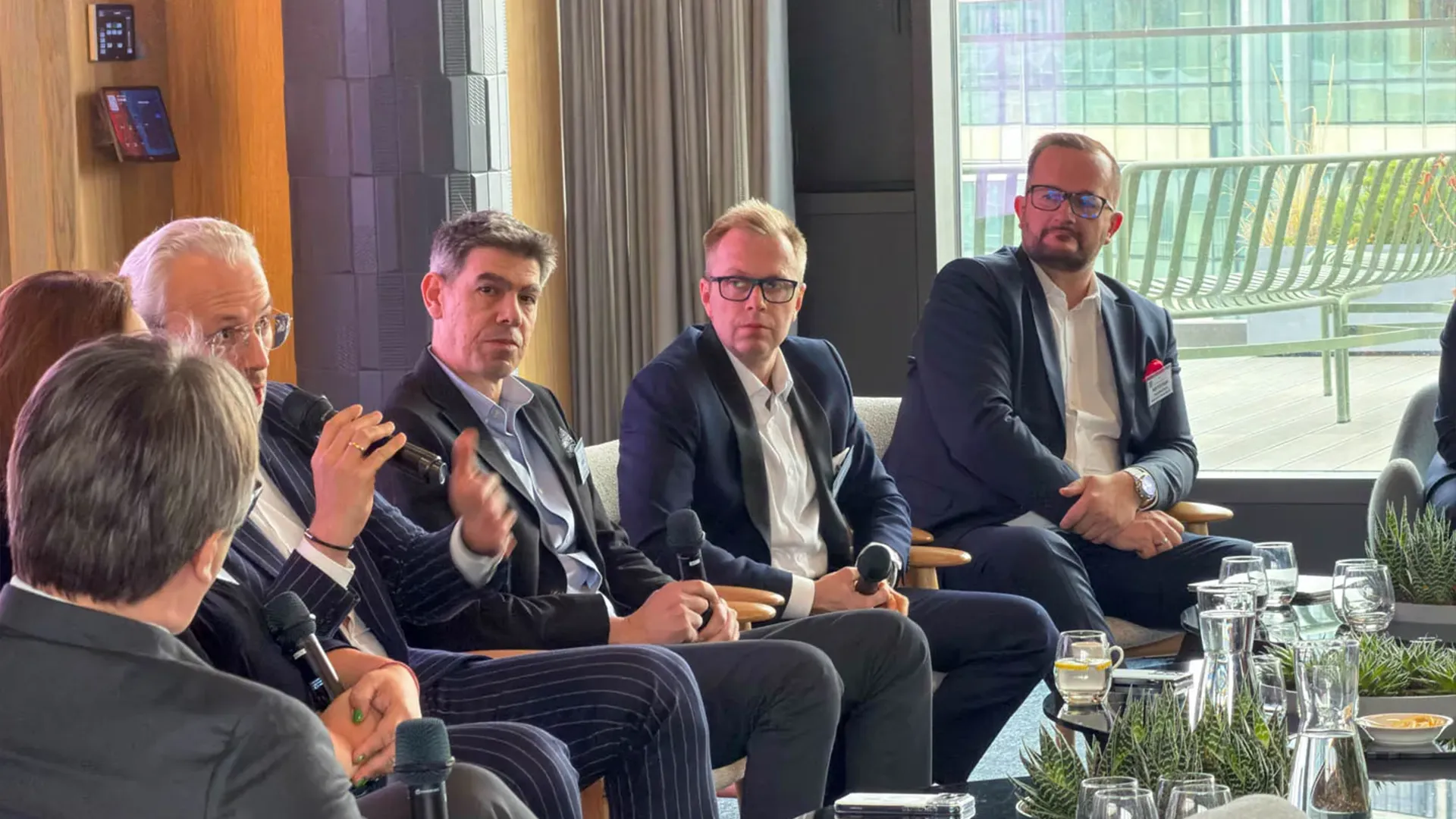
A severe supply crunch and intense market polarisation are driving the "hotelification" of CEE workspaces, offering premium, hospitality-driven amenities to command higher rents. (GRI Institute)
► Liquidity, Yields, and Capital Allocation
Primary vs Secondary Destinations
When assessing risk-adjusted returns, the cost and availability of debt play a crucial role. Debt funds and traditional banks are willing to finance prime CBD offices and fully stabilised retail assets, recognising their strong cash flows and rental growth potential.However, financing for secondary assets, or those carrying even a minor 5% to 10% vacancy rate, remains highly restricted.
Pricing Variation
On the pricing front, retail parks in Poland currently trade at yields between 7.5% and 8%, but - as this segment matures and becomes increasingly saturated - investors anticipate these yields could compress toward the 6% mark, closely mirroring current valuations in the neighbouring Czech Republic.For the office sector, value creation is expected to stem from capital value growth rather than significant yield compression, with prime Warsaw assets projected to reach capital values of EUR 6,500 per square metre as rental rates continue their upward trajectory.
Retail and Office Success
Ultimately, whether investing in offices or retail, the market has matured beyond broad sector generalisations. Success relies entirely on meticulous asset selection, proactive capital expenditure, and a relentless focus on delivering an exceptional, hospitality-driven experience to the end-user.► CEE CRE Conclusions
The era of broad-based, passive returns in CEE commercial real estate has definitively ended. As the market matures, future value creation will be dictated by how effectively investors navigate profound structural bottlenecks - from severe power grid limitations to persistent supply constraints.Rather than relying on sweeping geopolitical trends or generic sector growth, capital must now be highly selective, targeting prime assets that can physically and operationally withstand these execution hurdles.
Looking ahead, the ultimate winners in the next cycle will be those who transition from traditional landlords to hospitality-driven operators.
While the region's underlying fundamentals remain strong, capturing that growth will demand intense operational agility, proactive capital expenditure, and a highly nuanced approach to asset management.
► Continue these discussions with the most senior players active in the region at CEE GRI 2026 in Warsaw on 19th May
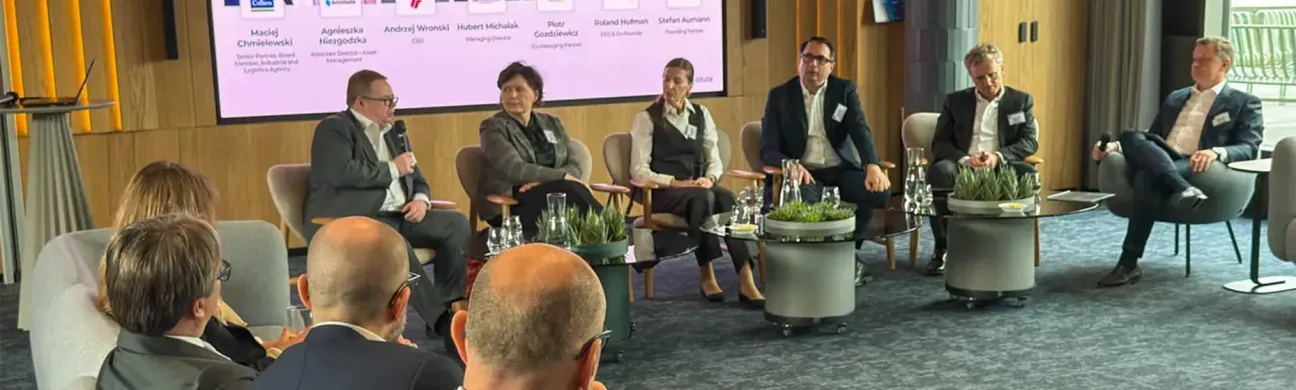
Logistics insights were shared during the Manufacturing, Nearshoring, & Logistics panel at the GRI Institute’s CEE Commercial Real Estate Forum, co-hosted by Colliers, featuring participation from Agnieszka Niezgodzka (Accolade Group), Andrzej Wronski (7R), Dorota Latkowska-Diniejko (REINO Partners), Hubert Michalak (Hillwood), Piotr Gozdziewicz (Nextus Capital), and moderator Maciej Chmielewski (Colliers).
Retail and office sector insights were discussed during the event's Offices vs Retail in CEE panel, featuring contributions from Agata Sekula (Echo Polska Properties), Arkadiusz Rudzki (Skanska), Eran Levy (BIG), Krystian Modrzejewski (New Gate Investment), Piotr Goclowski (CVI DM), Łukasz Pawikowski (Manova Partners), and moderator Marek Paczuski (Colliers).