 Credit: Adobe Stock
Germany’s Beds Ecosystem: The new rules for hospitality and residential real estate repositioning
Industry leader insights into the operating models, capital discipline, and conversion realities defining today’s most investable accommodation strategies
March 31, 2026Real Estate
Written by:Rory Hickman
Executive Summary
At the GRI Institute’s The Beds Ecosystem in Germany - Hospitality Meets Residential roundtable, the agenda centred on a market being reshaped by convergence across hospitality, residential, serviced apartments, co-living, senior housing, and other living formats.
Ahead of the latest edition of our biggest gathering of German real estate leaders at Deutsche GRI 2026 on 28th April in Frankfurt, the core questions were clear: which operating models are still financeable, where is capital really flowing, and when can conversions truly work in practice?
What emerges is not a story of unlimited liquidity or straightforward repricing. It is a story of a market where appetite exists, but capital is disciplined, exits are uneven, and underwriting now depends far more on operational reality than on contractual form alone.
Ahead of the latest edition of our biggest gathering of German real estate leaders at Deutsche GRI 2026 on 28th April in Frankfurt, the core questions were clear: which operating models are still financeable, where is capital really flowing, and when can conversions truly work in practice?
What emerges is not a story of unlimited liquidity or straightforward repricing. It is a story of a market where appetite exists, but capital is disciplined, exits are uneven, and underwriting now depends far more on operational reality than on contractual form alone.
Key Takeaways
- Beds remains a compelling investment theme, but capital is backing operationally credible, highly selective opportunities rather than the sector as a whole.
- The strongest opportunities lie in flexible formats and asset repositioning strategies that can bridge hospitality and residential uses.
- Success now depends on transparency, realistic risk-sharing structures, and a precise match between product, building, and planning framework.
Promise Without Pace
Germany’s hospitality and residential sectors are moving decisively closer together, reshaping how investors, owners, and operators think about the beds market. What was once viewed as a broad, high-conviction theme is now being tested more rigorously, with success depending less on sector labels and more on operational strength, asset flexibility, and disciplined execution.The appeal of beds remains strong, but the opportunity is no longer simply about backing the category - it is about understanding which products, structures, and strategies can truly perform in a more demanding market.
Serviced apartments, co-living, hybrid formats, senior living, and hotel products are increasingly viewed as part of one broader ecosystem, especially as investors search for use cases that align with demographic change, urban mobility, affordability pressures, and more flexible patterns of stay.
Yet enthusiasm has not fully translated into a broad market reset. There is still a sense that capital is available in principle, including from outside Germany, but deployment remains cautious. The disconnect is not simply access to money. It is whether pricing, risk, and exit expectations can be aligned in a way that makes new deals underwrite cleanly.
Older stock, repositioning needs, ESG-related capex, and planning complexity all affect the real cost of entry. The result is a market where conviction exists, but the margin for error has narrowed significantly.
Fixed Leases Falling Short
One of the clearest shifts is in how operating risk is assessed. For years, the lease was often treated as the key line of defence. That logic has weakened as lenders and investors place much greater emphasis on whether a hotel or living product can actually perform at asset level, rather than relying on a headline rent commitment that may prove brittle under pressure.This reflects a post-pandemic reality. Covid exposed the limits of rigid structures, while subsequent cost inflation has made the challenge more acute.
Labour, wages, and operating expenses have risen materially, while room-rate growth is no longer expected to provide the same level of support going forward. In this environment, the gap between what operators need and what investors expect has widened.
As a result, transparency has become more valuable than contractual certainty in isolation. Performance visibility, rent cover, sponsor quality, brand strength, and location are all increasingly central to financeability.
Hybrid leases, lower-base structures, management agreements, and more adaptive frameworks are gaining relevance because they better reflect how risk is actually shared in weaker parts of the cycle.
The implication is significant: a 25-year contract is no longer enough on its own to reassure the market. The structure must work in operational reality, not just on paper.
Capital Still Chasing Quality
Strong locations, established operating platforms, and products with clear brand identity continue to draw interest, but the flight to quality is becoming sharper, and that has consequences across both hospitality and adjacent living formats.This is particularly important for newer or more fragmented concepts. The beds ecosystem is expanding, and product innovation is accelerating, but not every niche will prove durable over a 10-15 year hold period.
That matters for both capital allocation and exit liquidity. Investors may like the direction of travel, but many remain cautious about which concepts can maintain demand, pricing power, and operational resilience over time.
The same caution applies to serviced apartments and hybrid residential-hospitality products. Demand may be evident, but the market is still working out which formats are genuinely scalable, which are merely opportunistic, and which can hold value through a full cycle. The convergence thesis is powerful, but long-term proof of concept still matters.
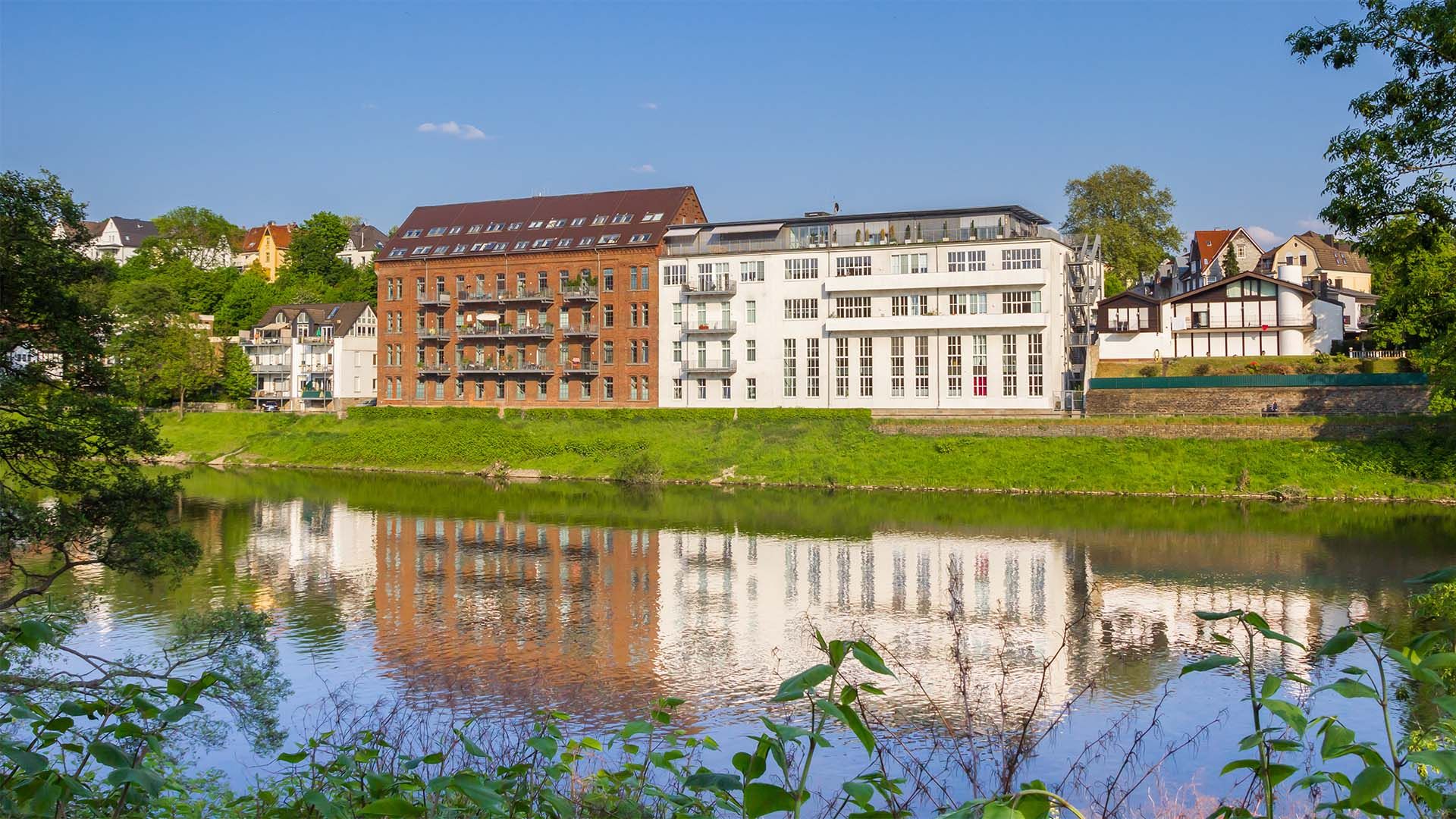
As hospitality and residential converge, success in the German beds market is increasingly defined by operational strength, asset flexibility, and disciplined execution. (Adobe Stock)
Pain, Planning, and Potential
Conversions remain one of the most talked-about opportunities in Germany’s beds market, especially as obsolete offices, department stores, and other challenged assets search for viable next uses. The logic is compelling: beds can activate stranded buildings, address urban demand, and support broader regeneration goals.But execution is hard. In reality, only a small share of potential schemes truly works once technical, legal, and economic constraints are fully mapped. The recurring blockers are building-services infrastructure, lift and shaft placement, room access, circulation, daylight, depth of floor plates, mixed-use logistics, and the cost of retrofitting to meet the operational requirements of the chosen end product.
Planning law is equally decisive, with the choice between staying on a commercial track or moving toward residential use having the potential to determine whether a scheme is truly viable.
Municipal approaches vary, and while policy tools aimed at accelerating housing delivery may help some projects, they do not remove the underlying cost burden or solve every entitlement issue, particularly around hybrid or quasi-residential formats.
That means successful conversions tend to be highly asset-specific. They are usually less about broad market optimism and more about solving a very particular problem in a very particular building. In many cases, necessity drives creativity.
From Fringe to Functional
One of the most striking signs of market evolution is the growing seriousness around denser, lower-cost, or more flexible accommodation formats.Capsule-style concepts and other compact models are increasingly being examined not as gimmicks, but as practical answers to affordability, difficult floor plates, transport-hub demand, and underused urban stock.
These formats will not suit every building or every guest profile. But they can materially improve revenue per square metre, offer plug-and-play deployment, and open up assets that would otherwise be hard to reposition.
In the right micro-market, especially where price sensitivity is high and transient demand is deep, such models can create a credible operating proposition.
This points to a broader market truth: Germany’s beds ecosystem is no longer only about traditional hotel rooms or conventional residential layouts. It is becoming a test bed for more varied typologies, more flexible standards, and more operationally led design thinking.
Flexibility Over Formula
The biggest takeaway is that Germany’s beds market is not short of ideas or interest. What it lacks is tolerance for outdated assumptions.The old formula of fixed structures, standard products, and easy exits is no longer reliable. In its place is a more complex landscape where underwriting has to absorb operating volatility, planning risk, asset-level constraints, and product evolution all at once.
That does not weaken the beds thesis - on the contrary, it makes the category more relevant. But it also means success will depend less on broad thematic enthusiasm and more on disciplined execution.
The assets most likely to move forward will be those where product, planning, operations, capital, and exit strategy are aligned from the outset.
In Germany, the beds ecosystem is clearly expanding. The opportunity is real. But the winners are likely to be the groups that stay flexible, build in transparency, and treat convergence not as a slogan, but as a practical exercise in making difficult assets, and difficult structures, actually work.
► Join us at Deutsche GRI 2026 in Frankfurt on 28th April for more insights on accommodation convergence, repositioning strategies, and capital trends shaping the German market
These insights were shared during the GRI Institute’s Beds Ecosystem in Germany roundtable, co-hosted by CMS, featuring participation from Andreas Otto (CMS), Benjamin Albrecht (Aroundtown SA), Gesa Rohwedder (Drees & Sommer GmbH), Tobias Gollnest (B&B Hotels), Veronica Eckhoff (Aareal Bank), and moderator Andreas Ewald (Colliers).