 Credit: GRI Institute
International Optimism Meets German Structural Reality
Germany’s real estate market faces regulatory hurdles and pricing misalignments despite significant international investor optimism
February 4, 2026Real Estate
Written by:Rory Hickman
Executive Summary
This report highlights the key insights from the GRI Chairmen’s Retreat Takeaways Germany 2026, where top real estate owners, investors, and lenders active in Germany explored the results of the GRI Chairmen’s Retreat Europe 2026 survey through the lens of local market conditions.
While global optimism and stabilising markets are welcome, persistent regulatory constraints, pricing misalignment in core sectors, and the need for strategic repositioning underscore that Germany’s real estate market is entering 2026 with both clear opportunities and significant challenges.
While global optimism and stabilising markets are welcome, persistent regulatory constraints, pricing misalignment in core sectors, and the need for strategic repositioning underscore that Germany’s real estate market is entering 2026 with both clear opportunities and significant challenges.
Key Takeaways
- Global optimism contrasts with local hurdles as Germany’s real estate market faces pricing misalignment and regulatory challenges
- Despite strong demand, Germany’s residential market is constrained by regulatory limits and slow transaction activity
- AI and shifting work models are reshaping Germany’s office sector, with hybrid models leading to increased vacancies in secondary locations
Download the PDF of the 'GRI Chairmen’s Retreat Takeaways Germany 2026 Spotlight' report here.
Survey Says…
Concerns about inflation, AI’s impact on job markets, and geopolitical tensions, including the US-China trade war and the war in Ukraine, have increasingly led investors to view Europe, and particularly Germany, as a safer alternative to more volatile markets.The results of the GRI Chairmen's Retreat Europe 2026 survey revealed an overall sense of cautious optimism for real estate, with 61% of global senior leaders expressing a positive outlook for the next 12 months, indicating a potential market stabilisation after years of valuation corrections and liquidity uncertainty.
While the majority viewed the market positively, 28% were neutral, suggesting they remain vigilant before committing new capital. Only 8% expressed outright pessimism, reflecting a shift away from negative sentiment that had previously dominated the industry. This is one of the highest levels of positive sentiment recorded in recent years.
This newfound optimism is largely driven by the growing expectation that the market is undergoing an adjustment phase, despite the uneven recovery across different sectors.
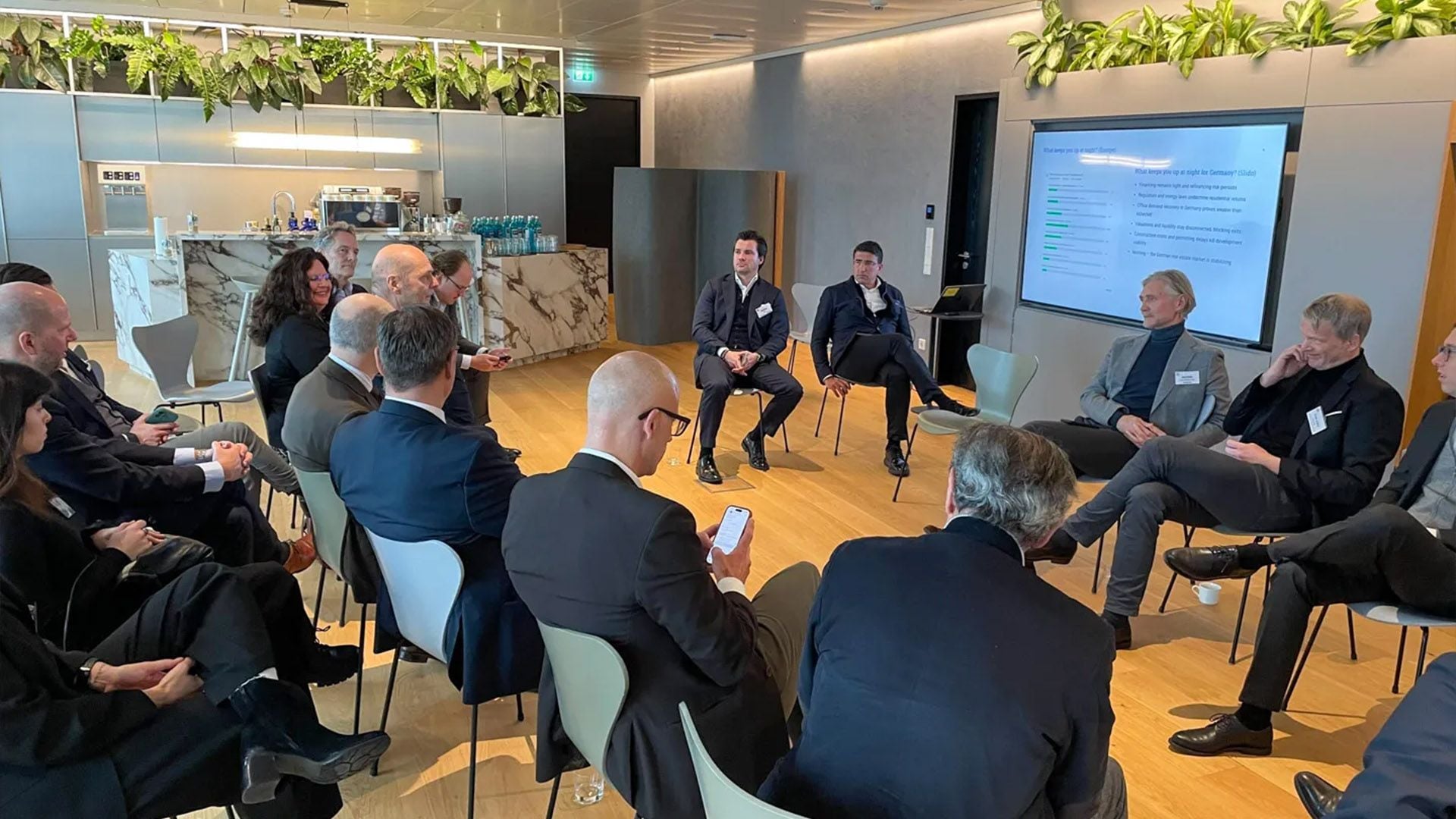
The results of the GRI Chairmen's Retreat Europe 2026 survey revealed that 61% of global senior leaders express a positive outlook for European real estate over the next 12 months. (Credit: GRI Institute)
Divided German Outlook
However, this global optimism contrasts with a more nuanced outlook in Germany, where the outlook is more complex as structural challenges have dampened confidence among domestic stakeholders compared to their global counterparts.Although Germany's reputation for stability, democratic values, and long-term safety makes it a top investment target for international investors in Europe, local participants report a disconnect between the external perception of stability and the realities they face in the market.
Challenges in the German Market
While Germany continues to attract significant interest, particularly from international investors, transaction activity remains slow. The primary obstacle is the misalignment between buyers' and sellers' pricing expectations, which continues to hinder market fluidity.Value-Add Strategies
Many foreign investors are keen to pursue value-add opportunities, but sellers have been hesitant to accept the necessary price adjustments that reflect the current market conditions. This mismatch in expectations has resulted in a standstill for many transactions.Office assets, especially large core buildings, face particular difficulties. Demand in this segment is weaker than expected, and limited core capital further compounds the problem.
International investors are under increasing pressure to deploy capital in Germany, but the returns often fail to justify the perceived risk, particularly in the office sector unless there is potential for conversion.
Secondary Location Challenges
While high-end, amenity-rich real estate models work well in core markets, replicating these in secondary locations proves to be extremely challenging. Rent constraints in these areas make it difficult to justify such developments, leaving many regions behind as the gap widens.There is also a concern that Germany may become overly concentrated in a small number of large urban centres, which raises critical questions about job availability, infrastructure quality, healthcare access, and the long-term liveability of regional cities.
This issue cannot be solved by real estate alone. It is intrinsically linked to state-level economic success, highlighting the need for broader, systemic changes to address these challenges.
Regulatory Issues in Germany
Regulation, particularly zoning and energy laws, remains one of the biggest structural obstacles in the German market. Increasing compliance demands have placed a strain on operational resources, limiting companies' ability to focus on growth, investment, and innovation.Planning Permission
Municipal and governmental bodies are often described as highly cautious, with a tendency to delay adapting regulatory frameworks to reflect evolving market conditions. This reluctance to change creates further challenges.One key issue is municipal zoning rigidity, which can act as a major barrier to repurposing assets. Even when conversion seems logical from a market perspective, approval processes remain slow and are often subject to political discretion, making timely developments difficult.
Digital Drivers
On a positive note, digitalisation has brought some improvements, with multiple departments now able to process planning files simultaneously, speeding up the process. Furthermore, AI has been suggested as a potential tool for dramatically accelerating planning permissions by automating standardised regulatory checks in the future.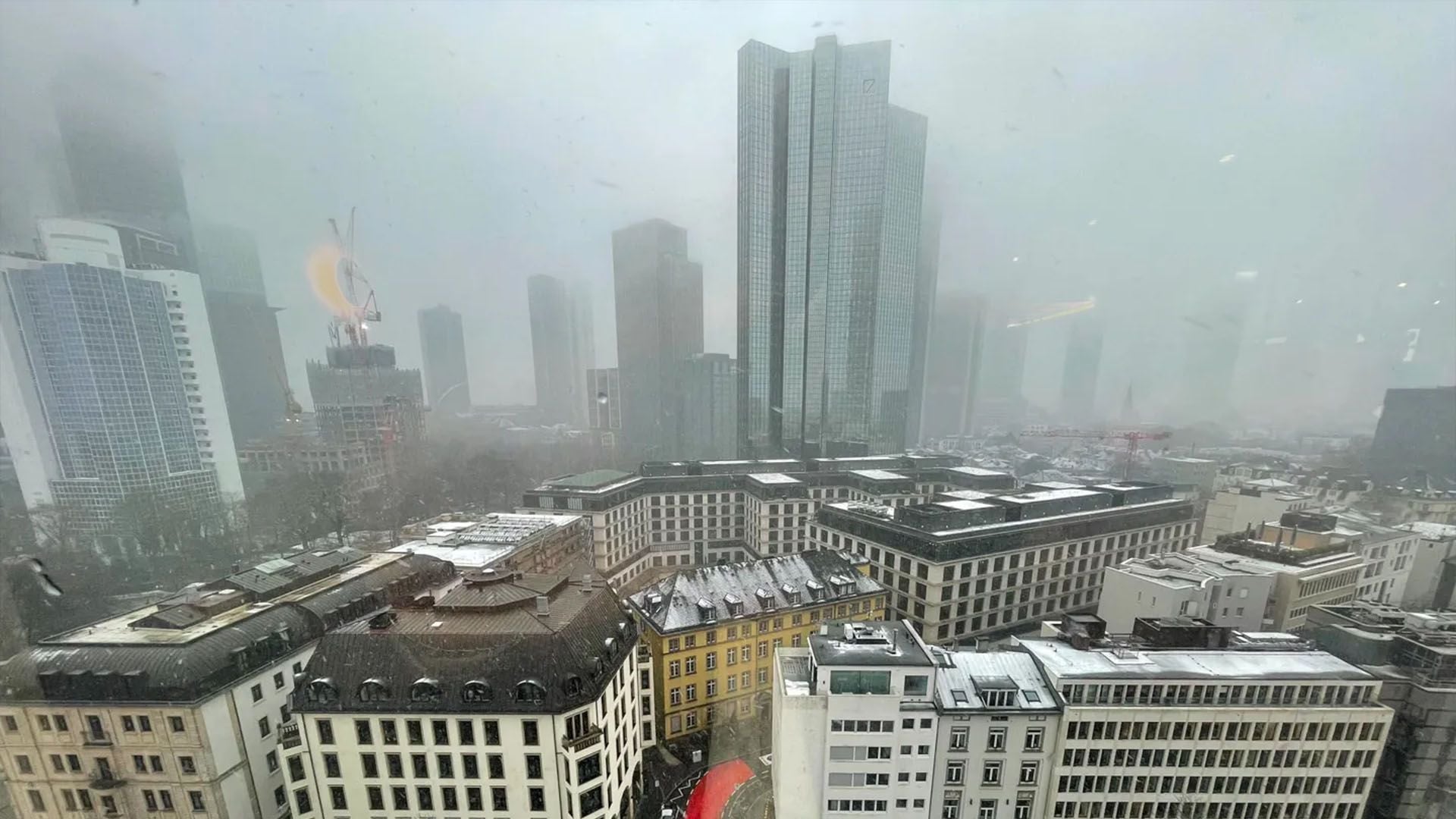
Although Germany is currently a top investment target for investors in Europe, local participants report a disconnect between the external perception of stability and the realities they face on the ground. (Credit: GRI Institute)
Financing and Liquidity
Financing is notably not considered the primary concern among German market players, with liquidity still widely available - especially from alternative lenders. Banks have also become more prepared than they were three years ago, with expanded restructuring capacity that gives them more flexibility.However, while liquidity is abundant, real estate is seen as less attractive compared to other real assets, such as infrastructure, and investors are increasingly cautious due to rising capital costs and higher equity requirements, with sponsors now injecting more equity to safeguard their initial investments.
A major challenge in the market is the lack of deal evidence, which makes it increasingly difficult to underwrite future exit pricing. This valuation uncertainty remains a key issue for investors.
Another concern comes from insurance companies beginning to factor in climate risks, particularly water risks, which are often excluded from standard policies. To manage these emerging risks, insurers are seeking higher yields and fees from property owners, which is affecting real estate returns and putting pressure on investors to generate returns that match the increased risk profiles.
Concerns for the Future
Looking ahead, several macro risks dominate concerns in the market. These include the potential for a deep recession affecting the West, the possibility of AI destroying jobs rather than creating them, and the aggressive return of inflation.This uncertainty is compounded by broader geopolitical tensions, worries about currency debasement, and shifts in commodities such as gold and silver.
Despite these concerns, real estate is still seen as a relative safe haven in turbulent environments, offering income-producing security that stands in contrast to more volatile financial assets.
AI’s Impact on Jobs
AI is increasingly viewed as one of the most transformative forces of the next decade, expected to drive significant structural changes both in employment and spatial demand. Projections suggest that up to 70% of white-collar jobs could be automated within the next 5-10 years.Automation is expected to be most effective in repetitive tasks, while more creative functions, such as development, are considered harder to replace.
Early impacts of AI are already visible across several sectors. For example, the demand for analysts has been reduced due to AI-supported modelling, while customer support functions have been automated by as much as 50%.
In the insurance sector, claims departments are already able to significantly reduce staffing, though this process is constrained by German labour laws.
In the real estate sector, office shrinkage, the rising demand for amenity-driven spaces, and increased vacancies in secondary locations are all expected to be influenced by the technological shift.
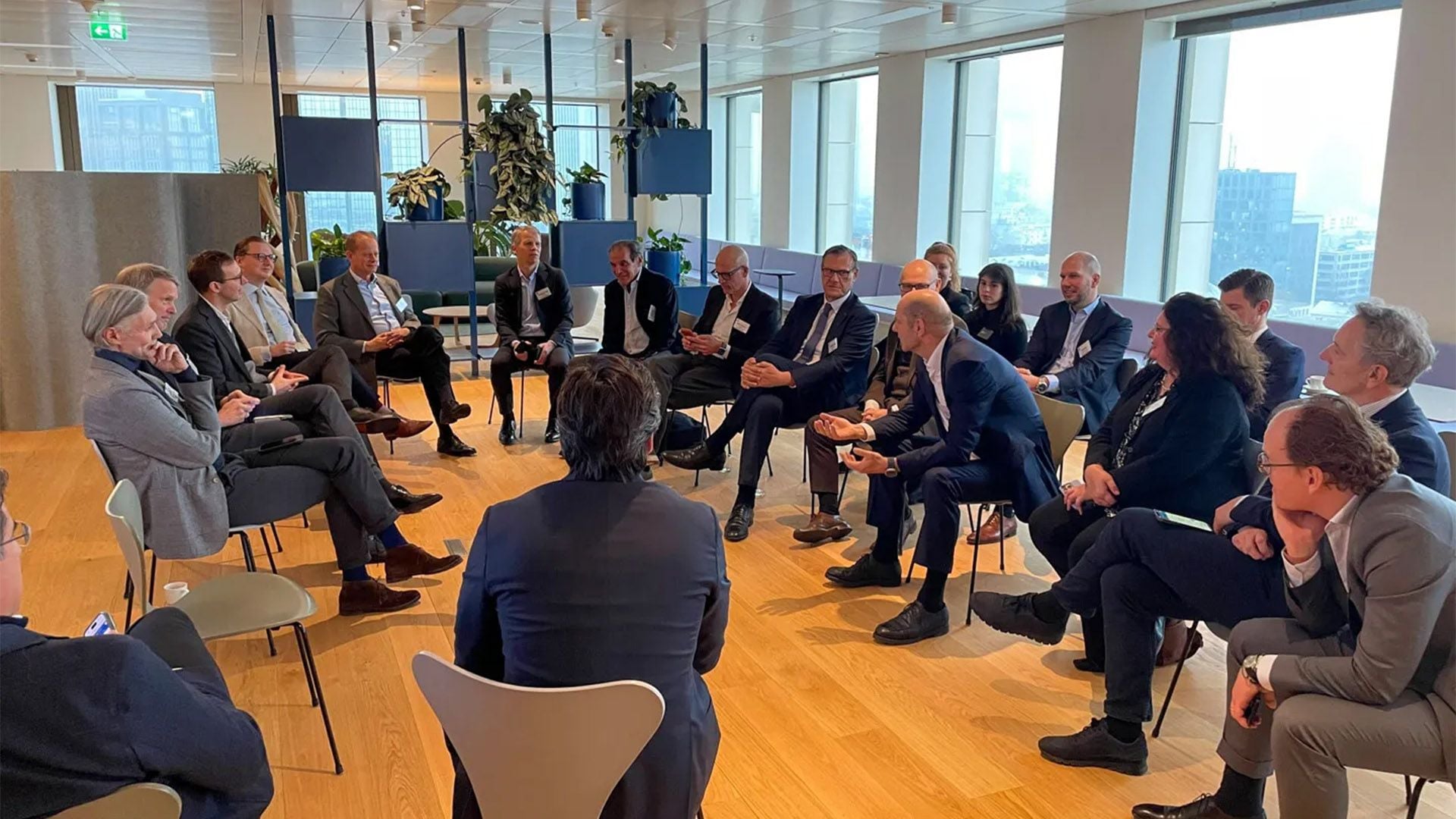
The GRI Chairmen’s Retreat Takeaways Germany 2026 saw top real estate owners, investors, and lenders gather in Frankfurt to analyse the results of the survey conducted at the GRI Chairmen's Retreat. (Credit: GRI Institute)
Residential Market
Germany's residential market remains one of the strongest demand sectors, largely driven by structural supply shortages. However, the income-producing residential segment faces significant constraints due to regulation and rent caps, which limit the potential for growth and profitability.Returns under traditional buy-and-hold models remain challenging to achieve, prompting investors to seek alternatives such as:
- New development strategies
- Space expansion tactics
- Niche products that operate outside standard regulated frameworks
Development is considered one of the few strategies that can partially circumvent the strict regulatory limits currently in place.
Office Trends
The office market in Germany is characterised by a severe bifurcation. Prime city-centre locations continue to be functional and expensive, while secondary and back-office zones are facing significant structural vacancy.Frankfurt, in particular, has large volumes of empty office space, with some submarkets now considered effectively unlettable.
The conversion of obsolete office stock into residential units is viewed as one of the most realistic solutions, although this process is also hampered by regulatory challenges.
The reduction in office demand is attributed to several factors, including the rise of hybrid work models, AI-driven workspace shrinkage, and tenant preferences for amenity-rich, central locations.
Future of Real Estate in Germany
Industry leaders agree that Germany’s real estate market must undergo a repricing and realignment to better match other European markets such as Spain, Denmark, and France.As the market adapts, development, repositioning, and adaptive reuse are consistently highlighted as essential strategies for the upcoming cycle.
Adaptation will be key for the German market moving forward, with several factors driving change:
- Regulatory and liquidity constraints reshaping investment strategies
- AI accelerating workforce and space transformation
- The divergence between prime and secondary locations intensifying
- Residential demand remaining strong but limited by regulatory ceilings
These insights were shared during the GRI Chairmen’s Retreat Takeaways Germany 2026 roundtable, co-hosted by Ardian and featuring participation from Ben Lehrecke (Fundament Advisory), Bernd Haggenmüller (Ardian), Dirk Brandes (Natixis), Gunther Deutsch (Barings), Marius Koch (Cerberus), Matthias Euler (Greystar), Nico Rheims (Ardian), Sebastian Schmidt (GIGA.GREEN), Simon Lutz (Peakside Capital), and Tom-Eric Möller (DIH Deutsche Industrie-Holding).