 GRI Institute
Europe GRI 2026 - Summer Edition Spotlight: Winners and Losers in the Great Market Reset
Collected insights from 700+ senior leaders on shifting capital flows, private credit, and operational strategies across all major asset classes and regions
September 24, 2026Real Estate
Written by:Rory Hickman
Executive Summary
European commercial real estate is undergoing a fundamental structural transition, as historic reliance on yield compression gives way to an imperative for operational income growth, hands-on asset management, and disciplined underwriting.
This shifting landscape defined the 35+ discussion panels among more than 700 senior industry leaders over two days at Europe GRI 2026 - Summer Edition in Paris, the largest edition of our premier real estate summit to date.
This spotlight report captures the core strategic themes emerging from those debates, mapping out how global investors, lenders, and operators are adapting portfolio strategies, capital deployment, and execution models across the region.
As market participants recalibrate for the cycle ahead, these findings offer a high-level overview of the critical dynamics driving the industry forward, especially when combined with the sentiments revealed in the results of our latest Europe GRI 2026 Barometer.
The conversation is set to continue at GRI Commercial RE & Data Centres Europe 2026 and GRI Credit & Debt Opportunities 2026, both taking place in London on November 17th, while global real estate capital flows are on the table at the GRI Global Summit 2026 in Abu Dhabi in December.
► Check out all of the photos from Europe GRI 2026 - Summer Edition here
► Discover the full calendar of upcoming GRI Institute Europe events
This shifting landscape defined the 35+ discussion panels among more than 700 senior industry leaders over two days at Europe GRI 2026 - Summer Edition in Paris, the largest edition of our premier real estate summit to date.
This spotlight report captures the core strategic themes emerging from those debates, mapping out how global investors, lenders, and operators are adapting portfolio strategies, capital deployment, and execution models across the region.
As market participants recalibrate for the cycle ahead, these findings offer a high-level overview of the critical dynamics driving the industry forward, especially when combined with the sentiments revealed in the results of our latest Europe GRI 2026 Barometer.
The conversation is set to continue at GRI Commercial RE & Data Centres Europe 2026 and GRI Credit & Debt Opportunities 2026, both taking place in London on November 17th, while global real estate capital flows are on the table at the GRI Global Summit 2026 in Abu Dhabi in December.
► Check out all of the photos from Europe GRI 2026 - Summer Edition here
► Discover the full calendar of upcoming GRI Institute Europe events
Key Takeaways
- Future value creation in European real estate depends on active operational management and rental growth instead of relying on market-wide yield compression.
- Institutional capital is rapidly pivoting away from traditional offices into private credit, direct joint ventures, and specialised operational asset classes.
- Market performance is sharply bifurcating, as prime and ESG-compliant assets retain value while obsolete secondary properties face severe valuation write-downs.
► Macro Capital, Investment Cycles, and Allocation

(GRI Institute)
▷ International Capital
Global investment appetite is recovering across asset classes, yet capital deployment remains highly selective due to geopolitical volatility and interest rate uncertainties.Persistent inflation and elevated benchmark rates managed by monetary authorities, including the European Central Bank (ECB), continue to pose refinancing challenges and heighten competition for capital.
Traditional real estate allocations are facing downward pressure as investors increasingly pivot towards higher-yielding alternative private assets, including private credit, private equity, and energy or defence infrastructure.
In addition, holding uninvested cash is widely regarded as an unviable strategy due to inflationary erosion, forcing market participants to re-evaluate portfolio strategies.
Although economic resilience and GDP growth remain supported by industrial expansion and capital expenditures, interest rate dynamics have extended target investment horizons from traditional five-year periods to seven- or ten-year timelines.
Geographic capital deployment is heavily influenced by political stability, security, tax regimes, and underlying demographics.
Emerging wealth creation in Asia, the US, and Central and Eastern Europe (CEE) is driving cross-border investment flows into core European markets, while European investors often seek diversification overseas.
Preferred sectors include logistics, residential, student housing, and hospitality - the latter of which significantly benefits from rising room rates and elevated occupancy. Conversely, secondary office assets continue to suffer from falling occupier demand and severe valuation adjustments.
A key point of contention involves data centres, where opinion is divided over whether they constitute core real estate or belong strictly within infrastructure portfolios.
Beyond this, views diverge on whether prime assets in major hubs have reached their valuation floor or remain vulnerable to further price drops.
Long-term structural drivers such as Artificial Intelligence (AI) and Environmental, Social, and Governance (ESG) standards are fundamental to modern underwriting and asset management. Rapid expansion in AI is directing substantial capital towards specialised technology and energy infrastructure, while simultaneously altering long-term office space requirements.
Climate change is increasingly influencing asset values, pushing investor preference towards cooler northern geographies or mountain regions, while penalising older, energy-inefficient buildings lacking adequate cooling systems.
Deliberation over radical economic shifts triggered debate regarding speculative theories of future universal basic income and total deflation; however, the prevailing sentiment expects persistent inflation, high commodity costs, and rising sovereign debt levels.
Consequently, real estate assets face heightened exposure to escalating property taxes, as non-movable assets become attractive targets for government taxation.
▷ LP-GP Capital
Institutional capital deployment is increasingly structured around balancing risk-adjusted returns against liquidity requirements, driving substantial allocations toward credit and credit-adjacent mechanisms such as net-lease strategies.Equity allocations favour a barbell approach that pairs discounted core-plus opportunities with high-growth secular themes, particularly digitalisation and defence infrastructure.
Rather than applying uniform sector plays, investors distinguish between market risk and asset-specific risk. In residential and student accommodation, strategies target rapid portfolio scale across target cities to capture broad demographic growth, whereas office strategies require granular, micro-location selection to insulate against asset-level obsolescence.
Capital is also expanding beyond traditional logistics into niche formats, including small-bay industrial units and flexible, less-regulated living segments such as single-family rentals and co-living.
Divergent requirements between mid-market and mega-institutional investors are altering preferred investment vehicles and access structures. Mega-institutional Limited Partners (LPs) increasingly demand direct access, co-investment rights, or equity stakes in Operating Companies (OpCos) and Special Purpose Vehicles (SPVs) to maintain operational influence.
Conversely, mid-market LPs demonstrate growing interest in multi-asset products that blend real estate and infrastructure to satisfy green and sustainable mandates within single solutions.
To manage liquidity and optimise fee structures, institutional capital is shifting toward Separately Managed Accounts (SMAs), open-ended structures, and co-investments over standard commingled Private Equity Real Estate (PERE) funds.
Additionally, a massive refinancing gap in private debt markets is expanding opportunities for non-bank lenders to price senior credit attractively across European commercial assets.
The operational dynamic between General Partners (GPs) and LPs has shifted toward heightened requirements for granular data, advanced analytics, and active operational execution.
LPs expect managers to demonstrate direct, hands-on operational management to drive Net Operating Income (NOI) growth rather than relying on financial leverage or market yield compression.
This shift is leading LPs to actively collaborate with GPs to resolve legacy portfolio issues, restructure underperforming vehicles, and establish specialised platform partnerships.
Market participants remain divided on timing and risk appetite, with some arguing that global macroeconomic friction reinforces a domestic home-country bias, while others contend that uncrowded conditions and early-cycle pricing in select European jurisdictions present an ideal window to commit fresh capital.

(GRI Institute)
▷ Dry Powder
Significant volumes of uncommitted capital remain unallocated in private real estate markets, alongside growing contributions from private wealth, which now accounts for 20% of European transaction activity.While traditional open-ended core funds face structural liquidity constraints, listed real estate entities, specialised private funds, and private wealth channels are selectively deploying capital.
Institutional deployment is further influenced by impending pension fund regime shifts across major economies, which are anticipated to unlock between EUR 400 billion and EUR 600 billion in long-term liquidity.
Investment flows are increasingly concentrated in specialised operational sectors, such as Purpose-Built Student Accommodation (PBSA), self-storage, and residential platforms, which demonstrate strong underlying demographic demand.
Managers holding substantial Assets Under Management (AUM) are adapting to these shifts by moving away from sector-agnostic vehicles towards targeted, vertically integrated strategies.
Relative performance across global regions reveals a sharp divergence, as North America benefits from faster price adjustments, high market liquidity, and large domestic capital pools, whereas continental Europe continues to experience subdued transaction velocity.
Ageing demographics in Europe have resulted in stagnating pension capital growth, in contrast to rapidly expanding wealth pools in Asia and North America that remain structurally underallocated to European assets.
A primary obstacle to core transaction activity is the lag in property appraisals, where formal valuations fail to reflect market-clearing prices, causing buyers and sellers to remain at a standstill. Furthermore, GPs face mounting pressure from LPs regarding low Distributed to Paid-In Capital (DPI) metrics, as institutional investors hesitate to re-commit capital until prior investments deliver tangible distributions.
To navigate persistent rate volatility, capital deployment is shifting towards special situations, debt instruments, and off-market transactions targeting viable assets with stressed balance sheets. Credit strategies offer double-digit yields with equity-like returns and downside protection, competing directly with traditional equity allocations.
One point of contention centres on whether core real estate valuations have reached a true floor or face further downward revisions, leading some investors to sit on cash while others aggressively pursue off-market deals measured by Gross Asset Value (GAV).
Ultimately, institutional sentiment underscores that market beta driven by yield compression is no longer viable, making localised operational execution, specialised asset management, and fee alignment essential to securing investor commitments.
▷ Pan-European Investment Cycle
European commercial real estate transaction volumes have settled into a lower baseline between EUR 220 billion and EUR 240 billion, reflecting a fundamental shift in market mechanics where future value creation relies entirely on driving operational NOI and rental growth rather than expecting cap-rate compression.With benchmark interest rates remaining elevated and underlying inflation persistent, investors face an environment in which capital growth requires hands-on asset management and income expansion.
Geographic performance exhibits sharp divergence across continental markets. Southern European jurisdictions, particularly Italy and Spain, are outperforming historical benchmarks due to acute supply shortages, robust manufacturing activity supporting logistics, and strong demand for residential and flex-living assets.
Conversely, traditional core markets like France and Germany have lagged, though sentiment toward Germany is becoming distinctly opportunistic.
Substantial land valuation markdowns in major German metropolitan hubs are enabling new developments in student accommodation, while surging state defence expenditures are generating unexpected occupier demand for large-scale industrial space.
In contrast, French transaction activity remains constrained by political elections, fiscal uncertainty, and regulatory friction.
More broadly, persistent relative underperformance compared with alternative private markets - such as private credit and infrastructure - has prompted a broader debate regarding real estate's role within institutional portfolio construction.
To restore competitiveness and secure investor commitments, equity strategies are recalibrating underwriting models to target double-digit yields and Internal Rate of Return (IRR) metrics in the mid-teens, while adopting conservative exit yield assumptions.
Capital is increasingly directed toward niche thematic growth areas, including budget hospitality platforms, private cloud data centres, and specialised living assets.
On the financing side, while overall debt liquidity has expanded significantly across the capital stack, elevated central bank base rates maintain high overall borrowing costs. Non-bank alternative lenders are capturing a growing share of mid-market transactions between EUR 25 million and EUR 100 million through stretch-senior and unitranche whole-loan structures.
However, back-leverage facility expansion provided by investment banks to private debt funds remains a key topic of debate, as European regulators, including the ECB, apply stricter scrutiny to grey areas surrounding regulatory capital treatment and illiquidity compared to the US debt market.
Intense competition among debt providers has driven softer financing terms, resulting in compressed credit spreads, reduced prepayment penalties, and covenant-light borrowing structures.
Equity sponsors are frequently willing to accept higher loan margins to eliminate restrictive financial covenants, seeking operational flexibility to execute business plans without facing premature default or capital call risks.
Nevertheless, lenders remain divided on whether omitting early warning covenants is appropriate in Europe, where loan enforcement and asset recovery processes are far more prolonged and complex than in the US. Concurrently, traditional commercial banks remain restricted to conservative Loan-to-Value (LTV) limits due to heavy regulatory capital charges, leaving higher-leverage tranches to private credit funds.
Looking forward, structural underwriting is increasingly dictated by physical infrastructure bottlenecks, particularly grid power availability and water access for data centres and modern industrial facilities.
In addition, rapid technological progress in AI, including potential breakthroughs in Artificial General Intelligence (AGI), threatens to accelerate the technical obsolescence of older industrial and commercial assets, making energy security and structural adaptability essential factors in long-term property valuation.
▷ Liquidity, JVs, and Portfolio Strategy
Institutional real estate capital allocation is undergoing a structural shift toward disintermediation, with investors increasingly bypassing multi-layered fund structures in favour of bilateral joint ventures (JVs) and direct platform partnerships.While risk-sharing in core asset classes represents a cyclical response to uncertain exit valuations, JVs in operationally intensive sectors - such as flexible living, hospitality, and data infrastructure - have become a permanent structural fixture.
Capital allocators increasingly demand direct exposure to local operating partners who possess technical expertise and local operational presence, viewing hands-on execution as an essential risk management mechanism rather than an administrative overhead.
This disintermediation enables faster problem-solving during market dislocations, allowing partners to interact directly with occupiers, contractors, and local planning authorities without relying on third-party intermediaries.
Value creation strategies are pivoting away from speculative yield compression toward generating robust cash flows and building enterprise value through combined Property Company (PropCo) and OpCo models.
Participating across both physical real estate and operating platforms grants investors enhanced exit optionality - including corporate mergers, recapitalisations, and platform stock listings - while capturing intangible brand equity and operational earnings.
A key point of contention involves fee alignment and the structuring of governance provisions within JV agreements. Market participants emphasise that robust, pre-agreed default mechanisms and capital call remedies established upfront are vital to managing cost overruns or market shocks without triggering adversarial disputes.
Furthermore, alignment is significantly strengthened when GPs commit meaningful personal capital alongside institutional LPs, ensuring symmetrical economic risk across all phases of the property cycle.
A distinct market polarisation separates mega-institutional asset managers from specialised, entrepreneurial boutique firms. Although large managers offer scale and brand security, mid-sized boutique operators managing between USD 500 million and USD 1 billion are gaining traction by providing direct founder involvement and agile execution.
Emerging technologies, particularly AI, are accelerating this trend by allowing small operational teams to process complex underwriting and asset management tasks in hours rather than weeks, dramatically reducing administrative overhead and narrowing GP fee margins.
Unlike commingled private equity funds that suffer from cross-collateralised assets and rigid fee structures, tailored JVs enable customised fee budgets tied directly to operating expenses, alongside tiered performance carry with hard hurdle rates.
However, this shift toward ultra-lean, AI-enabled operational platforms presents new organisational challenges, particularly regarding the long-term career development and multi-disciplinary training of junior analytical talent.
▷ Buyer-Seller Reality Check
European real estate remains heavily fragmented into distinct regional sub-markets, where local currency regimes, available bank leverage, and capital origins dictate transaction liquidity.Northern European jurisdictions rely predominantly on domestic pension funds due to local currency structures, whereas Central and Eastern Europe continues to depend on international and cross-border regional capital.
A major friction point centres on valuation discrepancies across geographical borders, particularly regarding CBD assets.
Although prime CBD office properties in major CEE cities offer tenant demand, rental growth, and cash flow fundamentals comparable to Western European hubs, yield spreads persist primarily because of investor risk perceptions rather than asset-level performance.
Consequently, market activity remains heavily constrained, with transacting buyers demanding positive leverage relative to local borrowing costs before committing equity.
A widening bid-ask spread separates motivated sellers from optional owners who refuse to realise peak valuation markdowns. Forced sales are largely restricted to entities confronting debt maturities, redemption queues, or fund expirations.
However, competitive European debt markets enable many asset owners to refinance or restructure existing facilities, creating zombie loans that delay genuine price discovery.
To bridge pricing gaps, transactions frequently rely on structured arrangements, such as deferred payments, earn-outs, and vendor loans. Significant disagreement persists over whether these creative mechanisms foster alignment between counterparties or merely obscure transparency by postponing necessary valuation write-downs.
While proponents view deferred payment terms as pragmatic tools to navigate temporary market volatility, critics contend that avoiding clear price corrections prevents effective capital recycling and prolongs overall market stagnation.
Future investment performance will depend almost entirely on asset-level NOI growth and active management rather than market-wide yield compression. Non-listed legacy portfolios lacking rental growth or capital expenditure support face substantial write-downs, with broader market valuations estimated to drop up to 30% below peak levels to align with NAV discounts.
Despite widespread caution surrounding traditional office space, opportunistic investors are selectively acquiring heavily discounted gateway office buildings to execute change-of-use strategies, converting obsolete commercial space into residential accommodation or hotel platforms.
Looking ahead, industry expectations point towards an emerging wave of corporate spin-outs as real estate professionals depart legacy vehicles to form independent boutique platforms, alongside growing early-cycle interest from North American, Asian, and Australian institutional investors.
► Debt Markets, Credit, and Capital Stack

(GRI Institute)
▷ The European Debt Map
Private capital debt platforms have evolved over the past decade from special-situations lenders into dominant primary capital providers spanning fixed-rate, core-plus, and transitional real estate financing.In contrast to the US market - where key surrenders and property workouts proceed rapidly - European debt deployment remains subject to prolonged execution timelines, forcing lenders to underwrite through sustained macroeconomic volatility.
Deployment strategies prioritise scale commitments to prime credits and sectors demonstrating resilient top-line rental growth, particularly logistics and granular residential formats such as Built-to-Rent (BTR) and Single-Family Rental (SFR) schemes.
Conversely, unhedged development projects, vacant regional offices, and complex capital stacks lacking equity cost-overrun guarantees face acute financing bottlenecks.
To maintain competitive pricing and enhance returns, private debt managers increasingly utilise back-leverage facilities from investment banks alongside capital commitments from insurance mandates and custom account structures.
However, heavy reliance on bank-provided back-leverage creates systemic concentration risks, especially as underlying LTV ratios climb higher across leveraged debt vehicles.
Unlike the US, European real estate markets lack deep secondary liquidity in Collateralised Loan Obligations (CLO) or Commercial Mortgage-Backed Securities (CMBS) structures to offload large credit exposures, though anticipated Solvency II regulatory revisions may stimulate institutional appetites for securitised debt.
Divergent views persist regarding back-leverage vulnerability: proponents assert that asset managers absorb initial default tranches, whereas critics argue that layered leverage during a period of unadjusted property valuations heightens default risks.
Europe's slow valuation adjustment process has allowed traditional lenders and equity sponsors to defer real estate write-downs through loan extensions and debt restructurings, yet persistent benchmark interest rates are gradually forcing capitulation and key surrenders.
Industry experts caution that abundant private capital liquidity may obscure severe macroeconomic headwinds, including persistent cost inflation, geopolitical trade friction, and escalating political populism across European jurisdictions.
Regulatory interventions - encompassing municipal residential rent caps, mandatory property sales at sub-market values, and stringent local energy mandates restricting data infrastructure - present significant operational hurdles.
Consequently, long-term credit underwriting must incorporate idiosyncratic political and legislative risks alongside standard asset-level cash flow analysis.
▷ Refinancing the Wall
The anticipated commercial real estate refinancing wall is materialising as a slow, granular re-alignment rather than a sudden, systemic crash. Market participants are absorbing debt maturities through loan extensions, debt restructurings, and selective equity top-ups.Refinancing shortfalls are highly asset-specific rather than uniform across property types. Properties facing severe friction include secondary offices with high vacancy, unviable development sites impacted by elevated construction costs, and legacy assets requiring substantial capital expenditure to satisfy ESG standards or altered occupier requirements.
Conversely, assets generating reliable cash flows with long-term tenant indexation, such as net-lease facilities, PBSA, and prime logistics, continue to secure deep debt liquidity.
Geographic dynamics exhibit distinct regional variations. CEE maintains commercial property delinquency rates below 2%, whereas Germany experiences mounting Non-Performing Loan (NPL) volume across over-leveraged residential portfolios and distressed sponsor holdings.
Intricate legal frameworks and bureaucratic enforcement across European jurisdictions prolong transaction timelines, yet they rarely serve as absolute barriers to lending activity.
Overall debt costs remain constrained primarily by elevated central bank benchmark rates rather than credit spreads, which have compressed across senior and subordinated lending tiers.
Even where higher base rates push LTV ratios past initial covenants, lenders generally favour pragmatic forbearance, covenant recalibration, or restructuring over foreclosure, provided underlying properties preserve strong cash flow and steady rental indexation.
Bridging refinancing gaps relies heavily on sponsor capitalisation and the willingness of equity holders to inject fresh capital. When sponsors lack the resources for equity checks, private debt funds step in with subordinated loan tranches, stretch-senior debt, or mezzanine capital to stabilise property capital structures.
Frictions persist between senior banks and junior capital providers during workout negotiations. Senior financial institutions enforce strict intercreditor agreements and retain priority enforcement rights, leaving junior lenders to weigh the risks of taking second-charge positions without direct governance levers if senior lender behaviour turns aggressive.
In the long run, active asset management, sustained index-linked rental growth, and cooperative borrower-lender relationships are expected to cushion the market, preventing widespread asset surrenders.
▷ Capital Stack: Whole Loans, Preferred Equity, and Mezz
Commercial real estate debt markets are experiencing a marked shift in borrower demands, driven primarily by stalled property sales and the need to deliver distributions to institutional investors.Rather than seeking neutral refinancing terms, sponsors are increasingly pursuing cash-out refinancings and higher debt proceeds to return capital. In response, whole loan and stretch senior leverage levels have expanded to range between 70% and 75% LTV, effectively forcing credit providers to absorb risks previously borne by equity investors.
Although appraised valuations on paper remain relatively steady, the scarcity of large-scale transactional benchmarks generates underlying friction. This disconnect is particularly acute in value-add projects, where land values and 30% to 40% construction cost inflation severely test legacy business plans.
Within the capital stack, stretch senior whole loans continue to capture the vast majority of deal volume over junior debt components, largely due to back-leverage efficiency and the friction associated with senior-mezzanine intercreditor agreements.
Mezzanine debt and preferred equity solutions are largely restricted to transitional assets or projects with depressed initial cash flows that cannot support high Interest Coverage Ratios.
Geographic divergence shapes loan resolutions across Western Europe. Lenders in the UK are more inclined to push for asset sales, recapitalisations, or enforcement, whereas continental European institutions tend to grant loan extensions to avoid taking possession of collateral.
As a result, loan workouts are heavily dictated by sponsor liquidity; well-capitalised sponsors proactively inject fresh equity to preserve assets, while illiquid sponsors face expensive extensions or loan portfolio sales at steep discounts.
Debate persists regarding risk pricing across different debt tranches, as intense competition compresses credit spreads even as elevated base rates maintain high overall borrowing costs.
While some market participants caution that senior risk is mispriced due to aggressive margin compression, others argue that senior positions and back-leverage structures remain sufficiently insulated by underlying real estate collateral.
Meanwhile, the integration of insurance capital and back-leverage facilities has created a highly symbiotic ecosystem among alternative managers and traditional financial institutions, expanding overall market liquidity.
From a geographic perspective, deployment heavily favours jurisdictions with transparent legal frameworks and liquid capital markets, such as the UK, Spain, Ireland, and the Nordics, whereas markets dominated by cheap local bank balance sheets present greater competitive hurdles for non-bank capital.
▷ Private Credit and Bank Collaboration
The relationship between commercial financial institutions and non-bank alternative lenders has evolved from direct competition into a highly symbiotic operational framework dominated by back-leverage facilities.Under this structure, alternative credit platforms originate whole loans directly to sponsors, maintaining operational control, primary security, and due diligence oversight. In turn, investment and commercial banks provide back-leverage to the debt funds, benefiting from lower regulatory capital charges compared to direct property lending.
For private credit managers, this arrangement yields enhanced portfolio returns at standard LTV and Loan-to-Cost (LTC) thresholds without requiring them to accept subordinated mezzanine positions within traditional A/B capital structures. Beyond back-leverage, collaboration encompasses origination referrals, synthetic risk transfers (SRTs), and syndicated loan facilities for large-scale capital requirements.
Despite expanding cooperation, structural constraints continue to hinder full European market integration. The absence of a deep, liquid European CLO and CMBS securitisation market forces banks to retain back-leverage exposures directly on balance sheets, establishing natural concentration limits.
In addition, competition is intensifying as traditional banks raise senior LTV thresholds from conservative 55% levels toward 65%, encroaching directly on territory previously dominated by alternative debt funds.
Friction also persists around legal documentation, as borrowers and debt funds push back against rigid US-style warehouse repo mechanics, such as aggressive mark-to-market provisions and recourse requirements, preferring customised European loan-on-loan structures that offer execution certainty.
Beyond this, ongoing credit spread compression has squeezed illiquidity premiums on senior tranches, prompting institutional insurance capital to re-evaluate senior debt allocations in favour of liquid fixed-income instruments or retail private wealth strategies.
Looking to the future, market participants anticipate that back-leverage terms will encounter a strict regulatory floor, preventing facilities from loosening to the point where regulators reclassify them as direct senior property exposures.
Should macroeconomic conditions become exceptionally benign and secondary securitisation channels reopen, investment banks may pivot away from back-leverage toward underwriting public CMBS issuances.
Conversely, private credit managers are expected to maintain a permanent presence by diversifying beyond standalone real estate debt into multi-strategy platforms combining infrastructure credit and Asset-Based Finance (ABF).
In the end, while institutionalisation, standardisation, and regulatory oversight will continue to reshape borrowing frameworks, deep sponsor relationships and execution certainty remain the primary determinants of deal allocation across the European capital stack.
▷ Mid-market Financing Deals
The European mid-market debt landscape exhibits a sharp contrast between an oversupplied credit sector and a starved equity market. Mid-market ticket parameters vary substantially across jurisdictions, ranging from GBP 20 million to GBP 100 million in the UK, compared with EUR 10 million to EUR 50 million across continental Europe.While alternative credit providers compete aggressively for viable mid-market positions, equity capital has dried up significantly because equity investors continue to demand obsolete return targets around 20% IRR that no longer align with current property valuations.
Consequently, transaction velocity is heavily dominated by refinancings rather than new acquisitions or ground-up developments, as property owners utilise higher LTV facilities to extract equity or extend debt maturities while awaiting broader market recovery.
Geographic capital allocation reveals a distinct regional migration towards Southern Europe, where markets in Spain and Italy are attracting substantial mid-market volume due to favourable yield spreads, expanding infrastructure, and flexible non-bank lending terms.
In CEE, countries like Poland offer higher returns, yet cross-border capital deployment remains hindered by restrictive fund mandates or geographical misperceptions regarding regional stability.
Meanwhile, German lender behaviour is marked by reverse selection; local banks quietly restructure terms and compress credit margins for surviving sponsors to protect balance sheets against stranded office assets, leaving weaker property portfolios unserviced.
In the UK, a scarcity of viable commercial development projects has directed mid-market credit towards specialised living segments, including care homes, PBSA, co-living, and BTR platforms.
Aggressive competition among debt funds is heavily supported by back-leverage facilities provided by investment banks, enabling non-bank lenders to compress margins and offer high LTV terms.
However, these multi-layered loan-on-loan arrangements introduce noticeable execution friction and intercreditor concerns for borrowers, who fear multi-party approval bottlenecks if asset performance degrades.
To bypass this complexity, a growing number of property sponsors prefer partnering with unlevered alternative credit platforms funded directly by family offices, high-net-worth individuals (HNWIs), or pension funds.
These unlevered capital sources accept lower first-charge yields in exchange for operational speed, direct decision-making, and structural simplicity, ensuring a durable competitive advantage in complex mid-market deals.
► Secondary Liquidity, Recapitalisations, and Exits

(GRI Institute)
▷ Secondaries Market
The real estate secondary market is transitioning from an opportunistic niche into an established liquidity channel, supported by dedicated capital pools that have expanded significantly over recent years. Nevertheless, total secondary capital represents a minor fraction of the vast unrealised NAV currently locked up in legacy funds and illiquid structures.The fundamental catalyst accelerating deal flow is the intense institutional demand for DPI, as LPs seek capital returns amidst stagnant primary transaction markets. As a result, secondary trading is increasingly relied upon as a structural solution for institutional portfolio rebalancing, risk management, and capital recycling rather than an emergency exit of last resort.
Transaction activity exhibits a clear division between LP-led stake sales and GP-led continuation or direct secondary vehicles. LP-led transactions frequently contend with acute information asymmetry, requiring secondary buyers to apply substantial NAV discounts, often reaching 30%, to hedge against unadjusted book values and lagging property appraisals.
In contrast, GP-led restructurings enable detailed, asset-level underwriting of lease terms, tenant credit, and physical building fundamentals. Investment strategies within GP-led deals have pivoted sharply away from development or speculative growth plans towards fully standing, income-generating real estate.
Moreover, secondary pricing discounts are framed not as arbitrary markdowns, but as essential mathematical adjustments calibrated to deliver target IRR metrics when underlying property valuations remain inflated.
Maintaining GP alignment and proper fee incentives creates a complex operational dynamic, particularly when legacy managers are out of the money on performance carry or nearing the end of fund life.
Although replacing an underperforming manager is legally permitted under specific LPAC thresholds, secondary investors rarely enforce manager removal because doing so destroys critical operational knowledge and asset-level continuity.
Instead, secondary capital prefers to re-anchor vehicles, restructure carry hurdles, or convert legacy assets into fresh JVs or co-investment platforms.
Despite European execution friction surrounding complex JV agreements and multi-jurisdictional tax structures, global institutional allocators are increasingly leveraging secondaries to acquire high-quality, re-underwritten property portfolios at attractive entry points.
▷ Exit Optionality
European commercial property transaction activity remains severely constrained at levels 40% to 45% below long-term averages, positioning exit liquidity as a primary underwriting challenge rather than an automatic outcome of business plan completion.Total real estate capital inflows have dropped sharply, forcing fund managers to explicitly identify specific buyer profiles and account for higher yield demands from prospective acquirers.
Although considerable capital is directed toward technology assets such as data centres, concerns persist that insufficient institutional take-out liquidity will exist once these large-scale projects reach completion.
Consequently, exit underwriting is adjusting to realistic forward return expectations, acknowledging that future buyers will demand higher initial yields and wider spreads over benchmark rates to commit equity.
Conventional exit routes face severe headwinds, as Initial Public Offerings (IPOs) are unviable with listed real estate entities trading at 20% to 40% discounts to NAV, and portfolio Mergers and Acquisitions (M&A) remain hindered by low pricing.
In response, recapitalisations and GP-led continuation structures have become increasingly prevalent because LPs prefer writing smaller follow-on checks between EUR 50 million and EUR 100 million to preserve quality assets rather than committing large sums to new fund vehicles. This strategy secures crucial duration, allowing managers to complete operational turnarounds, drive rental growth, or await market re-stabilisation.
Simultaneously, hurdle rates across the capital stack have risen; core-plus strategies now target 10% to 12% total returns with 5% to 7% distribution yields, while opportunistic IRR expectations have escalated from historic 15% levels towards 20%.
To enhance liquidity, investment managers are restructuring assets into OpCo/PropCo frameworks or breaking large portfolios into mid-sized lot sizes between EUR 40 million and EUR 110 million to target private wealth, family offices, and cross-border buyers.
Sector preference strongly favours simple, durable asset classes such as residential and living platforms, which offer predictable cash flows and long physical lifespans, over traditional offices that require capital-intensive Capital Expenditure (CapEx) cycles every decade.
Tapping into non-institutional retail and high-net-worth investor networks provides an effective secondary liquidity option when institutional buyer depth is absent. Ultimately, long-term exit optionality relies on asset-level cash flow durability, disciplined capital-value underwriting, and maintaining flexible execution strategies across diverse buyer pools.
► Value-Add, Asset Transformation, and Obsolescence

(GRI Institute)
▷ Value-Add
Value-add investment strategies across European real estate have undergone a fundamental shift, pivoting away from historic reliance on cap-rate compression or speculative macro tailwinds toward driving NOI growth through operational transformation, physical repositioning, and complex asset restructuring.Rather than pursuing ground-up development or structurally impaired real estate in secondary locations, market participants favour mispriced assets with in-place cash flows, buying from restricted capital pools to sell into deeper buyer markets.
Motivated sellers are typically driven by negative NOI, broken capital structures, fund expirations, or the pressing imperative to generate DPI to unlock future institutional commitments. Consequently, underwriting models have recalibrated, with value-add target returns moving upward to mid-teens net IRRs to compensate for elevated borrowing costs and persistent benchmark rates.
Execution approaches vary substantially by sector, with operational control emerging as a decisive factor in value creation. In healthcare real estate, value-add execution relies on ESG enhancements, space re-configurations, and long-term operator partnerships rather than tenant replacement.
Within the living and hospitality sectors, investors leverage strong demographic tailwinds and inflation-indexed pricing power, focusing on operational platforms that directly manage the underlying property.
Repositioning core assets with existing cash flow is widely preferred over full building conversions, as in-place income provides a vital buffer against elevated debt costs and conservative LTV lending limits.
Additionally, integrating OpCo and PropCo frameworks ensures strict alignment between property owners and operators, preventing mis-management from eroding asset performance during multi-year holding periods.
Geographic activity highlights a pronounced split across Western Europe, shaped by regional price discovery and local regulatory environments. Southern European markets, including Spain, Italy, and Portugal, continue to attract significant capital due to robust living fundamentals, strong tourism demand, and favourable tax or planning adjustments.
In contrast, transaction activity across traditional core markets like France and Germany remains constrained, as property valuations require further downward alignment to match current institutional cost of capital.
Broader underwriting faces ongoing friction from elevated 10-year government bond yields, persistent construction cost inflation, geopolitical volatility, and local regulatory hurdles. Sustained value creation depends on securing predictable, asset-level cash flows and maintaining disciplined capital structures capable of weathering extended holding periods.
▷ Conversions and Repositioning
Commercial property conversions and asset repositioning are increasingly driven by structural obsolescence rather than speculative market timing.While converting redundant office blocks, department stores, and parking facilities into residential, hospitality, healthcare, or student accommodation offers path-to-alpha opportunities, physical suitability remains a severe constraint.
Fewer than 30% of existing commercial structures possess the necessary floor-to-floor heights, structural grids, facade flexibility, or building depths required for viable change-of-use schemes. Consequently, investors prioritise operational transformation and flexible product design over ungrounded expectations of yield compression.
Furthermore, forward-thinking developers are progressively future-proofing new office schemes by incorporating adaptable structural frameworks from inception to facilitate future conversions if occupier demand shifts.
Underwriting conversion projects requires addressing a multi-layered matrix of execution risks, including planning delays, interest rate volatility, construction cost inflation, and exit cap-rate movement.
Rather than adjusting loan pricing alone, debt and equity providers insulate capital stacks through rigorous deal structuring, demanding highly liquid sponsors, milestone-linked drawdowns, fixed-price contractor agreements, and minimum 5% to 10% contingency buffers.
Project delivery faces severe operational friction due to a systemic shortage of skilled construction labour across Europe, where a deficit exceeding 2 million workers restricts specialised trade availability.
Time delays present a particularly dangerous hazard, as extended construction and licensing schedules dilute project returns and heighten exposure to shifting macroeconomic conditions.
Mixed-use repositioning strategies combining living, hotel, office, and amenity spaces are gaining momentum by creating diversified income streams that enhance overall asset resilience.
Regulatory environments exert a dual influence; while national initiatives, such as streamlined zoning frameworks in the Netherlands, foster high conversion rates, municipal friction, local planning obstacles, and mandatory social housing quotas frequently stall delivery.
Assets that are physically unsuited for conversion face severe valuation markdowns and risk becoming stranded liabilities with ongoing carry costs.
Given that institutional core buyers remain hesitant, sponsors must ensure execution plans are backed by strong asset management capabilities, allowing properties to generate stable cash flows over longer holding periods until institutional exit liquidity restores.
▷ CapEx, ESG, and Obsolescence
Institutional investors and lenders have shifted from viewing sustainability compliance as a mere reporting exercise to integrating environmental capital expenditure directly into deal underwriting and asset valuations.Pre-screening processes routinely incorporate upcoming regulatory frameworks, such as the Energy Performance of Buildings Directive (EPBD), alongside long-term decarbonisation trajectories.
As a result, buyers increasingly use mandatory CapEx requirements to negotiate price reductions during acquisitions, while sellers face valuation write-downs if decarbonisation interventions are delayed.
Capital modelling remains an intricate balancing act, with market participants routinely grappling with labour cost inflation, supply chain bottlenecks, and conflicting estimations that oscillate between over-projecting net-zero conversion expenses and underestimating baseline operational maintenance.
Capital expenditure is increasingly bifurcated into defensive investments required merely to maintain regulatory compliance and tenant retention, and offensive interventions that enhance occupier experience and drive NOI growth.
Within core markets, sustainability credentials no longer secure an automatic green premium, as high standards have become the baseline expectation for prime occupiers. Instead, non-compliant assets suffer from a pronounced brown discount, elevated vacancy rates, and structural illiquidity.
Industry participants caution against over-engineering buildings with redundant environmental certifications or oversized mechanical plant systems, emphasising that occupiers prioritise flexible, future-proofed floor plans capable of adapting to evolving hybrid work patterns and AI technologies over purely symbolic green features.
Long-term asset relevance is severely threatened by physical climate impacts, including heat stress and flooding risks, alongside technical constraints like rigid riser capacities and low ceiling heights.
A fundamental mismatch persists between traditional five-year private equity hold periods and the multi-decade timelines required for comprehensive decarbonisation and building retrofits.
Compounding this friction, formal appraisal methodologies fail to capture post-CapEx performance outcomes, treating energy-efficiency investments purely as balance-sheet costs rather than factoring in future operational savings or risk mitigation.
Ensuring long-term asset viability requires active asset managers to align capital allocation with realistic tenant demand, micro-location dynamics, and structured, phased retrofit plans to prevent obsolete properties from turning into stranded liabilities.
► Residential and Alternative Living Sectors

(GRI Institute)
▷ Living as a Defensive Play
Residential real estate is widely regarded as a resilient asset class due to acute, structural supply shortages across major urban markets and stable occupier demand that persists through economic cycles.Compared with commercial sectors, residential portfolios display lower volatility in NOI after CapEx, as maintaining domestic accommodation avoids the large tenant-inducement expenditure typical of office or retail lease turnovers.
Operational control and vertical integration serve as critical risk-mitigation tools; managing property management, leasing, and maintenance in-house allows owners to protect net distributions, preserve asset-level data, and rapidly adjust operational levers during inflationary or high-interest-rate environments.
While residential assets rarely deliver dramatic short-term valuation spikes, their predictable cash-flow profile underpins long-term wealth preservation.
Execution strategies vary across sub-sectors, contrasting core mass-market rental housing with specialised living formats such as PBSA and senior accommodation. Specialised operational formats require higher initial yields to compensate for greater CapEx requirements and operational intensity, whereas mass-market residential provides steady, defensive income.
Establishing geographic scale - often targeting thresholds such as 1,000 units per city or 5,000 units nationally - optimises gross-to-net income, reduces administrative leakage, and justifies dedicated local management teams.
A distinct structural advantage of residential platforms lies in secondary exit optionality; if institutional capital markets face liquidity constraints, owners can pivot toward privatising individual units by selling directly to owner-occupiers or private retail investors.
Government intervention and rent regulation represent the most prominent perceived downside risks within European residential markets. Over-regulation in select jurisdictions can inadvertently stifle private construction, restrict stock supply, and create market friction.
Nevertheless, data indicates that revenue per available square metre in regulated jurisdictions closely tracks unregulated markets over extended hold periods, supported by near-total occupancy rates.
To achieve target returns in the mid-teens, investors are moving beyond low-yielding core acquisitions towards repositioning, Build-to-Sell (BTS) schemes, and value-add living strategies that generate higher initial yields on cost.
▷ Residential BTS & Regulation Europe
European BTS residential development faces mounting friction from tightening mortgage lending standards and elevated interest rates, which force buyers to commit greater upfront equity.While higher borrowing costs have slowed transaction velocity in major Western and Southern European cities, underlying end-user demand for affordable and mid-market housing remains remarkably resilient.
In metropolitan commuter belts, developers targeting accessible price points, such as units around EUR 300 thousand, encounter minimal commercial absorption risk due to persistent structural undersupply.
Conversely, capital allocation to BTS schemes requires careful underwriting of sales rhythms, as shifting consumer sentiment can abruptly pause pre-sales activity, compelling developers to manage execution timelines rigorously.
Administrative friction and prolonged permitting schedules represent the single largest impediment to expanding housing inventory across continental Europe. Development approval timelines vary dramatically, spanning 18 months in flexible CEE regions to upwards of three to five years in heavily bureaucratic municipal frameworks such as Belgium or parts of Southern Europe.
These extended planning horizons inflate land holding costs, increase financing expenses, and erode developer profit margins, which typically range between 10% and 20% post-tax.
Rather than reflecting developer greed, end-product price inflation is primarily driven by artificial supply constraints imposed by municipal inertia and excessive infrastructure exactions required by local authorities.
Government interventions aimed at curing housing affordability frequently exacerbate market imbalances by targeting price caps or penalising foreign buyers through transfer taxes, rather than addressing core supply shortages.
Effective policy frameworks instead rely on targeted financial mechanisms, such as Value Added Tax (VAT) reductions for first-time buyers or state-subsidised mortgage interest rates, which directly enhance buyer access without chilling development activity.
Capital structures and developer execution also display sharp regional variations across the continent. While Southern European markets depend on specialised local operating platforms backed by private equity and family offices, CEE markets like Poland benefit from liquid, publicly listed residential developers funded by domestic institutional pension capital.
▷ Flex, Serviced & Co-Living
The flexible living sector encompasses a broad spectrum of alternative residential and hospitality formats, spanning short-stay serviced apartments, mid-stay corporate accommodation, and long-stay co-living schemes.Locational strategies divide into two distinct operational approaches: Operators targeting prime CBD hubs to capture high-margin Business-to-Business (B2B) travel, and developers pursuing large-scale suburban or secondary-node projects containing 600 to 1,500 units.
Large suburban footprints leverage economies of scale to achieve development viability and offer affordable rental pricing to young professionals and students.
Across core European metropolitan markets, severe underlying housing deficits continue to protect occupancy levels, allowing efficiently designed micro-living units measuring 20 to 35 square metres to command elevated rental rates per square metre.
Digital technology and automated property management systems are fundamental to operating lean flex-living platforms, enabling keyless entry, remote guest support, and automated administration that significantly reduce on-site labour costs and elevate Gross Operating Profit (GOP) margins toward mid-60% levels.
An ongoing operational debate centres on the financial utility of communal amenities. Critics contend that capital-intensive spaces, such as in-house spas, full-service dining, and underutilised co-working lounges, generate excessive utility and maintenance expenses while dragging down operational margins.
In contrast, proponents argue that targeted amenities, such as on-site gyms, media rooms, or curated local commercial partnerships, are critical for brand differentiation, tenant retention, and driving daily pricing power.
Additionally, platforms are integrating AI-driven revenue management tools to optimise dynamic pricing and expand direct website bookings, bypassing high-commission Online Travel Agencies (OTAs).
Institutional underwriting in flex living must reconcile physical PropCo asset value with volatile OpCo cash flows, complicating property appraisals and capital deployment.
Divergent views persist regarding yield expectations: whereas some market participants continue to factor in cap-rate compression, the prevailing sentiment cautions that high construction expenses and elevated interest rates necessitate underwriting based strictly on operational NOI growth.
Structuring lease arrangements remains another area of active deliberation. Property owners frequently demand fixed master leases backed by conservative rent-coverage ratios to insulate capital from market shocks, whereas operating platforms advocate for hybrid or variable revenue-share leases that align incentives and prevent tenant default risks during periods of broader macroeconomic stress.
▷ Purpose-Built Student Accommodation (PBSA)
UK PBSA is experiencing a cyclical rebalancing as post-pandemic demand spikes normalise, compounded by a reduction in postgraduate international student enrolments. Market sentiment is heavily divided between prime, newly delivered schemes and ageing legacy stock.Modern, well-amenitised properties in prime locations achieve full occupancy and double-digit rent growth, whereas 10- to 20-year-old assets lacking en-suite bathrooms or modern communal facilities suffer pronounced vacancy drops.
This rapid technical and operational obsolescence means older stock requires substantial capital expenditure or complete site redevelopment to remain competitive, creating a widening valuation gap across regional UK markets.
Continental European markets present contrasting fundamentals, characterised by low provision rates and distinct occupier profiles. In France, PBSA demand is dominated by domestic students, limiting rental growth in regional cities where local purchasing power remains constrained.
Conversely, Italy is attracting growing institutional interest due to a 14% annual surge in international enrolment driven by an expansion of English-taught university programmes.
However, sharp construction cost inflation - with development costs per bed climbing to EUR 90 thousand in major Italian hubs - requires granular, micro-location underwriting to capture higher-income domestic and international students. Tax-transparent vehicle structures further enhance the appeal of Italian student housing for long-term income strategies.
Soaring construction expenses and elevated borrowing costs have pushed new regional UK development costs above replacement values, causing ground-up development pipelines to shrink despite falling land prices.
At the same time, the traditional House in Multiple Occupation (HMO) supply is contracting under stringent local planning policies, licensing restrictions, and tax burdens, effectively locking in long-term occupier demand for PBSA platforms.
Design preferences have also shifted from basic, loose-furnished units towards highly functional rooms featuring fitted storage, integrated charging hubs, and specialised communal amenities.
Success in this evolving market increasingly depends on strong digital branding, operational excellence, and tailored amenity offerings that justify premium rental rates.
▷ Senior Living
Despite compelling demographic tailwinds and an ageing European population, institutional deployment into senior living remains constrained by a lack of clear product definition and asset standardisation.While care homes delivering direct medical support have achieved higher institutional maturity, independent and assisted senior living formats vary wildly across jurisdictions. A persistent structural mismatch exists between high-end for-sale developments and the acute, underserved demand for mid-market affordable rental accommodation.
Product models are further complicated by cultural nuances; Northern European jurisdictions display greater acceptance of communal living, whereas Southern European markets face high domestic home-ownership rates that require extensive consumer education to encourage older occupiers to transition out of family homes.
Operational execution forms the core risk in senior living, rendering passive landlord models behind traditional triple-net leases largely obsolete. When operating businesses face cost inflation or margin pressure, property owners absorb direct financial and reputational fallout regardless of lease terms.
In response, lease structures across Western Europe are evolving away from rigid long-term agreements towards variable rent mechanisms or hotel-style management contracts incorporating performance-based termination clauses.
Because institutional-grade operators remain scarce across continental Europe, investors increasingly co-design scalable independent platforms or structure hybrid care-assisted models to secure predictable, long-term NOI streams.
Investment opportunities reflect a distinct regional split between repriced core markets and expanding Southern European territories. Germany offers substantial entry opportunities following recent market re-valuations, supported by established assisted living networks.
Conversely, Spain and Italy present immense consolidation potential across fragmented, family-owned operational platforms, though primary demand in these regions remains skewed towards affluent expatriate populations rather than domestic mass markets.
Achieving scale across European jurisdictions requires patient institutional capital operating on multi-decade horizons, as the sector transitions towards long-term rental frameworks that demand continuous operational re-investment and hands-on portfolio management.
► European Hospitality Markets

(GRI Institute)
▷ Structural Hospitality
The hotel and hospitality market is undergoing a structural reset rather than acting merely as a late-cycle trade relative to underperforming commercial sectors.Operational performance across major European metropolitan hubs and resort markets has weathered post-pandemic inflation, geopolitical volatility, and interest rate increases, supported by a fundamental consumer shift toward experiential travel.
Institutional deployment remains highly selective, concentrating on prime urban locations with high barriers to entry, as well as luxury assets and leisure platforms capable of preserving pricing power.
While top-line Average Daily Rate (ADR) growth has remained strong in gateway cities, secondary and tertiary markets encounter softer occupier demand where revenue gains struggle to keep pace with broader cost inflation.
Operating margins face friction from inflationary headwinds, including rising minimum wages, elevated energy costs, and general supply-chain expenses.
To mitigate these pressures, institutional underwriting is shifting away from fixed master leases toward management agreements and variable revenue-share contracts that align incentives between asset owners and operating platforms.
Fixed leases are increasingly viewed as risky in secondary locations unless operators deploy tech-enabled, highly automated operational models that eliminate traditional on-site staffing overheads.
By digitising guest management, streamlining property workflows, and deploying automated back-office tools, specialised platforms can expand GOP margins into the mid-60% range and optimise Revenue Per Available Room (RevPAR) through dynamic AI pricing engines.
Geographic capital deployment reveals contrasting regional dynamics across continental markets. While asset pricing in Spain and Greece has compressed toward core and core-plus yields, markets such as Italy offer substantial value-add opportunities for investors capable of executing complex physical and operational turnarounds.
In CEE, jurisdictions such as Poland are attracting expanded capital commitments due to robust GDP growth, surging corporate activity, and expanding domestic travel.
Since cap-rate compression is largely absent, future investment performance relies on driving operational alpha through physical repositioning, re-branding, room-density optimisations, and targeted CapEx.
Platform acquisitions and brand-agnostic JVs provide institutional investors with the scale and flexibility necessary to acquire mispriced, capital-starved hotel assets across fragmented European markets.
▷ Hospitality Risk-Adjusted Returns
Hospitality asset underwriting treats daily operational volatility as a structural advantage rather than an inherent risk, contrasting sharply with long-lease commercial property facing structural demand shifts.Owing to the dynamic adjustment of room rates, hospitality portfolios absorb inflationary pressure far more effectively than traditional fixed-income real estate structures.
Value-add investors routinely capitalise on pricing dislocations generated by non-specialised or over-leveraged owners, acquiring assets at meaningful discounts to fair value or replacement cost.
Although senior debt and whole-loan leverage levels have expanded up to 75% LTV, disciplined capital deployment relies on driving operational margin expansion rather than assuming cap-rate compression or favourable macroeconomic shifts at exit.
Contractual structures and operating models are undergoing significant recalibration as owners push for greater operational alignment. Long-term Hotel Management Agreements (HMAs) with global hotel chains are increasingly scrutinised for depressing GOP margins and limiting operational flexibility during market downturns.
In response, private equity sponsors favour white-label operators backed by shorter five-year HMAs or targeted franchise arrangements, securing international booking distribution while preserving vacant possession optionality upon sale.
While ultra-luxury resorts still depend on renowned global branding and integrated residential sales to justify development capital, mid-market urban assets increasingly rely on proprietary technology, streamlined cost structures, and direct digital booking channels to bypass high third-party commissions.
Targeted capital deployment favours European gateway cities and prime Mediterranean resort destinations protected by stringent planning moratoria, historical building restrictions, and high barriers to entry.
Southern European jurisdictions, most notably Italy, Spain, and Greece, offer expansive value-add potential through the re-capitalisation of fragmented, family-owned properties with low brand penetration.
The overall buyer universe for operational real estate has deepened considerably, as institutional allocators increasingly embrace operational platforms over passive landlord models. This expanding institutional liquidity, combined with flexible refinancing options, provides asset managers with robust exit optionality across the operational hospitality spectrum.
▷ Urban Strategies & Operating Models
Urban hospitality strategies are increasingly defined by transport connectivity and micro-location demand rather than rigid geographic city-centre boundaries.While luxury brands require prime CBD addresses, economy, mid-scale, and alternative living platforms expand their operational footprints across secondary urban nodes and transit corridors where demand density supports viable rent coverage.
European gateway destinations continue to benefit from resilient international leisure and business travel, functioning as cultural hubs with deep demand drivers. However, municipal intervention, tourist caps, historical preservation mandates, and strict zoning regulations severely restrict new development pipelines across major metropolitan markets.
While these regulatory barriers create severe hurdles for new entrants, they simultaneously shield established properties from competitive oversupply, reinforcing asset values for existing hotel owners.
Operational profitability faces growing pressure from escalating municipal tourist taxes, shifting VAT regimes, and rising labour costs across Western Europe. The distribution of these legislative and inflationary risks highlights an ongoing debate between fixed-lease structures and management agreements.
Fixed-lease contracts leave operators fully exposed to municipal tax hikes and operational cost inflation, which can trigger operator insolvencies or force lease restructurings when top-line growth fails to keep pace.
Conversely, management agreements transfer top-line volatility directly to property owners, enabling platforms to maintain lean corporate structures while adapting room pricing.
Although tax increases impact all local market competitors uniformly, operators must carefully calibrate room rates to avoid damaging guest satisfaction scores and digital review ratings.
Digital technology and AI integration are reshaping hotel operations by streamlining guest journeys and reducing back-office administrative expenses. Operating models range from fully staff-less corporate apartments utilising automated check-ins and remote support to full-service leisure resorts where direct human interaction remains essential to guest satisfaction.
Advanced pricing algorithms and automated distribution tools optimise RevPAR while minimising dependency on high-commission channels. In addition, emerging robotics and AI applications are expected to absorb back-of-house tasks such as housekeeping logistics and financial reconciliations over the next decade.
This technological transition enables operators to control rising payroll burdens, protect profit margins, and maintain flexible operational models across diverse property formats.
▷ Luxury Hospitality Assets & Branded Residences
Branded residences operate across BTS and BTR structures, divided between standalone schemes and developments co-located with luxury hotels. While historic sector growth was dominated by established hotel operators, non-hotel lifestyle, fashion, and automotive brands are expanding into residential developments.Pricing premiums for branded units, which range between 15% and 30% above unbranded equivalents, are driven by architectural quality, service delivery, and operational consistency rather than logo placement alone. Long-term asset value in secondary markets depends on an operator's ability to maintain high service standards long after initial unit sales complete.
Structuring rental pools creates a critical operational balancing act between unit owners and management platforms. Voluntary rental participation is widely preferred over mandatory pooling, as forced rental programs restrict personal owner use and depress secondary resale values.
Operational models for standalone schemes increasingly utilise shared neighbourhood clubhouses and centralised hospitality hubs to deliver concierge, dining, and housekeeping services without constructing full-service hotel facilities within every building.
Revenue splits within rental pools typically range between 20% and 30% on gross revenue or 50% on net profits, ensuring that rental income covers ongoing building service charges while preserving investment yields for buyers.
Buyer motivations diverge sharply depending on unit size, brand positioning, and geographical location.
High-net-worth buyers in prime gateway cities or trophy resort destinations acquire units primarily as collectible assets for personal use, whereas investors in urban city centres prioritise cash-flow returns and global distribution platforms to maximise rental occupancy.
Geographically, Southern Europe, CEE, and emerging cross-border hubs present substantial growth potential due to under-penetration relative to established markets in North America and the Middle East.
Although luxury branded residences remain a small fraction of the broader high-end residential market, long-term expansion hinges on tailoring brand requirements to local planning constraints, managing operating expenses, and maintaining operational alignment across the capital stack.
► The Office Sector

(GRI Institute)
▷ European Office Investment
The European office sector exhibits extreme polarisation between prime or super-prime assets and obsolete secondary stock. While aggregate European transaction volumes remain depressed at roughly a quarter of historical averages, prime rents continue to climb due to an acute shortage of top-tier space.Market participants reject the narrative of total office obsolescence popularised in North America, emphasising that European cities benefit from historical density, transit connectivity, and mixed-use urban planning that preserve core occupier demand.
Tenants increasingly demand super-prime environments that offer high-grade ESG compliance, advanced technology, wellness amenities, and collaborative floor plans to attract talent. As a result, well-located gateway assets that satisfy strict sustainability criteria command premium pricing and retain resilient occupier interest.
Capital allocation shows sharp regional and buyer-type divergence across the continent. In CEE hubs like Prague, strong domestic liquidity provided by local retail funds, family offices, and private wealth channels has insulated the market from the broader international capital retreat, maintaining single-digit vacancy in prime districts.
Across Western Europe, institutional core buyers remain cautious, leaving private wealth allocators and opportunistic platforms to acquire mispriced assets without heavy competition.
Debt financing is readily available for ESG-aligned prime assets or well-defined retrofit business plans, whereas lenders strictly avoid secondary regional stock or single-tenant back-office facilities vulnerable to technological dislocation.
Addressing the expanding volume of secondary office stock involves significant technical and financial complexity.
While change-of-use strategies converting obsolete commercial space into residential or hospitality formats present path-to-alpha opportunities, successful execution relies heavily on physical suitability, floor-to-floor heights, structural grids, and favourable municipal planning frameworks.
Upgrading existing offices to modern standards has transitioned from an offensive value-add strategy into a capital-intensive, defensive necessity required simply to preserve asset relevance.
Retrofitting older stock requires extensive CapEx for facade overhauls, energy-efficiency compliance, and climate resilience, as non-compliant assets risk becoming un-financeable and facing ongoing valuation markdowns.
► Industrial Logistics and Warehousing
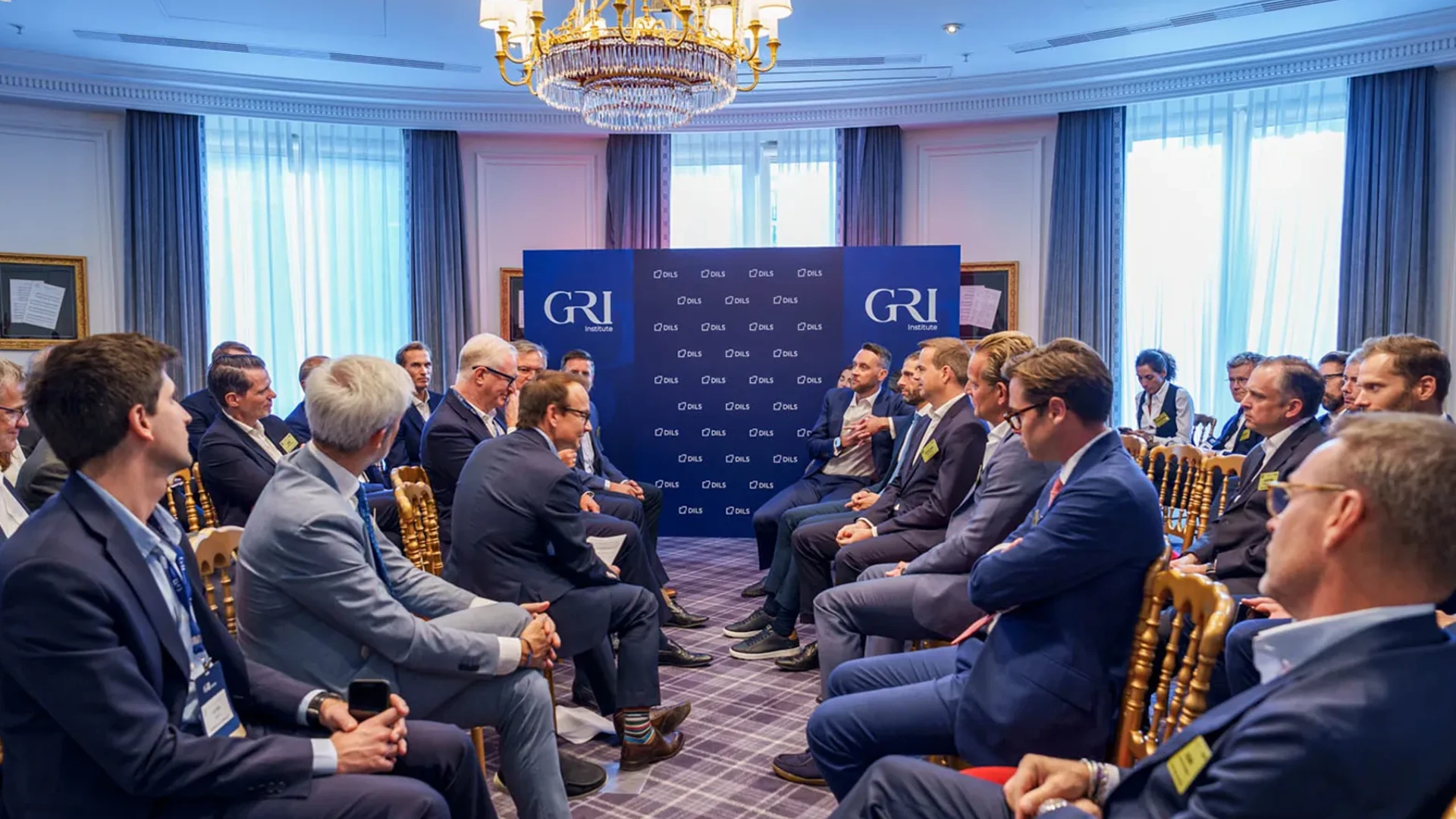
(GRI Institute)
▷ Europe’s Logistics Local Winners
European logistics capital deployment remains anchored by long-term structural fundamentals, including e-commerce expansion, supply chain re-configuration, and industrial digitalisation.Debt financing has flowed more readily into the sector than equity capital, offering attractive risk-adjusted returns amidst broader macroeconomic volatility, though yield compression across senior lending tiers is prompting investors to reconsider equity risk premiums.
Meanwhile, environmental sustainability has evolved from a superficial overlay into an essential risk-mitigation tool required to secure long-term debt and equity commitments.
Lenders and institutional allocators closely evaluate asset-level decarbonisation, solar power installation, electric vehicle charging infrastructure, and energy performance to ensure building relevance, protect exit liquidity, and mitigate future CapEx requirements.
Geographic performance exhibits clear operational variations across continental markets. Poland has developed into a hyper-competitive logistics hub exceeding 40 million square metres of modern stock, propelled by central European road infrastructure, expanding regional consumption, and strong Third-Party Logistics (3PL) absorption.
However, persistent developer competition keeps regional rent levels low and compresses development margins. In contrast, other CEE jurisdictions such as Romania and Bulgaria offer elevated development yields between 9% and 10% on cost, backed by low warehouse density, infrastructure expansion, and patient permanent capital vehicles.
In Southern Europe, locations such as Madrid attract developer interest due to well-defined hub-and-spoke transport corridors, population growth, and sustained demand for specialised XXL warehouses and cross-dock facilities.
Urban and last-mile logistics continue to deliver superior rental growth relative to big-box formats, driven by severe land scarcity, complex planning regimes, and elevated construction costs.
To achieve financial viability for ground-up urban developments, prime rents must clear higher baseline thresholds, such as GBP 13 per square foot in UK metropolitan nodes.
Rather than relying solely on e-commerce occupiers, urban industrial parks benefit from a highly diversified tenant base spanning Small and Medium-sized Enterprises (SMEs), light manufacturing, and local service providers.
Competition for urban sites is further intensified by data centre developers offering substantial land-value premiums, although real estate conversion remains constrained by multi-year power grid connection delays, site size limitations, and municipal planning barriers.
Success in the upcoming cycle hinges on securing power infrastructure, advancing land entitlements, and driving income through speculative developments in supply-constrained locations.
► Data Centres and Digital Infrastructure
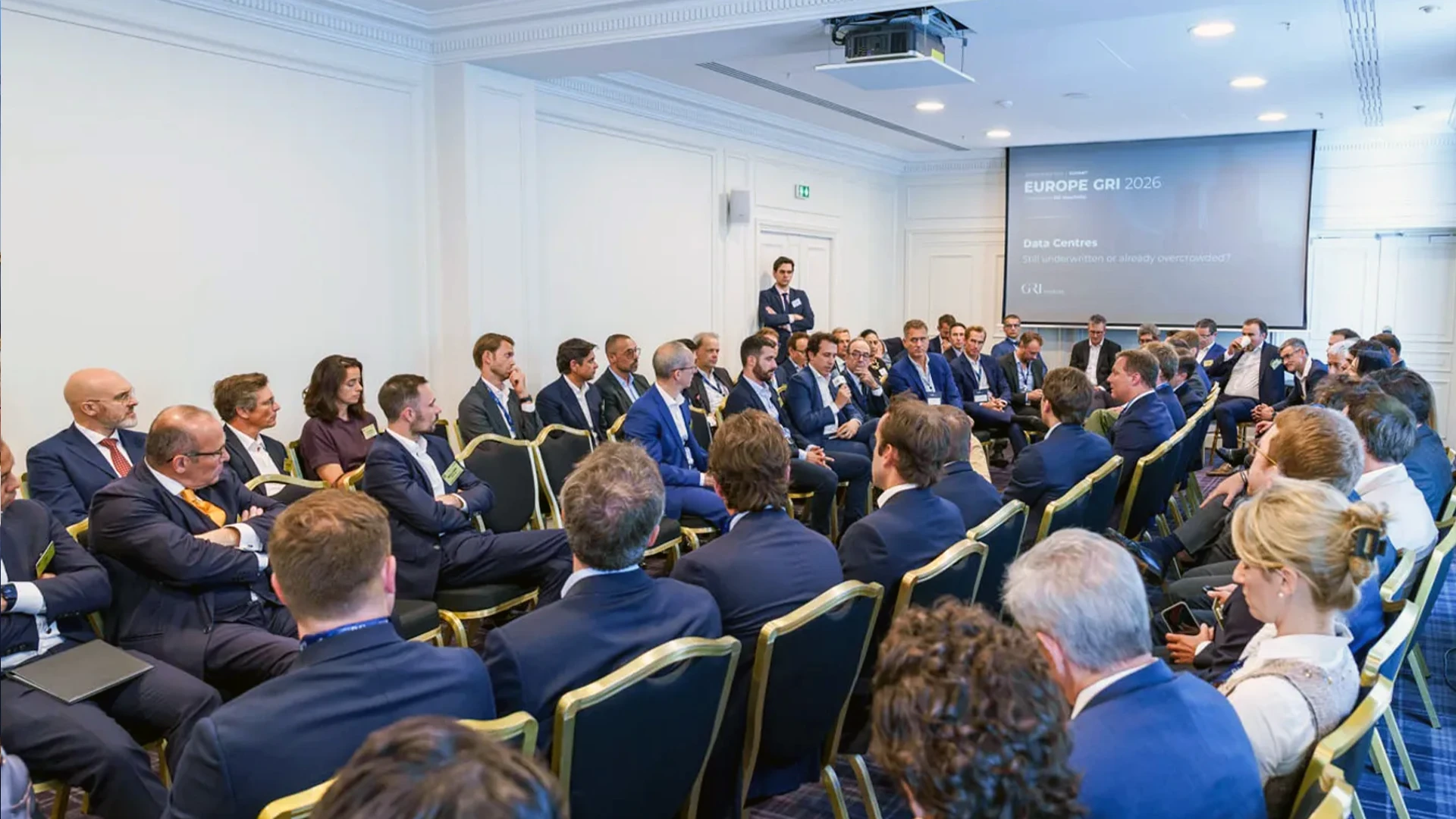
(GRI Institute)
▷ Data Centres: Underwritten or Overcrowded?
Secular demand for data centre capacity is supported by the rapid expansion of AI services, cloud migration, and digital infrastructure requirements across Europe. While long-term addressable demand remains vast, market sentiment balances genuine structural growth against concerns of peak optimism and aggressive capital deployment.Debt capital has flooded the sector, with alternative lenders, high-yield markets, and commercial banks competing fiercely to fund projects. Financing terms have loosened substantially, driving leverage thresholds past 90% LTC in select development schemes while compressing credit spreads.
Although high development yields on cost provide a buffer against exit cap-rate expansion, underwriting requires careful calibration of site absorption schedules, land pricing, and hyperscaler leasing velocity.
Securing high-voltage power allocations and municipal planning consent represents the primary barrier to entry and defining operational moat within Western European markets.
A critical distinction separates unverified power applications from genuinely energised land, as grid infrastructure delays of five to eight years and severe supply-chain bottlenecks for transformers frequently derail project timelines.
Overcrowded grid connection queues, inflated by speculative land banking, are prompting transmission operators and local authorities to institute strict financial milestones and environmental regulations.
Municipal resistance and stringent sustainability mandates, including hourly renewable energy matching requirements in select jurisdictions, have elevated execution risk, reinforcing the value of pre-energised sites with immediate utility access.
Technological progress in high-density AI computing is forcing a re-evaluation of facility design, demanding modular physical frameworks capable of handling escalating rack power densities and liquid cooling systems without interrupting active operations.
Direct operational capabilities and established relationships with major cloud providers or hyperscalers allow integrated platforms to unlock development value far more effectively than un-derived real estate plays.
Although speculative construction of smaller facilities can capture near-term demand from emerging specialised cloud providers, long-term asset viability relies on bankable, long-term leases with institutional end-users.
Aligning the multi-decade lifespan of physical structures with the rapid three- to five-year replacement cycle of computing hardware necessitates ongoing, phased CapEx investments to insulate facilities against technical obsolescence.
▷ Building the Next Generation of Digital Infrastructure
Next-generation digital infrastructure development in Europe is being severely constrained by power allocation delays, extended grid-connection timelines, and municipal permitting bottlenecks.Although multi-hundred-megawatt campus announcements dominate industry headlines, market participants estimate that less than a third of speculative pipeline capacity will achieve operational completion by the end of the decade.
Grid operators and local authorities are introducing strict financial milestones, upfront deposit guarantees, and regulatory hurdles to eliminate non-viable power applications.
Speculative power-land trading has accordingly lost momentum, as institutional capital and major end-users demand verifiable energisation schedules, robust substation access, and predictable licensing frameworks before committing development capital.
To overcome grid connection delays that frequently extend past 2030, developers are increasingly evolving into direct energy producers by co-locating facilities near power generation sources or exploring off-grid solutions.
Strategic partnerships with utility providers encompass renewable energy integration, battery storage, and emerging Small Modular Reactors (SMRs) to secure dedicated, uninterrupted electricity supplies.
Overcoming local community resistance requires proactive engagement, transparent environmental reporting, and tangible local contributions.
Operators are mitigating ecological concerns by deploying closed-loop liquid cooling systems that eliminate municipal water consumption and establishing heat-reuse partnerships to supply district heating networks, adjacent industrial facilities, or agricultural projects.
A fundamental operational challenge lies in reconciling the rapid 18- to 24-month evolution of AI processing hardware with multi-year physical construction schedules.
Future-proofing facility design requires over-engineering structural and mechanical infrastructure, including accommodating floor load capacities above 3,000 kg per square metre and supporting rack power densities escalating toward 120 to 400 kW.
While converting obsolete office or industrial real estate into data centres offers path-to-value potential, technical limitations regarding ceiling clearance, structural load capacity, and power availability often necessitate complete site redevelopment.
Long-term platform value depends on maintaining adaptable mechanical frameworks capable of transitioning between air and liquid cooling technologies without interrupting active IT operations.
► Join the conversation and shape the future of digital infrastructure at GRI Commercial RE & Data Centres Europe 2026
► Regional Analysis
▷ Iberia: From Recovery to Maturity

(GRI Institute)
Institutional investors increasingly approach the Iberian peninsula as a unified geographic investment play to achieve critical mass, despite distinct regulatory, legal, and municipal frameworks separating Spain and Portugal.
Portugal offers attractive yield spreads and strong economic momentum, yet its modest market size creates illiquidity constraints and rapid cyclical swings that complicate exit timing. Integrating Portuguese assets within broader Spanish platforms allows international capital allocators to achieve operational scale and portfolio liquidity.
Meanwhile, Spain provides structural market depth, with Madrid - still a strong number one in the latest GRI Barometer city preference results - and Barcelona attracting the vast majority of institutional deployment across core and value-add strategies.
Sector selection reflects a marked pivot towards inflation-resilient, operationally intensive asset classes, with hospitality, logistics, and alternative residential formats capturing the largest capital shares.
Traditional BTR returns have compressed under high construction expenses and borrowing costs, prompting value-add investors to pursue unit privatisation, BTS schemes, and conversions of obsolete commercial stock into educational or healthcare facilities.
Equity strategies target net IRRs above 15% through hands-on asset management, physical repositioning, and operational enhancement rather than expecting cap-rate compression.
Prime office assets maintain selective appeal for long-term institutional buyers, whereas value-add opportunities rely on active change-of-use strategies or speculative developments in supply-constrained micro-locations.
Elevated central bank benchmark rates have increased borrowing costs, yet credit availability across the capital stack remains robust due to intense competition between commercial banks and alternative credit providers.
Political volatility and legislative shifts surrounding municipal housing policies and digital infrastructure power allocations introduce operational friction, making legislative predictability a key underwriting concern.
To insulate JVs against execution delays and cost overruns, institutional investors insist on symmetrical co-investment commitments and performance-aligned fee structures.
Successfully deploying cross-border capital across Iberia requires direct alignment with experienced local operating partners who possess granular market knowledge, off-market deal access, and municipal planning expertise.
► Join our Portuguese Offices & Mixed-Use roundtable, co-hosted by Fidelidade, on 28th October
► In Madrid, we will be hosting Repositioning Hospitality in Spain's Urban Transformation at JLL’s Madrid office on 29th October
► We will also hold the Spanish Housing & Flexible Living Models roundtable on 11th November, co-hosted by CMS
▷ France: Immobilier Tertiaire et Transformation

(GRI Institute)
Office-to-residential conversions across the French commercial property sector encounter severe technical and financial constraints that frequently render simple building refurbishments unviable.
Structures possessing rigid structural grids or floor plate depths exceeding 18 metres fail to meet domestic light and ventilation standards, requiring full demolition or major structural rebuilding to produce marketable residential layouts.
Historical reliance on cap-rate compression or falling benchmark rates to salvage weak conversion models has given way to strict asset-level underwriting.
Factoring in elevated construction costs, lost VAT recovery, planning delays, and mandatory social housing allocations, underlying land values for redundant suburban offices often test negative territory to satisfy the mid-teens net IRR expectations of private equity investors.
Regional office vacancy displays extreme geographical polarisation, sitting near 17% across institutional portfolios in the Île-de-France area despite tight conditions in prime central business locations.
Although converting redundant commercial stock presents an opportunity to address broader urban housing shortages, execution is regularly hindered by municipal politics and rigid local master plans (PLUs).
Local mayors routinely resist widespread residential conversions over concerns regarding municipal infrastructure capacity, such as schools and public services, alongside the margin erosion caused by compulsory social housing quotas.
As a result, while initial conversion schemes in a municipality may obtain local planning consent, subsequent proposals face mounting political resistance or retroactive municipal demands that undermine project economics.
Institutional mega-funds struggle to deploy capital into transformation strategies, given that conversions demand bespoke, site-specific execution rather than rapid, scalable portfolio deployment.
Non-listed retail real estate investment trusts (SCPIs) face a pronounced dilemma, managing numerous obsolete suburban office properties that require heavy CapEx infusions.
To avoid crystallising severe balance-sheet write-downs through immediate liquidations, SCPI managers are entering into risk-sharing development partnerships, earn-outs, and conditional sales agreements tied to planning approvals.
In terms of target end-uses, student accommodation conversions achieve rapid occupier absorption, whereas senior living schemes face persistent institutional investor hesitancy due to high operational service costs and recent operator reputational damage.
► Join the conversation at our French Value Add & Transformation roundtable, co-hosted by JLL, in Paris on 13th October
▷ Italy: Can Capital Scale Up?

(GRI Institute)
The Italian commercial real estate market is undergoing a pronounced recovery, evidenced by first-half transaction volumes reaching EUR 7.7 billion - a substantial year-on-year increase that surpasses historical benchmarks.
Investment activity exhibits unprecedented sector diversification, with capital flowing beyond traditional office assets into logistics, hospitality, retail, and digital infrastructure.
Market participants emphasise that Italy offers superior relative stability compared to core Western European jurisdictions, where fiscal uncertainty and severe valuation write-downs have constrained transaction velocity.
Italian property valuations have remained comparatively stable, while prime yields maintain a favourable spread of 50 to 100 basis points over French and German benchmarks.
In addition, transparent real estate fund vehicles deliver significant tax efficiency for cross-border institutional allocators, enabling portfolio share transactions that bypass heavy local asset-level transfer taxes.
Scaling capital deployment requires a structural shift from standalone property acquisitions toward vertically integrated operating platforms and combined PropCo and OpCo structures.
To overcome supply bottlenecks, institutional allocators are acquiring local development platforms and general contracting entities, securing direct oversight of construction costs, delivery timelines, and operational execution.
Operational real estate presents the most compelling growth trajectory across the peninsula. Residential rental formats address acute structural housing deficits in major metropolitan centres, while student accommodation benefits from an extreme undersupply, with national provision rates sitting near 4% amid rising university enrolments.
Concurrently, the hospitality sector is experiencing a generational recapitalisation, as fragmented, family-owned hotel portfolios transition toward institutional platforms and global brand management across both gateway cities and expanding resort markets in Southern Italy and Sicily.
Despite expanding institutional appetite, scaling capital allocation faces persistent structural hurdles related to lot sizes and municipal administrative friction.
Approximately 80% of regional transactions involve ticket sizes below EUR 15 million, forcing large institutional investors to rely on local operational partners capable of aggregating granular assets into institutional-grade portfolios.
Navigating local planning approvals, brownfield environmental remediation, and power grid connections for data centres demands local execution expertise across thousands of distinct municipal jurisdictions.
Furthermore, the absence of a deep domestic pension fund market leaves transaction liquidity heavily dependent on international cross-border capital, which accounts for nearly three-quarters of total deal volume.
To bridge this gap, institutional managers are increasingly partnering with domestic private wealth channels and family offices to construct resilient, income-generating portfolios.
► Don’t miss our Italy Private Capital vs Institutional Investors roundtable in Milan on 24th November
▷ CEE’s Next Chapter: Cross-border Capital Plays

(GRI Institute)
Macroeconomic performance across Central and Eastern Europe exhibits sharp regional divergence, challenging the historical practice of treating the territory as a monolithic investment region.
Poland continues to outpace Western European benchmarks with GDP growth approaching 4%, while Czechia demonstrates sustained economic stability. Conversely, Romania faces fiscal pressures and real-term growth deceleration, whereas Hungary offers an increase in selective value-add opportunities following recent political shifts.
Market allocators increasingly advocate abandoning broad regional classifications, arguing that bundling distinct national jurisdictions obscures asset-level fundamentals and unnecessarily heightens geopolitical risk perceptions among global cross-border investors who conflate local market dynamics with proximity to conflict in Ukraine.
A fundamental structural evolution across the region is the rapid emergence and capitalisation of domestic liquidity, particularly in Czechia and Poland.
High household savings rates and expanding retail investment funds have empowered local institutional managers to acquire prime commercial assets, offsetting the temporary retreat of Western European capital and successfully absorbing large-scale portfolio divestments.
Concurrently, international allocators, including US Real Estate Investment Trusts (REITs), continue to target high-yielding operational assets supported by robust consumer purchasing power and expanding middle-class demographics.
Although historical yield spreads between CEE and core Western European markets have compressed - with prime Polish industrial properties occasionally trading tighter than equivalent German stock - investors rely strictly on asset-level NOI growth rather than expecting cap-rate compression to achieve target returns.
Sectoral capital allocation remains heavily weighted towards logistics and industrial assets, driven by global supply chain re-shoring, manufacturing relocations from Asia, and expanding regional e-commerce consumption.
However, capturing mega-institutional allocations requires building larger portfolio lot sizes and establishing scalable operational platforms to overcome traditional transaction size limitations.
Beyond industrial warehousing, alternative living sectors present substantial growth runways; PBSA, senior memory care, healthcare facilities, and digital infrastructure face acute structural supply deficits across primary metropolitan hubs.
Additionally, surging state-backed defence expenditures and EU infrastructure funding are anticipated to provide multi-year catalysts for industrial expansion, urban regeneration, and long-term liquidity across the broader region.
▷ GCC: Global Capital Magnet?

(GRI Institute)
Recent macroeconomic disruptions and regional shocks impacting the Gulf Cooperation Council (GCC) have catalysed a strategic realignment in how sovereign wealth funds and institutional allocators deploy capital across European markets.
Balancing immediate domestic resilience with the re-engineering of outbound liquidity, GCC sovereign allocators holding approximately USD 7 trillion in reserve buffers are shifting from passive global liquidity providers into highly disciplined, value-driven asset managers.
Rather than pursuing speculative trophy commercial acquisitions, outbound capital deployment is actively pivoting toward capital recycling and targeted co-investments in defensive European sectors, including BTR housing, PBSA, logistics platforms, and technology assets across CEE hubs.
These cross-border investment flows are increasingly reinforced by bilateral commercial initiatives, such as the UK-GCC Free Trade Agreement (FTA), alongside expanding regional corridor banks, clean energy infrastructure projects, and sophisticated regulatory frameworks operating within the United Arab Emirates (UAE) and wider regional financial hubs.
Targeted capital deployment within the GCC region itself concentrates heavily on specialised operational real estate sub-sectors that address acute structural supply deficits across regional metropolitan hubs.
While prime gateway office space in major financial free zones remains tightly constrained and commands premium rents, alternative formats such as self-storage, corporate staff accommodation, private healthcare facilities, and educational infrastructure generate highly predictable cash flows.
In addition, large-scale state initiatives in Saudi Arabia and the UAE are driving substantial capital into experiential leisure, all-inclusive resort hospitality, and religious tourism.
Logistics and light industrial assets also benefit from expanding regional trade corridors, maritime port investments, and state-backed manufacturing initiatives aimed at diversifying domestic economies beyond hydrocarbon revenues.
Underwriting real estate across the region requires navigating a non-homogeneous landscape marked by distinct regulatory regimes, tax structures, and local business cultures across individual member states.
Divergent legal frameworks between financial free zones and onshore jurisdictions necessitate rigorous tax planning and customised JV documentation to insulate capital from structural friction.
While geopolitical volatility occasionally prompts short-term investor caution, market participants view these headwinds as finite, transitory events that do not impair multi-decade demographic and economic growth drivers.
Long-term investment success relies on combining international brand equity or technical design with deeply embedded local operating partners who possess the land access, municipal relationships, and execution speed necessary to deliver complex development projects.
► The most senior international real estate leaders will gather at the GRI Global Summit 2026
Thank you to every one of our speakers, moderators, co-chairs, and participants for their contributions to the valuable discussions that unfolded at Europe GRI 2026 - Summer Edition.
Check out the full photo album from the gathering here.