 Credit: GRI Institute
Polarisation and Price Lags in Paris: France GRI 2026 Spotlight Report
How patient capital, platform-led asset management, and structural flexibility are rewriting the playbook for institutional real estate allocations
June 25, 2026Real Estate
Written by:Rory Hickman
Executive Summary
The French real estate market is navigating a significant structural rebalancing, marked by a slower pricing correction than its European neighbours and a sharp capital rotation away from traditional offices, according to insights shared by industry leaders at France GRI 2026 in Paris.
While commercial segments face severe headwinds, certain defensive niches are capturing selective institutional equity. This tension between lagging valuations and resilient occupier demand defined the core of discussions, ultimately revealing that outperformance in this cycle will belong to those with the patient capital and specialised execution required to solve for localised market complexity.
When we return to the French capital on 9th-10th September for Europe GRI 2026 Summer Edition, it will be within a market for which the focus has firmly pivoted toward asset platformisation, structural flexibility, and deep operational capability.
While commercial segments face severe headwinds, certain defensive niches are capturing selective institutional equity. This tension between lagging valuations and resilient occupier demand defined the core of discussions, ultimately revealing that outperformance in this cycle will belong to those with the patient capital and specialised execution required to solve for localised market complexity.
When we return to the French capital on 9th-10th September for Europe GRI 2026 Summer Edition, it will be within a market for which the focus has firmly pivoted toward asset platformisation, structural flexibility, and deep operational capability.
Key Takeaways
- Europe has captured an 86% surge in property capital as investors pause US allocations, even as the market navigates a structural paradox of abundant bank liquidity and scarce investor equity.
- The French living sector is shifting towards unified block acquisitions, specialised operational platforms, and customer-centric design to insulate portfolios against market cycles.
- Severe structural headwinds have forced corporate tenants to slash office footprints by 15-40%, accelerating a massive capital rotation into data centres, logistics, and battle-tested retail assets.
► French Real Estate Investment Cycle
The European real estate market is experiencing a significant shift in capital allocation, driven by changing geopolitical landscapes and varying speeds of pricing corrections. While global real estate fundraising halved between its 2021 peak and 2024, falling from USD 240 billion to USD 118 billion, Europe has benefited from a recent rebound.Capital targeted at European property surged by 86% between 2024 and 2025, rising from EUR 18 billion to roughly EUR 35 billion. This resurgence is partly fuelled by investors pausing US allocations due to political instability, choosing instead to look toward Europe as a stable, fragmented, and value-add friendly alternative.
Within Europe, investment dynamics vary heavily by country. The UK offers rapid mark-to-market repricing and robust international student demand, despite high financing costs with bond yields above 5%. Germany has seen massive repricing, with residential values falling between 30% and 50%, forcing listed entities to trade at a 50% discount to net asset value.
This sharp correction has created attractive entry points for affordable residential strategies in secondary German cities. Meanwhile, Spain is gaining momentum through strong economic growth, low inflation, managed labour costs, and a severe undersupply in student housing.
In contrast, France remains somewhat behind the curve in terms of repricing, with real estate entities trading at a more modest average discount of 20% below net asset value. While a clear pricing floor has not yet been universally established, constrained supply continues to support rental growth across logistics, industrial assets, and student housing.
Fractional residential sales, involving purchasing buildings to sell off individual units, deliver double-digit returns, while senior housing stands out as an undervalued sector with powerful demographic tailwinds.
The CRE sector broadly faces severe structural headwinds across the continent, with investors remaining heavily overexposed to offices, making new allocations difficult.
Although extreme pockets of repricing of 55% to 70% have occurred in secondary offices, widespread distress has not yet materialised, leaving the sector with expectations that it will to mirror the historical trajectory of retail, requiring a multi-year period of devaluation, stabilisation, and structural adjustment before re-emerging as a high-yield opportunity.
In the meantime, capital is rotating toward operational asset classes, niche segments, and alternative strategies. French data centres, backed by abundant nuclear energy and a widening supply-demand imbalance, present a compelling outlook.
To unlock capital in today’s environment, fund managers must offer robust operational execution rather than just prime locations.
Platformisation, particularly through captive operating companies that manage assets internally, has become a key requirement for institutional investors. This model ensures data control, eliminates conflicts of interest, and aligns management incentives with property performance.
While a flexible approach utilising third-party operators can still deliver swift returns, establishing specialised operational platforms remains the preferred route to maximising value and preparing portfolios for future market cycles.

(GRI Institute)
► Investment Strategies
The real estate investment landscape is undergoing a profound structural rebalancing as equity strategies regain traction over debt. While the surge in interest rates initially turned real estate debt into a highly attractive alternative, the practical challenges of deploying capital have altered investor perspectives.In France, defensive traditional banks have maintained a strong grip on refinancing, forcing real estate debt funds to target riskier secondary assets, including suburban offices, to hit double-digit return thresholds.
This dynamic has sparked a wave of default caution, prompting institutional capital to return to equity structures where structural control can be maintained. Simultaneously, the historic focus on broad office allocations has been replaced by an ultra-selective approach to prime assets.
Securing institutional capital for core strategies now requires a significant premium over sovereign debt, with buyers demanding yields that clear benchmark ten-year government bonds by at least 250 basis points.
At the same time, traditional retail funds that previously anchored the core market are managing redemption pressures by rotating capital away from domestic properties toward the wider Eurozone. This shift has elevated alternative niches that offer genuine demographic insulation.
Healthcare portfolios, comprising private clinics and specialised nursing facilities, provide highly resilient income streams with core-plus yields reaching up to 10%. Light industrial and localised activity units are also attracting defensive capital, as essential local service operators require functional storage space that remains largely decoupled from broader economic fluctuations.
Value-add capital is moving toward operational platform plays that resemble corporate private equity buy-outs. Self-storage is expanding through integrated pan-European platforms that require highly specific marketing and digital acquisition expertise rather than standard brick-and-mortar management.
In the opportunistic sector, the conversion of obsolete office stock into niche hospitality assets, such as youth hostels, is targeting returns of up to 20%, though these redevelopments face prolonged local planning permissions.
This shift toward highly operational, multi-sector strategies has transformed institutional team structures. Small generalist investment houses are abandoning direct execution in favour of specialised operating partners, joint ventures, and club deals.
Conversely, larger global managers are establishing distinct, off-balance-sheet corporate verticals to institutionalise proprietary asset expertise without inflating the core corporate cost base.
On the ground, project teams are shedding rigid internal divisions, requiring professionals to manage transactions and intensive asset operations interchangeably as market conditions dictate.
These asset management capabilities are being tested as portfolios assembled during the 2019-2021 market peak approach maturity.
Cash-generative, fully leased properties are rarely being sold at a loss - instead, fund managers are using standard extensions or structuring continuation vehicles backed by fresh equity to safeguard principal capital and honour fiduciary duties.
Fire sales are restricted to vacant or structurally compromised assets, with limited partners demanding granular, line-by-line asset transparency before deciding whether to inject fresh equity or accept a discounted exit.

(GRI Institute)
► Real Estate Debt
The real estate debt market is defined by a structural paradox: abundant institutional bank liquidity contrasts with a scarcity of investor capital. Regionally, stable European financing escapes the volatility disrupting US lenders.Establishing debt facilities within France involves fewer hurdles than navigating the UK or Germany, a resilience reinforced by deep domestic equity. Yet, this surface masks operational bottlenecks within traditional institutions.
A large volume of historical value-add credit remains frozen on bank books because a sluggish transaction market has stalled property exits. Compounding this, new loan originations are shifting towards medium-to-long-term profiles, locking up capacity.
Banking groups also contend with strict risk caps governing cumulative market exposure across subsidiaries, accelerating the expansion of alternative debt funds. Rather than engaging in conflict, traditional lenders and alternative players are partnering through senior-subordinated whole-loan structures to distribute risk.
Consequently, lending appetite has polarised across property sectors. While offices face intense scrutiny due to restricted liquidity, hospitality and managed student housing enjoy robust transactional depth and seamless financing execution.
At the same time, logistics is undergoing a cautious stabilisation, and prime luxury residential assets remain insulated as wealthy cash buyers remove financing risks.
Retail parks also attract renewed favour across Southern European markets. Tightened underwriting reinforces this trend, prioritising operator track records and regional scale, while leverage limits have decreased to conservative thresholds between 30% and 35% loan-to-value or loan-to-cost.
Strict enforcement of European taxonomy and 2030 carbon mandates disqualifies older urban office properties. For prime green assets, intense competition compresses margins to between 65 and 100 basis points.
Under financial stress, cultural divisions emerge; large US funds are far more inclined to hand over keys, whereas European consortiums prefer to inject fresh equity to retain control. When handling distressed positions, banks differentiate sharply between temporary valuation adjustments and permanent operational failures.
Assets with strong underlying cash flows damaged solely by capitalisation rate expansion receive maturity extensions and covenant restructurings. Conversely, vacant properties with expanding deficits force lenders to accelerate asset reclamation.
In deadlocked multi-investor disputes, banks execute formal trust agreements to mandate clean exits. This risk management also dictates upfront underwriting, with lenders strictly favouring management contracts over fixed leases in hospitality to guarantee immediate visibility into revenues.
(GRI Institute)
► Asset Value Creation
The French real estate market faces structural disruption mirroring the economic distress of the mid-1970s, with target returns varying significantly by institutional structure. Standard value-add strategies seek a baseline internal rate of return of 15%, while higher-tier funds target net returns between 17% and 18% alongside a minimum 1.5x equity multiple.However, severe commercial polarisation compresses these benchmarks, forcing realistic returns in the Paris central business district down to 12% or 8% as private buyers bid up premium assets using highly optimistic models.
Value-add execution routinely absorbs structural planning and permit risks, but fund managers avoid fundamental zoning reforms, which remain strictly categorised as speculative, opportunistic ventures. This backdrop has shifted capital away from traditional offices towards alternative niches, including logistics, self-storage, purpose-built student accommodation (PBSA), and hospitality.
Within hospitality, fixed leases are being replaced by management agreements because a defaulting tenant poses a far greater risk than direct operational volatility.
These integrated platform models capture both real estate appreciation and corporate operating margins, facilitating portfolio scale-ups for public listings in Singapore markets, which prove far more receptive to operational real estate trusts than discounted European platforms.
Financing these strategies relies on pragmatic institutional credit lines that actively reject binary lease profiles, preferring multi-let configurations where a single vacancy cannot bankrupt a vehicle via sudden building charges, with Asian banks offering more competitive structures and spreads than US lenders.
Value creation is further enhanced by integrating environmental mandates directly into early design phases for value preservation.
Rather than committing to decades-long timelines, managers rely on data platforms to execute calibrated, five-year decarbonisation strategies to maximise mid-term property values. This technical capex must be stringently managed, as the office market requires every euro to be explicitly counted.
This fiscal discipline is severe in peripheral regional markets, where speculative office development has entirely ceased because local rental growth cannot absorb escalating construction costs, whereas central Paris remains structurally insulated due to corporate demand and strict regulatory restrictions on new development supply.
Concurrently, the occupier market for large-scale corporate developments has broken down as tenants abandon historical commitments in favour of shorter, flexible leases to hedge against economic uncertainty.
Consequently, massive speculative developments exceeding 25,000 square metres have vanished due to severe occupier uncertainty. Obsolete single-use properties are instead retrofitted into flexible, mixed-use spaces combining office, hotel, and residential space within a single asset.
Executing this pivot requires full asset vacancy, as occupied buildings present insuperable operational barriers to floor-plan redesigns. To safely insulate these exits, managers underwrite a conservative 50-basis-point cap rate expansion buffer, establishing a strict downside scenario to safeguard principal equity if macroeconomic conditions deteriorate further.

(GRI Institute)
► Living Assets
The French living assets sector is experiencing an operational overhaul, with value creation moving towards meticulous product design and precise demographic positioning. Moving from sourcing to construction demands significant time to balance resident types and calculate communal amenities.Reflecting a shift from developer-led options to customer-centric models, communal spaces have expanded from basic laundry rooms to 1.5 to 2 square metres per room to maximise user experience.
This focus shapes the senior living segment, where early speculative models incorrectly assumed an unbroken age continuum from 65; contemporary strategies recognise that the average entry age sits closer to 75 or 80, demanding accurate customer segmentation and consumer market education.
Maximising performance relies on sophisticated marketing and flexible lease structures. For student housing, securing an international resident base of 20% to 25% requires global acquisition funnels spanning fairs in the US, China, and India alongside digital channels.
While digital leads integrate cleanly with local university partnerships, legacy marketing channels such as radio or television yield zero return. Conversely, senior living remains highly local, utilising targeted regional marketing to reach consumers, and decision-making adult children.
Operationally, owners are replacing traditional fixed leases with management contracts to avoid being left blind to conversion rates, marketing efficiency, and structural maintenance faults such as unreported water leaks.
Management contracts ensure commercial business value remains tethered to the asset owner. However, because securing credit in restrictive markets often requires fixed leases, smaller regional operators form joint ventures with institutional funds to scale portfolios. Achieving standalone profitability requires a critical mass of 3,000 to 4,000 units, driving pan-European market consolidation.
Concurrently, large operators are embedding artificial intelligence to qualify prospective tenants, automate lease documentation, and execute real-time revenue management tools using live data.
This efficiency allows tiny teams of four to manage up to 1,000 units. Technology removes low-value administrative tasks without displacing human interaction, keeping staff available to host events and build communities.
Even out-of-hours desks deploy voice-cloning tools to maintain a responsive presence, though physical emergencies continue to require a local human presence.
Finally, funding is maturing away from historical build-to-sell models targeting retail buyers, which triggered negative publicity when unmet capital expenditure requirements eroded retail equity. Institutional capital favours unified block acquisitions under a single owner capable of long-term capex funding.
Despite rigid regulatory barriers restricting daily flex-living options, the sector's maturation points towards flexible, international brand concepts capable of supporting residents from university years through to seniority.

(GRI Institute)
► Hospitality
The European hospitality sector is redefining how capital captures value by exploiting operational ecosystems and brand equity. In ultra-luxury, value generation has inverted; market leaders leverage premium food and beverage concepts as primary revenue drivers rather than secondary amenities.High-performing restaurants generate vast revenues, feeding hotel occupancy, and anchored branded residences. This commercial ecosystem allows high-net-worth buyers to integrate hospitality services into their domestic lives, cementing an emotional brand connection that safeguards long-term asset values.
Conversely, budget and mid-scale sectors drive efficiency through hybrid structures blending hotel comfort with hostel-style density. Utilising configurations such as bunk beds and private bathrooms within modular dormitories allows these concepts to double the number of beds per square metre.
Prioritising sellable square metres over fixed room counts enables premium urban conversions to outperform traditional three-star properties by up to 45% in revenue.
Although the wider market is pivoting towards management contracts, institutional investors heavily favour twenty-year lease structures for hybrid assets to shelter risk-averse funds from operational fluctuations, leaving operators to bear execution risks.
Operational innovation is also reshaping tech-driven short-term rental platforms functioning with near-zero on-site staff via end-to-end digital check-in systems. However, sharp cross-border regulatory variations dictate where these automated models can scale.
While a ten-unit building executes seamlessly in decentralised leisure markets such as Spain, strict French mandates requiring twenty-four-hour on-site personnel destroy the financial viability of small-scale properties.
Consequently, operators in France must target larger, aggregated schemes to protect net margins, shifting leases towards hybrid formulas that tie variable revenues to guaranteed minimum baselines.
Securing financing remains secondary to sourcing properties at realistic prices, as legacy owners frequently preserve inflated historical book valuations, refusing to accept capital cuts. While institutions with robust balance sheets easily command bank debt, early-stage hybrid concepts must initially rely on full equity or private equity structures until operational performance metrics are proven.
Furthermore, large branded residential schemes face prolonged permitting gridlocks following local municipal elections, adding significant development risks.
Sustainability mandates add further layers of asset assessment, though hospitality remains advanced in energy efficiency. Structural sustainability is decided during conversion, yet green systems face pushback from developers prioritising upfront margins over long-term savings.
Increasingly, embedded carbon lifecycle assessments act as a filter, causing projects to be abandoned at the feasibility stage. Centralised automated climate systems also require calibration, as rigid environmental thresholds risk triggering poor reviews if they conflict with diverse guest preferences.

(GRI Institute)
► Offices
The French office market is enduring its worst downturn in twenty years, with investment volumes at EUR 1.8 billion.Corporate tenants are trading central prestige for fiscal discipline, workplace services, and total flex-desk strategies, reflecting a structural shift in occupier behaviour. Because historical studies showed desks sat empty 60% of the time, firms are slashing footprints by 15% to 40%.
These retrenchments have inverted the leasing market, flipping the historical ratio of seven transactions for every three renegotiations to favour short-term extensions and rent-free concessions.
This contraction exposes deep geographic polarisation across the 55 million square metres of Île-de-France stock. While vacancy is concentrated outside Paris, the capital maintains a modest 6% to 7% rate. Paradoxically, ultra-prime Paris rents hit a record EUR 1250 per square metre.
Outside Paris, finding tenants takes three years compared to one year within the capital, forcing 80% of investment exclusively into Paris. Regional take-up continues to slide, establishing a new annual norm of 1.6 million square metres, down from historical peaks of 2.5 million.
Addressing oversupply via office-to-residential transformation remains sluggish, with actual conversions at just 1% to 2%. Sourcing assets is hindered by carrying costs, squatting liabilities, and a severe buyer-seller pricing gap. Structurally, only one in ten properties suits conservation, forcing developers to retain basements while flattening superstructures.
Bureaucratic deadlocks with tax-reliant municipalities consume three to four years, meaning even successful hybrid conversions take seven years to deliver. To break this gridlock, the Gauguet and Noir laws empower officials to bypass urban rules for residential mutations. Mayors must now prove explicit public utility or schooling deficiencies to block conversions, while a 2025 tax framework introduces targeted exemptions.
Concurrently, the selective debt market funds offices but mandates multi-tenant profiles over single-occupier risks for large assets. Lenders also decouple property risk by treating office schemes secured by state satellites as sovereign bonds to bypass lending freezes.

(GRI Institute)
► Retail
The retail property market is emerging from a protracted period of institutional neglect, marking the structural end of widespread retail bashing.While total real estate investment fell by nearly 50% in the first quarter of 2026 due to external geopolitical shocks, retail property proved uniquely resilient, doubling its share of transaction volumes from 20% to 40%. This recovery is supported by a comprehensive, battle-tested repricing that has run a Darwinian course ahead of other asset classes.
Yields on secondary shopping galleries expanded to between 8% and 10%, highlighted by extreme individual devaluations where properties once bought for EUR 65 million resold for EUR 13 million. This correction has established realistic entry points, reviving investor interest and attracting competitive bank refinancing offers for dominant regional assets.
Market activity is highly polarised across formats, with institutional equity favouring defensive, necessity-driven sub-typologies. Out-of-town retail parks and supermarkets demonstrate superior resilience, underpinned by low operational overheads, affordable base rents, and a consumer shift towards discount networks.
Supermarkets maintain stable appeal, trading at prime yields between 6% and 7% due to their convenience profile. Furthermore, strict urban planning regulations limiting new peripheral developments have generated asset scarcity, protecting existing schemes.
In contrast, traditional high streets face severe operational strain. Historical rent inflation driven by expensive flagship stores squeezed out essential local retailers, leaving high streets overexposed to overextended fashion brands that suffered widespread vacancies during recent downturns.
This environment requires a migration from passive landlords to active operators who manage property through hands-on retail management. Success relies on tracking store performance, downsizing formats, and rotating underperforming occupiers rather than maintaining rigid leases.
While variable rent structures align interests in outlet destinations, standard transactions face legislative headwinds. New rules limiting commercial lease security deposits to a maximum of three months have inadvertently harmed retail renewal. Because landlords can no longer demand six-month or twelve-month financial cushions, they routinely reject small independent tenants in favour of large corporate credit lines, leaving innovative operators starved of space.
Finally, municipal intervention remains a volatile, unpriceable risk. Arbitrary pre-election changes, pedestrianisation schemes, and uncoordinated local planning decisions that flood the market with competing supply can quickly collapse asset performance.

(GRI Institute)
► Logistics
The French logistics real estate market is enduring its quietest first quarter in a decade, with investment and leasing volumes hitting historic lows. Institutional deal flow has dried up amid a severe shortage of new prime developments, leaving capitalisation rates unanchored.For core-plus assets with layout or location deficiencies, yields have expanded to 6% from roughly 5.25% three years ago. This lull stems from a post-pandemic hangover, as e-commerce giants over-committed to excessive industrial footprints.
Occupiers are now releasing surplus space back onto the market, causing a sharp slowdown in net take-up and pushing up local vacancy rates.
Resolving the construction equation for new logistics properties is exceptionally difficult because high construction costs clash with static market rents. While elite land plots in prime corridors command premiums exceeding EUR 600 per square metre, secondary land values have collapsed to EUR 40 per square metre without attracting speculative buyers.
Compared to dynamic European markets, including Spain, Italy, and Poland, France is penalised by slower permitting timelines, higher delivery risks, and compressed rental growth. This friction has altered regional exit strategies; institutional funds are retreating, but corporate occupiers are buying assets outright.
Having suffered past rental inflation, these operators are purchasing their own facilities to control supply chains and avoid external landlord vulnerabilities.
Sustainability has transformed underwriting criteria from a marketing luxury to an absolute barrier to institutional capital. Selective core funds enforce a strict prohibition against properties relying on traditional gas-fired boilers, categorising fossil-fuel dependence as a deal-breaker.
To safeguard core valuations ahead of a future three-to-five-year exit, property managers are upgrading twenty-year-old facilities to modern green standards. Although tenants often ignore green certifications because standard warehouses remain unheated, the true value lies in transitioning warehouses into electric energy hubs.
Properties must also now support the heavy power requirements of electric truck fleets, an infrastructure shift that can trigger connection charges of up to EUR 1.5 million from grid operators. To bypass these costs, developers integrate massive rooftop solar photovoltaic systems, exploiting pre-installed grid cabling to export excess power or run localised, self-consumption networks that lower net occupier utility bills.
This focus on infrastructure is exposing the limits of complex urban formats, particularly multi-storey vertical warehouses. While multi-tiered distribution hubs have succeeded in hyper-dense global gateways, such as Hong Kong, they fail to achieve traction around French metropolitan areas, as vertical schemes generate inefficient layouts on upper tiers and carry prohibitive construction premiums that local market rents cannot absorb.
Because French regional hubs lack extreme demographic density, vertical constraints remain unnecessary. Instead, value creation remains tethered to conventional, single-level facilities with clearance heights ranging from 10 to 20 metres, where automation can integrate smoothly into existing footprints.

(GRI Institute)
► Data Centres
The European data centre market is undergoing a rapid, structurally complex expansion as institutional capital races to exploit a widening supply-demand imbalance. While highly mature in the US, Europe has historically lagged behind, with capacity concentrated in the FLAP-D markets of Frankfurt, London, Amsterdam, Paris, and Dublin.France in particular represents a pivotal growth hub, closing last year with 540 megawatts of installed capacity and projecting expansion to 2.3 gigawatts by 2030. This growth is driven by unprecedented grid capacity reservations; the national operator has registered 34 gigawatts of industrial consumption requests, half of which stem entirely from data centres.
In the Paris region alone, outstanding requests total eight gigawatts, matching the entire current power consumption of the metropolitan area. This scale has fractured development into three phases defined by shifting risk profiles.
The initial phase consists of a speculative land play focused on securing acreage, grid allocations, and administrative approvals. This stage is entirely equity-financed, as debt providers refuse to underwrite early planning risks. Sourcing sites requires exhaustive screening; developers routinely filter 140 land parcels to secure five options due to rigid site criteria spanning flood zones and flight paths.
Grid application queues add further friction, as processing timelines for high-voltage access have expanded from two years to between seven and twelve years, prompting operators to mandate cash deposits of up to EUR 100,000 just to open a file.
Once secured, construction and operational leasing are dominated by global funds capable of bearing minimal leverage. Stabilised assets are increasingly seeing a structural split between the underlying real estate shell and digital operations. Multi-billion dollar funds are actively purchasing physical properties, targeting long-term corporate leases of 15-20 years with prime yields between 6% and 10%.
Technological disruption continuously reshapes these operational metrics, particularly through the rapid advancement of artificial intelligence. The massive processing power required for model training has caused rack density to spike from ten kilowatts to over 50 kilowatts, shortening chip lifespans to a brief three to five years.
This density has forced a total re-engineering of cooling infrastructure away from air systems towards direct liquid cooling, introducing massive retrofitting costs to existing pipelines. These technical demands expose a stark market mismatch; while technology firms require a two-year time-to-market window, French planning gridlocks stretch development over nearly a decade.
To bypass these barriers, some international developers are building independent gas-fired plants to generate power off-grid, while others favour more accommodating European markets such as Milan, where power can be secured within four years. Environmental mandates add further hurdles, requiring properties to reuse 20% of waste heat, a threshold that remains operationally marginal.
Finally, retrofitting obsolete office buildings into processing hubs is structurally unviable, as traditional structural columns cannot accommodate standard containerised rack dimensions.
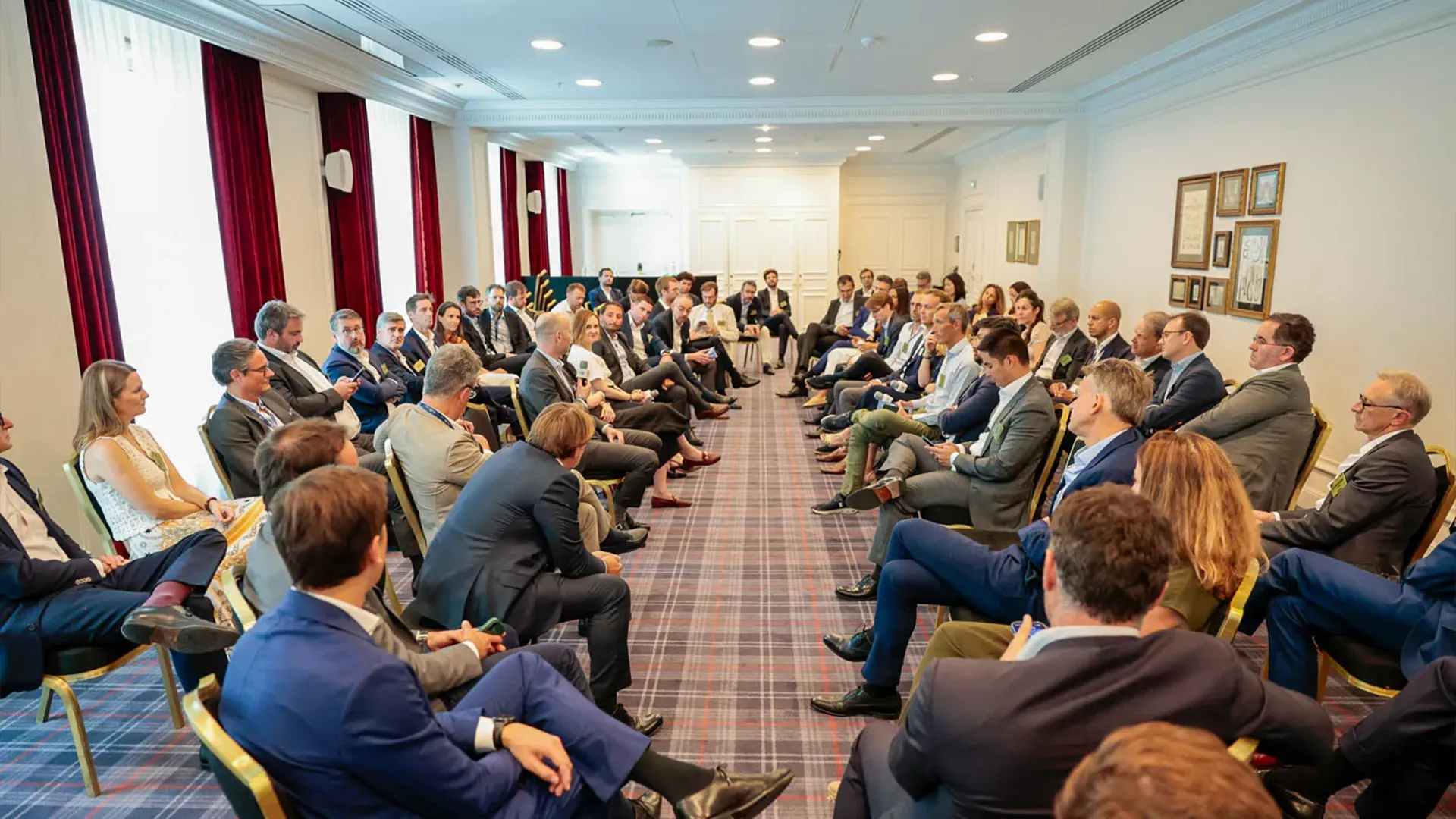
These insights were shared during industry leader discussions at France GRI 2026, with additional notes from ESSEC Business School.
Check out all upcoming GRI Institute Europe gatherings here.