 GRI Institute
Beyond the Boom: Navigating the new era of French hospitality real estate
Analysis from France’s top real estate leaders on the luxury versus economy divide, regulatory pressures, the rapid rise of flex-living formats, and more
April 15, 2026Real Estate
Written by:Rory Hickman
Executive Summary
The hospitality sector has emerged from the shadows of alternative real estate to claim its position as a mainstream, core institutional asset class. Following the unprecedented disruption of the pandemic, the recovery trajectory of European hotels has been nothing short of spectacular - and France is no exception.
Industry leaders gathered at the GRI Institute’s Résidentiel Géré et Hôtels France 2026 roundtable in Paris to discuss the French market's evolution, noting a landscape defined by staggering post-Covid revenue growth, including an extraordinary 30% increase in Paris between 2019 and 2025.
Ahead of France GRI 2026, we look at how investors must navigate profound supply constraints, a sharply divided asset landscape, evolving contract models, and looming regulatory pressures to unlock long-term value in this new cycle.
Industry leaders gathered at the GRI Institute’s Résidentiel Géré et Hôtels France 2026 roundtable in Paris to discuss the French market's evolution, noting a landscape defined by staggering post-Covid revenue growth, including an extraordinary 30% increase in Paris between 2019 and 2025.
Ahead of France GRI 2026, we look at how investors must navigate profound supply constraints, a sharply divided asset landscape, evolving contract models, and looming regulatory pressures to unlock long-term value in this new cycle.
Key Takeaways
- Investors are increasingly abandoning traditional leases in favour of flexible, operationally integrated models to maximise control and exit value.
- The market is sharply divided, with luxury assets successfully raising rates while the economy segment struggles under stagnant pricing, labour shortages, and rising operational costs.
- Strict 2030 environmental regulations are forcing urgent green capital expenditures, accelerating the shift towards management contracts where owners capture the resulting financial upside.
Selective Resilience in the Hospitality Boom
The hospitality sector is no longer a niche allocation reserved for specialist funds. Globally, it now represents an average of 8% of commercial real estate investment, and in France, that figure has climbed to an impressive 12%. Investment volumes in the French sector grew by 22% starting in 2023, signalling a robust and sustained market appetite.Capital is rotating out of traditional sectors - particularly offices, which continue to face structural headwinds - and seeking the yield and inflation-hedging characteristics unique to hotels. However, the market is now transitioning from a period of euphoric recovery into an era of "selective resilience".
Supply-Demand Disconnect and Market Bottlenecks
While investor appetite remains fundamentally strong, the market is currently constrained by an unusually low construction pipeline as the sector undergoes an era of selective resilience.Although the top-line revenues look fantastic on paper, the operational realities of energy costs, labour shortages, and compliance now demand a highly sophisticated approach to underwriting.
In major French cities, less than 2% of the existing inventory is currently under development. High construction costs, stringent zoning regulations, and expensive development financing have effectively choked off new supply.
This structural lack of new product is intensifying competition for existing assets, particularly those with repositioning potential. However, this dynamic interacts with a significant expectation gap between buyers and sellers, which is currently stalling transaction volumes in the mid-cap market.
Sellers continue to base their pricing expectations on the recent, massive top-line surges seen post-2022. Buyers, on the other hand, are highly cautious. They are underwriting deals with a sharp focus on squeezed operational margins, inflated payroll costs, and the heavy CapEx required to meet modern environmental standards.
Until this bid-ask spread narrows, the market remains somewhat suspended, with core capital waiting on the sidelines for realistic entry points.
Luxury Surges as Economy Squeezes
The headline growth figures mask a severe, structural divide that has emerged across different segments of the French hotel market. The industry is currently experiencing a "tale of two tiers", where the top and bottom of the market are operating under entirely different economic realities.High-end 4-star and 5-star hotels, particularly those capitalising on the Parisian tourism surge, have enjoyed massive success.
These assets have benefited heavily from a shift in consumer behaviour favouring experiential travel and luxury domestic tourism, allowing them to push daily rates to historic highs. In recent years, premium assets in Paris have seen massive price increases of 40% to 50%.
In stark contrast, the budget and economy hotel segments are struggling immensely, as these assets suffer from a fundamental lack of price elasticity. It is incredibly difficult for operators to raise room rates beyond the strict ceiling of EUR 40 to EUR 60 without severely impacting occupancy.
Consequently, these economy assets are trapped; they cannot generate the top-line growth required to absorb the relentless pressures of rising payroll, expensive energy contracts, and general inflation.
For many investors, this lack of pricing power makes the economy segment increasingly difficult to underwrite, pushing capital further up the quality curve.
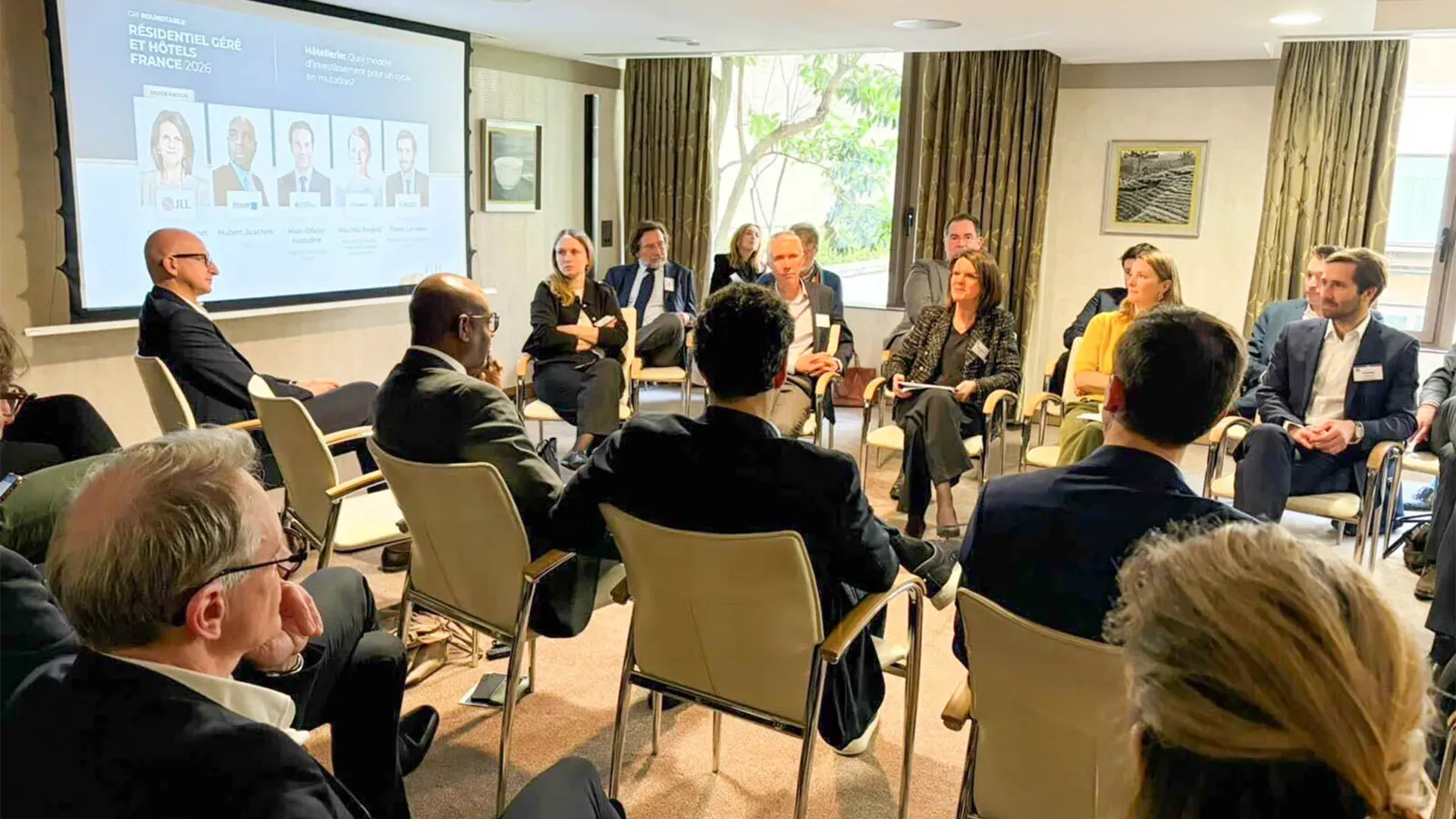
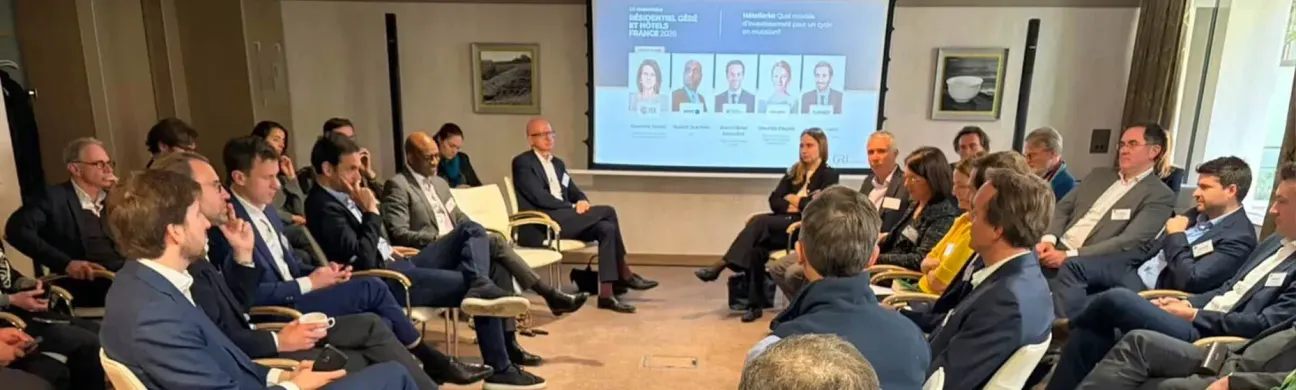
French real estate leaders gathered in Paris to discuss the future of the hospitality industry at GRI’s Résidentiel Géré et Hôtels France 2026 roundtable. (GRI Institute)
Capital Strategies and Ownership Models
Faced with these complexities, investment strategies have become highly dependent on specific capital constraints, fund mandates, and risk appetites. The way institutional capital approaches hospitality has fundamentally fractured into two distinct philosophies.On one side, retail and core funds generally stick to traditional commercial leases to secure guaranteed income. Their primary objective is to deliver stable, resilient dividends to their shareholders while avoiding direct operational risk.
However, with core funds facing variable performance and yield compression, there is a growing trend of capital rotating out of core strategies and deploying into value-add opportunities.
On the other side, private equity and specialised investors are increasingly shifting toward fully integrated models. By taking ownership of the real estate, the business operations, and the management platform, these investors maintain absolute control.
This vertical integration avoids the notorious misalignment of interests that can occur between passive landlords and third-party operators. In an environment where operational efficiency dictates the final yield, owning the operator allows investors to strictly control the profit and loss statement from top to bottom.
Interestingly, the French market features a unique legal quirk regarding commercial leases that agile investors are actively leveraging.
In France, terminating a commercial lease usually triggers a massive eviction indemnity. However, because judicial tribunals are currently assigning very low valuations to struggling hotel businesses - effectively valuing the "fonds de commerce" at pennies on the dollar - receiving or initiating an eviction notice can actually be viewed as a positive opportunity.
Owners can affordably reclaim their assets, consolidate operations, rebrand, or change operators to drive fresh value.
Flexibility as a Value Driver
The standard approach to operator agreements has fundamentally shifted, treating hospitality less as pure real estate and more as an operational business.Traditional fixed-lease agreements lost much of their appeal after the Covid pandemic. Investors who experienced unpaid rent realised they were bearing all the downside risk of a crisis without participating in the upside of the recovery.
Today, contract flexibility is considered the most critical lever for maximising asset value upon exit.
Assets that can be marketed with "vacant possession" - meaning they are sold without a fixed operator or strict brand tie-in - consistently command higher exit values. This is due to increased buyer competition, as unencumbered assets offer incoming investors total pricing freedom and the ability to implement their own operational vision.
To bridge the gap between an owner's desire for an unencumbered exit and the immediate need for professional management, "manchise" contracts - a hybrid hotel agreement combining a management agreement (HMA) with a franchise agreement - are emerging as a highly popular hybrid solution.
These contracts allow an established operator to manage the asset initially, ensuring stability and brand standards, but include a predetermined option to convert the agreement to a pure franchise model later.
This flexibility broadens the eventual pool of buyers, catering to both hands-on investors who want a franchise and passive investors who prefer a managed setup.
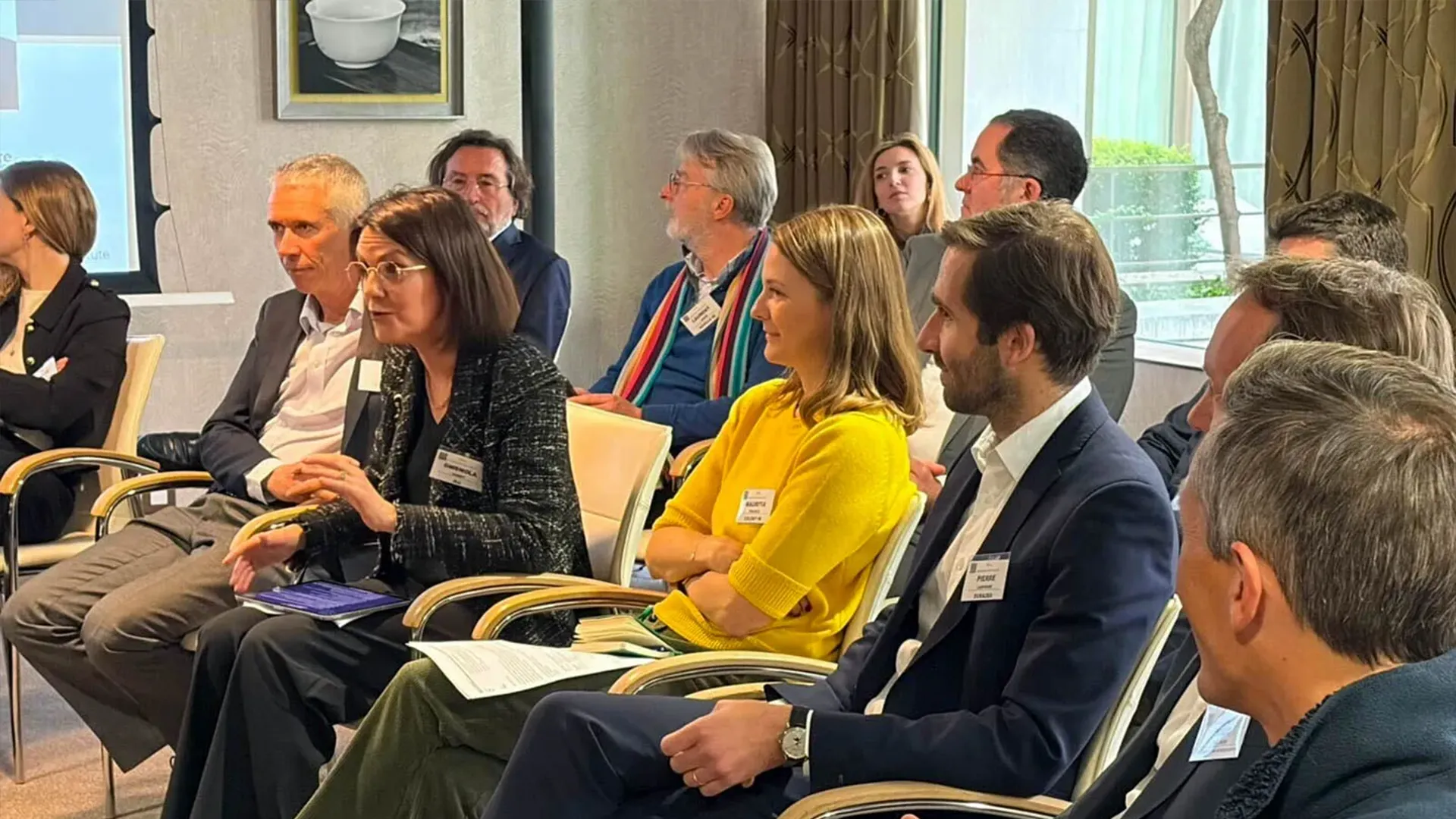
Discussions revealed that contract flexibility is now considered to be the most critical lever for maximising hospitality asset value upon exit. (GRI Institute)
Alternative Asset Attraction
As investors seek yield outside traditional hotel formats, the lines between hospitality and residential real estate are blurring.Aparthotels and flex-living assets have become highly attractive alternatives. These hybrid models offer the revenue benefits of hotel-level daily pricing alongside the lower structural and payroll costs typically associated with managed residential spaces.
Flex-living models, which often feature 6 to 10-month tenant churns, allow landlords to regularly adjust rents to combat inflation - an agility impossible in standard French residential leases.
However, the valuation of these assets remains complex; despite sharing characteristics with student housing (which sees sharp cap rates of 4.25% to 4.50%), flex-living assets are still generally valued using wider, traditional hotel capitalisation rates, making the investment equation challenging.
Within traditional hotels, food and beverage (F&B) departments remain a notorious challenge. F&B is frequently the least profitable component of a hotel's operation, burdened by high staffing needs and complex supply chains, and faces heavy scrutiny when revenue growth stalls.
However, a strong counter-trend of "destination F&B" is emerging. Forward-thinking investors are ripping up the traditional hotel restaurant model and outsourcing to dedicated, professional restaurateurs.
When executed as a standalone destination rather than a mere guest amenity, F&B can be flipped from a cost centre into a major revenue driver. Some operators are now successfully targeting up to 35% of total revenue from these services, a massive leap from the industry standard of 10%.
Financing the Future of France
Despite the operational hurdles, the financing environment remains highly supportive, acting as a crucial tailwind for the sector. Lenders and banks currently show a strong appetite for hotel real estate, eagerly taking on operational risks and offering competitive margins that represent a vast improvement over the lending conditions of 2022 and 2023.In particular, lenders are increasingly comfortable underwriting fully integrated operational models, heavy repositioning projects, and ambitious CapEx plans.
This financing support is vital, because massive capital expenditure is imminent. Compliance with strict environmental regulations - specifically the French "tertiary sector decree" (Décret Tertiaire) - is creating a significant financial burden.
With a looming, urgent 2030 deadline to drastically reduce energy consumption, these required upgrades are particularly pressing for assets in the 15- to 20-year-old bracket. Investors are heavily relying on debt, equity, and available government subsidies to finance these mandatory green retrofits.
Crucially, the financial mechanics of these environmental upgrades underscore the market's shift in contract preferences. Under a management contract, the owner reaps the immediate financial rewards of energy efficiency upgrades through lowered operating costs and increased asset valuation.
Conversely, under a traditional lease, capital expenditures for green upgrades are often borne by the owner, while the tenant enjoys the savings on energy bills, resulting in a net financial loss for the landlord.
This dynamic is the final nail in the coffin for rigid leases, ensuring that the future of French hospitality real estate belongs to flexible, operationally integrated models.
► Don’t miss the chance to connect with top industry leaders at France GRI 2026 in Paris on 28th May
These insights were shared during the Hôtellerie panel at GRI Institute’s Résidentiel Géré et Hôtels France 2026 roundtable, featuring contributions from moderator Gwenola Donet (JLL), as well as Hubert Joachim (Amundi Immobilier), Marc-Olivier Assouline (Columbia Threadneedle Investments), Mauritia Foujols (Colony IM), and Pierre Lariviere (Eurazeo).