 Magnific
GCC-Europe Capital Flows: Macro disruption and strategic realignment
Discover how regional shocks and strategic adaptation are paving the way for a transformative new chapter in cross-border capital between Europe and the Gulf
August 14, 2026Real Estate
Written by:Rory Hickman
Executive Summary
Drawing on the latest market intelligence, we examine how 2026 geopolitical conflicts and supply corridor disruptions are driving a profound strategic realignment across Gulf sovereign wealth funds and institutional allocators.
As regional players balance an immediate focus on domestic resilience with the re-engineering of outbound capital flows across Europe, passive liquidity deployment is giving way to a maturing, highly disciplined phase of sovereign portfolio management.
Far from signalling a retreat from international markets, this evolving dynamic is actively reshaping the mechanics of cross-border deals through capital recycling, targeted co-investments in European property sectors, and strategic alignment across clean energy corridors, underpinned by expanding regional banks, bilateral trade pacts, and evolving regulatory frameworks.
These critical themes will take centre stage at upcoming GRI Institute gatherings, including Europe GRI 2026 - Summer Edition in Paris on 9th-10th September, featuring the GCC: Global Capital Magnet? panel, and the GRI Global Summit 2026 in Abu Dhabi on 9th December, where the most senior industry decision-makers will gather to continue the conversation.
► Learn more about our biggest international event of the year - the GRI Global Summit 2026
As regional players balance an immediate focus on domestic resilience with the re-engineering of outbound capital flows across Europe, passive liquidity deployment is giving way to a maturing, highly disciplined phase of sovereign portfolio management.
Far from signalling a retreat from international markets, this evolving dynamic is actively reshaping the mechanics of cross-border deals through capital recycling, targeted co-investments in European property sectors, and strategic alignment across clean energy corridors, underpinned by expanding regional banks, bilateral trade pacts, and evolving regulatory frameworks.
These critical themes will take centre stage at upcoming GRI Institute gatherings, including Europe GRI 2026 - Summer Edition in Paris on 9th-10th September, featuring the GCC: Global Capital Magnet? panel, and the GRI Global Summit 2026 in Abu Dhabi on 9th December, where the most senior industry decision-makers will gather to continue the conversation.
► Learn more about our biggest international event of the year - the GRI Global Summit 2026
Key Takeaways
- Geopolitical shocks have driven GCC sovereign funds to temporarily prioritise domestic resilience and localized economic security over global liquidity provision.
- Outbound capital deployment is shifting away from trophy acquisitions toward disciplined capital recycling across European housing, logistics, and technology.
- Bilateral trade pacts, expanding corridor banks, and sophisticated regulatory frameworks are fundamentally re-engineering long-term economic partnerships.
Geopolitical and Macroeconomic Pressures on GCC
The US-Israeli war against Iran, launched on 28 February 2026, has introduced severe economic and operational supply shocks across the Gulf Cooperation Council (GCC) states.Direct physical damage to regional energy facilities reached USD 58 billion, including over USD 20 billion required to restore Qatar's Ras Laffan liquefied natural gas production plant, while the concurrent maritime blockades have significantly impacted global oil supply and elevated prices.
Aggregate GCC gross domestic product (GDP) is estimated to contract by around 2.1% in 2026, with non-oil GDP contracting by 2% to 5%, while national outcomes diverge sharply across the bloc, ranging from a 9.1% contraction in Qatar to a 2.6% expansion in Oman.
The United Arab Emirates (UAE) economy has demonstrated high relative resilience, with World Bank forecasts projecting 2.4% GDP growth in 2026. This expansion has been aided by the UAE ending its five-decade membership in OPEC on 1 May 2026 to align production with its 4.85 million barrels per day capacity.
Consequently, UAE crude and condensate exports rebounded to 3.94 million barrels per day in June, recovering from a record low of 2.13 million barrels per day in March during the initial blockade.
Similarly, Saudi Arabia's economic outlook reflects a pattern of near-term deceleration followed by a robust medium-term recovery.
Following the conclusion of International Monetary Fund (IMF) Article IV consultations in July 2026, the Kingdom's gross domestic product growth is expected to slow to 1.7% in 2026 under the weight of regional conflict and Strait of Hormuz shipping disruptions, before expanding by 5.5% in 2027 as maritime trade normalises and Vision 2030 reforms continue to drive non-oil expansion.
The IMF highlighted the Kingdom's strong fiscal position, supported by sustainable public debt levels, a non-oil primary deficit that narrowed to 23.3% of non-oil GDP in 2025, and net foreign assets at the Saudi Central Bank standing at USD 488 billion at the end of May 2026, equivalent to 14 months of import cover.
Sovereign resilience is further reinforced by deep capital market access, demonstrated by over USD 60 billion in bond issuances in 2025, while the Public Investment Fund shifts its 2026-2030 strategy toward more selective capital allocation, spending efficiency, and heightened private sector participation.
Sovereign Allocation Shifts
In response to heightened regional instability, GCC sovereign wealth funds (SWFs), which collectively hold around USD 7 trillion in reserve buffers, are shifting from global liquidity providers to domestically anchored allocators.An estimated USD 50 billion to USD 100 billion of sovereign capital is being reallocated inward to finance local defence, advanced manufacturing, artificial intelligence, logistics, and food security.
Although an IMF study demonstrates that cross-border investment generates roughly three times the impact on non-hydrocarbon GDP growth compared to domestic spending, security imperatives are temporarily overriding cross-border efficiency.
This reduction in outbound capital deployment, including lower purchasing of US Treasuries, is tightening global funding conditions and sustaining elevated international interest rates.
Bilateral Trade Realignment and EU Economic Corridors
Commercial relations between Europe and the GCC are undergoing structural realignment. In May 2026, the GCC and the UK finalised a landmark Free Trade Agreement (FTA), establishing the region's first trade deal with a G7 economy.The agreement is projected to add roughly GBP 15.5 billion in annual trade flows to an existing GBP 53 billion baseline, improving market access for British businesses while offering preferential terms for Gulf aluminium, petrochemical, and financial services exporters.
Conversely, inter-bloc negotiations for a comprehensive European Union (EU) and GCC FTA remain stalled after 36 years. Frustration over this lack of progress prompted the EU and the UAE to initiate bilateral trade talks in April 2025.
Between 2015 and 2024, EU exports to the GCC fell by 4.5%, whereas European Free Trade Association (EFTA) exports grew by 34% under a 2014 agreement, illustrating the competitive disadvantage facing unratified EU trade frameworks against state-subsidised Chinese exports.
Despite inter-bloc friction, bilateral commercial ties between the EU and Saudi Arabia are expanding under Saudi Vision 2030. Total trade in goods and services reached EUR 88.8 billion in 2025, supported by EU exports expanding at an average annual rate of 11% since 2021 to reach EUR 38 billion.
The EU holds 29% of Saudi foreign direct investment (FDI) stock, with institutional dialogue supported by the European Chamber of Commerce in Saudi Arabia (ECCKSA), which inaugurated its new Riyadh headquarters in June 2026.
Strategic cooperation between the regions is increasingly centered on energy security and trade corridor resilience.
Initiatives like the India-Middle East-Europe Economic Corridor (IMEC) aim to construct subsea telecommunications lines, electricity networks, and green hydrogen pipelines connecting NEOM in Saudi Arabia or Duqm in Oman to European markets via Red Sea and Mediterranean shipping routes, bypassing vulnerable maritime choke points.
Furthermore, proactive European engagement on hydrogen offtake agreements and certification adjustments under the Carbon Border Adjustment Mechanism (CBAM) provides a structured framework for long-term industrial collaboration.
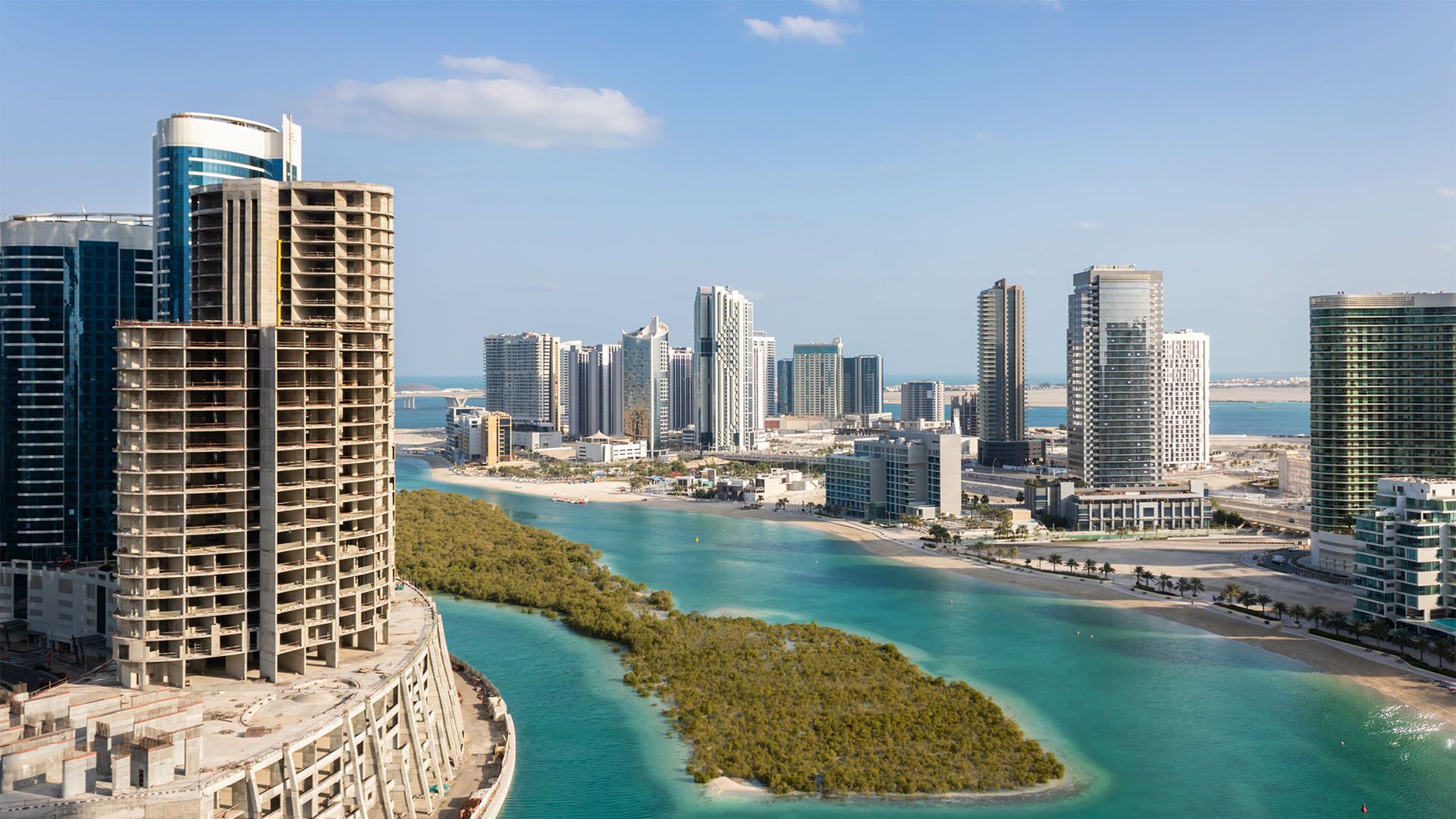
(Adobe Stock)
Outbound Capital Deployment and Real Estate Strategies
GCC corporate and sovereign institutions are actively reviewing international portfolios to execute capital recycling strategies, unwinding non-core or low-yielding international holdings to redeploy liquidity into core regional priorities.In July 2026, UAE telecommunications group e& agreed to sell its entire 16.2% stake in British telecom operator Vodafone to French investment vehicle Vega for GBP 4.4 billion (roughly USD 5.95 billion or AED 21.5 billion).
Executed at a 13% premium, the transaction represents one of the largest outbound divestments from the region in 2026, reflecting heightened portfolio discipline among Gulf entities.
Outbound real estate allocations are similarly pivoting from trophy commercial assets toward development finance, logistics, and regulated residential housing sectors.
In early August 2026, Mubadala Investment Company announced their commitment of up to EUR 600 million (USD 692 million) across two European property strategies managed by ADD Capital. Focusing primarily on Italy and wider European markets, these funds target build-to-rent (BTR) housing, purpose-built student accommodation (PBSA), and logistics assets.
The participation of Italian state lender CDP (Cassa Depositi e Prestiti) introduces domestic policy backing, pairing European housing supply mandates with return-seeking sovereign capital.
Simultaneously, driven by expanding tourism, infrastructure upgrades, and a growing global brand presence, the Eastern Mediterranean - particularly Greece - is attracting strong international hospitality investments reinforced by cultural affinity, short flight times, and established travel patterns from the Gulf.
Geographic diversification is further expanding capital deployment into Central and Eastern Europe (CEE), where Gulf investment volume grew by 38% to surpass EUR 6 billion in 2025. Technology and software represent key acquisition targets, with assets in Warsaw and Prague trading at valuations 30% to 40% below Western European levels.
However, these transactions require navigating regulatory requirements, including the EU Foreign Subsidies Regulation for deals exceeding EUR 100 million, alongside national FDI screening frameworks covering technology assets.
Banking Networks and Financial Hubs
The regional banking sector has scaled significantly to intermediate multi-directional trade and investment flows across Europe, Africa, India, and Asia.The top three regional lenders - Qatar National Bank, First Abu Dhabi Bank (FAB), and Emirates NBD - held combined aggregate assets of roughly USD 1.13 trillion as of June 2026.
These institutions are operating as strategic corridor banks, demonstrated by Emirates NBD completing its acquisition of India's RBL Bank, which added AED 74 billion in assets to the group.
In Saudi Arabia, domestic scale is led by institutions like Al Rajhi Bank, holding SAR 1.055 trillion in assets, positioning the kingdom's banking system for future international expansion alongside Vision 2030 corporate clients.
Regional financial hubs, including the Abu Dhabi Global Market (ADGM) and the Dubai International Financial Centre (DIFC), operate in a complementary manner with established offshore legal jurisdictions.
These platforms support institutional capital structuring by integrating faith-based Sharia vehicles - such as Murabaha, Sukuk, Ijara, Musharaka, and Mudaraba - with international legal frameworks.
Regulatory Governance
Regulatory enhancements within established offshore legal jurisdictions, including the elimination of investor limits, expanded qualifying investor definitions, and accelerated approval timelines, have further facilitated the growth of evergreen and private fund vehicles for family offices and institutional investors.Managing cross-border capital deployment requires strict compliance with evolving regulatory and tax standards.
Investment structures operating across these corridors must align with local corporate tax frameworks, such as the UAE 9% corporate tax, OECD Pillar Two global minimum tax regulations, and national FDI screening regimes.
Within volatile market environments, professional valuation frameworks, including RICS Red Book provisions, are being strictly applied to ensure objective asset pricing and legal certainty across international transactions.
Conclusion
Ultimately, the geopolitical shock of 2026 has catalysed a structural maturation in how capital and commerce move between the Gulf and Europe.Far from signalling a permanent retreat from international markets, the temporary pivot toward domestic resilience and capital recycling reflects a more disciplined, value-driven era of sovereign portfolio management.
As economic relations transition away from passive liquidity deployment toward strategic trade corridors, clean energy infrastructure, and targeted sector co-investments, the economic corridor connecting the GCC and Europe is being fundamentally re-engineered.
Supported by increasingly sophisticated financial hubs and stringent regulatory frameworks, this evolving dynamic replaces opportunistic asset acquisition with resilient, risk-weighted partnerships designed to withstand geopolitical volatility while underwriting long-term economic transformation.
► Continue the conversation at the GRI Institute’s upcoming gatherings addressing capital flow between GCC and Europe:
- Europe GRI 2026 - Summer Edition - 9th-10th September - Paris, France - Summit
- Featuring the GCC: Global Capital Magnet? panel
- GRI Global Summit 2026 - 9th December - Abu Dhabi, UAE - Summit
- Featuring the confirmed participation of senior leaders from key players including ADCG, ADIA, Barclays, CBRE, Cushman & Wakefield, DWS, EIA, GIC, Goldman Sachs, Mubadala, and many more
► Read more on European real estate in our full H2 2026 outlook
► Access more insights into the GCC’s property markets in our in-depth report