 GRI Institute
Italian Commercial Real Estate: Flexibility, placemaking, and the search for a new investment narrative
GRI roundtable insights on how workspace evolution, urban regeneration, and challenges attracting capital are reshaping Italy's commercial property landscape
August 20, 2026Real Estate
Written by:Rory Hickman
Executive Summary
Italy's commercial real estate market faces a sharp structural bifurcation. Despite resilient leasing fundamentals and expanding flexible workspace, capital remains heavily concentrated on prime assets with compressed yields, leaving secondary locations illiquid and constraining urban regeneration where it is needed most.
These dynamics defined discussions at the GRI Institute's Italian Commercial Real Estate 2026 roundtable, co-hosted by RealStep SGR at their La Forgiatura Campus in Milan, where industry leaders highlighted how identity-driven placemaking, luxury dining, and university innovation partnerships are generating rental premiums that significantly exceed conventional benchmarks.
Yet, a persistent gap remains between operational success and institutional investor perception. Inflexible town planning, regulatory friction, and job creation heavily concentrated in Milan continue to create structural headwinds relative to European competitors such as Spain.
Bridging this divide will require patient private capital, corporate family offices, and flexible municipal agreements to lead the way towards broader institutional acceptance. As real estate leaders seek new frameworks to unlock value, these conversations will continue at Europe GRI 2026 - Summer Edition in Paris on 9th-10th September, and GRI CRE & Data Centres Europe 2026 in London on 17th November.
► Check out all upcoming GRI Institute Europe gatherings here
These dynamics defined discussions at the GRI Institute's Italian Commercial Real Estate 2026 roundtable, co-hosted by RealStep SGR at their La Forgiatura Campus in Milan, where industry leaders highlighted how identity-driven placemaking, luxury dining, and university innovation partnerships are generating rental premiums that significantly exceed conventional benchmarks.
Yet, a persistent gap remains between operational success and institutional investor perception. Inflexible town planning, regulatory friction, and job creation heavily concentrated in Milan continue to create structural headwinds relative to European competitors such as Spain.
Bridging this divide will require patient private capital, corporate family offices, and flexible municipal agreements to lead the way towards broader institutional acceptance. As real estate leaders seek new frameworks to unlock value, these conversations will continue at Europe GRI 2026 - Summer Edition in Paris on 9th-10th September, and GRI CRE & Data Centres Europe 2026 in London on 17th November.
► Check out all upcoming GRI Institute Europe gatherings here
Key Takeaways
- Yield compression in prime Milan assets has created a stark market bifurcation, leaving secondary locations illiquid despite resilient leasing fundamentals.
- Identity-driven placemaking, mixed-use repositioning, and flexible workspaces are successfully commanding significant rental premiums over commoditised office space.
- Regulatory friction, slow municipal planning, and heavy economic concentration in Milan remain major hurdles to attracting institutional capital for regeneration projects.
► Flight to Quality Limits
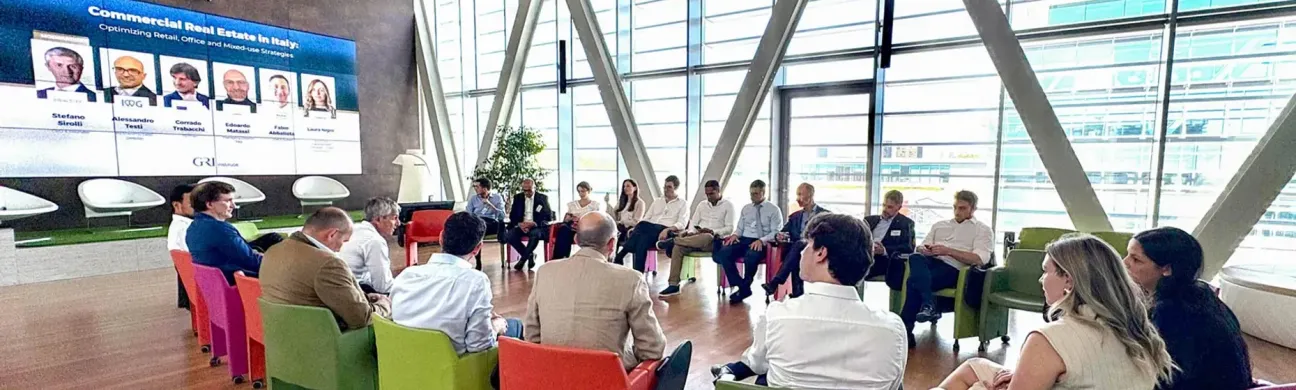
The Italian office market is in a classic flight-to-quality phase. Prime Milan office transactions have compressed to yields around four percent - below the ten-year bond rate - leaving virtually no upside and making such investments increasingly unattractive on a risk-adjusted basis.Some capital is beginning to explore opportunities slightly outside prime locations, and alternative lenders are providing financing solutions that support value-add strategies in these areas.
However, the bifurcation is stark. While prime assets trade at historically tight yields, secondary locations face a near-total absence of liquidity.
The result is a market where capital is abundant at the top and virtually absent everywhere else - a dynamic that constrains regeneration and repositioning strategies precisely where they could generate the most value.
(GRI Institute)
► Workspace Demand Transformation
Flexible workspace is no longer a niche product in Italy. Major global operators now serve millions of people across thousands of centres worldwide, and Italy has become a significant growth market.Portfolios that numbered around 90 Italian centres just four years ago have expanded to 140, with another 50 under construction. Annual new contract signings in Italy now number in the dozens.
The operating model has evolved beyond traditional leasing. Management contracts are increasingly common: building owners invest in fit-out, while operators find clients, manage the space, take a fee, and pass the majority of margin to the property partner.
Individual desks in prime Milan locations command approximately EUR 1,000 per month, with 20-square-metre offices reaching EUR 6,000 monthly - prices that, despite appearing high, represent significant savings for clients who gain flexibility, services, and the ability to scale without long-term commitments.
Perhaps most revealing is the emergence of unexpected markets. In cities such as Palermo, flexible workspace centres have reached full occupancy far faster than anticipated, driven by communities of foreign digital workers attracted by quality of life and Mediterranean location - a market segment virtually no one had predicted.
This suggests that the geographic potential for flexible workspace in Italy extends well beyond Milan, even as institutional capital remains reluctant to follow.
► Placemaking as Value Creation
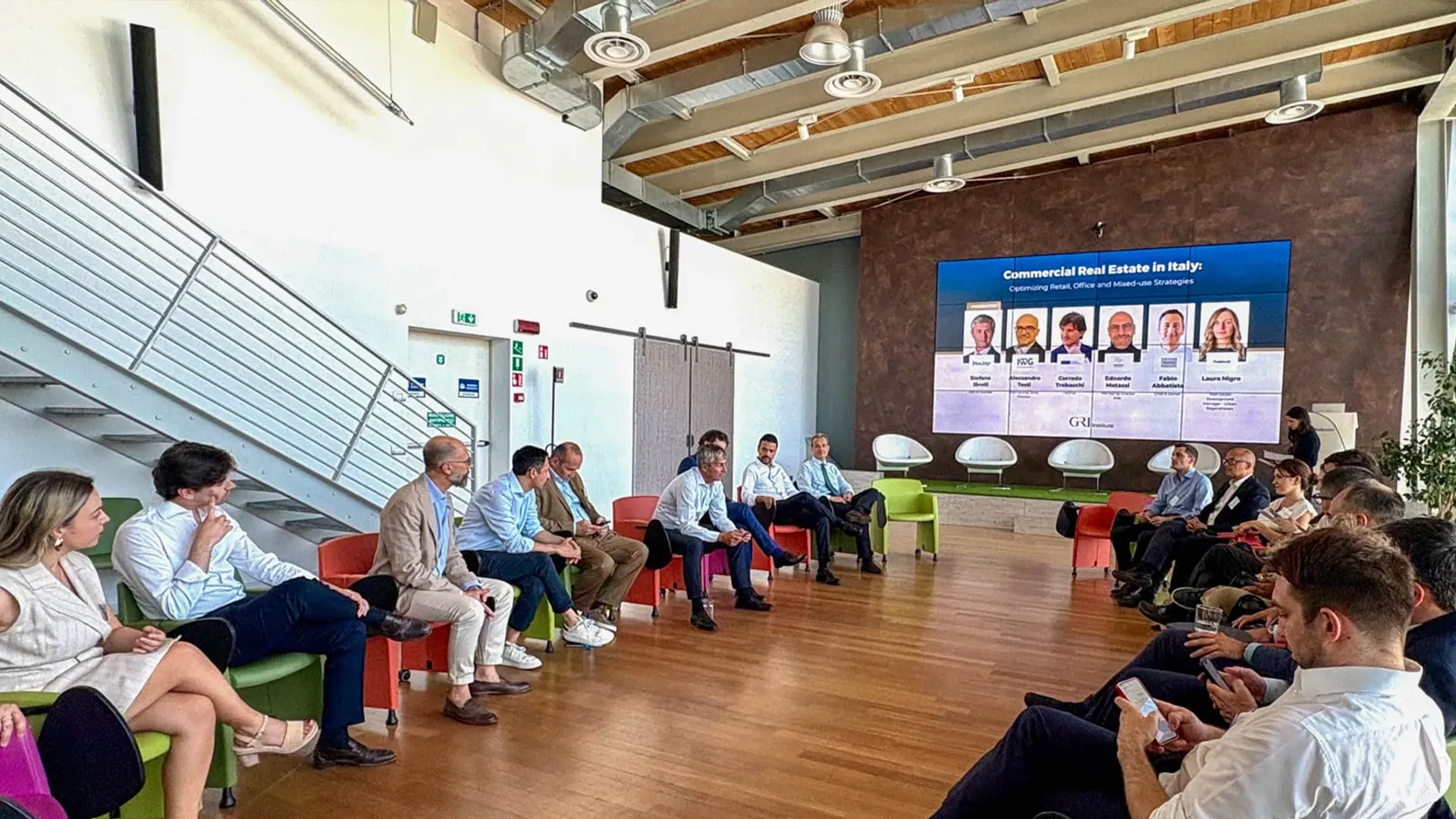
The most compelling evidence for a new commercial real estate paradigm in Italy comes from placemaking and mixed-use repositioning strategies.Developments that combine exceptional architectural design, distinctive food and beverage operators, university innovation partnerships, and curated public spaces are achieving rental levels that significantly exceed initial projections and surrounding competitive benchmarks.
In one illustrative case, rents reached approximately EUR 250 per square metre against a competitive benchmark of EUR 120 - and tenants continued to renew. The approach involves investing in areas perceived as worse than their reality, creating best-in-class assets, and attracting anchor tenants whose presence establishes new rental benchmarks.
The tenant perspective reinforces this logic. Companies whose identity is rooted in beauty, sensory experience, or hospitality are increasingly choosing locations based on the quality, identity, and architectural character of the spaces they occupy - not conventional metrics alone.
When the physical environment aligns with a company's core identity, the result is a workspace that becomes a competitive advantage in itself, with visiting executives consistently rating such locations as the best in their global portfolios.
Similarly, high-end dining establishments that initially seemed risky in regeneration areas rather than traditional city centres have thrived precisely because of the transformation narrative - open space, heritage architecture, and emerging community attracting both local and international clientele.
(GRI Institute)
► The Differentiation Challenge
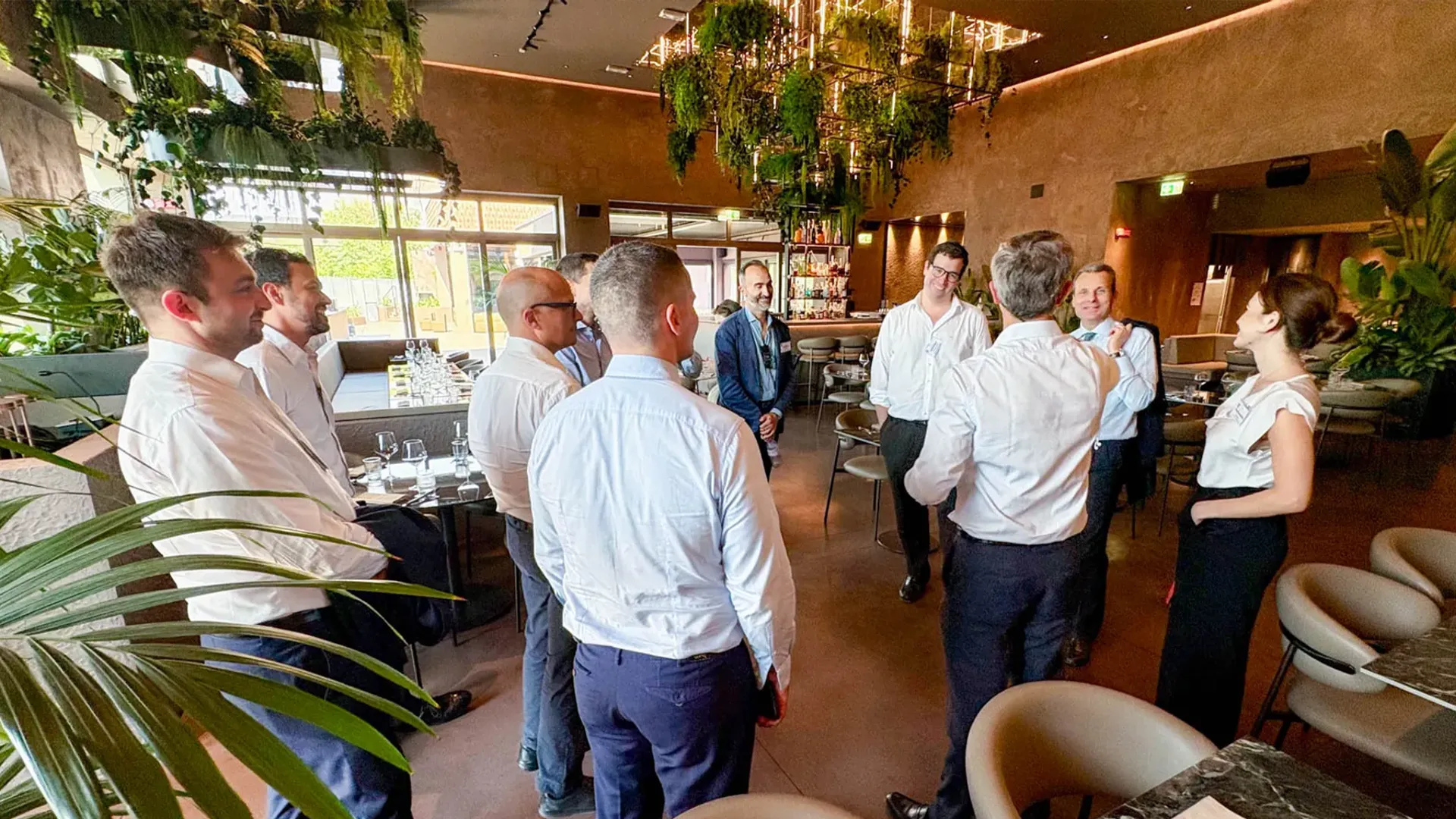
A critical concern in Italian commercial real estate is commoditisation and the fact that most new commercial buildings look identical.Unlike distinctive regeneration projects, standard office developments are virtually indistinguishable on paper or online, making it extremely difficult for tenants or investors to differentiate between options.
This commoditisation undermines pricing power and makes placemaking and identity-driven strategies all the more critical for those willing to pursue them.
The implication is clear: In a market where prime yields have compressed to the point of offering no upside, the ability to create distinctive, identity-rich environments is one of the few remaining sources of genuine value creation.
► Investor Reluctance and the Italian Risk Profile
Perhaps the most significant challenge facing Italian commercial real estate is the difficulty of attracting institutional capital, particularly for development and regeneration projects.Investors generally dislike development risk, and Italy's regulatory environment - including inflexible planning systems, slow public authorities, and bureaucratic complexity - compounds the challenge.
Italy's risk profile has deteriorated relative to competitors. Spain offers faster GDP growth, easier regulation, a larger domestic market, and a more efficient banking system.
Job creation in Italy is concentrated almost exclusively in Milan, limiting the geographic scope for investment. Even emerging markets such as the Balkans are attracting investor interest that might otherwise flow to Italian secondary cities.
Infrastructure partnerships that could catalyse urban regeneration - particularly with major railway operators controlling strategically located urban land - remain frustratingly difficult to execute, with timelines measured not in years but in what might generously be described as geological time.
► Pathways Forward for Italian CRE
Despite these structural challenges, several pathways are emerging:Private capital as a bridge
The most receptive capital sources for regeneration-led strategies tend to be corporate family offices rather than standard fund houses. Corporate investors understand the broader business ecosystem and are more willing to invest in regeneration narratives. The challenge is bridging from these private capital sources to full institutional acceptance.Calculated portfolio allocation
The current moment calls for calculated risk-taking in placemaking and mixed-use strategies. If flexible workspace or experiential retail components remain below 10-15% of a total asset, they are increasingly viewed as a positive differentiator rather than a risk factor. Allocating a small portion of portfolios to such projects allows investors to experience long-term value creation firsthand.Flexible planning agreements
Negotiating flexible town planning agreements with municipalities is proving essential. In developments exceeding 90,000 square metres, the ability to shift uses between buildings - converting planned office space into hotels when market conditions warrant, for example - provides the adaptability that rigid classification systems otherwise deny.The 15-minute city as a commercial imperative
Monofunctional developments - the legacy of 1970s and 1980s planning - are giving way to mixed-use environments where residents and workers can access principal services within walking distance. This evolution is not merely a planning ideal but a commercial imperative that drives tenant demand and rental premiums.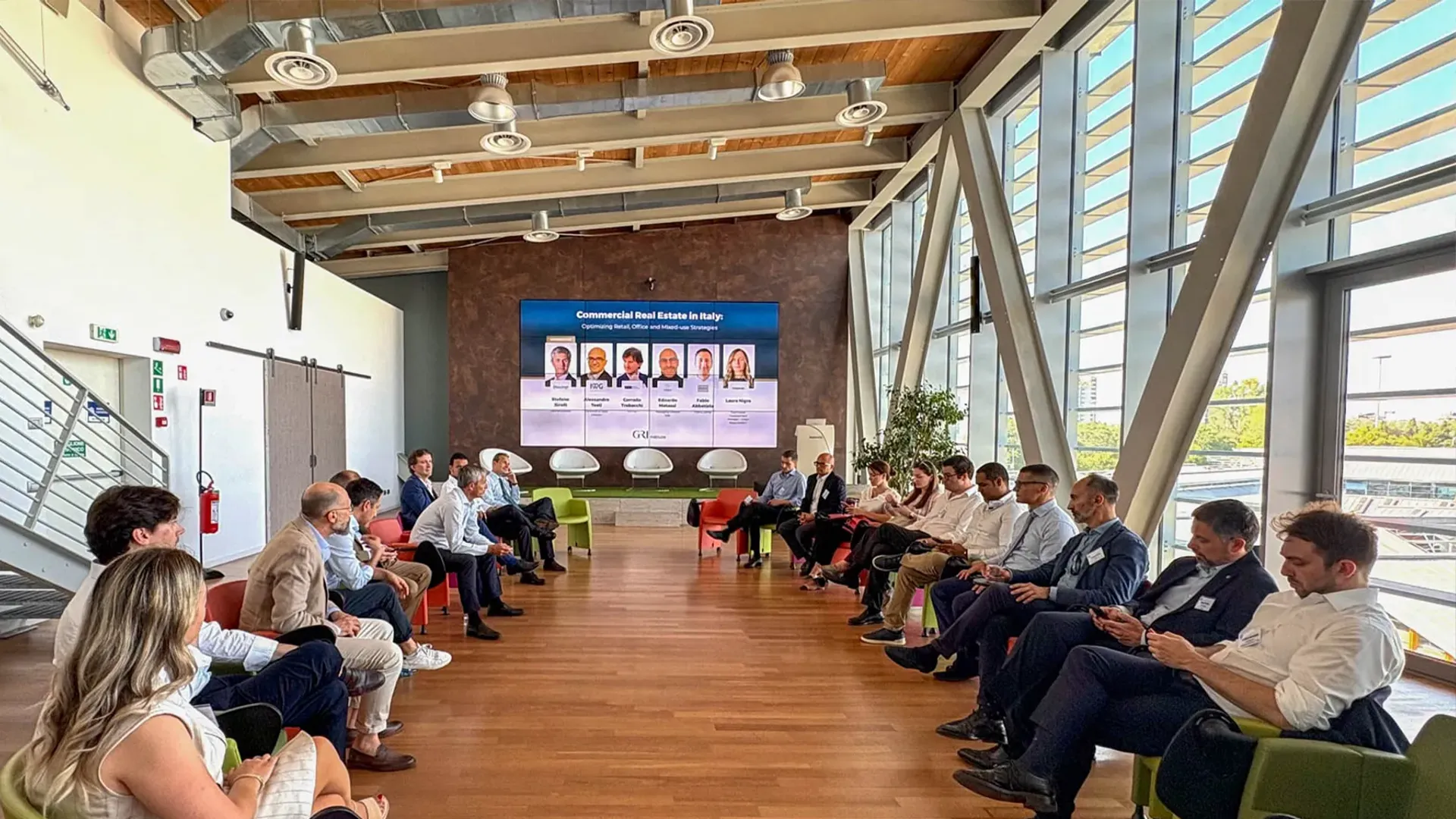
(GRI Institute)
► Conclusion
Italy's commercial real estate market is caught between strong operational fundamentals and persistent structural headwinds. Leasing demand, flexible workspace growth, and the demonstrated success of placemaking strategies provide grounds for confidence.Yet geographic concentration of economic activity, regulatory friction, conservative institutional capital, and intensifying competition from other European markets constrain the pace of transformation.
The most significant insight is that the traditional investment model - standardised assets, rigid classifications, and pure yield-driven analysis - is increasingly misaligned with how tenants actually use and value space.
Fragrance laboratories, chef-driven restaurants, flexible desks for digital nomads in Mediterranean cities, and university innovation hubs all represent a market that rewards identity, experience, and adaptability over uniformity.
Whether Italy's investment community can evolve its frameworks quickly enough to capture this value remains the central, unresolved question. The younger generation of investors may eventually recognise regeneration as a distinct asset class - but the timeline for that recognition remains uncertain.
These insights were shared during industry leader discussions at the GRI Institute’s Italian Commercial Real Estate 2026 roundtable, co-hosted by RealStep SGR and featuring contributions from moderator Stefano Sirolli (RealStep SGR), along with Alessandro Testi (IWG Italy), Corrado Trabacchi (Orion Capital Managers), Edoardo Matassi (Expressions Parfumées), Fabio Abbatista (Ristorante Abba), and Laura Nigro (KERVIS).
Continue the conversation at upcoming GRI Europe CRE gatherings
► Europe GRI 2026 - Summer Edition in Paris, 9th-10th September
► GRI CRE & Data Centres Europe 2026 in London, 17th November