 GRI Institute
Capitalising on Cognitive Growth: Pune Commercial Real Estate 2026 Spotlight
Exclusive GRI Institute report on how GCC expansion, engineering talent, liveability, and infrastructure upgrades are transforming Pune into a prime hub
September 21, 2026Real Estate
Written by:Rory Hickman
Executive Summary
Pune's real estate market is undergoing a fundamental structural transformation, driven by an expanding footprint of GCCs, deep engineering talent, superior urban liveability, and an unprecedented infrastructure push.
As commercial leasing momentum accelerates towards historic highs and residential demand shifts towards a younger demographic, the city is rapidly asserting itself as one of India's most dynamic regional growth hubs.
These structural catalysts - alongside the operational realities of engineering discipline, capital velocity, green building standards, and emerging potential in under-supplied co-living and hospitality sectors - formed the core takeaways at the GRI Institute's Pune Commercial 2026 roundtable, co-hosted by Kohinoor Group.
With India GRI 2026 rapidly approaching on 8th October, we take a look at the key trends, debates, and future outlook shaping Pune's emergence as a cognitive city, and a premier institutional real estate destination.
► Don’t miss the chance to join the country’s top industry leaders at India GRI 2026
As commercial leasing momentum accelerates towards historic highs and residential demand shifts towards a younger demographic, the city is rapidly asserting itself as one of India's most dynamic regional growth hubs.
These structural catalysts - alongside the operational realities of engineering discipline, capital velocity, green building standards, and emerging potential in under-supplied co-living and hospitality sectors - formed the core takeaways at the GRI Institute's Pune Commercial 2026 roundtable, co-hosted by Kohinoor Group.
With India GRI 2026 rapidly approaching on 8th October, we take a look at the key trends, debates, and future outlook shaping Pune's emergence as a cognitive city, and a premier institutional real estate destination.
► Don’t miss the chance to join the country’s top industry leaders at India GRI 2026
Key Takeaways
- Pune is solidifying its position as a leading GCC and engineering hub, driven by robust commercial leasing, deep technical talent, and superior urban liveability.
- Major infrastructure investments and high building standards are enabling developers to deliver projects with elevated execution precision and capital discipline.
- Sustained corporate expansion is accelerating residential demand among younger buyers, whilst highlighting significant opportunities across under-supplied sectors.
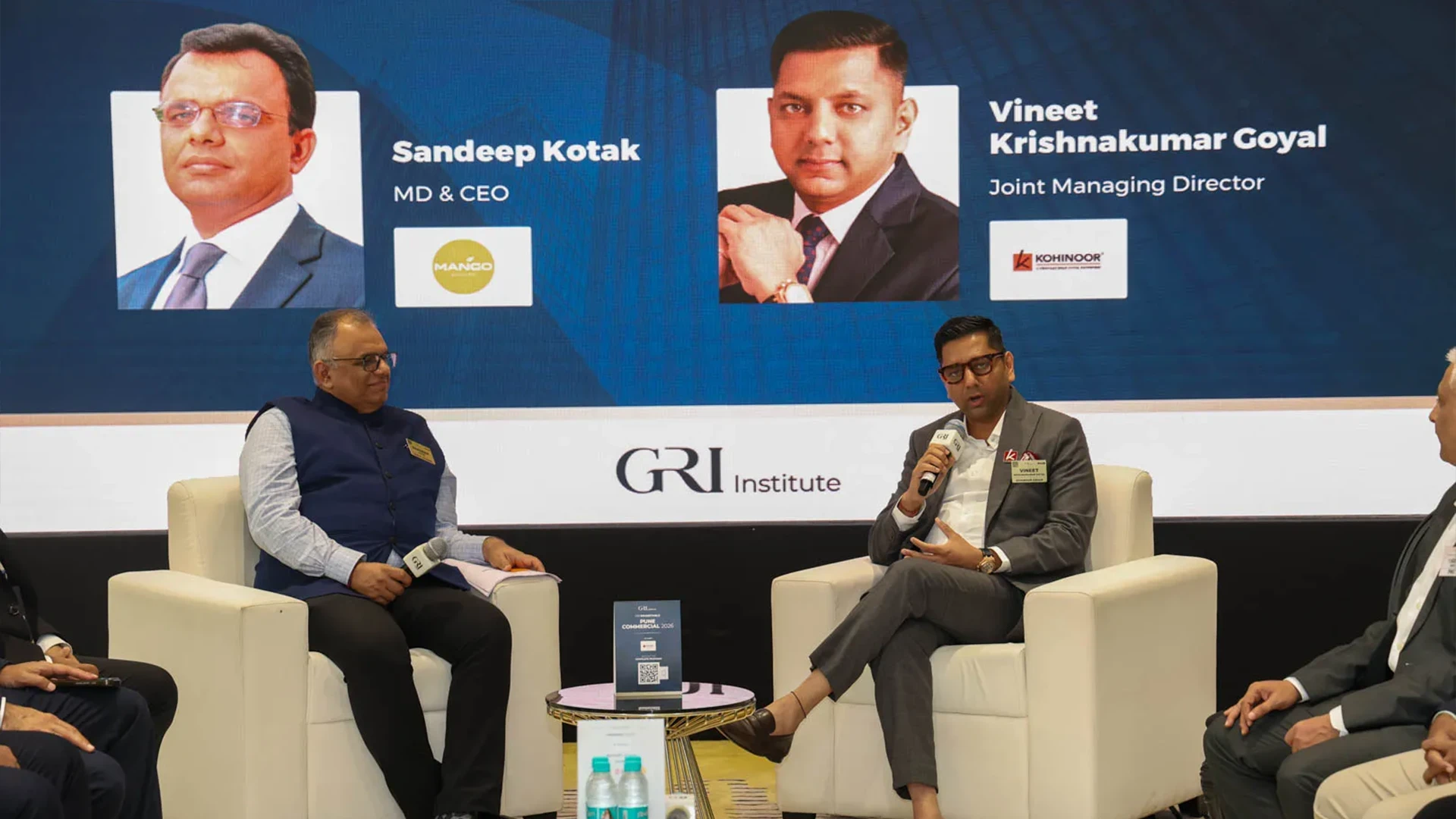
► Understanding Pune Real Estate
(GRI Institute)
Economic Growth and Infrastructure Links
Pune's real estate market is undergoing a structural evolution, sustained by balanced growth across residential, commercial, warehousing, and hospitality sectors.While short-term market comparisons often prompt cautious sentiment, multi-year performance horizons over five, ten, and fifteen years demonstrate stable expansion, rising asset valuations, and consistent leasing momentum.
This long-term resilience is underpinned by Pune's robust local economic fundamentals, an expanding talent pool, and key infrastructure initiatives, including ring road construction, riverfront development projects, and a 90-minute transit link to the upcoming Navi Mumbai International Airport.
Engineering Precision and Execution
At the operational foundation of modern real estate development in Pune is a strict emphasis on engineering precision, quality control, and execution certainty.In high-performing real estate organisations, construction is managed as a process of systematically eliminating risk within an uncertain operating environment.
Quality control protocols enforce absolute compliance, where laser levels, digital validation, and strict tolerance measurements empower site engineers to halt construction immediately upon detecting deviations, with no scope for negotiation.
To overcome complex site challenges, project teams rigorously stress-test execution strategies, progressing from Plan A through Plan Y to identify optimal solutions.
This emphasis on pre-planning, digital validation, and site discipline allows developers to compress delivery timelines significantly, enabling large-scale commercial towers to be completed in as few as 24 months compared to standard industry timelines of 36 to 48 months.
Capital Discipline and Financial Strategy
Navigating market cycles in Pune requires property developers to maintain simplicity at the core of their business strategies while remaining adaptable.Long-term organisational success relies on capital discipline and creative financing, where strategic decisions are guided by empirical market assessment, ecosystem requirements, and strict cash flow management rather than speculative gut feelings.
Transitioning away from fragmented partner structures or excessive debt towards equity-aligned operational control removes administrative friction and allows firms to focus on long-term growth.
A trading mindset that prioritises capital velocity, asset monetisation, and constant reinvestment enables developers to recycle capital efficiently. Under this approach, developers remain willing to divest completed assets or land parcels whenever transaction values yield returns exceeding target benchmarks of 6%.
Effective financial structuring often involves phased project financing - cross-subsidising early construction through retail sales, selling select commercial blocks to manage cash flow, and leasing remaining space to major corporate anchors prior to eventual fund monetisation.
(GRI Institute)
Commercial Office Expansion and GCC Drivers
In the commercial office sector, Pune records steady annual net absorption between 8 million and 10 million square feet, with Global Capability Centres (GCCs) acting as the primary growth driver.Accounting for approximately 50% of total commercial space absorption, Pune ranks second nationally behind Bangalore for GCC space uptake.
This influx is driven by Pune's deep engineering talent pool, competitive office rentals, cost efficiencies, and strategic proximity to US and European financial hubs for banking, financial services, and insurance (BFSI) back-office operations.
Crucially, GCC demand in Pune exhibits strong durability against technological disruptions such as artificial intelligence (AI), as local operations focus heavily on core engineering, financial systems, and specialised R&D rather than basic task automation.
Commercial demand is also tightly linked to manufacturing and automotive clusters in micro-markets such as Pimpri-Chinchwad, Chakan, and Bhosari, where industrial firms require corporate headquarters near their operational plants.
To attract high-value corporate tenants, development strategies increasingly favour larger floorplates of 5,000 square feet and above, which offer superior tenant retention and long-term asset value compared to fragmented, smaller office units.
Residential Dynamics and Buyer Demographics
Robust commercial absorption directly strengthens Pune's residential housing market, as expanding corporate workforces create sustained housing demand.Capital values in Pune's residential sector have appreciated significantly, with prices rising by nearly 70% over multi-year cycles (growing at roughly 10% annually) even as total unit sales volumes remain steady.
A notable demographic shift is occurring among homebuyers, with the average purchasing age falling from a historic range of 32 to 38 years down to 25 to 35 years. Younger working professionals and double-income households with early capital access are making purchasing decisions earlier in their careers.
Furthermore, post-pandemic lifestyle changes have prompted buyers to move away from entry-level micro-units in favour of larger two-bedroom and three-bedroom apartments.
Buyer confidence across all residential price bands has been reinforced by regulatory frameworks such as RERA, which enforce strict delivery deadlines, protect homebuyer rights, eliminate non-compliant developer practices, and ensure operational transparency.
Co-living, Rental Housing, and Hospitality Horizons
The interaction between shared accommodation and permanent ownership highlights evolving lifestyle choices in Pune.The co-living and student housing segments face a severe supply shortage, with citywide demand standing at approximately 700,000 beds annually against an organised supply of only 80,000 to 100,000 beds.
Although unorganised co-living accounts for over 500,000 beds in major technology corridors like Hinjawadi and Kharadi, institutional investors and specialised operators are progressively formalising the market through master leases, small-unit strata sales, and targeted yield caps of 3% to 5%.
However, institutionalised rental housing (build-to-rent) remains a long-term prospect that may take 10 to 15 years to establish fully, as Indian buyers continue to prefer property ownership over long-term leases.
Concurrently, Pune suffers from a marked deficit in hospitality inventory, particularly five-star hotel keys in major industrial and commercial hubs such as Pimpri-Chinchwad.
Expanding hotel capacity represents an under-capitalised opportunity to capture growing corporate travel, MICE (Meetings, Incentives, Conferences, and Exhibitions) events, and regional economic activity.
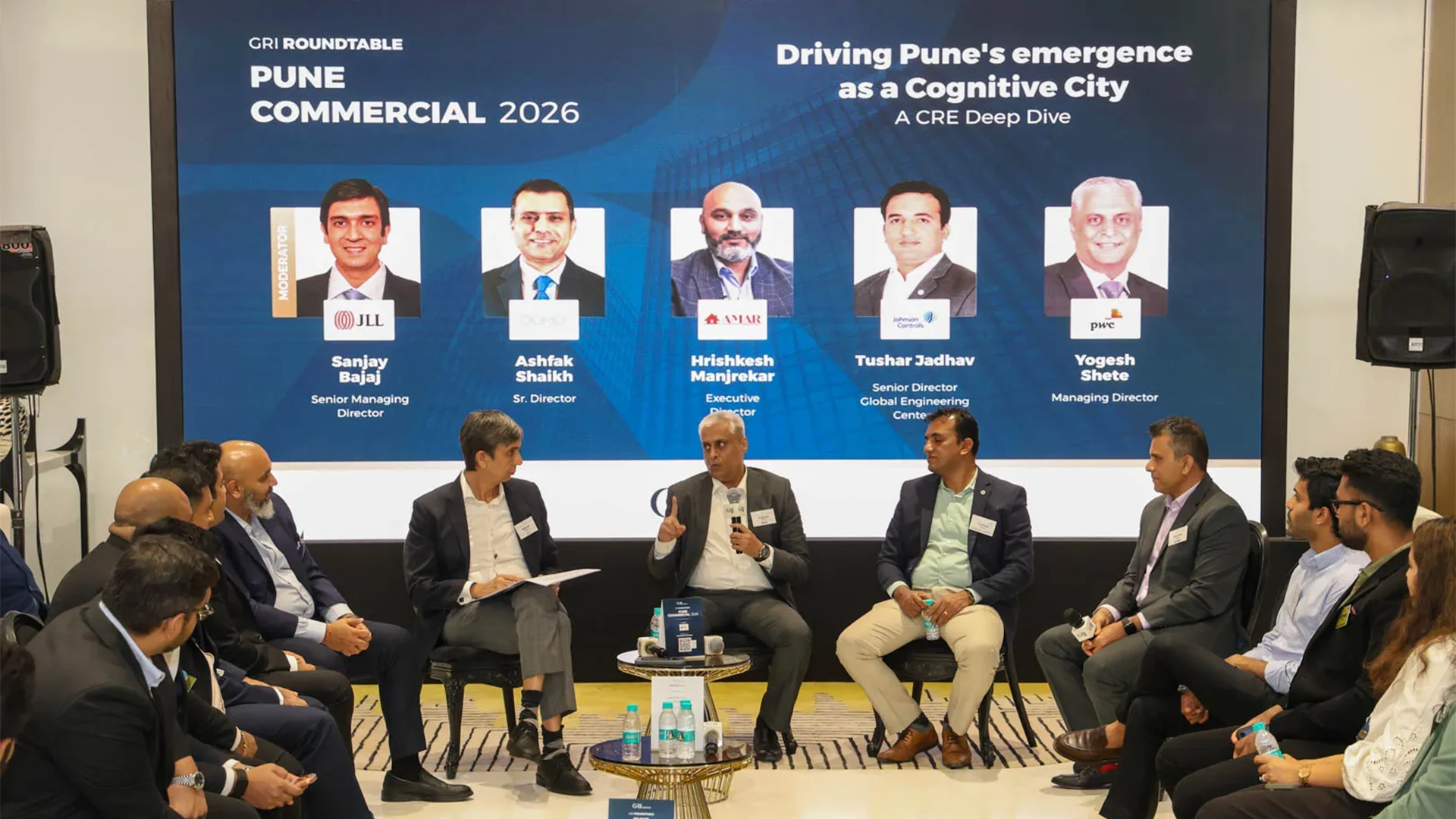
► Driving Pune's emergence as a Cognitive City
(GRI Institute)
Commercial Absorption and Growth Dynamics
Pune's commercial office market exhibits strong momentum, recording 7 million square feet of leasing within the first eight months of the year, putting gross annual absorption on track to approach historic highs.Long-term projections indicate that as regional infrastructure matures, Pune possesses the structural capacity to evolve into a 14 million to 15 million square feet annual absorption market.
Currently, the city hosts over 475 active GCC units, accounting for approximately 13% of India's total GCC ecosystem.
This footprint is complemented by a robust BFSI presence comprising 12 million square feet of occupied space - making Pune the third-largest BFSI hub nationally - and a dominant manufacturing real estate segment that absorbed 15 million square feet last year, representing 20% of India's total manufacturing space uptake.
Livability Metrics and Comparative Advantage
When global corporate occupiers evaluate regional hubs against competing markets such as Hyderabad, Chennai, or Bangalore, baseline cost efficiency and labour arbitrage - amplified by favourable exchange rates where USD, EUR, and GBP trade above 100 INR - are treated as default entry conditions rather than primary differentiators.Instead, selection criteria have shifted toward multi-year talent scalability, real estate availability, and urban livability.
Pune scores exceptionally well on global livability indicators, driven by lower relative pollution, reduced corruption, accessible healthcare, lower crime rates, and superior family support structures.
These quality-of-life factors foster strong employee retention, enabling Pune to maintain single-digit attrition rates over multi-year periods compared to higher-churn tier-one hubs.
Furthermore, market vacancy hovering around 15% to 20% is increasingly viewed by occupiers as an operational advantage rather than a sign of oversupply, as it guarantees expansion space, controls rental inflation, and provides immediate execution certainty for incoming tenants.
Talent Pipeline and Academic Alignment
Pune's talent pool offers distinct structural advantages, producing approximately 30% of national GCC-relevant engineering capacity. While competing technology hubs lean heavily toward digital IT or cybersecurity, Pune provides deep expertise in core mechanical, automotive, and production engineering.Future-proofing this pipeline requires structured, multi-stakeholder collaboration among industry, academia, and local authorities.
Academic institutions across the region are embedding industry leaders directly into curriculum development boards, allocating 20% to 30% of course design to corporate inputs and integrating accredited open electives, software certifications, and mandatory internships.
To meet emerging operational demands - such as automated logistics, robotics, and smart warehouse design - industry partners are advocating for cross-disciplinary training that bridges electrical, electronics, and software engineering.
While entry-level graduate packages remain standardised at baseline ranges of INR 450,000 to INR 550,000 annually, the broader talent landscape is transitioning toward a pay-for-skills economy where specialised technical expertise commands substantial compensation multipliers.
(GRI Institute)
Green Building Standards and Micro-Market Evolution
Sustainability performance forms a central pillar of Pune's real estate competitiveness, with 85% of total commercial inventory achieving green building certifications.In recent evaluation cycles, the city recorded 110 million square feet of green-rated space, with 90 million square feet achieving top-tier IGBC Platinum certification - representing the highest concentration of platinum-rated space in India, spanning commercial office, industrial, IT, and hospitality assets.
Elevated land acquisition costs and construction inflation - where average building costs rose from INR 2,200 to INR 3,900 per square foot - are being balanced by updated FSI regulations and stable rental yields averaging around USD 1 per square foot monthly.
Development patterns have shifted from isolated office buildings toward 3 million to 5 million square feet master-planned campuses.
Micro-market specialisation has intensified, with eastern corridors like Kharadi-Wagholi forming large technology clusters, central and northern districts accommodating corporate headquarters, and western nodes like Baner, Balewadi, and Pimpri-Chinchwad capturing significant engineering demand due to airport access and talent proximity.
Workspace Strategies and Occupier Agility
Occupier preferences reflect a balanced approach between flexible workspaces and long-term core leases.Flexible office arrangements serve as essential incubation vehicles for early-stage market entrants, enabling international firms to build organisational culture, recruit talent, and establish operations without initial capital expenditure on fit-outs.
However, as operations mature, occupiers typically migrate toward dedicated, custom-designed core facilities that reinforce brand identity, support proprietary security protocols, and mitigate operational exposure.
The emerging standard combines a heavily branded core headquarters with flexible satellite capacity, granting enterprises the agility to accommodate headcount fluctuations, corporate restructuring, or M&A activity without disrupting ongoing business operations.
Infrastructure Delivery and Macro Projections
The long-term trajectory of Pune's property market is intrinsically tied to large-scale infrastructure projects nearing completion.Key developments scheduled over the next 24 to 36 months include dual ring roads designed to bypass 30% of thoroughfare traffic, expanding mass transit metro networks, and a 34-kilometre riverfront road network engineered to cut cross-city travel times between eastern and western hubs to under 22 minutes.
Coupled with progress on the new international airport at Purandar, these investments are opening up new growth corridors.
State-level policy initiatives, such as the Maharashtra GCC policy, provide dedicated incentives to establish over 400 new capability centers, positioning the combined Pune-Mumbai economic corridor as a premier global hub.
Across India, the GCC footprint is projected to expand from 2,170 to 3,500 unique facilities by 2030, with annual export value expected to rise from USD 100 billion toward USD 180 billion to USD 200 billion, cementing regional commercial real estate as a critical engine of economic expansion.
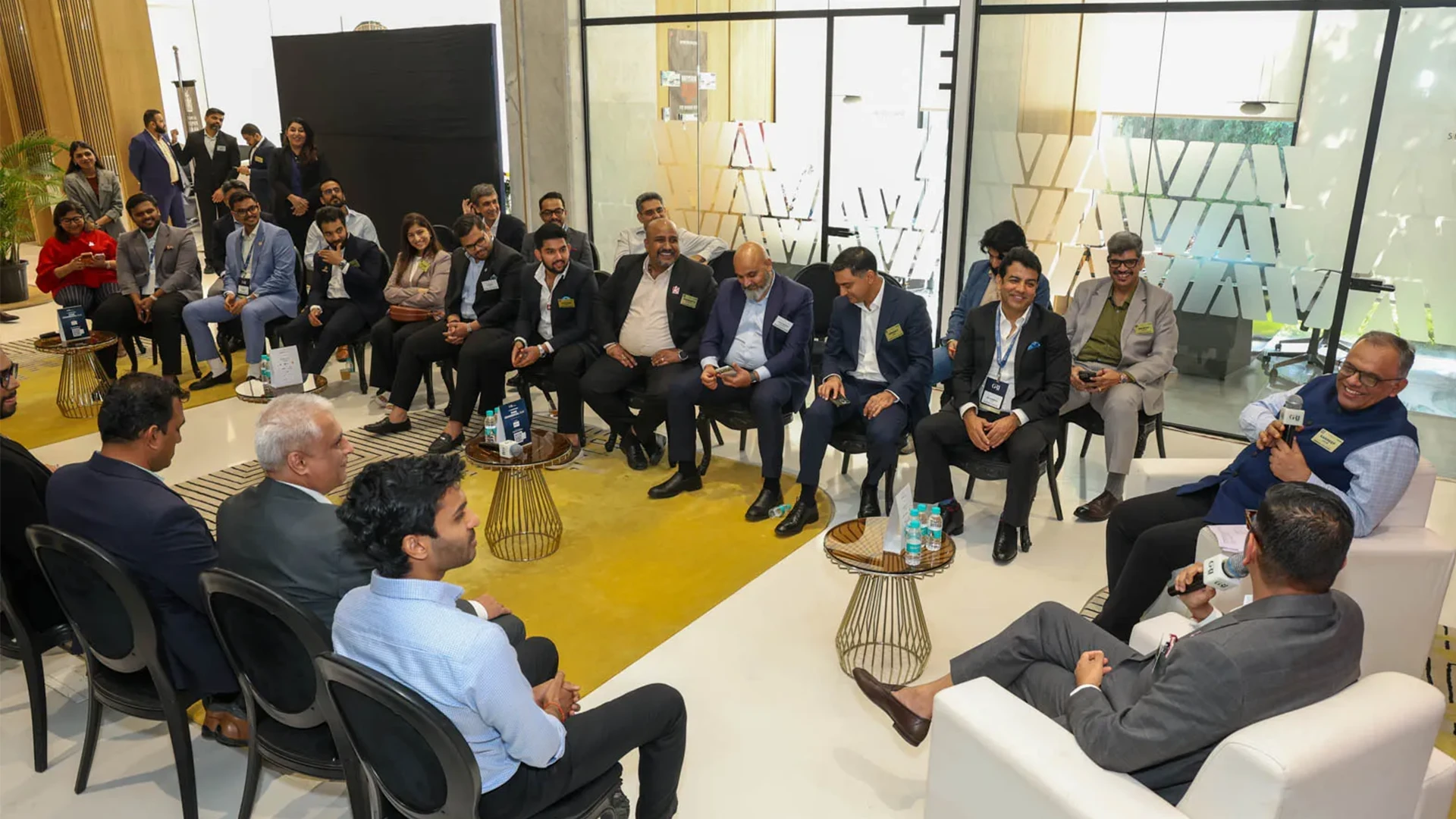
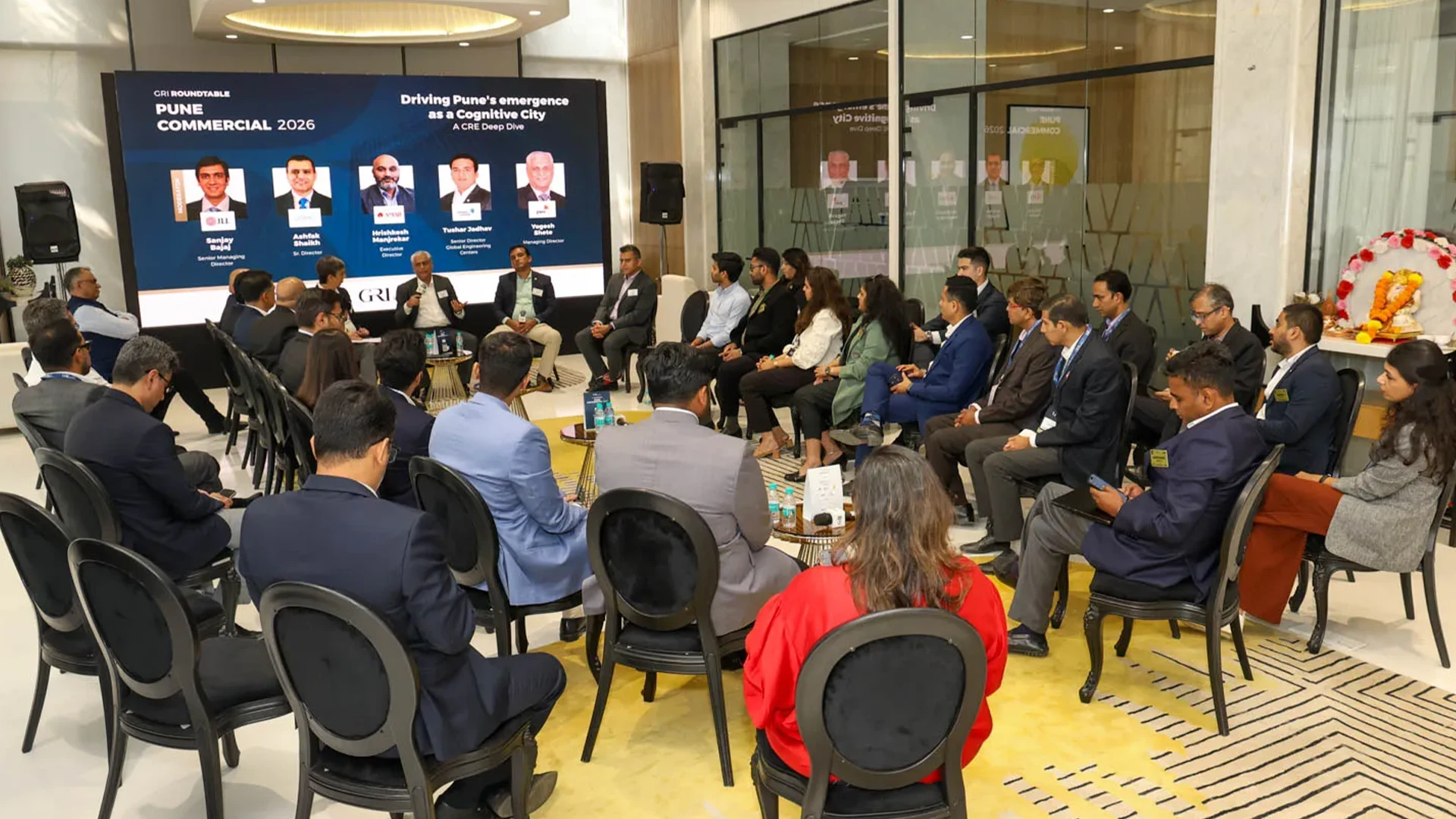
These insights were shared at the GRI Institute’s Pune Commercial 2026 roundtable, co-hosted by Kohinoor Group, with the Understanding Pune Real Estate discussion led by Sandeep Kotak (Mango Advisors) and Vineet Krishnakumar Goyal (Kohinoor Pune), and the Driving Pune's emergence as a Cognitive City panel moderated by Sanjay Bajaj (JLL India), with panellists Ashfak Shaikh (Domo), Hrishikesh Manjrekar (Amar Builders), Tushar Jadhav (Johnson Controls), and Yogesh Shete (PwC).