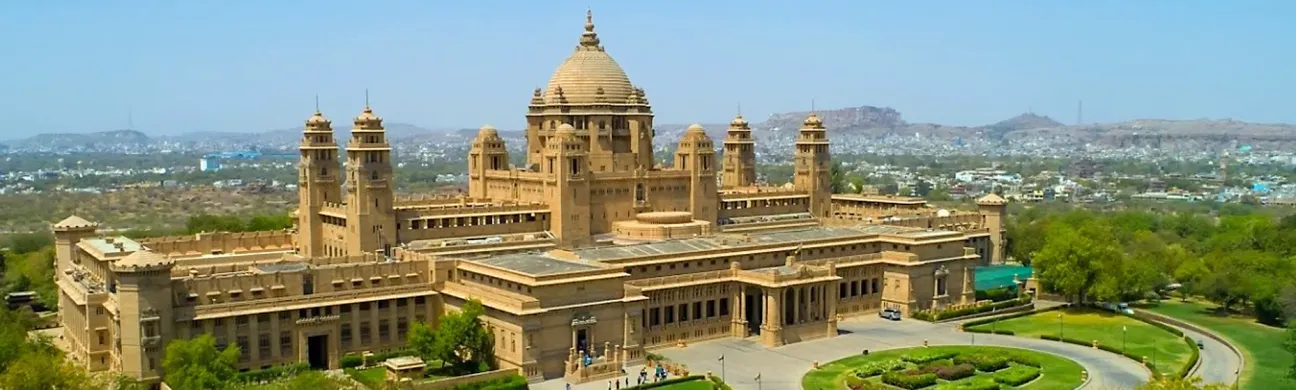
 Wikimedia Commons
Institutionalisation, Capital Inflows, and Scale: Indian Hospitality Outlook H2 2026
Discover how real estate leaders are navigating supply constraints, rising costs, and geographic expansion into Tier-2 and Tier-3 markets
July 28, 2026Real Estate
Written by:Rory Hickman
Executive Summary
Key takeaways from conversations between top industry leaders at GRI Institute India events throughout the first half of 2026, combined with the latest market research in our full H2 Outlook report, break down the dramatic structural re-rating and rapid institutionalisation facing Indian hospitality real estate.
Although regulatory friction and rising construction costs continue to extend project timelines for greenfield developments, the sector is demonstrating exceptional commercial strength, heavily supported by a permanent structural reset in domestic travel demand, soaring average room rates, and innovative structures such as branded residences that effectively de-risk capital deployment.
As we near India GRI 2026 on 8th October in Mumbai, where discussions on these vital shifts will continue, we take a detailed look at the country’s maturing hospitality asset class, breaking down deal structures, geographic expansion into secondary hubs, operator partnerships, and long-term yield outlooks.
► Access the full Indian Real Estate Outlook H2 2026 report here
Although regulatory friction and rising construction costs continue to extend project timelines for greenfield developments, the sector is demonstrating exceptional commercial strength, heavily supported by a permanent structural reset in domestic travel demand, soaring average room rates, and innovative structures such as branded residences that effectively de-risk capital deployment.
As we near India GRI 2026 on 8th October in Mumbai, where discussions on these vital shifts will continue, we take a detailed look at the country’s maturing hospitality asset class, breaking down deal structures, geographic expansion into secondary hubs, operator partnerships, and long-term yield outlooks.
► Access the full Indian Real Estate Outlook H2 2026 report here
Key Takeaways
- Indian hospitality real estate has matured into a core commercial asset class, attracting record institutional capital driven by cash-flow-backed valuations.
- Resilient domestic travel now accounts for over 80% of sector revenues, insulating the market from global volatility and fuelling nationwide geographic expansion.
- Development delays and rising construction costs are steering investors towards operational acquisitions, multi-city portfolios, and de-risked mixed-use developments.
► The Maturation of Indian Hospitality
The Indian hospitality real estate sector experienced a dramatic structural re-rating in the first half of 2026, evolving from an emotion-driven passion business into a mature, performance-backed commercial asset class.Institutional investment tripled year-on-year to approximately USD 300 million, outpacing all other property asset classes in percentage growth. Across institutional real estate portfolios, hotels now account for 5% of total holdings.
This macroeconomic shift reflects heightened market confidence, bringing hospitality parity with conventional office, retail, and logistics segments.
Overall transaction data encompassing INR 36,564 crore across approximately 37,847 keys highlights how institutional capital has become the dominant market force, deploying INR 21,812 crore in acquisitions alone.
Foreign investors have also played a significant role, contributing 70% of early institutional inflows across hospitality, alternative, and retail assets.
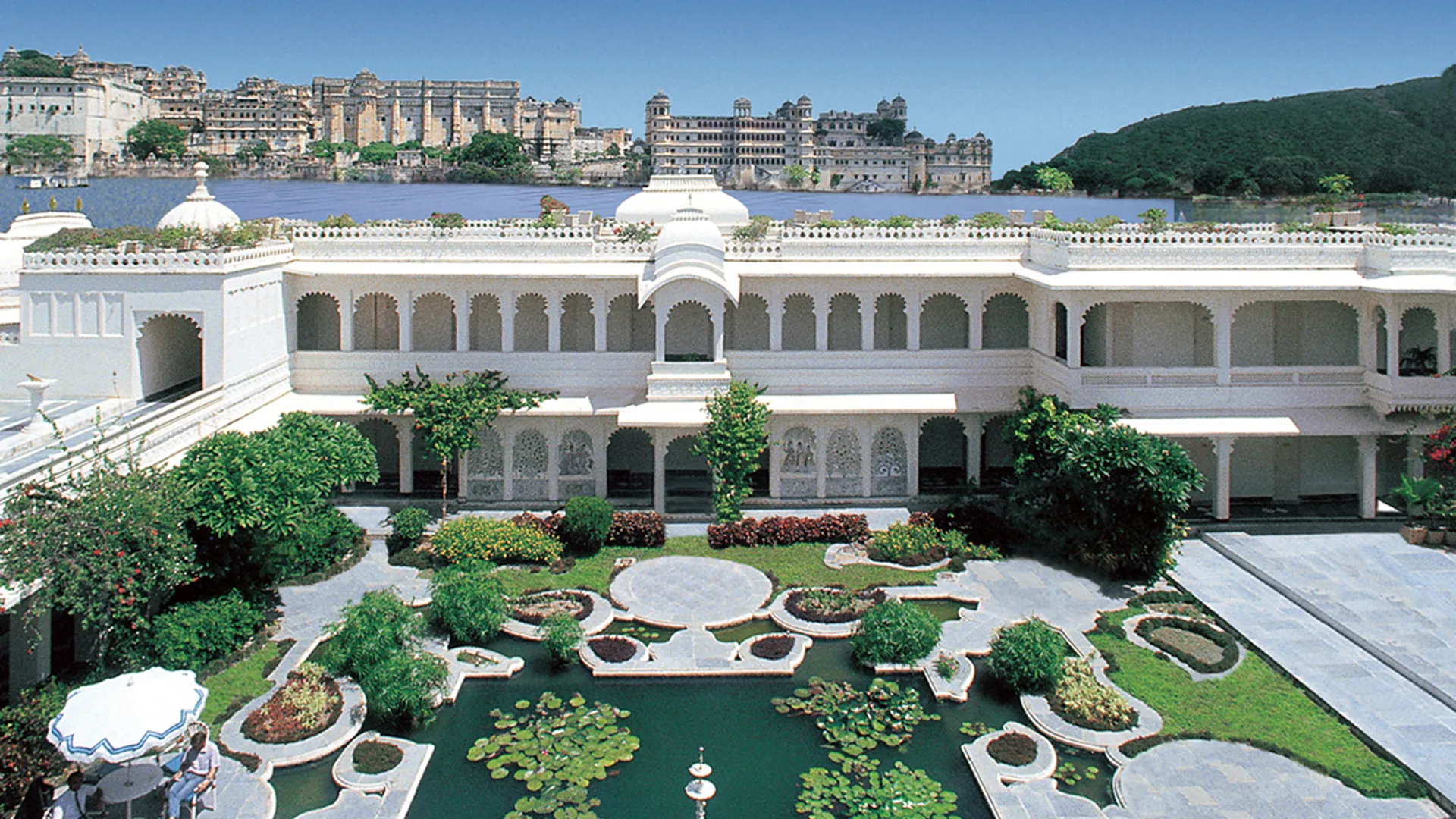
(Wikimedia Commons)
► Travel and Tourism Trends
This transformation is underpinned by robust macroeconomic fundamentals and a permanent structural reset in domestic travel demand. Domestic travellers now generate over 80% of revenues in key segments, insulating the sector from global economic volatility and fluctuations in foreign inbound travel.Following an estimated 4.5 billion domestic tourist visits in 2025, nationwide hotel occupancy levels stabilised between 63% and 65%. Average room rates increased by 10% year-on-year to between INR 8,500 and INR 8,700, while revenue per available room grew by 10% to 12%, landing in the range of INR 5,400 to INR 5,600.
Strong demand is further fuelled by expanding corporate activity, large-scale convention facilities, staycations, destination weddings, and religious tourism.
Although geopolitical conflicts and rising aviation costs present external risks, and travel funded by unsecured credit introduces potential systemic macroeconomic vulnerabilities, the sheer volume of diverse domestic demand drivers provides exceptional long-term visibility.
► Hospitality Hierarchy
As valuations are increasingly dictated by operational cash flows rather than asset vanity, a clear valuation hierarchy has emerged.Luxury properties command premium pricing at roughly INR 1.68 crore per key due to high entry barriers, prime locations, and established brands. Conversely, midscale and budget assets serve as scalable, value-led entry points.
Institutional buyers are placing significant value on immediate national scale, operator synergies, and geographic risk mitigation, evidenced by the heavy concentration of capital in multi-city portfolios, which accounted for INR 15,095 crore of total investment.
Operating margins of 40% to 50% have pushed EBITDA multiples up to 25, while capitalisation rates have compressed to between 4% and 6%.
Capital deployment is currently concentrating across three core deal structures: acquiring stabilised operating hotels, forward-funding branded developments, and funding hotel-anchored mixed-use projects.
Meanwhile, distressed assets are trading near parity at USD 0.90 to USD 0.95, supported by a shift in hospitality debt from non-banking financial companies back to commercial banks, which are structuring 18-year loans with embedded put-and-call options to balance risk, tenure stability, and bank exposure.
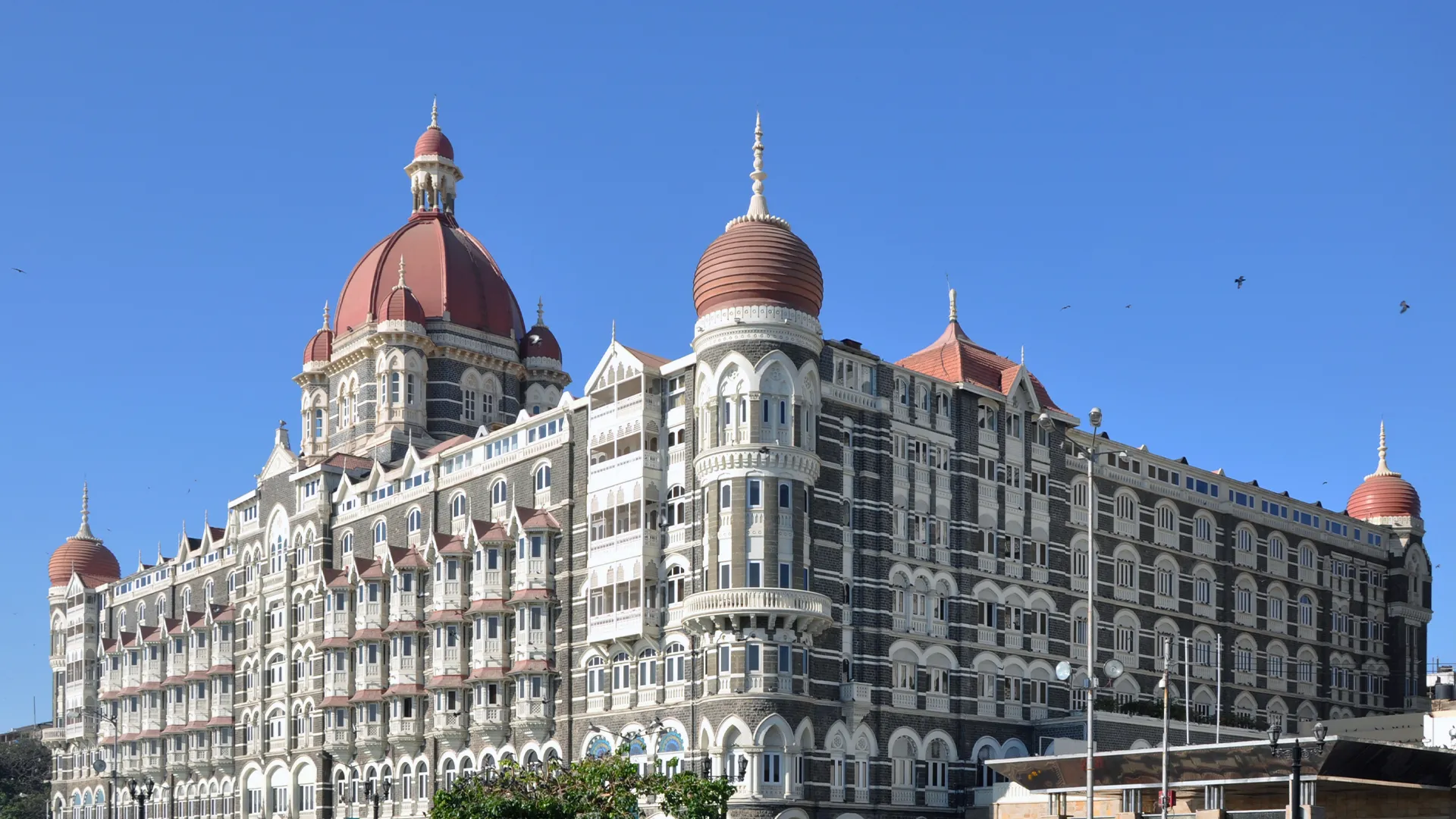
(Wikimedia Commons)
► Demand vs Development
Despite strong demand, India continues to face a structural undersupply of quality hotel rooms. Dense bureaucracies requiring up to 160 approvals extend building timelines to five years, creating regulatory friction that discourages institutional capital from entering greenfield projects.Consequently, investors are currently favouring operational assets, distressed properties, and immediate cash flows. Development is further complicated by construction costs per hotel key increasing by 8% to 12% due to input cost inflation, skilled labour shortages, and supply chain constraints.
Average development costs, excluding land and statutory approvals, range between INR 9,000 and INR 14,000 per square foot, while per-key costs average INR 4.77 million for economy, INR 5.56 million for midscale, INR 14.75 million for upscale, and INR 28.73 million for luxury assets.
To protect project internal rates of return, developers are replacing ego-driven over-specifications with strict pre-construction planning and adopting modular construction systems to reduce project timelines by 30% to 50%.
► Mixed-Use and Branded Residential
Major real estate developers are increasingly transitioning from holding ad-hoc property assets to establishing institutionalised, multi-format platforms.Incorporating a hotel component into high-density mixed-use developments helps push infrastructure utilisation toward 100% across the full week, as hospitality demand peaks during evenings and overnights when office and retail usage subsides.
Mixed-use developments integrating retail, office, and residential spaces can generate up to 30% of hotel revenues. Furthermore, complex strata-sales are restricted by rules, making branded residences highly attractive.
By commanding a 25% to 40% price premium over conventional luxury housing, branded residences deliver early sales revenue that cross-subsidises upfront hotel construction and yields between 7% and 9%, effectively de-risking equity return profiles.
► Geographic Expansion
Capital and developer attention are rapidly expanding beyond traditional urban gateways such as Mumbai and Delhi, moving into a broader national footprint.Over 400 asset-light contracts have been signed to expand into Tier-2 and Tier-3 cities, leisure markets, and spiritual destinations including Goa, Udaipur, Rishikesh, Nashik, Lonavala, Kota, Guwahati, and Khajuraho.
Aggressive highway rollouts and new aviation infrastructure are also opening remote micro-markets to super-luxury developments, where competitive mapping and intuition enable premium rates as high as INR 90,000.
To execute this growth, developers are leveraging asset-light partnerships with international operators. However, these maturity dynamics reveal friction. Developers bear the financial risk of long-term capital depreciation, whereas operators secure base fees without asset liability.
Rapid brand expansion has triggered an attention dilution crisis, degrading corporate oversight and expense control. Although brands offer a 25% to 50% revenue premium, overextended operator bandwidth has forced developers to use internal audits to stop leakage, demand mutual accountability, and migrate towards franchise models.
► Indian Hospitality Outlook
Looking forward, the Indian hospitality ecosystem offers a highly favourable deal-making window for developers, landowners, and institutional investors before asset prices fully adjust.Hotel brand signings hit an all-time high recently, representing a 36% annual increase with 64,118 keys across 586 properties, and are projected to reach 690 hotels and 76,000 keys in 2026.
Listed hotel operators are projected to add more than 70,000 new keys by 2030 to meet rising middle-class consumption. The midscale category makes up the largest share of these future signings at 55%, while soft brands and conversions account for 10%.
Ultimately, a projected five-year supply shock will inevitably compress margins, creating a subsequent acquisition cycle for private equity.
Until then, improved operational legibility, geographic diversification, and de-risked capital stacks ensure that Indian commercial real estate continues to view hospitality as a resilient, long-term growth engine.
► This article was adapted from our full Anchoring the Future: Indian Real Estate Outlook H2 2026 report - available here.