 Adobe Stock
Decoding the Indian Hotel Investment Boom
How aggressive expressway expansion and debt fuelled travel are reshaping the private equity playbook for luxury resorts
February 24, 2026Real Estate
Written by:Jorge Aguinaga
Key Takeaways
- Despite protracted approval lifecycles and regulatory friction, a massive transition toward private equity ownership is projected over the next five years as the Indian hospitality market achieves critical scale.
- The aggressive national rollout of expressways and regional airports is redefining accessibility, enabling developers to confidently establish super-luxury assets in previously remote micro-markets.
- Exuberance surrounding premium occupancy rates must be weighed against the systemic vulnerabilities introduced by an exponential expansion in unsecured consumer credit funding luxury travel.
The hospitality asset class presents a highly complex paradox for institutional investors and private equity funds operating within the subcontinent, with greenfield hotel developments demanding the navigation of exceptionally dense regional bureaucracies in order to access the sector’s robust operating margins.
Developers must secure an exhaustive array of approvals - ranging from a minimum of 30 to 35 licences in progressive jurisdictions like Gujarat to upwards of 160 separate permissions in Tamil Nadu - simply to open their doors.
This intense regulatory friction extends the typical construction lifecycle to between three and five years, inherently conflicting with the standard five to seven-year investment horizons of closed-ended institutional funds.
Consequently, while the current investment landscape remains heavily dominated by high net worth individuals (HNWIs) and domestic corporate entities rather than global institutional players, this established paradigm is rapidly shifting.
As the sheer scale of the market expands and existing assets reach maturity, a profound transition of asset ownership from private individuals into public capital and institutional private equity is definitively anticipated within the next five years.
As a result of around 30 kilometres of national highways being constructed every single day alongside an unprecedented aviation expansion that delivered 40 new airports over the past decade with another 100 projected for the next ten years, previously remote and inaccessible micro-markets are being rapidly integrated into the premium leisure ecosystem.
This enhanced logistical connectivity empowers developers to confidently establish super-luxury assets in emerging, niche destinations that previously lacked the requisite infrastructure to support high-yielding properties.
The analytical component involves meticulously mapping competitive sets and commercial office ecosystems within strict three to ten-kilometre radii to intelligently forecast future demand and rate structures, while the intuitive element focuses on pioneering completely untested locations based on latent potential.
For instance, luxury operators are confidently commanding rates of INR 90,000 per night in Khajuraho by capitalising on proximity to the Panna Tiger Reserve and new multi-lane expressways, which now facilitate premium guest willingness to undertake 700-kilometre drives.
Similarly, ambitious projects are acquiring 50-acre land parcels in Gandikota, colloquially known as the Grand Canyon of India, relying entirely on the emerging Kadapa airport infrastructure to generate formidable future demand.
Recent financial stability reports published by the Reserve Bank of India (RBI) have explicitly flagged exponential, uninterrupted growth in non-housing consumer debt, revealing that the two absolute largest segments driving this nationwide credit expansion are mobile technology purchases and luxury vacations.
The rapidly accelerating trend of consumers borrowing capital specifically to fund holiday travel introduces a layer of systemic vulnerability into the hospitality matrix, creating a highly complex risk-reward scenario for incoming institutional funds.
Consequently, future asset managers will be required to delicately balance exceptional operating yields against the macroeconomic fragility of a predominantly debt-driven travel boom.
Thank you to everyone who participated in the GRI Hospitality & Branded Residences 2026 forum.
Developers must secure an exhaustive array of approvals - ranging from a minimum of 30 to 35 licences in progressive jurisdictions like Gujarat to upwards of 160 separate permissions in Tamil Nadu - simply to open their doors.
This intense regulatory friction extends the typical construction lifecycle to between three and five years, inherently conflicting with the standard five to seven-year investment horizons of closed-ended institutional funds.
Consequently, while the current investment landscape remains heavily dominated by high net worth individuals (HNWIs) and domestic corporate entities rather than global institutional players, this established paradigm is rapidly shifting.
As the sheer scale of the market expands and existing assets reach maturity, a profound transition of asset ownership from private individuals into public capital and institutional private equity is definitively anticipated within the next five years.
Infrastructure Tailwinds and Strategic Market Expansion
The fundamental economic principle dictating future development pipelines is that capital intrinsically follows the traveller, an outward movement currently supported by an aggressive, heavily capitalised national infrastructure programme that is fundamentally redefining spatial accessibility.As a result of around 30 kilometres of national highways being constructed every single day alongside an unprecedented aviation expansion that delivered 40 new airports over the past decade with another 100 projected for the next ten years, previously remote and inaccessible micro-markets are being rapidly integrated into the premium leisure ecosystem.
This enhanced logistical connectivity empowers developers to confidently establish super-luxury assets in emerging, niche destinations that previously lacked the requisite infrastructure to support high-yielding properties.
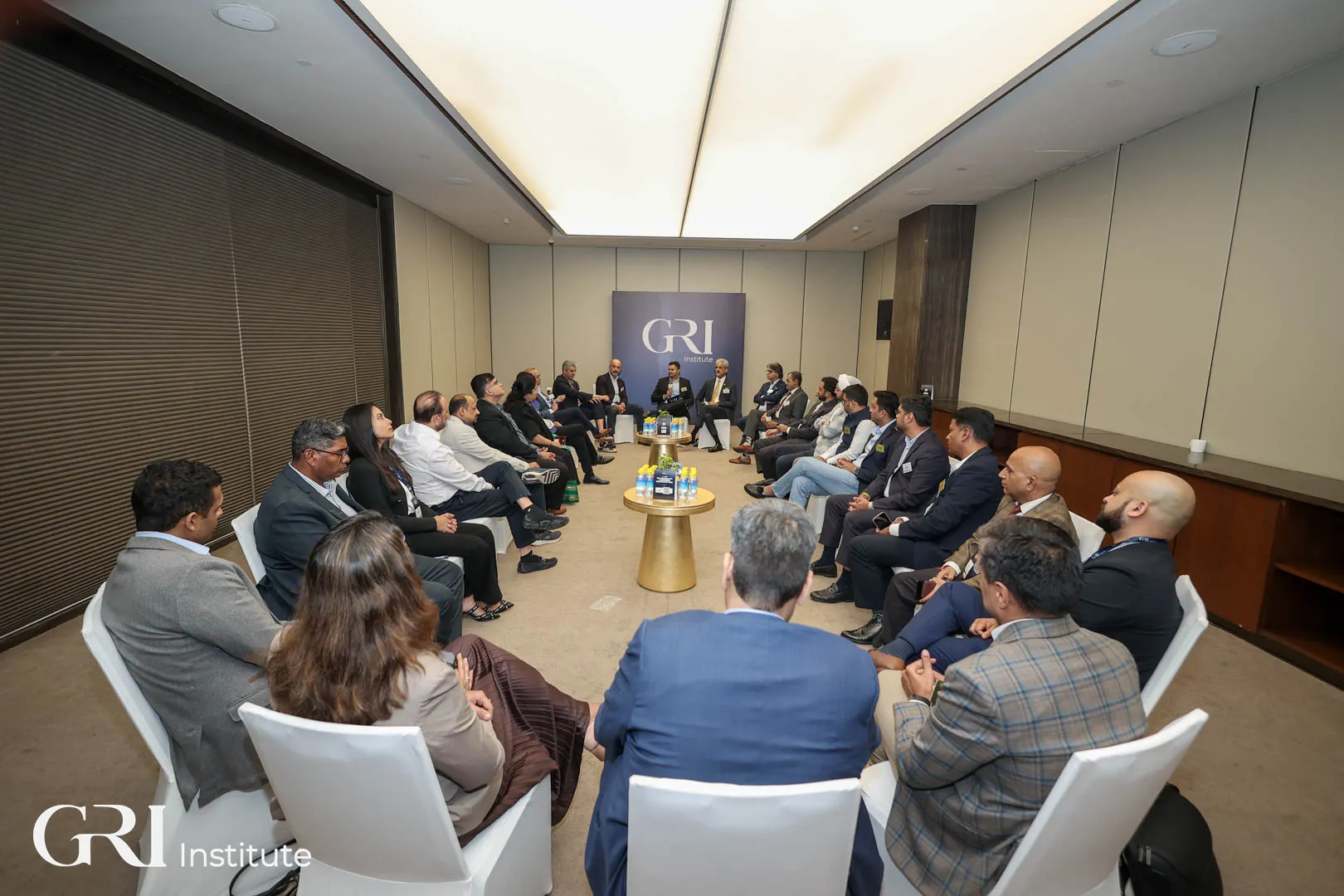
Industry leaders gathered in New Delhi for the GRI Hospitality & Branded Residences 2026 forum to engage in closed-door discussions assessing capital flows, scalable operating models, and the strategic future of branded living. (GRI Institute)
Balancing Empirical Data with Market Intuition
Despite increasing institutionalisation across the sector, high-level site selection remains a highly nuanced exercise where strategic capital deployment relies on a distinct evaluation formula - 40% of the final decision is rooted in rigorous empirical study, whilst the remaining 60% depends heavily on seasoned market intuition.The analytical component involves meticulously mapping competitive sets and commercial office ecosystems within strict three to ten-kilometre radii to intelligently forecast future demand and rate structures, while the intuitive element focuses on pioneering completely untested locations based on latent potential.
For instance, luxury operators are confidently commanding rates of INR 90,000 per night in Khajuraho by capitalising on proximity to the Panna Tiger Reserve and new multi-lane expressways, which now facilitate premium guest willingness to undertake 700-kilometre drives.
Similarly, ambitious projects are acquiring 50-acre land parcels in Gandikota, colloquially known as the Grand Canyon of India, relying entirely on the emerging Kadapa airport infrastructure to generate formidable future demand.
Consumer Credit Expansion and Financial Stability Risks
While the aggressive development pipeline signals immense industry optimism, the underlying consumer spending patterns warrant meticulous macroeconomic scrutiny, as the current exuberance fuelling unprecedented occupancy rates and premium pricing is increasingly supported by high volumes of unsecured consumer credit.Recent financial stability reports published by the Reserve Bank of India (RBI) have explicitly flagged exponential, uninterrupted growth in non-housing consumer debt, revealing that the two absolute largest segments driving this nationwide credit expansion are mobile technology purchases and luxury vacations.
The rapidly accelerating trend of consumers borrowing capital specifically to fund holiday travel introduces a layer of systemic vulnerability into the hospitality matrix, creating a highly complex risk-reward scenario for incoming institutional funds.
Consequently, future asset managers will be required to delicately balance exceptional operating yields against the macroeconomic fragility of a predominantly debt-driven travel boom.
Thank you to everyone who participated in the GRI Hospitality & Branded Residences 2026 forum.