 GRI Institute
Can Germany’s real estate market overcome its pricing and liquidity deadlock?
Senior insights from the GRI Women Leading German Real Estate Forum on sector rotation, alternative lending, and breaking the current liquidity deadlock
May 19, 2026Real Estate
Written by:Rory Hickman
Executive Summary
Germany’s real estate sector is currently undergoing a period of intricate structural change, defined by a persistent liquidity deadlock and a wide pricing disconnect between buyers and sellers.
Senior female industry leaders recently convened at the Deutsche GRI 2026 Women Leading German Real Estate Forum, co-hosted by Dentons, to explore how the market is evolving beyond its traditional core playbook to survive a cycle that has yet to hit its absolute bottom.
In the lead up to Europe GRI 2026 Summer Edition on 9th-10th September in Paris, also featuring the Women Leading European RE 2026 gathering on the 8th, we examine how this rebalanced market demands the navigation of a dense regulatory labyrinth while addressing systemic workforce biases that hinder the retention of top-tier industry talent.
► Read the full Deutsche GRI 2026 Spotlight report here
Senior female industry leaders recently convened at the Deutsche GRI 2026 Women Leading German Real Estate Forum, co-hosted by Dentons, to explore how the market is evolving beyond its traditional core playbook to survive a cycle that has yet to hit its absolute bottom.
In the lead up to Europe GRI 2026 Summer Edition on 9th-10th September in Paris, also featuring the Women Leading European RE 2026 gathering on the 8th, we examine how this rebalanced market demands the navigation of a dense regulatory labyrinth while addressing systemic workforce biases that hinder the retention of top-tier industry talent.
► Read the full Deutsche GRI 2026 Spotlight report here
Key Takeaways
- Geopolitical crises and a significant pricing gap between buyers and sellers have created a liquidity deadlock that alternative lenders are increasingly bridging.
- Capital is rotating into alternative asset classes and data centres to find yield while meeting strict ESG requirements that act as mandatory financing prerequisites.
- Deep-seated workforce biases against flexible working require urgent systemic reform to retain talent and maintain market competitiveness.
Cycles, Capital, and Complex Challenges
The German real estate market is currently navigating a highly complex and transitional phase, heavily influenced by persistent geopolitical volatility and shifting macroeconomic fundamentals.Market sentiment strongly suggests that the absolute bottom of the current cycle has not yet been fully reached. The Middle East crisis, the ongoing war in Ukraine, and the resulting fluctuating energy prices continue to inject severe unpredictability into capital allocation strategies across Europe.
Consequently, institutional investors are carefully reassessing exactly where and how to deploy their capital, balancing the perceived safety of traditional assets against the critical need for resilient, long-term yields.
A pervasive wait-and-see approach characterises the broader investment landscape, with transaction volumes heavily hampered by a systemic disconnect in the market.
While the residential sector presents attractive entry points for highly opportunistic and value-add buyers, traditional core strategies remain exceptionally challenging because standard calculations struggle to absorb today's higher financing costs.
A significant hurdle to market fluidity is the persistent gap between buyer and seller pricing expectations. Many sellers are severely hindered by their existing, inflated book values, making them extremely reluctant to dispose of assets even when they fully acknowledge that actual market values are notably lower.
This current deadlock is compounded by looming liquidity pressures, suggesting a high probability of increased forced sales in the near future as financing terms expire and fund lifespans run out.
In direct response to these severe pressures, achieving success in the current climate requires heavy, proactive asset management and bold, out-of-the-box creativity.
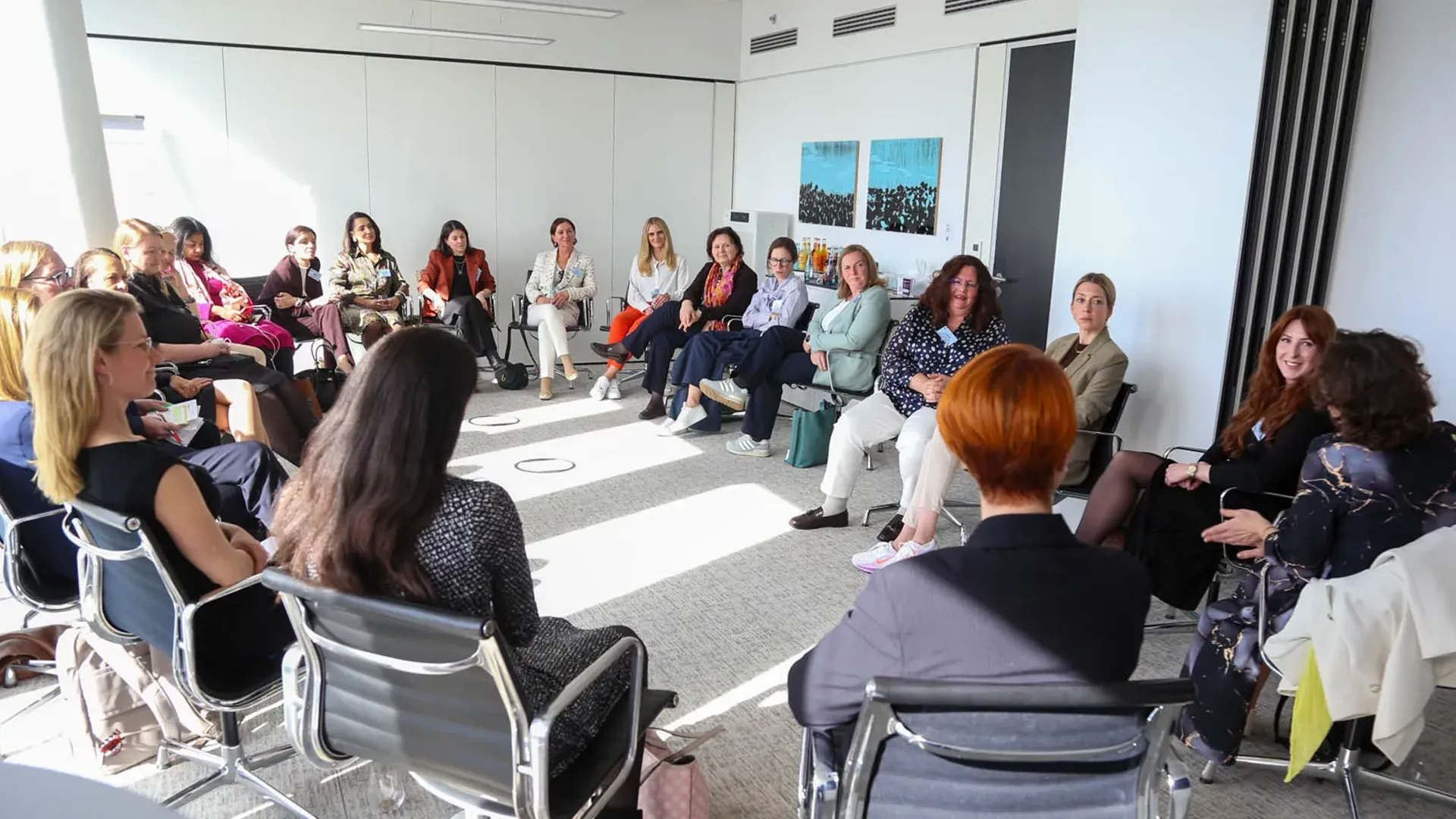
Investors are navigating a complex market reset defined by geopolitical volatility and a persistent pricing gap, requiring proactive asset management to overcome the current liquidity deadlock. (GRI Institute)
Pivoting Portfolios
As traditional sectors face distinct structural and regulatory headwinds, institutional capital is steadily rotating towards alternative, non-regulated, and emerging asset classes.While standard logistics and residential properties remain foundational to many portfolios, there is a clear strategic pivot towards niche segments, especially student housing, co-living, and senior living.
Senior living, in particular, is currently highly underexploited within the German market, primarily due to a lingering investor misconception that rigidly links the asset class with heavily regulated nursing care.
Educating the market on the true viability of non-regulated senior living segments is essential, especially as these assets can directly increase profitability without requiring massive additional construction investments.
Simultaneously, the traditional office sector is experiencing profound structural shifts, prompting forward-thinking investors to seek higher overall values through intensive asset conversions - such as transforming vacant, older office or retail buildings into modern residential spaces.
On the alternative infrastructure side, data centres are rapidly solidifying their position as a preferred asset class. Lenders are increasingly treating it similarly to traditional real estate, favouring straightforward structures that include long-term tenants and standard mortgages.
In the industrial and logistics space, immediate but complex opportunities are emerging to lease existing speculative storage space to the defence sector, though establishing strategic, nationwide logistical setups remains exceedingly difficult to execute.
Navigating the Regulatory Labyrinth
The German residential market remains heavily constrained by an exceptionally complex web of local and federal regulations. Strict rent caps present a significant and ongoing barrier to profitability for asset owners.To legally operate outside of these restrictive caps, properties must either be classified as new builds constructed after 2014, or they must undergo incredibly extensive renovations.
These required renovations must equal at least one-third of the total cost of a new build, forcing investors to implement comprehensive, full-scale flat upgrades to achieve true market rents.
However, executing new developments brings an entirely separate set of hurdles, specifically regarding mandatory social and subsidised housing requirements, which can encompass up to 50% of a given project.
With strict social housing rents hovering around EUR 7 per square metre and subsidised housing capped around EUR 16 per square metre, developers severely struggle to break even on these allocations.
To achieve financial viability, current construction costs necessitate baseline rent levels closer to EUR 20 per square metre, drastically squeezing investor margins and complicating long-term financial planning.
► Don’t miss the Women Leading European RE 2026 - Summer Edition on 8th September in Paris
Stranded Assets and Sustainable Solutions
ESG criteria have definitively transitioned from aspirational corporate goals to strict, unavoidable operational and financing prerequisites. The market is actively grappling with a growing volume of stranded assets that fail to meet modern environmental standards and are becoming increasingly difficult to sell or lease.While massive capital expenditure is often required to transition these properties from brown to green, historically high construction and financing costs make comprehensive retrofits financially unviable for many owners.
EU regulatory frameworks, including the strict mandate to improve the worst-performing 16% of property portfolios, remain firmly set in stone, despite anticipated delays in the final German implementation.
Lending institutions are responding aggressively by tightening their issuance criteria, with some prominent players now exclusively issuing green notes for compliant projects. The market dynamic is rapidly shifting from simply offering better interest terms for green assets to outright punishing brown assets by denying them essential financing altogether.
To bridge the operational gap where capital expenditure is highly limited, owners are increasingly relying on artificial intelligence and innovative start-ups to optimise their day-to-day operational expenditure.
Technological innovations range from advanced software platforms that optimise building energy usage to highly experimental hardware solutions, such as breaking volatile hydrogen into liquid and powder forms for safer, long-term building energy storage.
Furthermore, the social aspect of ESG is gaining critical, overdue attention, with socially responsible investments such as senior living proving highly capable of driving both social impact and robust financial return.

Top female real estate leaders highlight the urgent need for systemic reform to address corporate biases and retain top-tier talent within the industry. (GRI Institute)
Alternative Lenders Fill the Void
The core financing landscape in Germany is experiencing a notable and rapid realignment. Traditional banking institutions have become markedly more risk-averse, meticulously analysing asset fundamentals before deploying any capital.Banks are particularly hesitant to finance large-scale residential portfolios due to ongoing, highly politicised debates surrounding the forced socialisation of corporate housing.
This radical debate involves serious political proposals to transfer large, privately owned residential assets into state-backed holding companies, compensating the current owners with long-term bonds.
Consequently, traditional lenders are heavily retreating from complex new developments and large-scale residential deals, leaving a massive liquidity void that alternative capital providers are extremely eager to fill.
Family offices, private debt funds, and international investment banks are aggressively targeting the German market, bringing ample liquidity, albeit at varying and often higher risk premiums.
Notably, there is a clear, strategic shift among these alternative lenders from providing complex mezzanine debt to issuing straightforward whole loans, offering active borrowers more streamlined, reliable capital structures in an otherwise fragmented and uncertain lending environment.
Career Constraints and Corporate Culture
Beyond the financial mechanics of bricks and mortar, the structural dynamics of the real estate workforce remain a pressing, foundational issue - especially for the women leading the industry.Professionals navigating demanding full-time careers alongside significant personal responsibilities are forced to develop highly creative strategies to manage the pervasive pressures of the market.
Systemic corporate biases continue to severely penalise alternative or flexible working arrangements.
Employees opting for part-time schedules often find themselves disproportionately punished by their employers; they frequently execute 80% or more of a standard full-time workload while only receiving exactly half the financial compensation.
This double and triple punishment underscores a critical ongoing flaw in traditional corporate structures, highlighting the absolute necessity for systemic reform to attract and retain top-tier talent in a highly demanding, globally competitive market.
► Read the full Deutsche GRI 2026 Spotlight report here
► Check out the Deutsche GRI 2026 C-Circle Gathering report for even more insights
► A full analysis of the Deutsche GRI 2026 Survey results are available here
These insights were shared during Deutsche GRI 2026’s Women Leading German Real Estate Forum, co-hosted by Dentons, featuring contributions from moderator Sabine Wieduwilt (Dentons), as well as Ewa Parys (AEW), Hannah Stern (Recogizer Group GmbH), Jil Gunsenheimer (YOOBELONG), and Lisa Strohbücker (Heimstaden).
► Don’t miss the Women Leading European RE 2026 - Summer Edition on 8th September in Paris