 GRI Institute
Ahmedabad & GIFT City Real Estate 2026
Analysing the symbiotic ecosystem of IFSC tax incentives, Grade A commercial assets, and high-speed transit networks driving institutional capital into Gujarat
March 14, 2026Real Estate
Written by:Jorge Aguinaga
Executive Summary
The Indian real estate sector is witnessing the rapid emergence of a powerful new global corridor. Ahmedabad and GIFT City are currently operating as a highly synchronised twin-engine ecosystem, presenting a compelling proposition for both domestic and global institutional capital.
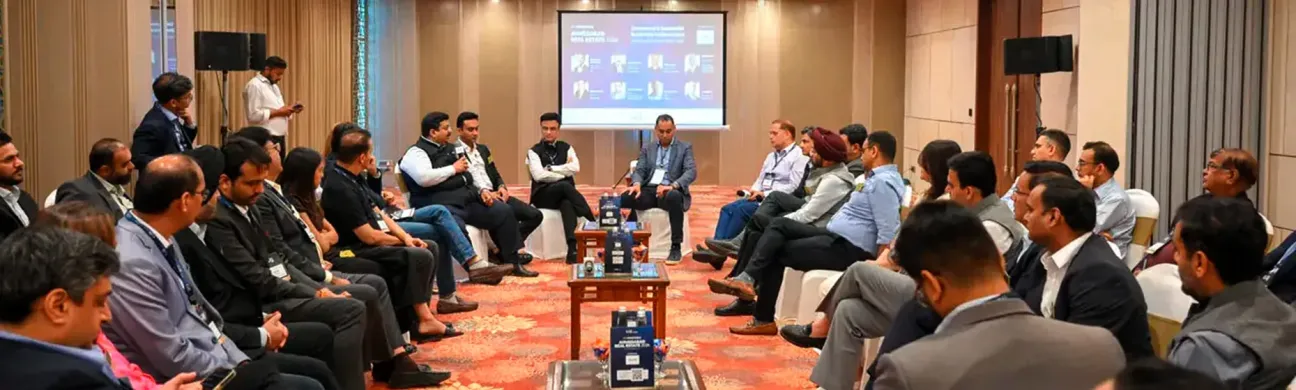
Marking a strategic expansion into this high-growth territory, the inaugural GRI Institute Ahmedabad Real Estate Roundtable 2026, co-hosted with Shivalik Group, convened industry leaders to interrogate these regional market dynamics.
This report synthesises critical insights from this milestone event on overcoming Grade A commercial supply bottlenecks, capturing shifting residential demands, and leveraging unified regulatory frameworks to secure viable assets in the next market cycle.
Marking a strategic expansion into this high-growth territory, the inaugural GRI Institute Ahmedabad Real Estate Roundtable 2026, co-hosted with Shivalik Group, convened industry leaders to interrogate these regional market dynamics.
This report synthesises critical insights from this milestone event on overcoming Grade A commercial supply bottlenecks, capturing shifting residential demands, and leveraging unified regulatory frameworks to secure viable assets in the next market cycle.
Key Takeaways
- The buyer demographic has stabilised into a balanced mix of local and external investors, with NRIs sustaining 20-25% of high-value transactions.
- A unified financial regulator and an unprecedented 20-year tax holiday are aggressively driving enterprise relocation and accelerating job creation.
- To capture institutional capital, developers are actively pivoting towards built-to-lease models to resolve the critical shortage of Grade A commercial floor plates.
The Aspirational Shift in Residential Real Estate
The Ahmedabad residential real estate landscape has experienced a fundamental transformation, directly catalysed by the broader momentum of the regional twin-engine ecosystem.Market dynamics within the city are shifting decisively from low-cost commodity housing towards premium, aspiration-led developments featuring comprehensive amenities and superior design elements.
This evolution is driven by a stabilised buyer demographic that is now split evenly between local purchasers and external investors, reflecting a profound maturation in regional confidence.
Non-Resident Indians (NRIs) continue to represent a robust 20% to 25% of total investments, frequently executing high-value transactions ranging between INR 30 crore and INR 50 crore.
Capital inflows are increasingly strategic rather than purely speculative, with investors from regions such as the United States, Dubai, and Portugal actively exploring physical relocation alongside their financial commitments.
Market transparency has improved significantly through the stringent enforcement of RERA and stronger compliance frameworks, which has systemically increased investor confidence.
This regulatory maturation is drawing substantial institutional capital into both premium residential portfolios and Grade A commercial projects, successfully moving the market away from fragmented ownership models.
Furthermore, the elevated living standards introduced by external investors purchasing within the GIFT City zone have pushed local Ahmedabad developers to deliver expansive, globally competitive gated communities.
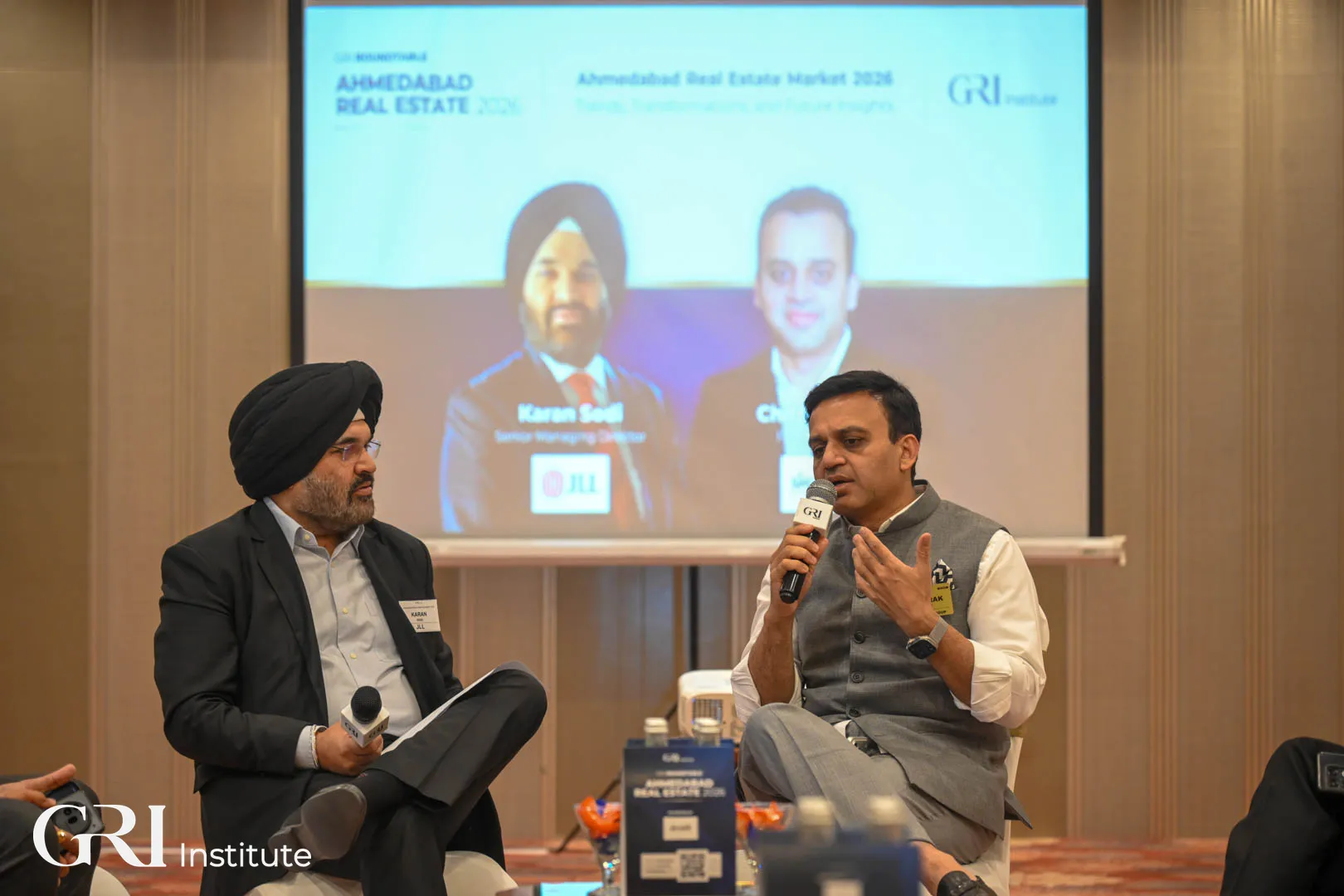
Marking our inaugural expansion into a rapidly evolving market, industry leaders engaged in a strategic fireside chat to unpack the city's growth trajectory and the definitive shift towards premium, aspiration-led residential developments. (GRI Institute)
Regulatory Catalysts and the Region’s Economic Engine
The establishment of the International Financial Services Centres Authority (IFSCA) as a regulator of India’s special economic zones (SEZs) has served as a critical catalyst for regional development by unifying previously fragmented regulatory bodies.Historically, global investors were forced to navigate multiple regulators, complex foreign direct investment rules, and severe taxation uncertainties, but the current streamlined framework has transformed the zone into a highly viable platform for international capital, supported by an unprecedented 20-year tax holiday that aggressively incentivises corporate relocation and talent acquisition.
This unified regulatory environment is rapidly accelerating job creation, with a strategic masterplan aggressively targeting 500,000 direct and 500,000 indirect jobs.
At the same time, Global Capability Centres (GCCs) are currently demonstrating exponential growth trajectories, exemplified by anchor institutions scaling operations from an initial 500 employees to nearly 3,000 within a mere two-and-a-half-year timeframe.
Addressing the Commercial Supply Imbalance
Despite the rapid influx of enterprise demand, the commercial real estate (CRE) supply chain across GIFT City faces critical bottlenecks that must be resolved to sustain long-term economic growth.Escalating premium rentals currently risk deterring large-scale bookkeeping and business process outsourcing operations, which require cost-efficient floor plates to generate an estimated 200,000 jobs within that specific sector.
While 41 buildings are actively under construction across the financial zone, the ecosystem requires significant maturation to house the projected workforce.
Historically, the prevailing developer mentality prioritised a build-to-sell model, which actively fragmented asset ownership through strata sales to retail investors or small and medium enterprises (SMEs).
This fragmentation now presents a significant barrier to entry for institutional capital, as global fund managers and multinational corporate occupiers require large, unified floor plates spanning hundreds of thousands of square feet.
To capture top-tier institutional investments, forward-thinking developers are transitioning towards build-to-lease models that require substantial upfront equity commitments. Boutique developers are already deploying up to INR 650 crore in pure equity for dedicated leasing assets, demonstrating a profound shift away from traditional strata sales.
The industry is simultaneously exploring innovative financial frameworks, such as the Fund-Lease-Own model, to standardise Grade A office spaces and create reliable yield-generating assets for global portfolios.
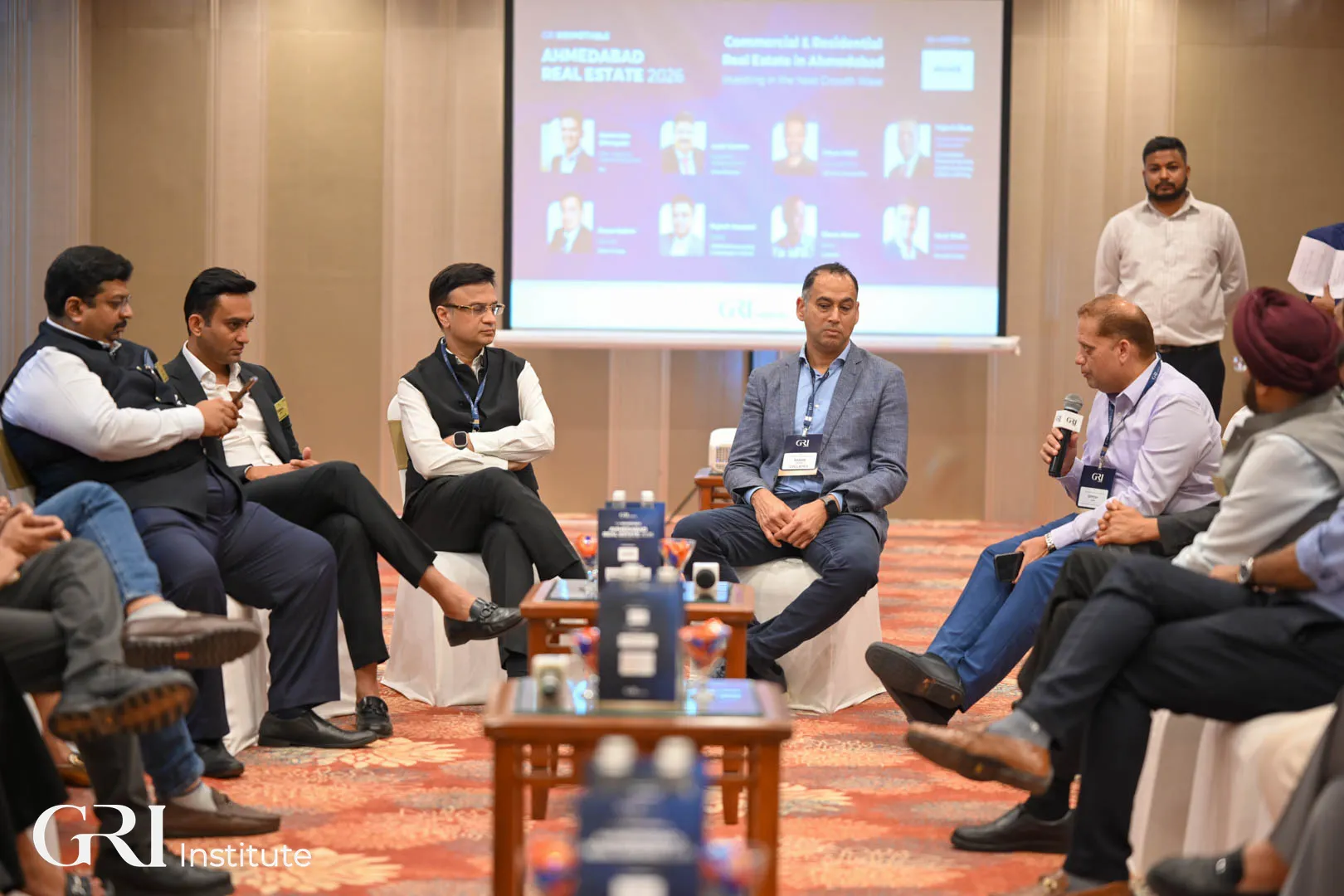
Top developers and investors convened to analyse the rising tide of institutional capital and the critical pivot towards Grade A commercial assets driving the next growth wave across the region. (GRI Institute)
High Speed Connectivity and Urban Expansion
Beyond these developments, large-scale infrastructure projects are also physically and economically reshaping the regional geography, ensuring that mobility keeps pace with rapid commercial expansion.The accelerated deployment of Metro Phase 2, expanded road networks, and the Mumbai-Ahmedabad bullet train are projected to unlock entirely new development corridors within the next four to five years.
These transport networks are drastically reducing transit times across the urban agglomeration, successfully compressing the commute between peripheral industrial zones such as Dholera and the city centre from two hours to approximately 60 minutes.
These massive capital injections into highway and urban connectivity are strategically designed to bypass the chronic congestion and infrastructure stress historically observed in older Indian megacities.
By engineering a resilient, circular urban grid, planners have ensured that critical nodes remain accessible within a 30 to 45-minute transit window.
This decentralised masterplan implements strict sectoral zoning, effectively isolating heavy semiconductor manufacturing in Sanand and Dholera while consolidating advanced medical infrastructure in the newly announced Kalol medical city. Educational ecosystems are strategically positioned 20 to 30 kilometres away from the central financial district.
This visionary segregation ensures that the core International Financial Services Centre (IFSC) retains its premium, low-density operational environment, complete with advanced district cooling and undisturbed subterranean utility tunnels
Maturing Ecosystems and Specialised Asset Classes
As the core commercial and residential sectors expand, there is an acute requirement for specialised real estate assets to support a fully integrated and liveable urban ecosystem.The educational sector acts as a primary driver of this diversification, anchored by foundational institutions such as the Indian Institute of Management and the National Institute of Design.
The recent influx of foreign universities, highlighted by the establishment of a massive 10-floor international campus, is generating unprecedented demand for purpose-built student accomodation (PBSA) and broader campus infrastructure.
Concurrently, shifting demographic needs are creating highly lucrative opportunities within the assisted living and senior care sectors. There is an expanding market requirement for sophisticated independent senior living communities, memory care facilities, and comprehensive healthcare infrastructure.
When supported by emerging financial structures such as longevity finance, these specialised asset classes position the market to become one of the most desirable and globally competitive urban centres in the nation.
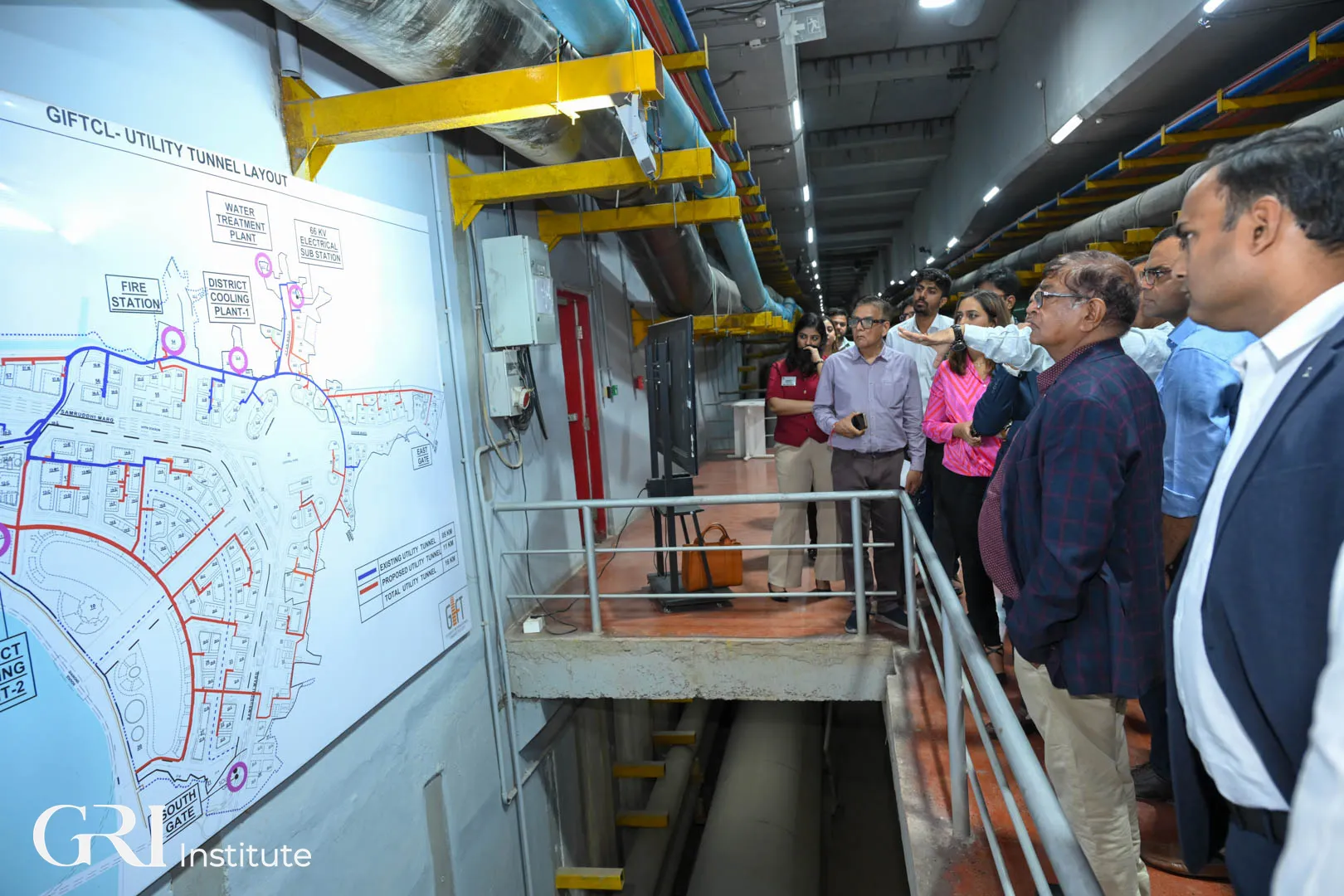
Members experienced an exclusive site visit to GIFT City, exploring district cooling and underground service networks that are actively setting the benchmark for sustainable infrastructure in India. (GRI Institute)
The Imperative for Global State Narratives
Despite the unparalleled regulatory advantages of the unified financial zone, the Gujarat] region requires a more aggressive, globally facing state narrative to attract massive anchor tenants.While the infrastructure represents a 10-year lead over competing domestic markets, translating this physical readiness into enterprise occupancy demands proactive political and administrative will.
Analysts draw direct parallels to the historic transformations of competing tech cities, where aggressive leadership directly secured foundational corporate tenants to trigger an ecosystem boom.
Currently, global capital markets require extensive education regarding the specific legal and tax indemnities offered by the financial zone. To scale effectively, local leadership must elevate its presence at macro-economic platforms such as the World Economic Forum in Davos, aggressively pitching the region as a unified, mega-corporate entity.
Establishing a dominant global narrative is critical to filling the massive 500,000-job capacity designed into the urban masterplan.
Macro Economic Sporting Infrastructure
The region is also positioning itself to leverage global mega-events as catalysts for accelerated infrastructure deployment. With Ahmedabad securing the Commonwealth Games in 2030 and an aggressive bid for the 2036 Olympics, the state is anticipating unprecedented capital injections into public works.Crucially, the financing structure for these mega-events relies heavily on public-private partnerships (PPPs), mitigating the risk of total exchequer depletion. Developers are strategically acquiring land and planning projects in the western corridors to capitalise on this impending infrastructure push.
If managed with a strict focus on sustainable legacy infrastructure, rather than isolated sporting arenas, these events possess the potential to permanently elevate the region into the top tier of globally recognised, highly liveable cities.
Thank you to everyone who participated in the Ahmedabad Real Estate Roundtable 2026, as well as our co-hosts, Shivalik. Look out for more discussions on these issues at our upcoming gatherings.