 GRI Institute
India Real Estate Land Title Report 2026
Unlocking USD 1.6 trillion in trapped Indian asset values with two-step diligence, digital land registries, and risk mitigation strategies
March 10, 2026Real Estate
Written by:Jorge Aguinaga
Executive Summary
The Indian real estate sector is currently navigating a severe liquidity constraint, as an estimated USD 1.6 trillion in asset values remains officially blocked from the active market due to unclear land titles. As developers compete for the mere 7% of the nation's officially urbanised land, traditional title diligence has rapidly evolved from a basic diagnostic checklist into a highly strategic risk management tool.
The Land Title Reset GRI Forum 2026, co-hosted with Landeed, convened industry authorities to interrogate these complex dynamics. The discussions highlighted how market leaders are actively adopting a rapid two-step screening framework to accelerate deal velocity, balancing early commercial decisions with the rigorous safety demands of premium equity. This report synthesises critical insights on overcoming digital transition friction, resolving post-transaction bottlenecks, and leveraging artificial intelligence to secure viable assets in the next market cycle.
The Land Title Reset GRI Forum 2026, co-hosted with Landeed, convened industry authorities to interrogate these complex dynamics. The discussions highlighted how market leaders are actively adopting a rapid two-step screening framework to accelerate deal velocity, balancing early commercial decisions with the rigorous safety demands of premium equity. This report synthesises critical insights on overcoming digital transition friction, resolving post-transaction bottlenecks, and leveraging artificial intelligence to secure viable assets in the next market cycle.
Key Takeaways
- Adopting an upfront red-flag screening process allows developers to make rapid go or no-go commercial decisions, drastically reducing wasted time and sunk costs.
- Expensive equity funds with strict deployment timelines require flawless title health, while alternative lenders and NBFCs demonstrate higher tolerance for historical documentation ambiguities.
- While government digital infrastructure improves transparency, transitional disruptions and software bottlenecks persist.
The Bottom Line
Balancing Deal Velocity and Capital Security
In the high-stakes arena of Indian real estate, navigating land acquisitions requires a delicate equilibrium between accelerating the velocity of deal closures and ensuring the absolute safety of deployed capital.Traditional title diligence has fundamentally transcended its historical role as a rudimentary diagnostic exercise to become a sophisticated, strategic decision-support tool.
This critical transformation demands that industry advisors proactively interpret underlying risks, propose actionable mitigations, and actively guide commercial decisions rather than merely reciting state regulations.
Because perfectly clean land transactions are exceptionally rare within this fragmented market, the strategic focus of industry leaders has decisively shifted away from expecting absolute document perfection towards comprehensive risk identification, quantification, and proactive management.
For modern developers and institutional investors, intelligent mitigation and structured foresight now matter significantly more than theoretical legal purity, dictating whether a firm can successfully maintain deal momentum while safeguarding its long-term investments against unforeseen regulatory surprises and market shifts.
The Macro Reality Data and Market Scale
Unlocking Trillions in Blocked Real Estate Assets
As a result of this situation, the Indian real estate sector finds itself navigating a severe structural bottleneck, with an estimated USD 1.6 trillion in asset values currently blocked due to unclear land titles.This immense volume of locked capital fundamentally constrains market liquidity and places an extraordinary burden on the judicial system, where land and real estate disputes now account for two-thirds of all civil court cases nationwide.
Resolving these inherited legacy documentation issues is not merely a localised administrative hurdle but a critical economic imperative for scaling national infrastructure and unlocking trapped equity.
Navigating Severe Land Scarcity and Deal Velocity
Compounding this financial gridlock is the stark physical reality of national land distribution. Currently, a mere 7% of the country's total landmass is officially urbanised. The vast majority of the terrain remains highly restricted, with agricultural zones and forest reserves collectively constituting approximately 80% of the national footprint.This profound scarcity of transactable, prime parcels forces developers into a hyper-competitive and prolonged acquisition matrix. Consequently, industry acquisition teams must operate under a stringent one percent rule, routinely evaluating up to 100 prospective leads to successfully close just one or two viable transactions.
This extensive vetting process creates immense operational friction, stretching the typical land acquisition lifecycle to anywhere between six and 18 months before a deal is finalised.
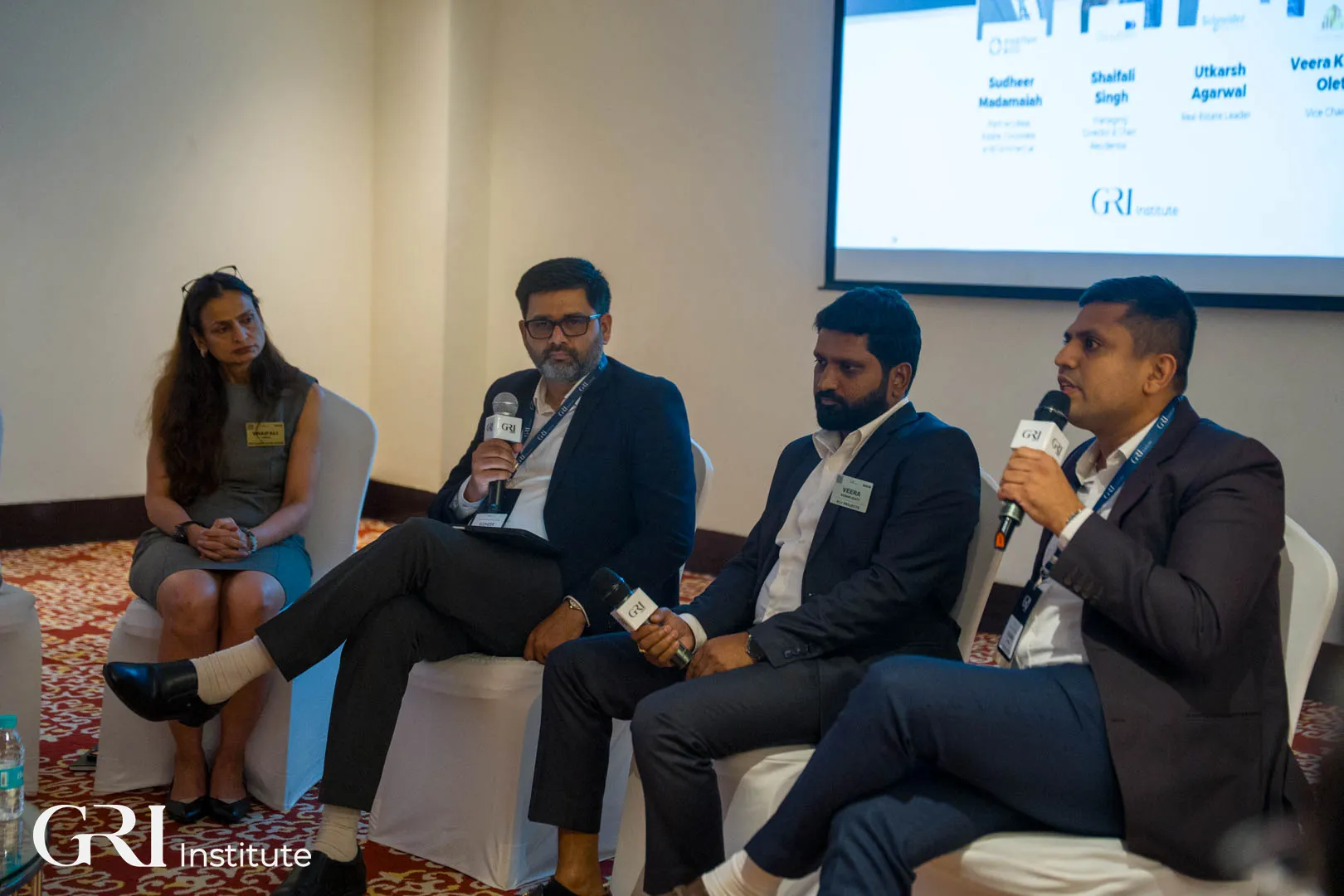
Industry leaders convened in Bangalore for the Land Title Reset GRI Forum 2026 to interrogate the structural dynamics of the Indian property market. (GRI Institute)
The New Diligence Playbook
Accelerating Deal Velocity Through Phased Screening Workflows
To navigate this complex legal environment, leading real estate firms are rapidly adopting an emerging two-step diligence model. This progressive framework initiates with a stringent upfront red-flag screening to capture fundamental roadblocks, such as inherent agricultural land holding restrictions or highly visible litigation patterns.By establishing this initial comfort layer, stakeholders are empowered to make critical go or no-go commercial decisions much earlier in the acquisition cycle. This strategic filter drastically reduces wasted administrative time, eliminates preliminary sunk costs, and minimises overall execution uncertainty.
Only after successfully passing this preliminary phase do legal teams execute a deep dive into historical archives, a methodology that effectively compresses a traditional six-month reporting process into a highly efficient six-week operational window.
Centralising Internal Control to Protect Project Margins
Underpinning this accelerated workflow is a fundamental philosophical shift regarding asset acquisition. Land can no longer be treated as a standard, outsourced procurement item, as it serves as the absolute foundation of the real estate business.Consequently, developers who maintain tight, internal control over title, regulatory, and revenue matters are significantly better positioned to navigate market complexities.
By internalising these critical functions and closely monitoring them at the senior management level, firms can effectively manage institutional lender engagement, mitigate cascading project risks, and fiercely protect their commercial margins.
The Underwriting Paradox
The Stringent Demands of Premium Equity
The source of project funding fundamentally dictates the required depth of title standardisation and scrutiny. Premium capital, such as specific equity funds, strictly demands far deeper and more comprehensive due diligence.These premium funding sources typically operate on aggressive investment timelines, functioning with only a one and a half year leeway before requiring substantial commercial progress.
Operating heavily on a standard 70-30 loan-to-value ratio, these institutional investors simply cannot afford the timeline disruptions associated with litigation traps, demanding absolute clarity on all title parameters before deploying capital.
The Flexible Approach of Non Banking Financial Companies
In stark contrast to the stringent requirements of premium equity, Non-Banking Financial Companies (NBFCs) and certain banking institutions frequently demonstrate a considerably higher tolerance for minor title risks and historical imperfections.These alternative lending entities often operate with less rigorous internal legal panels, relying on external validation to assume the acceptable risks that tier-one equity providers outright reject.
This underwriting paradox means that developers must align their capital stack strategy directly with the precise cleanliness of their acquired land titles, matching robust legal health with the appropriate tier of institutional funding.

Top real estate executives gathered in Bangalore to strategise on standardising diligence frameworks and leveraging property technology to unlock USD 1.6 trillion in trapped capital. (GRI Institute)
PropTech and Government Reforms
Navigating the Friction of Digital Modernisation
While the real estate market operates on a national macroeconomic scale, land documentation remains strictly a state-governed subject in India. The federal government is actively investing over INR 3,000 crore annually towards the comprehensive digital modernisation of these fragmented national land records.While transformative initiatives like the e-Khata system are strategically designed to act as prospective preventive measures against fraudulent transactions, the transitional phase introduces severe operational bottlenecks.
The current software implementation is creating substantial market friction, outright rejecting registered settlement deeds, and leaving some commercial buyers waiting over eight months for standard property transfers.
Overcoming Post Transaction Diligence Hurdles
Diligence hurdles extend well into the post-transaction phase, creating unforeseen regulatory traps for developers. Authorities frequently demand Record of Rights, Tenancy and Crops (RTC) documentation for the change of land use, even for parcels successfully converted decades ago where such historical records hold zero legal relevance.Resolving these systemic issues requires the seamless integration of land records, registration systems, and diverse government platforms to eliminate data silos.
Furthermore, a critical structural need exists nationwide to cease the administrative mixing of rural and urban land systems. To achieve true deal velocity across the country, municipalities must introduce urban-specific titles, mirroring the highly successful property cards currently utilised in Maharashtra and Gujarat.
Navigating the Future
Merging AI with Human Legal Expertise
Technological advancement is actively reshaping the preliminary stages of modern land acquisition. Artificial intelligence platforms, functioning as digital co-workers and trained on a massive dataset of half a billion real estate documents, provide unprecedented speed in document retrieval and initial risk screening.Nevertheless, human legal interpretation remains an irreplaceable component of the transaction cycle, as artificial intelligence will not replace human lawyers in the foreseeable future.
Firms that successfully merge rigorous internal diligence protocols with the early adoption of integrated property technology will decisively lead the next market cycle, securing viable assets and scaling their portfolios with unmatched velocity.
Thank you to everyone who participated in the Land Title Reset GRI Forum 2026. Look out for more discussions on these issues at our upcoming gatherings.