 Gemini
Plugged In or Priced Out? How power became the new currency in European logistics real estate
Senior leader insights from Europe GRI 2026 on navigating grid backlogs, data centre competition, and urban land scarcity to secure logistics returns
Executive Summary
Surging competition for urban sites, severe power grid bottlenecks, and a fundamental transition away from yield compression are actively reshaping the European industrial logistics and warehousing real estate landscape.
These shifting operational realities anchored the debate during the Europe’s Logistics Local Winners panel at the Europe GRI 2026 - Summer Edition summit in Paris, with industry experts highlighting that securing long-term returns now demands rigorous environmental risk mitigation, hands-on tenant management, and the agility to navigate hyper-competitive regional hubs.
The race to capture development alpha and secure viable grid connections will be a central focal point at the GRI Commercial RE & Data Centres Europe 2026 summit in London on 17th November, where senior developers, lenders, and allocators will reconvene to map out the next era of industrial and digital infrastructure growth.
► See full event details for GRI Commercial RE & Data Centres Europe 2026 here
► Read the full Europe GRI 2026 - Summer Edition Spotlight report here
Key Takeaways
- Future value creation in logistics depends entirely on driving operational income and securing development alpha rather than relying on market-wide yield compression.
- Securing power grid infrastructure and robust sustainability credentials has evolved from a secondary overlay into an essential risk-mitigation necessity in Europe.
- Operational performance is sharply bifurcating across regions and formats, with land-constrained urban logistics and high-yield emerging markets delivering superior growth.
► Capital Re-allocation in a Volatile Cycle

European logistics capital deployment remains firmly anchored by robust structural tailwinds, including e-commerce expansion, global supply chain re-shoring from Asia, and industrial digitalisation.
However, macroeconomic volatility, elevated interest rates, and central bank monetary tightening have fundamentally altered the debt and equity landscape.
Traditional real estate allocations are facing downward pressure as investors pivot towards higher-yielding alternative private assets, but logistics remains a preferred core sector alongside residential and student housing.
Institutional capital is even expanding beyond traditional large-scale warehousing into niche formats, such as small-bay industrial units.
In the immediate aftermath of interest rate adjustments, debt financing flowed far more readily into the sector than equity capital, offering attractive risk-adjusted returns with downside protection.
Today, prime logistics continues to secure deep debt liquidity because it generates reliable cash flows with long-term tenant indexation.
With it no longer being possible to rely on historical yield compression to deliver automatic capital appreciation, real estate performance in the current cycle is entirely dependent on driving Net Operating Income (NOI) and securing development alpha.
► Redefining Environmental Risk and Resilience
Environmental sustainability has transitioned from a superficial Environmental, Social, and Governance (ESG) compliance exercise into a core risk-management discipline required to secure long-term debt and equity commitments.
Institutional allocators and senior debt providers closely examine asset-level decarbonisation, energy performance ratings, on-site solar power installations, and Electric Vehicle (EV) charging infrastructure before committing capital.
The primary driver behind these sustainable enhancements is the mitigation of downside risk rather than the pursuit of minor interest rate discounts.
Lenders and equity investors focus heavily on projected terminal cash flows, evaluating whether an asset will remain operationally relevant to occupiers at lease expiration or loan maturity.
Proactive sustainability measures protect exit liquidity, safeguard income resilience, and insulate owners from substantial future CapEx requirements driven by tightening net-zero regulations.
Furthermore, rapid technological progress in Artificial Intelligence (AI) and the potential for Artificial General Intelligence (AGI) threaten to accelerate the technical obsolescence of older industrial and commercial assets.
This rapid evolution makes energy security, structural adaptability, and advanced cooling systems essential factors in long-term property valuation.
► Regional Divergence and Core Market Shifts
Operational performance across European logistics markets exhibits distinct geographical variations driven by local supply constraints, policy environments, and economic fundamentals.
In Western Europe, particularly the UK, Germany, and France, real estate strategies are influenced by high land costs, restrictive planning frameworks, and targeted occupier demand from high-value industrial sectors such as defence, advanced manufacturing, and technology.
Southern European jurisdictions, particularly Italy and Spain, are currently outperforming historical benchmarks due to acute supply shortages and robust manufacturing activity supporting logistics.
Spain, and particularly the central Madrid market, has established itself as a resilient development hub. Madrid benefits from a centralised geographic location with hub-and-spoke transport corridors that connect to major regional population centres within six to seven hours.
Demand in these Southern European markets centres around specialised extra-extra-large (XXL) regional fulfilment facilities, temperature-controlled logistics, and cross-dock assets designed to support modern retail distribution networks.
Conversely, traditional core markets like France and Germany have faced transaction constraints, though sentiment is shifting. In Germany, surging state-backed defence expenditures are generating unexpected occupier demand for large-scale industrial space.
Across Europe broadly, investment flows are also being shaped by international capital. Gulf Cooperation Council (GCC) sovereign wealth funds and expanding wealth pools in the Asia-Pacific (APAC) region are increasingly pivoting towards targeted co-investments in defensive European sectors, including logistics platforms, to diversify their portfolios.
► Hyper-Competition and Rent Constraints in Poland
Poland has developed into one of Europe's premier logistics markets, with its total modern warehouse stock expanding dramatically over the past decade to exceed 40 million square metres.
This expansion has been fuelled by extensive road infrastructure development funded by the European Union (EU), strategic geographic proximity to major Western European consumer markets, a robust domestic population, and high absorption from Third-Party Logistics (3PL) providers.
The Polish industrial sector is shifting its structural reliance away from low labour costs towards advanced automation, manufacturing relocations from APAC, power grid modernisations, and major nuclear energy infrastructure projects.
Expanding regional defence allocations and EU infrastructure funding are anticipated to provide multi-year catalysts for industrial growth across the broader Central and Eastern Europe (CEE) region.
However, intense developer rivalry has created a hyper-competitive operational environment in Poland. This fierce competition suppresses prime rental growth, keeping rent levels among the lowest across Europe, and squeezes development margins.
Despite this, CEE yield spreads have compressed significantly, with prime Polish industrial properties occasionally trading tighter than equivalent German stock.
To capture mega-institutional allocations in this region, investors must build larger portfolio lot sizes and establish scalable operational platforms.
► High-Yield Opportunities in CEE

In contrast to the hyper-competitive big-box market in Poland, other Central and Eastern Europe (CEE) jurisdictions, such as Romania and Bulgaria, present compelling high-yield opportunities.
These markets feature significantly lower warehouse stock density per capita compared to Western Europe or Poland, providing substantial long-term growth potential as regional infrastructure expands and economic convergence accelerates.
Development yields on cost in Romania and Bulgaria remain highly attractive, generally ranging between 9% and 10%. The investment landscape in these CEE markets is largely dominated by patient, permanent capital vehicles, listed real estate entities, and overseas institutional allocators, particularly from South Africa.
Since these capital sources prioritise long-term cash-on-cash income accumulation over rapid trading turnover, they are well-positioned to capitalise on robust occupier demand tied to regional Gross Domestic Product (GDP) growth and domestic Consumer Price Index (CPI) expansion.
► Urban Supply Squeeze and Tenant Diversity
Urban and last-mile logistics (LML) assets continue to generate superior rental growth compared to traditional outer-ring big-box facilities.
This outperformance is driven by severe land scarcity within metropolitan boundaries, highly fragmented land ownership, complex municipal planning systems, and elevated construction costs.
To achieve financial viability for ground-up urban developments, prime rents must clear demanding baseline hurdles, such as GBP 13 per square foot in UK metropolitan nodes.
Rather than depending exclusively on e-commerce operators, urban logistics parks benefit from an exceptionally broad occupier base. Space is actively absorbed by Small and Medium-sized Enterprises (SMEs), light industrial manufacturers, local service providers, creative studios, and specialised urban businesses.
This deep tenant diversity provides exceptional income stability, allowing urban property owners to capture significant rental increases upon lease renewals and rent reviews.
► Data Centre Rivalry and Power Infrastructure

The search for prime industrial land is increasingly complicated by competition from data centre developers.
Given the immense capital backing the expansion of digital infrastructure, data centre operators can offer residual land value premiums that are five to ten times higher than standard logistics valuations.
However, converting industrial land for data centre use faces severe practical constraints, including multi-year power grid connection backlogs, acreage size limitations, and municipal planning restrictions.
Power grid queue times can extend up to eight years in major European metropolitan regions, such as London, while in the Paris region developers have requested 16 gigawatts of power against an authority allocation of just 160 megawatts.
In response, transmission operators are introducing strict financial milestones to manage overcrowded connection queues.
Nevertheless, securing adequate electrical power capacity has become equally vital for traditional logistics properties, with modern occupiers in need of expanding power capacity to run automated material handling systems, operate EV delivery fleets, and power cold-storage infrastructure.
► Strategic Value Creation for the Next Cycle
Success in the evolving logistics real estate cycle requires a deliberate strategy centred on operational income and disciplined development.
While Built-to-Suit (BTS) projects offer stable long-term leases with creditworthy tenants, aggressive market competition has compressed BTS yields on cost, often pushing returns down towards 7% or lower.
Consequently, generating attractive risk-adjusted returns requires moving up the risk curve into site entitlement and selective speculative development.
Investors who secure strategic land parcels, solve complex planning entitlements, guarantee power infrastructure, and deliver high-specification space in supply-constrained micro-locations can capture development yields on cost exceeding 7.5% to 8% in Western markets and 9% to 10% in CEE regions.
By prioritising durable tenant cash flows and proactive asset management, real estate allocators can effectively navigate macroeconomic cycles and secure long-term income growth.
► Join the debate at GRI Commercial RE & Data Centres Europe 2026, London, 17th November
► Access the full Europe GRI 2026 - Summer Edition Spotlight report here
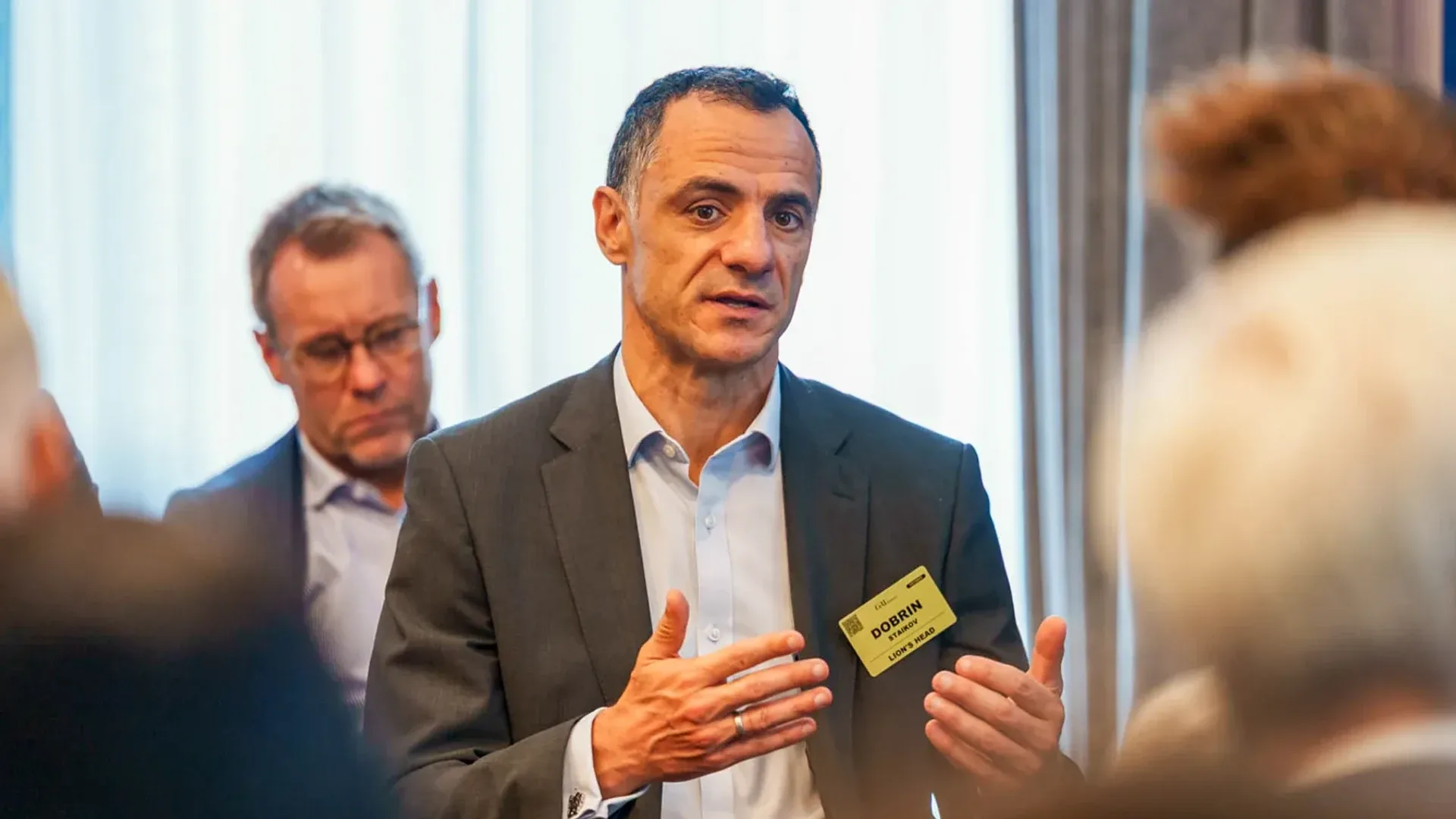
These insights were shared at the Europe’s Logistics Local Winners panel at Europe GRI 2026 - Summer Edition, moderated by Alfredo Mauri (DILS), with panellists Amaury Gariel (Scannell Properties), Dobrin Staikov (Lion's Head), Hubert Michalak (Hillwood), James Wakelin (Indurent), and Thomas Mallindine (Harleyford Capital).