 Unsplash
Shifting CEE Real Estate Capital Flows: From local liquidity to global capital re-entry
In-depth GRI insights from industry leaders on navigating market bottlenecks, domestic wealth creation, and emerging sector opportunities across CEE
July 24, 2026Real Estate
Written by:Rory Hickman
Executive Summary
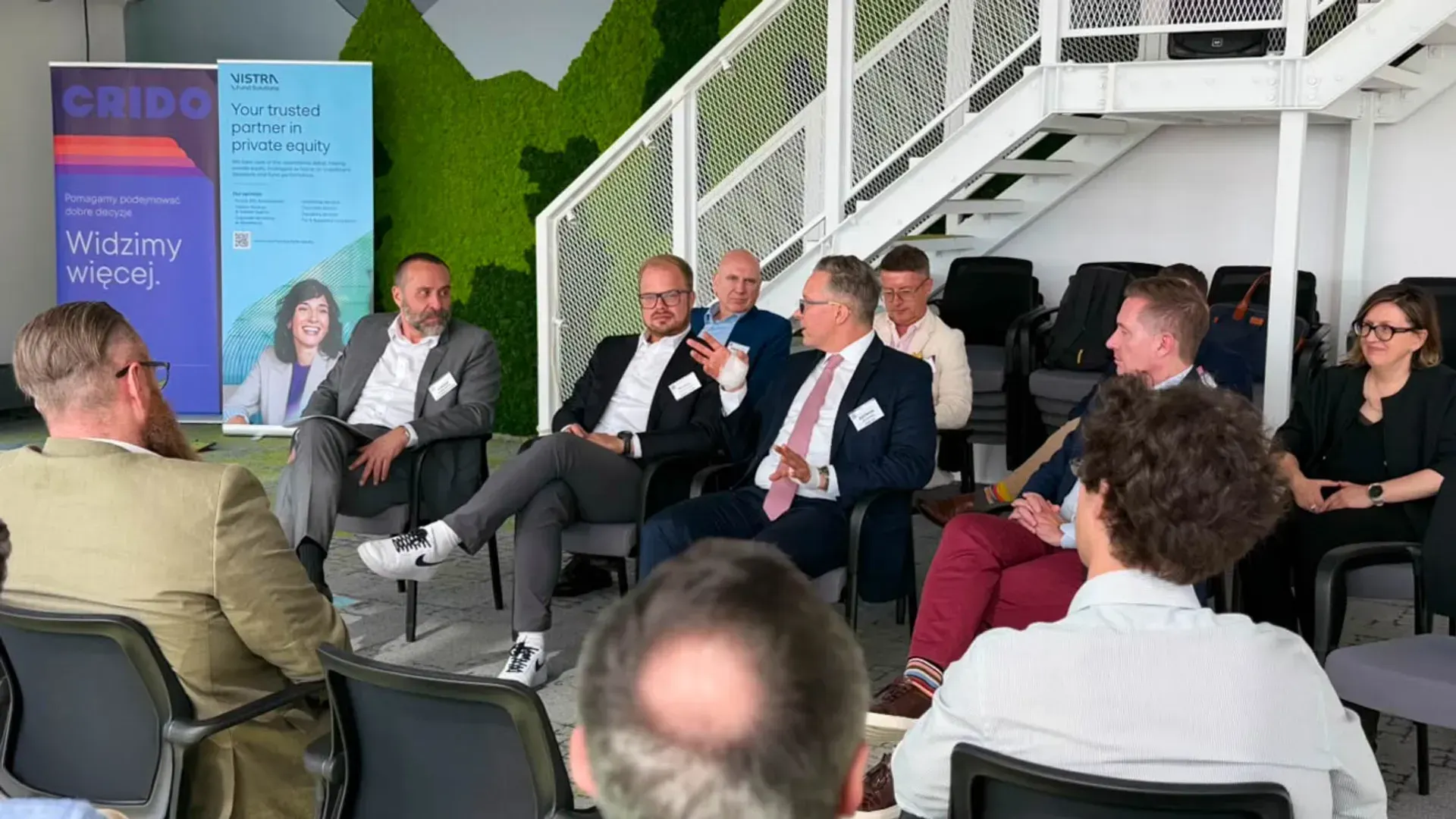
Investment strategies across the real estate landscape in Central and Eastern Europe are undergoing a structural transformation, revealed high-level discussions among senior market leaders at the recent CEE Capital Flows - Domestic RE Investments roundtable, co-hosted by Vistra at their offices in Warsaw.
Ahead of the CEE’s Next Chapter panel discussion at Europe GRI 2026 - Summer Edition, where top decision-makers active in the region will gather to continue the conversation, we look at how CEE stands ready to unlock its next phase of liquidity, cross-border investment, and institutional growth.
Ahead of the CEE’s Next Chapter panel discussion at Europe GRI 2026 - Summer Edition, where top decision-makers active in the region will gather to continue the conversation, we look at how CEE stands ready to unlock its next phase of liquidity, cross-border investment, and institutional growth.
Key Takeaways
- Poland continues to serve as the primary investment gateway across Central and Eastern Europe, underpinned by robust economic growth and falling vacancy rates.
- Domestic and regional capital have increasingly filled liquidity gaps left by traditional Western European institutions, though local wealth remains largely un-institutionalised.
- Global institutional investors are expected to return over the next 18 months, driving renewed transaction volume as interest rates ease and portfolio constraints resolve.
Inside CEE’s Shifting Real Estate Capital Flows
Historically anchored by core institutional capital originating from the US, Germany, and France, real estate investor demographics across the Central and Eastern Europe (CEE) region have undergone a marked shift.Large German open-ended funds, long considered a bedrock of regional market liquidity, have largely reduced their exposure or acted as net sellers, while French institutional buyers have concurrently focused primarily on acquiring assets offering inflation-indexed yields at recalibrated pricing.
In contrast, specialised US REITs and institutional vehicles have taken an active stance, aggressively targeting long-lease assets with terms exceeding ten years. This targeted appetite for long-lease products has driven a yield compression of approximately 75 bps year-over-year within prime single-tenant industrial and logistics segments.
Poland dominates CEE market hierarchy
Within the broader CEE footprint, national markets display distinct macroeconomic fundamentals, legal frameworks, and liquidity profiles.Poland continues to serve as the dominant institutional gateway for the region, underpinned by strong GDP growth, falling vacancy rates across prime sectors, and a mature legal environment that closely mirrors Western European civil codes.
Market activity in Poland offers exceptional breadth, spanning Warsaw central business district offices, regional retail parks, and prime industrial logistics networks.
While Poland remains the primary regional anchor for institutional capital, surrounding markets present specialised investment dynamics driven by distinct local supply constraints, fiscal structures, and administrative processes.

(GRI Institute)
Czechia, Hungary, and Romania
By comparison, Czechia stands out as a highly mature investment environment backed by high domestic savings rates. However, persistent shortages of prime domestic stock and soft local yields have prompted Czech capital to flow outward into Poland and wider regional markets in search of scale and yield.Hungary presents an intriguing growth trajectory, supported by competitive corporate tax structures, an absence of withholding tax for international investors, and a long-term goal of euro adoption by 2030. Nonetheless, Hungary's real estate sector faces challenges related to overall market depth and a shortage of institutional exit routes for large portfolios.
Elsewhere in the region, secondary markets such as Romania offer selective opportunities, though administrative delays - including multi-year municipal permitting freezes in Bucharest - have temporarily constrained development pipelines.
Domestic Wealth and Liquidity Bottlenecks
A defining feature of the current investment landscape is the prominent role played by domestic high-net-worth individuals and private family offices. In Poland, domestic capital has stepped in to maintain transaction momentum, predominantly targeting deal sizes ranging between EUR 2 million and EUR 30 million.Local investors frequently secure favourable debt terms from domestic banks due to broader corporate banking relationships, enabling them to outbid foreign institutions on mid-market assets.
Despite this activity, domestic wealth remains largely un-institutionalised. The absence of structured retail fund distribution networks, coupled with high fee margins demanded by commercial distribution channels, continues to hinder the creation of large-scale domestic investment vehicles.
Achieving Institutional Scale
Another major structural constraint is the limited availability of mega-portfolios capable of absorbing ticket sizes between EUR 500 million and USD 1 billion. This lack of scale effectively excludes ultra-large global private equity platforms that require immediate, heavy capital deployment.Additionally, investor sentiment among foreign capital based in major financial centres such as London or Frankfurt remains sensitive to currency risk.
Although commercial leases and transaction settlements across CEE are overwhelmingly denominated in the euro, the existence of local currencies, such as the Polish zloty (PLN), creates a psychological barrier for certain global boards, despite historical performance demonstrating strong long-term currency stability compared to several major global currencies.
(GRI Institute)
Sectoral Dynamics
Sector performance across the CEE region reflects clear structural shifts toward resilient asset classes:- Industrial and Logistics: Supported by nearshoring, supply chain reorganisation, and low vacancy rates, logistics assets remain a preferred allocation for institutional buyers seeking durable cash flows.
- Living Sectors: In the CEE residential market, the Private Rented Sector (PRS), student housing, and senior living represent rapidly growing frontiers, driven by demographic shifts and constrained homeownership affordability.
- Digital Infrastructure: Data centre developments are gaining momentum as global tech infrastructure expands, provided local power grid access and energy capacity can keep pace.
Geopolitical Reconstruction Future
From a geopolitical perspective, the ultimate resolution of the conflict in Ukraine presents significant long-term implications for regional real estate. Poland is uniquely positioned to act as the primary operational, transport, and administrative hub for future reconstruction efforts.Established infrastructure links - such as direct transport corridors extending from major port facilities like Gdansk to eastern logistics hubs - reinforce this strategic advantage.
While an end to hostilities would remove the geopolitical risk discount and unlock substantial global institutional capital, real-world execution will depend on clear labor market dynamics, regional trade policy, and robust governance frameworks for capital distribution.
Medium-Term Market Outlook
Looking ahead over a 12 to 18-month horizon, the CEE real estate market is expected to enter a phase of renewed liquidity and rising transaction volumes. Anticipated reductions in interest rates, the resolution of legacy portfolio workouts, and sustained tenant demand across core sectors will provide strong market tailwinds.While domestic private capital will remain essential for mid-market liquidity, the anticipated return of German open-ended funds, broader Asian institutional capital, and global private equity is projected to dilute local capital concentration, gradually restoring historical liquidity dynamics and reinforcing the region's position as a standardised, core European real estate market.
► Keep the conversation going at the CEE’s Next Chapter panel at Europe GRI 2026 - Summer Edition - full summit details here
These insights were shared during the Capital Re-Entry in CEE discussion at GRI’s CEE Capital Flows - Domestic RE Investments roundtable, co-hosted by Vistra, featuring contributions from Keynote Speaker Katarzyna Rzentarzewska (Erste Group Bank AG) and moderator Janusz Dzianachowski (Addleshaw Goddard), as well as Johannes Bauer (S+B Gruppe), Michał Stanisławski (Panattoni), Soren Olsen (Urban Partners), Sylwia Toczyska (Vistra), Szymon Ostrowski (PFR TFI), and Thomas Kächele (M&G Real Estate).