 Credit: GRI Institute
Investors capitalise on the end of easy money with highly targeted strategies
Unfiltered insights from the world's top real estate investors, developers, and financiers, captured at the GRI Global Summit 2025
November 18, 2025Real Estate
Written by:Helen Richards
Executive Summary
This official report from the GRI Global Summit 2025 details a structural reset in the global real estate landscape, driven by the end of easy capital, geopolitical friction, and a repricing of risk. Investors are shifting portfolios away from traditional office assets, into resilient sectors like logistics and residential. The lack of core capital is making private credit highly appealing for its attractive risk-adjusted returns, while data centres are identified as a new high-growth frontier, characterised by immense funding requirements and critical constraints around power and regulation. Finally, family offices are increasing real estate allocations as an inflation hedge and income source, even branching outside of their home regions, but preferring to use fund structures for these international investments.
Key Takeaways
- The global real estate market is undergoing a structural reset characterised by the end of easy capital, requiring investors to adopt highly targeted, sector-specific strategies and focusing on resilient assets like residential and logistics ("beds and sheds").
- The office sector is polarising, with capital flowing almost exclusively to high-quality, amenitised assets in prime locations, while AI is expected to accelerate the devaluation and potential repurposing of older, "back office" properties in secondary markets.
- Housing undersupply is a chronic global challenge exacerbated by counterproductive demand-side regulations (like rent controls) in Western markets, contrasting sharply with the proactive, development-accelerating government policies seen in the Middle East.
Download the PDF of this 'GRI Global Summit 2025 Spotlight' report here.
The End of Easy Capital: Cross-Border Investment in the New World Order
Persistent Political Risk
Political risk is no longer a temporary hurdle but a semi-permanent state that investors must navigate, having an undeniable impact on global capital flows and GDP growth.Although volatility initially caused a pullback, the real estate market is demonstrating resilience, with investors acknowledging the risk and cautiously re-engaging, particularly where fundamentals remain attractive.
This elevated risk demands a highly specific and targeted investment approach, as some markets present idiosyncratic factors and political uncertainty that make pricing challenging and worry global investors.
Despite the complexities, the repricing of real estate has created an attractive entry point that sophisticated investors are beginning to seize.
Critical Shortage of Core Capital
A significant challenge to the overall health of the global real estate market is the worrying lack of deep and abundant active core capital.While the US market is deemed the most resilient and functioning due to its robust base of patient, long-term domestic core capital, Europe is currently marked by a scarcity of such funds. Pension schemes in the UK are an extreme example, de-risking out of real estate to reach a full funding position, exacerbating the problem.
This capital gap compels investors to diversify their exit strategies beyond relying on core capital to return to the market in the short term, pushing them towards core plus, bank-backed capital exits, or even residential for-sale models.
European Occupational Market Fundamentals
Despite the capital challenges, the underlying fundamentals of the European occupational market are exceptionally strong across several key sectors.The residential sector is underpinned by phenomenal scarcity, with very low vacancy rates in major agglomerations like Berlin and Paris, fuelled by both intra-country and inbound migration that policy makers have yet to match with supply.
The industrial and logistics sectors are also poised for continued growth, driven by foresight expansion, supply fluctuations, and increased future demand spurred by major investment points in countries including Germany and Spain.
Even central prime offices maintain low vacancy rates as the premiumisation of the office market continues, and retail spaces are seeing rental growth, with fashion retail dominating retail leasing.
Portfolio Reallocation and Diversification
Investors are actively reshaping their portfolios to mitigate risk and capture growth, leading to a powerful sector reallocation away from traditional assets. This includes a strong consensus on down-weighting office exposure - a move so powerful that even existing owners are struggling to sell and are reluctant custodians of devalued assets.The favoured sectors are those resilient to economic slowdown, focusing on logistics and residential, which play into key macro megaforces and offer stable, inflation-limiting income.
To execute this, cross-border capital is becoming more targeted, preferring sector-specific strategies, co-investments, and platform deals over general macro views or individual trophy office assets.
The Allure of Private Credit
Real estate private credit has become highly appealing as an alternative investment during this transitional period, offering attractive risk-adjusted returns.Credit allows investors to enter the market without needing to predict the exact bottom of the cycle, providing strong cash flow and high returns from a detached position, making it arguably more attractive than both core and value-add equity.
However, experts caution that high returns in private credit rely on disciplined underwriting standards, suggesting that potential cracks in the system need close monitoring.
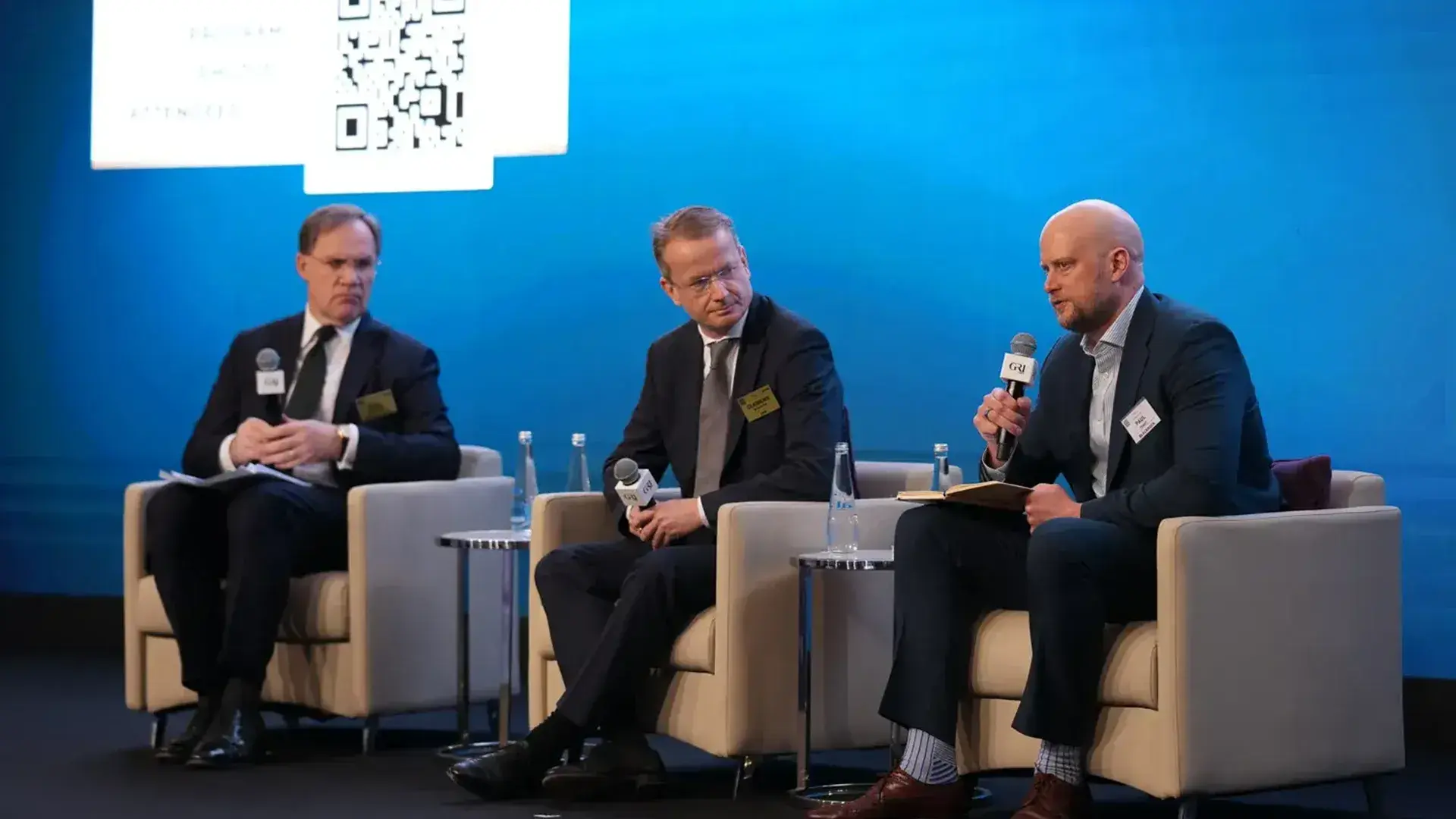
Opening Talkshow at the GRI Global Summit 2025 titled ‘End of Easy Capital - Can Cross-Border Investment Survive the New World Order?’ (Credit: GRI Institute)
Commercial Real Estate: Opportunities Amid Global Shifts
Uptick in Fundraising and Capital Flow
After a downturn in 2023 and 2024, the market is finally seeing a resurgence in capital raising, with early 2025 having demonstrated improved activity.This new capital is cautious and initially gravitating towards core-plus strategies and high-conviction sectors such as "beds and sheds" (residential and industrial). The “animal spirit” is beginning to stir, as investors are showing concern about missing out on opportunities.
Interestingly, the composition of capital is shifting; while endowment money is currently scarce due to political uncertainty affecting research funding, a significant emerging source is the US 401(k) individual savings network, now permitted to invest in private real estate.
Overseas sovereign and state pension funds are also actively deploying capital, but prefer managers focused on specific asset classes rather than broad-based funds.
The Great Office Divide
The office sector is experiencing an unprecedented level of polarisation, dividing assets into “haves” and “have-nots”.Liquidity and investment are highly selective, focusing almost exclusively on well-located, high-quality, and highly amenitised assets in prime sub-markets. This divergence is starkly illustrated by a significant spread in rents and transaction values even across short distances.
Conversely, the commodity-grade or older suburban offices face huge vacancy rates and a precarious future, with many expected to be redeveloped into housing.
This intense focus on quality is reflected in debt markets, which are now willing to finance high-calibre office refinancings, signalling a stamp of approval that prime office space is here to stay.
Acceleration into Alternative Sectors
While the office market is debated, capital is aggressively flowing into alternative asset classes like industrial, residential, and data centres.Residential, particularly multifamily, is facing the most aggressive capital deployment, leading to cap rate repression as investors chase growth fundamentals. The consensus is that both the residential and industrial sectors offer a deeper, more liquid pool of capital compared to the lumpy, capital-intensive office sector.
The data centre sector is a new high-growth frontier, with development finance proving readily available and spreads tightening. However, the astronomical cost of building these facilities - up to USD 1 billion per project - raises questions about long-term residual value and liquidity for new investors entering the market.
The Looming Impact of Artificial Intelligence (AI)
The rise of AI is set to drastically reshape the office sector, a disruption comparable to the internet's arrival in the 1990s, by fundamentally altering demand and property valuations.Office demand in major knowledge hubs like New York and Dallas is expected to remain resilient as their primary value lies in the concentration of human talent and collaborative innovation, which AI cannot easily decentralise or replace.
Conversely, the deepest disruption is forecast for smaller, "back office" markets. AI's capacity to automate administrative and data processing roles will reduce the need for large clerical workforces, leading directly to decreased demand for this type of office space.
This reduction is expected to translate into higher vacancy rates and subsequent devaluation of office properties in these secondary locations, pressuring owners towards repurposing buildings to mitigate financial losses. AI is, therefore, accelerating the already existent office trend of flight to quality
Selective Cross-Border Deployment
Global investors are adopting a highly strategy-specific and manager-focused approach to cross-border deployment. Rather than seeking a single global fund, institutional investors prefer to choose a specialist manager for each region and asset class.For emerging markets, especially in the Middle East and Asia, capital is increasingly sourced from domestic institutions and local family offices. This is particularly true in India, where the domestic institutionalisation of capital is a major emerging trend.
While the Middle East is seen as having strong demand for residential and industrial property, the lack of a mature secondary market for institutional real estate and poor data quality remain significant hurdles for international core investors.
 Leo Machado, Partner & Managing Director GCC at the GRI Institute, addresses global real estate market leaders at the GRI Global Summit 2025. (Credit: GRI Institute)
Housing Strategies: Bridging the Global Urban Supply Challenges
Chronic Undersupply in Global Housing
There is an extremely strong and persistent global demand for housing, with vacancy rates as low as 0.5% to 2.5% in various markets. This immense demand is also met with a severe supply-side crisis.In Europe, this deficit is partly attributed to the financial crisis wiping out many developers, leaving only small operators who struggle to build enough homes. Spain, for instance, demands 200,000 to 250,000 new homes annually but is currently building fewer than 90,000.
India also faces an enormous gap, with demand for affordable housing at perhaps five times the current construction rate. This supply issue is the fundamental challenge creating both opportunity and difficulty for investors.
Regulation Gridlock in Western Markets
Government regulations, intended to help, are actually suffocating new housing development in the UK and Europe, as developers face excessive timelines for complex planning processes, and regulatory bureaucracy involves an overwhelming number of consultants and reports.Examples from the UK include a new fire sign-off process that reportedly delays projects by over a year, while also impeding the occupation of finished buildings, burning up interest costs.
Investors are deterred by the unpredictability of policies, especially in the rental sector, where regulations can change mid-investment, undermining initial financial underwriting.
Counterproductive Regulations
Many real estate market players criticise demand-side housing regulations. Introduced as an attempt to solve the housing affordability crisis in a number of European markets, it is argued that efforts would be better allocated on increasing supply.Experience in markets including Berlin and Barcelona shows that rent controls are counterproductive, significantly decreasing the availability of rental housing. Investors view rent controls - particularly those with very low caps (1-2% increases) - as a major deterrent, making returns uncompetitive and challenging the viability of hold-to-rent strategies.
The risk from rent controls is even pushing some owners in Spain to sell units individually rather than holding them as part of a rental portfolio.
Middle Eastern Policy Accelerates Development
In stark comparison to the West, developers in the UAE and Saudi Arabia benefit from active government support and streamlined approval processes.In Abu Dhabi, a developer is able to secure official architectural approvals in as little as four months, a timeline which would take years in London or New York. The UAE government, focused on growing the economy through real estate, even helps to promote developers and match advertising efforts.
Meanwhile, in Saudi Arabia, the government is using policy to actively push development, such as mandating higher floor-area ratios (FARs) near metro stations, and imposing the White Land Tax, or vacant property fees (up to 10% of value), to force landowners to build out their undeveloped land banks.
Opportunities in Affordability
While affordability is a public concern, investors can approach it as a commercial opportunity. In India, strategy for affordable and mid-income housing proves that mid- to high-teen returns are achievable in private credit, provided the demand risk is lowered and the strategy is executed at scale.This requires building an entire ecosystem that addresses the whole value chain - not just financing, but also land sourcing, approvals, construction technology, and sales.
For governments to support these endeavours, they should reduce costs through interventions such as reduced land costs for affordable projects, or scaling down requirements like parking if a development has good public transport access.
 Many real estate market players criticise demand-side housing regulations, arguing that efforts would be better allocated on increasing supply. (Credit: GRI Institute)
Data Centres: Global Capital in the Digital Transformation
Data Centres: Real Estate or Infrastructure?
The perception of data centres is evolving, with debate regarding whether the sector categorises as infrastructure or real estate.Many argue that this categorisation is fluid and often depends on the investment strategy. For example, a built-to-sell approach may be considered real estate, whereas generating non-permanent income leans towards infrastructure. This duality reflects the asset's hybrid nature, which has both a physical structure and a critical utility-like function.
The consensus is that while institutional ownership is still nascent, the interest in data centres is decidedly mainstream, propelling them into a new asset class with various sub-classes for investors to explore.
Hyperscale Funding Models
The sheer scale and cost of modern data centre development are creating significant capital challenges, particularly with the rise of AI workloads.An average data centre has dramatically increased from 5-10 megawatts (costing up to USD 100 million) just a few years ago to an average of 100 megawatts (costing approximately USD 2 billion), with some moving into the gigawatt territory.
Traditional financing methods are no longer sufficient. Consequently, the industry is seeing the introduction of new financial vehicles, an influx of large asset managers, and sovereign wealth funds.
Joint ventures (JVs) are also becoming an essential mechanism to bring in the necessary capacity, particularly as debt markets, supported by the credit quality of major tech tenants like Meta and AWS, become crucial for executing these massive deals.
Power and Regulation
The electrical grid and regulation are recognised as the two most critical constraints for data centre assets, often overshadowing land availability.In Europe, obtaining power and planning permission can be an arduous, multi-year, even decade-long journey. This difficulty in delivery is so profound that it is tempering concerns regarding oversupply in the market.
This is also causing a geographical shift in development: AI workloads are becoming "application agnostic", meaning they are migrating away from traditional core markets, such as Frankfurt, London, Amsterdam, and Paris (FLAP), to regions like the Middle East where governments actively drive infrastructure, and where power and land are readily available.
ESG vs Exponential Energy Demand
Sustainability and ESG considerations are no longer a mere option but a necessity driven by the massive power requirements of AI. The enormous computational demand, where generating an image or video consumes 10 to 100 times more power than a simple search query, means the existing grid and power generation cannot cope with future growth.The industry is therefore shifting from a focus on sustainability for its own sake to a necessity to sustain growth. This pressure is forcing a focus on hybrid and alternative energy sources, with a growing emphasis on nuclear technology, particularly Small Modular Reactors (SMRs), which are seen as a potential key future source to enable faster, off-grid deployment.
Meanwhile, regulations also continue to drive ESG considerations, and in certain regions - especially those with hot, humid climates like Spain and India - constraints are being imposed not just on power, but also on water usage, leading to the introduction of Water Use Effectiveness (WUE) metrics.
Future Trend of AI Inferencing
Looking ahead, a crucial potential trend is the move from AI training to AI inferencing. Training, which currently drives the demand for the massive gigawatt data centres, involves building the large language models. Inferencing, however, is the process of interacting with those models to get results, and some projections suggest it will require 10 times the capacity of training.This shift will likely necessitate a different infrastructure model - smaller, more distributed edge data centres built closer to cities to ensure the low latency required for real-time applications.
This technological evolution will necessitate continuous innovation in data centre design, cooling, and high-density computing to keep pace with the changing demands.
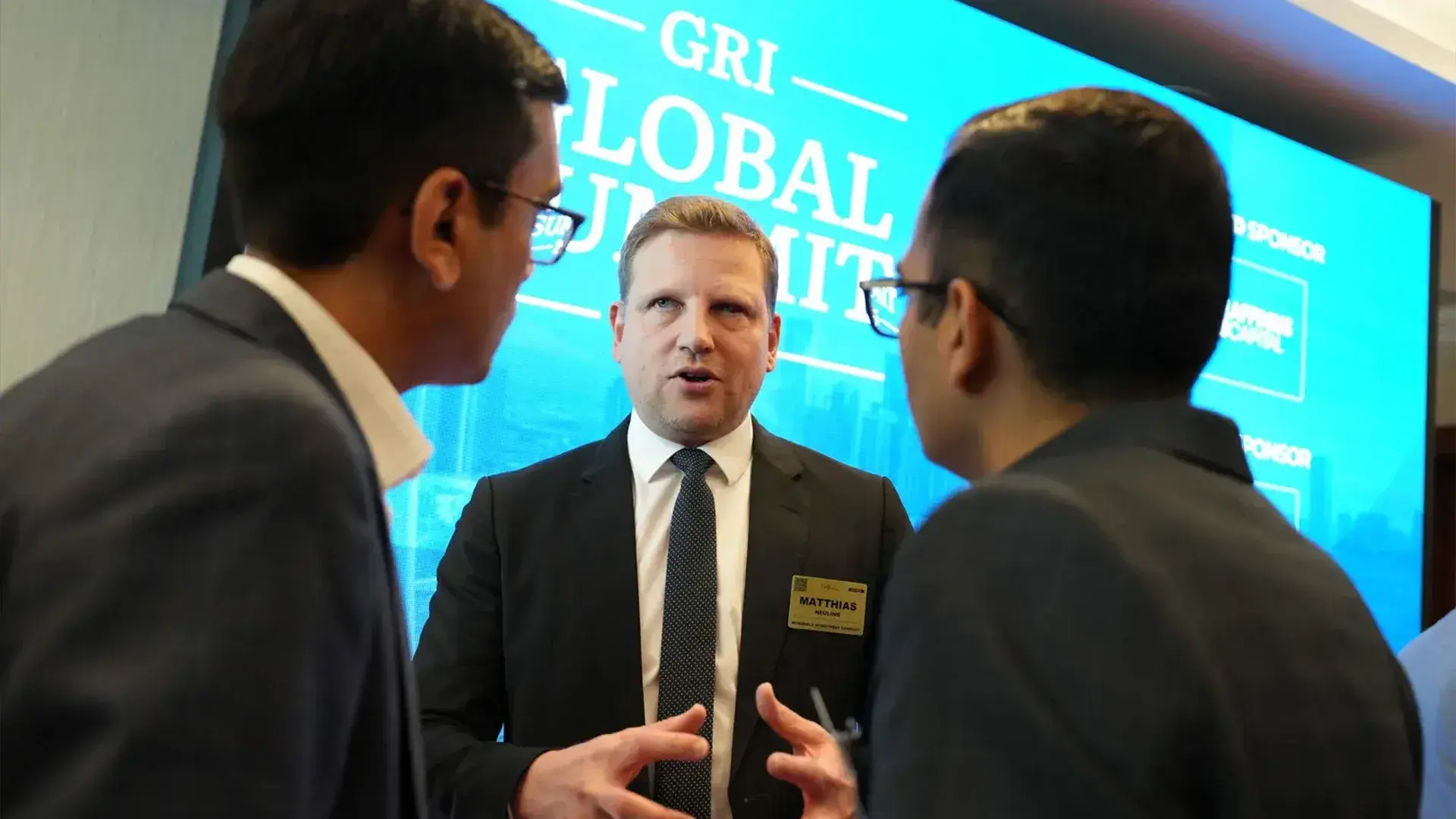
Sustainability and ESG considerations are no longer a mere option but a necessity driven by the massive power requirements of AI. (Credit: GRI Institute)
Hotels & Hospitality: The Next Wave of Growth
The Middle East's Dynamic and Divergent Market
The Middle East is characterised by a high degree of market diversity, featuring both burgeoning areas like Saudi Arabia, which is viewed as an emerging market for hospitality and tourism, and the more mature market of Dubai.A common thread is the dynamic growth throughout the region, with the Gulf Cooperation Council (GCC) seeing a tremendous rise as both a tourism and transit hub. The region’s effective handling of the COVID-19 pandemic also drew significant attention and capital, leading to an increased perception of the UAE as a safe harbour.
A major challenge identified, however, is the tendency to build beautiful but inefficient hotels, often leading to overinvestment and poor returns due to a lack of focus on maximising the revenue-generation capacity of the space.
Branded Hotel Management Agreements (HMAs)
Hotel owners frequently find themselves in a challenging position when dealing with large global brands, primarily due to the disalignment of financial interests. Branded operators are incentivised by revenue-linked fees (often ~15% of revenues), whereas owners prioritise profit and return on investment.This can result in an unfair sharing of value creation, intransparency regarding central and loyalty program charges, and the brand's primary focus being on growth and portfolio expansion rather than the profitability of the individual asset.
Furthermore, developers often lose all control over their property once an HMA is signed, with a common result being the owner inadvertently breaching the agreement by attempting to interfere or impose their will after realising the hotel is underperforming.
A suggested mitigation strategy is for owners to implement strong asset management and, where feasible, opt for a franchise agreement paired with a third-party operator, which offers greater control and a significantly higher selling price premium upon exit.
Global Capital Flow in Hospitality
Institutional and global capital flows are playing an increasingly crucial role in the hospitality sector. Institutions like the International Finance Corporation (IFC), the private sector arm of the World Bank, are actively involved in emerging markets, driven by a "double bottom line" mandate that requires both financial returns and significant development impact, such as job creation.The IFC offers essential support to investors by providing long-term dollar debt and political risk insurance through its sister company, MIGA (Multilateral Investment Guarantee Agency).
A notable trend is the rising engagement of GCC players in emerging markets, frequently stemming from government-to-government (G2G) obligations and leading to large-scale platforms such as Kasada in Sub-Saharan Africa. For debt providers, having a brand is typically preferred as it offers greater comfort and helps to maximise the value of the underlying real estate asset.
South America's Untapped Tourism Potential
Latin America, especially Brazil with its 213 million residents, holds huge tourism potential which is not yet fully realised as the region faces several key obstacles.Firstly, while Mexico spends around USD 300 million on the promotion of international tourism per year, Brazil spends just USD 50 million. Three years ago this number was USD 8 million, showing a vast improvement and trajectory to growth in the sector, however there is still work to be done.
Secondly, there is a critical need for improved international connectivity - an obstacle also faced by other South American countries. Finally, there is a lack of high-end product and penetration of international brands, with only 10% of all hotels in Brazil operated by international brands, and a mere four properties meeting the criteria of five-star.
This situation creates a massive opportunity for high-end developers and branded residences, especially when coupled with strategic initiatives of developing local expertise through training and education - also addressing the shortage of well-trained staff - and the important effort of securing necessary, long-term funding from multilateral development banks.

Institutional and global capital flows are playing an increasingly crucial role in the hospitality sector. (Credit: GRI Institute)
Family Offices: Invisible Capital, Visible Power
Strategic Allocation to Real Estate
Family offices are significantly increasing their real estate allocations, viewing it as a critical component of a diversified portfolio.While some see it as a valuation engine through asset repositioning and a source of cross-vertical synergies, the consensus is that real estate serves primarily as a hedge against inflation and market volatility, and as a reliable source of income and cash flow.
This perspective is particularly strong for those based in the UAE, where the tax landscape favours income-generating assets. The allocation levels are substantial, with some families committing as much as 20% of their capital to the asset class.
Geographic Focus
Historically, family offices had a strong home country bias, investing indiscriminately in real estate nearby. However, as they become more sophisticated, they are actively questioning if traditional, local holdings, such as UK residential properties, are the best long-term allocation, particularly given future demographic and national economic changes.The search for new opportunities is leading many family offices to focus on the “sunny side” of the Mediterranean for hospitality and development (for example Portugal, Greece, and Italy), and in specific verticals like student housing, self-storage, and industrial warehousing globally.
For investments outside their home region (often the UAE), family offices predominantly prefer to invest through fund structures to mitigate risk and compensate for a lack of local expertise, only going direct in their familiar, local markets.
Leverage in Real Estate
Leverage is becoming an essential component of real estate investing, particularly for complex construction or development projects, and for achieving necessary growth and scaling.Real estate is considered one of the best asset classes to leverage, as the long-term, predictable cash flows and asset-specific debt help to mitigate the risk of margin calls seen in volatile equity markets. Furthermore, using debt instils financial discipline by forcing investors to consider the true cost of capital.
Leverage can also be employed strategically as a mechanism for cross-jurisdictional tax management. However, accessing this leverage can be challenging for family offices, with common issues including high rates, short terms, and the need to expose family assets, leading some to favour bridge loan funds or corporate (non-family office) structures to facilitate borrowing.
Governance of Family Offices
A significant theme in the management of family offices is the tension between the family's emotional attachment to real estate and the need for institutional-grade governance.While family offices are agile and nimble, allowing them to pursue opportunities where institutional capital often can’t, this freedom carries the risk of reckless, emotionally-driven investments.
To combat this, successful family offices employ strong governance bodies, including investment committees with external advisors, and policies that restrict international direct investments to funds. This structure allows family members to be engaged and educated on the process, moving them from being mere recipients of wealth to curators of a future portfolio.
Thank you to all those who participated in the GRI Global Summit 2025, as well as our sponsors Affinius Capital, The Art of Living in Spain, CAIN, Cushman & Wakefield, and MARAEY for their valuable support.