 GRI Institute
Spotlight: Global Capital Flows and the New Underwriting Playbook in Latin America
Unlocking relative value in Latin American real estate through complete financial alignment, customized currency hedging, and focus on operational quality
15 de junio de 2026Mercado Inmobiliario
Escrito por:Jorge Aguinaga
Resumen Ejecutivo
As we look back at the strategic intelligence shared by industry leaders at Latin America GRI Real Estate 2026 in New York, the market shows resilient demographic tailwinds and nearshoring opportunities despite a complex macroeconomic landscape. However, prolonged high interest rates, currency volatility, and fragmented debt markets continue to disrupt global capital deployment.
In response, institutional funds are shifting from traditional opportunistic models toward defensive operational assets - such as industrial logistics and hospitality - and private credit architectures. Success in this cycle heavily relies on robust local partnerships and an uncompromising mandate for climate resilience to avoid the core capital brown discount.
We will continue tracking these sectoral shifts at GRI Hospitality Mexico & Central America 2026 and Andean & Central America GRI 2026 - don’t miss the chance to shape the future of the region's built environment.
In response, institutional funds are shifting from traditional opportunistic models toward defensive operational assets - such as industrial logistics and hospitality - and private credit architectures. Success in this cycle heavily relies on robust local partnerships and an uncompromising mandate for climate resilience to avoid the core capital brown discount.
We will continue tracking these sectoral shifts at GRI Hospitality Mexico & Central America 2026 and Andean & Central America GRI 2026 - don’t miss the chance to shape the future of the region's built environment.
Puntos Clave
- High currency volatility in Latin America complicates cross-border investments. To manage this, structured capital providers now reject isolated advisory models, demanding local operators commit significant personal stakes to guarantee financial alignment.
- Real estate debt ranges from Mexico’s well-funded 70% bank leverage to Colombia’s volatile maturities. To sidestep commercial credit vacuums for alternative assets, developers are successfully adopting agile, tokenized SPVs in El Salvador.
- Rather than chasing green premiums, investors utilize the "brown discount" to protect cash returns. Furthermore, robust social governance cuts hospitality turnover from 100% to under 30%, which reduces labor costs and boosts long-term IRR.
Global capital flows & Latin America
The Barrier of Eternal Adolescence and FX Reality
The industry frequently leans on the hopeful narrative of Latin America as a market merely waiting to mature. However, our observations confirm that the region's persistent volatility acts as a massive barrier to entry.For some major global players, Latin American investments have historically failed to achieve lift-off, often maintaining low portfolio thresholds precisely because these risks are difficult to manage.
A critical hurdle remains currency fluctuation. While local returns may look exceptional on paper, the frictional costs of ownership and complex FX hedging can quickly turn a profitable local deal into a disaster when converted back to US dollars or euros.
The debate on capital flows to Latin America continues in Miami. Learn more.

Network time at Latin America GRI Real Estate 2026 (Image: GRI Institute)
Redefining the Local Partnership Model
The era of international capital simply dropping executives into emerging markets to impose foreign frameworks is definitively over. The rules of engagement are hardening.Sophisticated capital providers and credit experts no longer just seek local advisors; they demand complete financial alignment. Local developers and operators are now expected by these structured capital providers to put significant personal stakes on the line alongside global investors.
This shared financial risk ensures that if a deal fails, the local partner absorbs the loss as well. We view this as the ultimate hedge against the bureaucratic delays and the unpredictable permitting timelines inherent in these jurisdictions.
Asset Class Polarization: The Data Center Divide
Right now, the broader real estate market is heavily stalled. Transaction volumes plummeted to crisis lows across various markets due to a massive bid-ask spread on valuations, and recent brief recoveries were quickly choked by global macro triggers, specifically geopolitical conflicts such as the war in the Middle East.Capital is not aggressively moving; instead, it is selectively waiting for relative value plays. We are seeing investors target assets tied to fundamental, unchangeable human needs: broad residential housing, last-mile logistics - fueled significantly by foreign capital, specifically Chinese companies actively utilizing Mexico to bypass geopolitical friction - and a hospitality sector currently bolstered by record-high average daily rates.
Meanwhile, legacy office spaces and physical retail are largely viewed with deep skepticism. Data centers, however, provoked a sharp structural divide among the experts.
While some view AI infrastructure as an exponential growth opportunity that vastly outweighs the risks of technological obsolescence, others warn that data centers function surprisingly like the luxury hospitality business.
Skeptics caution that success is not just about supplying massive amounts of power; it is about prestige and hyper-local neighborhood preferences. Tech tenants will reject a fully-powered facility simply because it sits in an undesirable location.
For example, a massive 45-megawatt data center in East London sat empty because hyperscalers exclusively preferred other specific regions.
Macro Volatility vs. Structural Governance
Global markets frequently obsess over short-term geopolitical noise, such as tariff threats or the renegotiation of trade agreements. When these threats arise, capital simply pauses and seeks shelter in more stable regions, like Europe, until the chaos blows over.However, the true, systemic threat to real estate capital flows is the shifting of local political regimes across Latin America. It is these localized governmental shifts - such as transitions from right to left - that directly dictate the rule of law, property rights, and long-term development policies.
Ultimately, global capital has no loyalty to geography; it will only anchor where the rule of law can guarantee the safety of the investment.

Senior leaders gathered in New York to debate the Latin American real estate outlook (Image: GRI Institute)
The New Credit Architecture
Navigating Latin America's Fragmented Debt Landscape
Latin America’s real estate financing landscape is fragmented into distinct regional bubbles that dictate capital availability.In Chile, developers benefit from a mature debt capital market where Unidad de Fomento (UF) financing from institutional investors provides a natural hedge and a strong spread against rents.
Conversely, Colombia's market is highly bank-centric and currently navigating its "wildest teenage years". During the pandemic, banks severely tightened their risk appetites, reducing long-term debt definitions to just six months.
At one point, 50% of debt matured in less than a year, forcing developers into an erratic, constant refinancing cycle. Coupled with local interest rates hovering around 13% to 14%, developers in Colombia find that Loan-to-Value (LTV) ratios exceeding 35% become heavily dilutive.
Meanwhile, commercial banks in markets like Mexico and Brazil remain well-funded. In Mexico, for instance, commercial banks comfortably offer leverage up to 70% at pricing levels that heavily outcompete alternative debt funds
Currency Hedging and Innovative Structuring
To mitigate the mismatch between local revenue streams and USD-denominated debt, financial institutions are deploying highly customized risk-management solutions.Traditional cross-currency swaps can be prohibitively expensive. They also require significant credit support, particularly for long-term debt in markets like Colombia.
To bypass this, some lenders now offer pre-hedged pools of local currency. By absorbing the swap directly onto their own balance sheets, these banks shield developers from mark-to-market risk. This provides predictable pricing in Brazilian Reais or Mexican Pesos exactly at the moment of disbursement.
Beyond managing currency risk, innovative structuring is also being utilized to incentivize sustainable development.
Institutions like the IFC are tying structural benefits directly to verifiable decarbonization strategies. For instance, issuing through an IFC B bond structure grants withholding tax exemptions. Furthermore, adopting specific decarbonization tools allows developers to earn rebates on the final spread charged to the client.
The Digital Asset Frontier and Alternative Capital
While traditional commercial banks dominate the capital stack, their reluctance to underwrite operational assets lacking long-term leases - such as hotels, multifamily housing, and self-storage - creates a distinct financing vacuum.Alternative private funds are present in the market, but developers often find them too expensive and lacking the necessary local scale to serve as viable solutions.
To bypass this institutional bottleneck without paying mezzanine premiums, developers are increasingly exploring digital asset tokenization. This is primarily routed through El Salvador's favorable and regulated legal framework.
Rather than exposing investors to cryptocurrency volatility, these tokenized Special Purpose Vehicles (SPVs) overwhelmingly operate in USD. They function as an agile distribution channel to reach family offices and institutional investors.
As long as the physical property title remains within the digital SPV - and is not physically transferred in the local jurisdiction - this structure offers substantial tax holidays for the participants.
Beyond IRR: Capitalizing on Climate Resilience and Social Impact
Reconciling IRR with the Brown Discount
While the push for environmental sustainability is strong across Latin America, real estate investors remain largely unwilling to trade their Internal Rate of Return (IRR) for green metrics.Instead of guaranteeing a green premium for sustainable buildings, developers are navigating the emerging concept of a brown discount, where non-resilient or operationally expensive assets risk diminished valuations.
To bridge this gap, sustainable design must be strategically framed around tangible cost reductions that boost the cash-on-cash returns institutional investors heavily prioritize.
- Asset Class Nuance: In sectors like conventional multifamily and offices, investors rarely demand formal certifications. Rather, they strictly prioritize operational quality, stable cash flows, and robust property management to secure investments.
- Cost Efficiencies: Early-stage integrations of energy-efficient systems drastically lower Operating Expenses (OpEx), occasionally yielding payback periods of just a few months. In the hospitality sector, where power consumption accounts for 6% to 10% of revenue, these structural efficiencies directly bolster overall project feasibility.
Climate Resilience as a Mandate for Insurability
Projecting returns over a 30 to 50 year asset life cycle requires developers to acknowledge severe climate realities, such as rising sea levels. For example, developers operating in vulnerable coastal areas like Los Cabos are preemptively adjusting historical flood defense levels from 4.5 meters up to 6 meters to ensure long-term asset survivability.This physical risk directly translates to financial risk on the balance sheet, particularly regarding commercial insurance. With insurers increasingly pulling out of high-risk regions due to catastrophic climate events, mitigating the annual average loss and potential maximum loss is a critical financial objective.
Assets that incorporate robust climate solutions preserve capital and secure their ongoing insurability while qualifying for lower premiums.
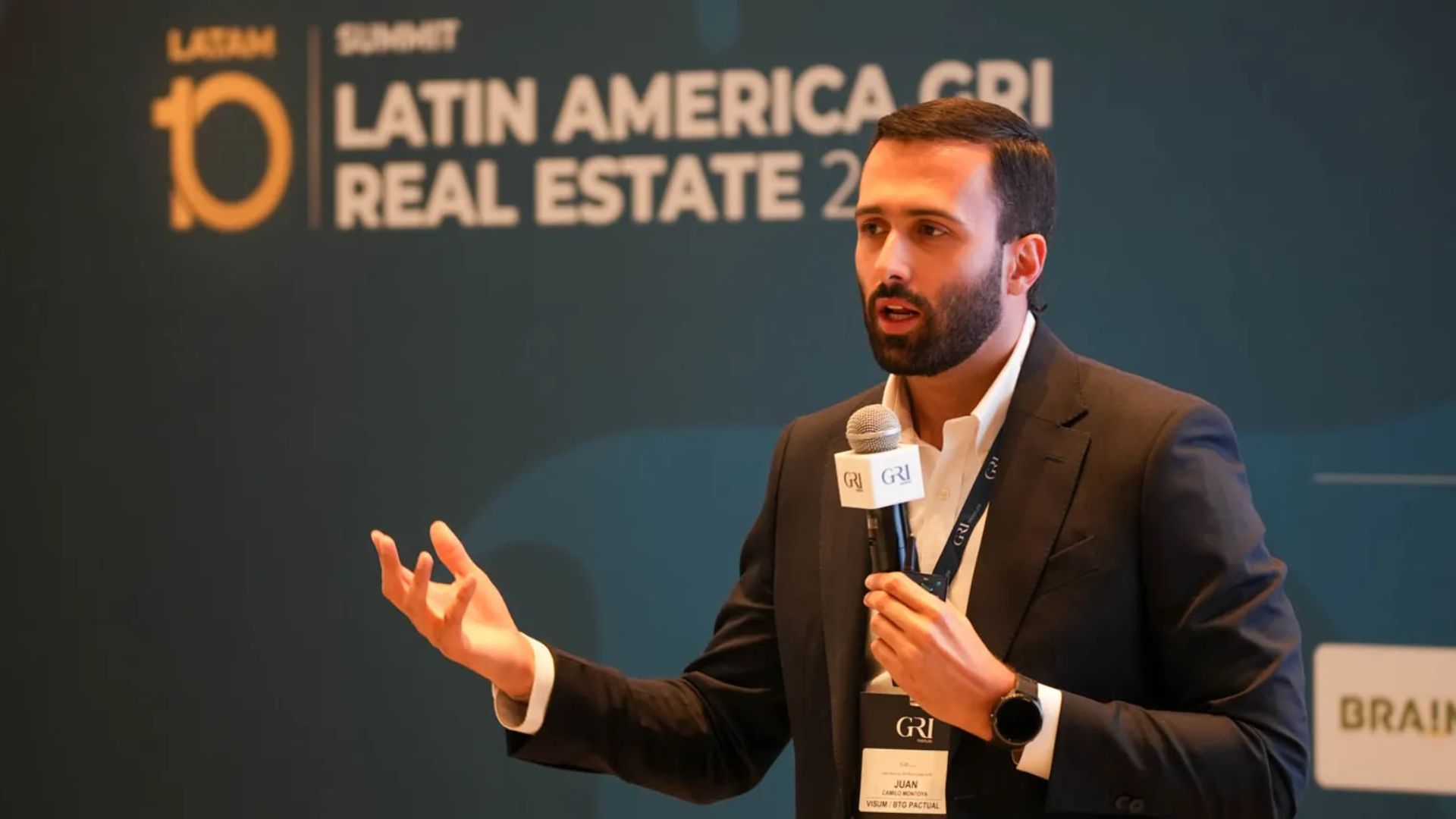
Latin America GRI 2026 is the tenth edition of the event (Image: GRI Institute)
Unlocking Value Through the Social Pillar and Certifications
While environmental investments often require long-term horizons to pay off, the social component in ESG delivers immediate IRR boosts through superior human capital management.- The Social ROI: In hospitality, personnel accounts for a massive 20% to 30% of total operational costs. By investing in structured career pathways and ethical hiring, best-in-class operators have successfully reduced industry-standard employee turnover rates of 80% to 100% down to under 30%. This drastically cuts labor costs while simultaneously elevating guest satisfaction and overall revenue. Additionally, establishing a social license by integrating and enriching local communities ensures long-term stakeholder alignment and project viability.
- Strategic Certifications: Building certifications - such as the International Finance Corporation (IFC) Excellence in Design for Greater Efficiencies (EDGE) standard - facilitate access to sustainable-linked loans, potentially shaving 5 to 15 basis points off massive corporate debt facilities.
Ultimately, sustainable frameworks must drive holistic operational quality to maximize an asset's valuation at the time of sale.
The Latin American Edge
Market Sentiment
The Latin American real estate market is currently entering an early recovery phase that presents attractive entry points for investors. Looking ahead to the 2026-2027 cycle, market sentiment indicates that industrial logistics, data centers, and hospitality are positioned to yield the strongest risk-adjusted returns.Global allocators are actively seeking scalable partnerships with established local platforms, though ongoing political and regulatory uncertainty remains the primary hurdle for capital deployment. Long-term projections suggest that by 2036, mature and stable REITs will dominate regional ownership structures.
Industrial & Logistics Resilience
Despite broader economic fluctuations, the industrial and logistics sector maintains a dominant position, bolstered by Latin America's geographic proximity to the US and a younger labor force compared to aging regions like Europe.Within Mexico, the greater Mexico City metropolitan area is experiencing strong momentum and very low vacancy rates. However, developers face structural challenges regarding legal transparency and aggressive local competition for land acquisition.
Conversely, cross-border markets like Tijuana and Monterrey are facing significant uncertainty driven by global trade renegotiations and shifting international tariffs. Ultimately, stakeholders must navigate this unpredictability by remaining creative and highly competitive
Reimagining Retail & Mixed-Use
Contrary to the overbuilt markets of the United States and Europe, retail space in Latin America presents a massive growth opportunity due to a significantly lower square-meter-per-capita ratio.Retail is now recognized as the critical anchor for successful mixed-use urban ecosystems. By dedicating 10% to 15% of space to destination or entertainment-driven retail rather than traditional storefronts, developers can elevate the performance and viability of surrounding assets.
Furthermore, integrated mixed-use models unlock vital operational efficiencies, such as shared parking infrastructures where office and residential peak hours naturally offset one another.
Office Sector Evolution
Across diverse metropolitan hubs like Santiago, São Paulo, and Buenos Aires, the office sector faces uniform dynamics characterized by a stark flight to quality.Prime, well-located core assets are experiencing space scarcity and rising rents, while secondary locations suffer from record-high vacancy rates.
Capital remains available, but investment theses are highly scrutinized, explicitly targeting flexible, experience-driven environments that replicate mixed-use communities.
Obsolete buildings lacking premium locations are increasingly targeted for creative adaptive reuse, including conversions into hotels or low-complexity medical centers.
Luxury Hospitality & Sustainability
Within the luxury hospitality sector, operators emphasize that while sustainability is highly important, green initiatives must ultimately make economic sense.Upgrades and eco-friendly integrations are evaluated on a strict case-by-case basis to ensure they benefit the investor, the brand, and the guest experience without compromising financial viability.
Navigating Affordable Housing
Affordable housing continues to struggle with tight margins and severe vulnerability to macroeconomic headwinds, particularly fluctuating interest rates and shifting government subsidies.To mitigate these risks, developers are shifting focus toward resilient capital cities - such as Bogotá and Medellín - and leveraging targeted government incentive programs like Conavit in Mexico.
In El Salvador, government incentives are also spurring investment, though these specific tax-free benefits are notably driving high-density residential developments, such as towers above 35 floors, rather than traditional affordable housing.
Because large-scale, multi-year projects place a heavy burden on the equity deployment capabilities of individual funds, investors are increasingly blending debt and equity structures to increase check sizes and achieve targeted returns. To align with shorter fund lifecycles, developers are also breaking massive developments into more manageable phases.