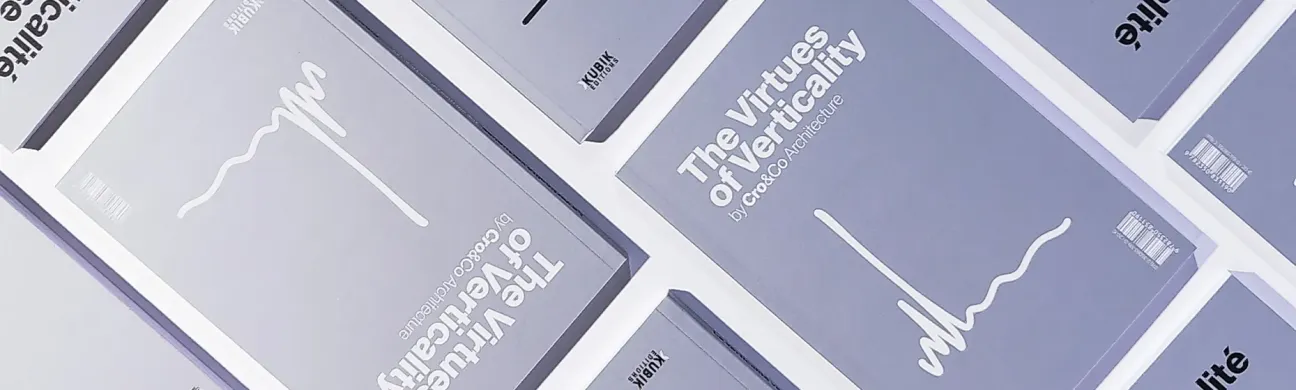
 Credit: Cro&Co ©
Vertical Virtues: Rethinking the Future of Towers in Urban Spaces
Discover how Cro&Co and CroMe Studio are shaping the future of verticality by merging architectural innovation with social value
January 6, 2026Real Estate
Written by:Rory Hickman
Key Takeaways
- Cro&Co/CroMe Studio’s new book examines the pivotal role of towers in shaping sustainable urban landscapes and addressing global challenges.
- The firm discusses the importance of incorporating environmental sustainability and social value in the design and planning of vertical structures.
- They advocate for a comprehensive approach to urban development, where mixed-use towers can contribute to both community engagement and environmental responsibility.
In an exclusive GRI Institute interview about their new book, The Virtues of Verticality, Cro&Co Architecture’s Jean-Luc Crochon and CroMe Studio’s Nayla Mecattaf delve into the evolving role of high-rise buildings in modern urban development.
Drawing on their extensive experience in high-profile projects that include The Shard in London and Trinity Tower in Paris, they explore how verticality can address pressing urban challenges like environmental sustainability, social value, and the growing demand for mixed-use spaces.
The book also offers insights from their in-house research and development efforts, tackling common misconceptions surrounding tower construction and providing a roadmap for designing buildings that contribute positively to cities and their inhabitants.
In this discussion, we cover the book's key themes, the firms' approach to innovative tower design, and the future of high-rise buildings in urban planning.
Based in Paris, our architecture firm consists of two branches: Cro&Co, led by Jean-Luc Crochon, with projects in France, and CroMe Studio, led by Nayla Mecattaf, with an international focus.
On both sides, we have approached verticality through concrete experiences.
Nayla has led high-rise projects in Europe, including The Shard in London, Belvedere in Vienna, and Potsdamerplatz in Berlin when she was partner at Renzo Piano Building Workshop, while Jean-Luc has designed the Trinity Tower in France (completed in 2020) and is currently restructuring the Mirabeau Tower.
Together, we are now developing the Odyssey trio of towers in Paris La Défense.
Designed in the early 2000s, The Shard already foreshadowed several environmental virtues: a prime location on a transport hub, the reuse of already impermeable land, a coherent vertical mixed-use alignment, public amenities at height, such as the summit view point and restaurant, and ground and lower levels open to the public.
The Trinity Tower in France, from its conception in the 2010s, also offered a host of advantages, including a strategic location, occupation of already impermeable ground, amenities on the top floors, green terraces, and a light-filled core.
Based on our experiences, we have highlighted the virtues of towers and acquired the expertise to design them.
Today, towers do not always get good press. This urban form sometimes suffers from irrational prejudices, and current French regulations severely restrict towers - even calling their existence into question. Yet never before have so many towers been built around the world!
We therefore believe it is necessary to reflect on this subject in a constructive and dispassionate manner in order to fuel the debate. We want to open up the discussion and participate in it.
The tower model is sometimes judged as a symbol, without considering the context and urban environment in which it is built.
This is why it is so important to put the urban context into perspective, particularly with regard to issues such as urban density, the fight against land artificialisation, and the carbon footprint generated by transport, heat islands, etc., to which virtuous towers can provide possible options.
Our R&D department was born out of our experience in the field.
While working on towers, we naturally began to question the preconceptions surrounding high-rise buildings, and we wanted to explore this topic in greater depth. That's why we set up an internal workshop with the members of our team who were most interested in the subject, to devote time to fundamental research.
We then conducted a comparative study of the carbon footprint of a high-rise building versus a group of five low-rise buildings with the same surface area. Although the results did show, unsurprisingly, that the construction of the high-rise building represented a greater carbon footprint, it also offered significant advantages - such as the smaller footprints of these towers freeing up space with unspoiled ground where vegetation can be planted to create islands of coolness and benefit the local community.
In practical terms, the research carried out enables us to make concrete decisions when designing projects, whether it be to design the core of a tower more efficiently, optimise vertical traffic, better plan the structure, or select the most virtuous materials.
Above all, it allows us to lay the foundations: location in relation to transport links, mixed-use functionality, and intensity of use.
For each project, we start with the context and the people: we support our clients in choosing programs, we analyse the site, and, if there is already an existing building, we assess its qualities to determine whether it can be restructured or whether demolition and reconstruction makes more sense.
Currently, there is a certain contradiction within French regulations which prevents the construction of towers. This includes fire regulations which do not allow timber to be used in the construction of high-rise buildings, despite the fact that the new energy and carbon regulations (RE2020, in force since 2022) include targets that cannot be met without the use of a wooden structure.
As a result, towers are currently unable to obtain building permits. However, this may change, particularly with the prospect of decarbonisation of all materials led by the building industry.
It has also been observed that high-rise buildings are better accepted when they are located in specific neighbourhoods designated for this purpose, rather than when they appear unexpectedly surrounded by lower buildings.
Another distinctive feature of France is the lack of systematic use of sprinklers (automatic water extinguishing systems) to fight fires. This makes the thermal mass of the materials used, both on the facade and inside the towers, extremely important, hence the need for in-depth research with the choice of materials.
Furthermore, towers sometimes suffer from a negative perception in France, a sentiment that may have been fueled by certain examples of "unsightly" or "unappealing" structures.
The collective imagination has rejected the image of the sealed-off office tower, like an aquarium, with no access to the open air, lack of spaces for sociability (due to ultra-protected horizontal circulation) and whose connection to the ground does not maintain a real relationship with the environment.
To be desirable, the virtuous tower must erase this perception and reconnect users with their environment.
In France, as elsewhere, we encourage the fundamentals of virtuous verticality. These are based on the universal values of quality of use: user well-being and common sense.
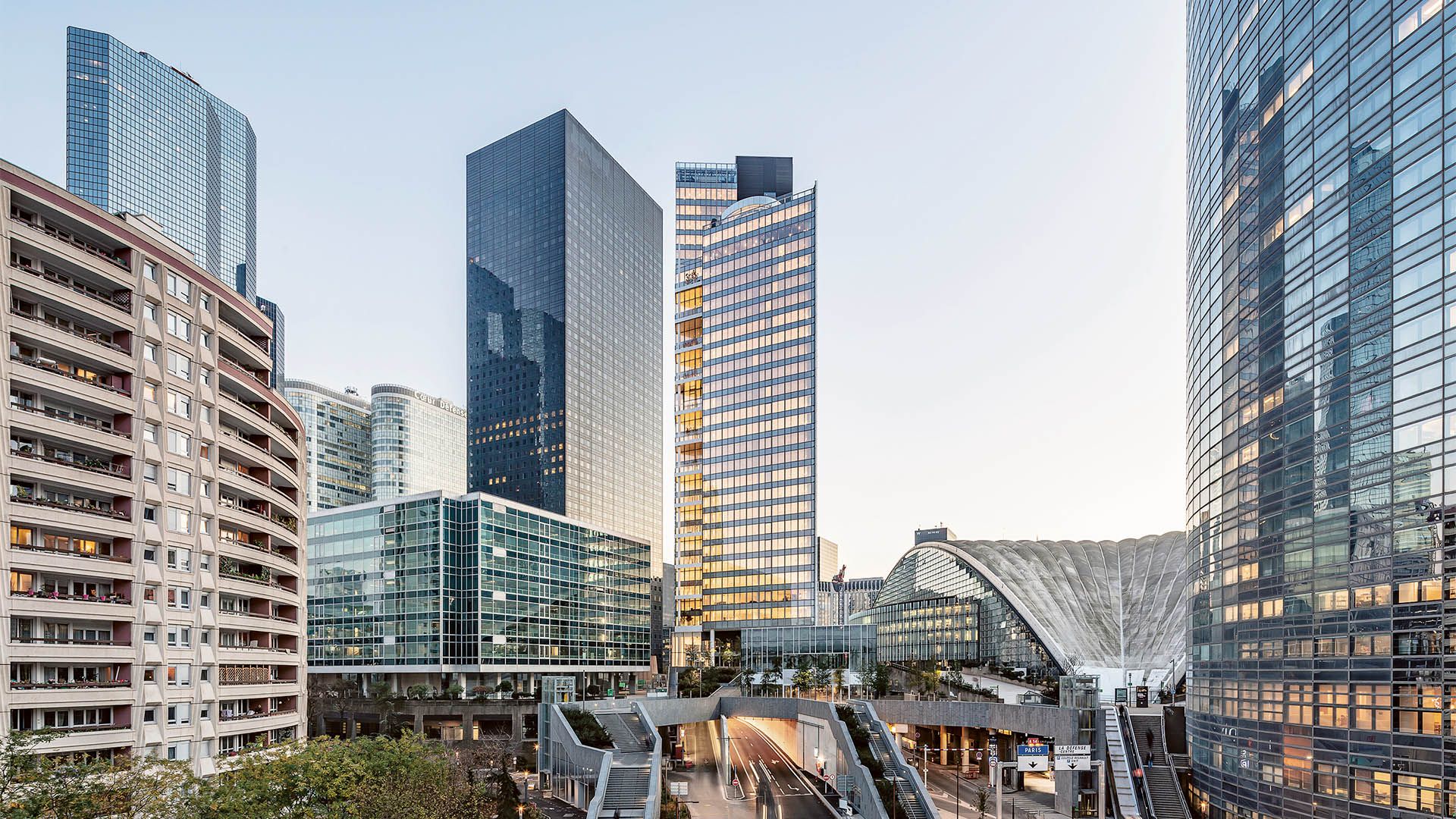
Named ‘Best Office Tower in the World’ in 2022, what lessons did you learn from the construction of Trinity Tower, and what would you approach differently now?
Designed and built between 2010 and 2020 above a highway in La Défense, the Trinity Tower was a landmark building for us, allowing us to implement the values of virtuous verticality:
Today, it is 100% occupied and in use, which means 100% useful carbon. Its qualities have won over and convinced users, which for us is the best proof of its desirability.
To take virtuous verticality even further, we want to encourage diversity within buildings by combining office space with other functions such as hotels, residential, services, and retail. Increasing the number of services allows us to integrate virtuous chronotopic uses.
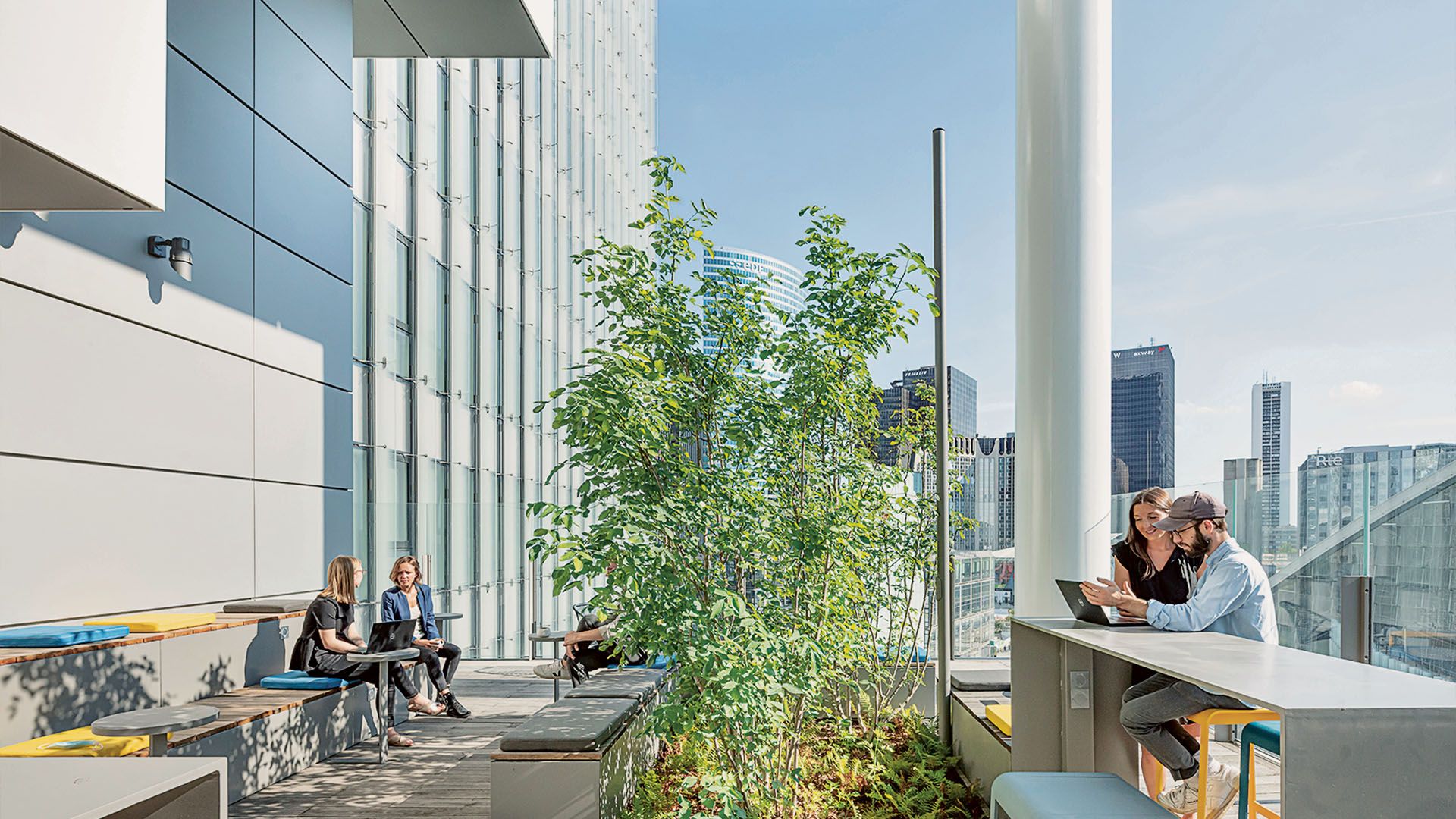
Vertical towers enable all of this at once. Due to their size, the possibilities, opportunities, and impact can be multiplied significantly.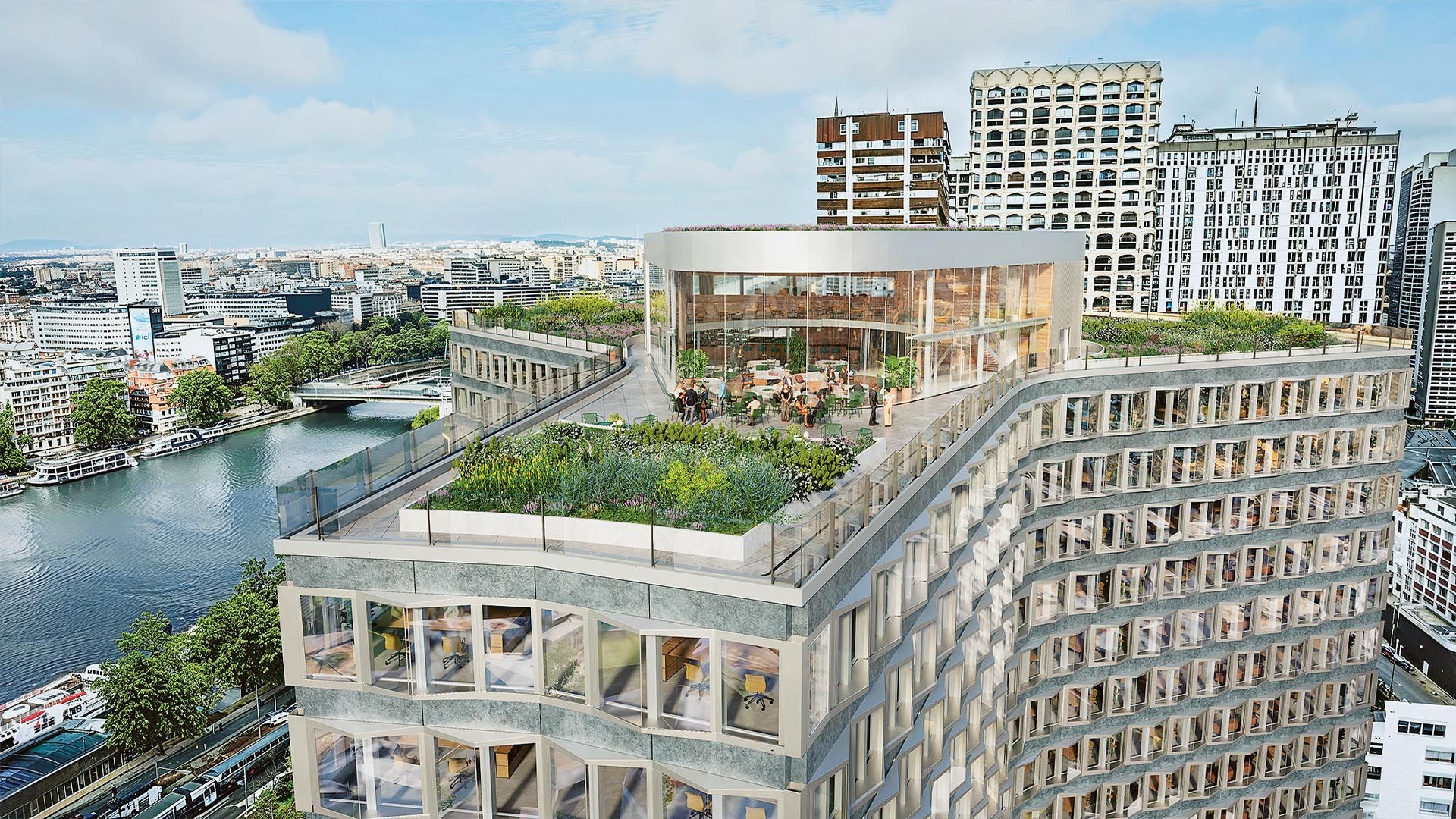
In France, “HQE” is the most widely used environmental certification, which stands for “Haute Qualité Environnementale”, and means “High Environmental Quality.”
We decided to add an “H” for “Human” because we believe that certifications are important and help to develop environmental values.
However, common sense should also be used as the primary decision-making factor, which means that, above all, the most important thing is to place people at the centre of the project and to use our intuition to design.
Our HQhE® label (registered trademark) is therefore a reference and a manifesto to our desire to reconnect people with the environment, giving both equal importance.
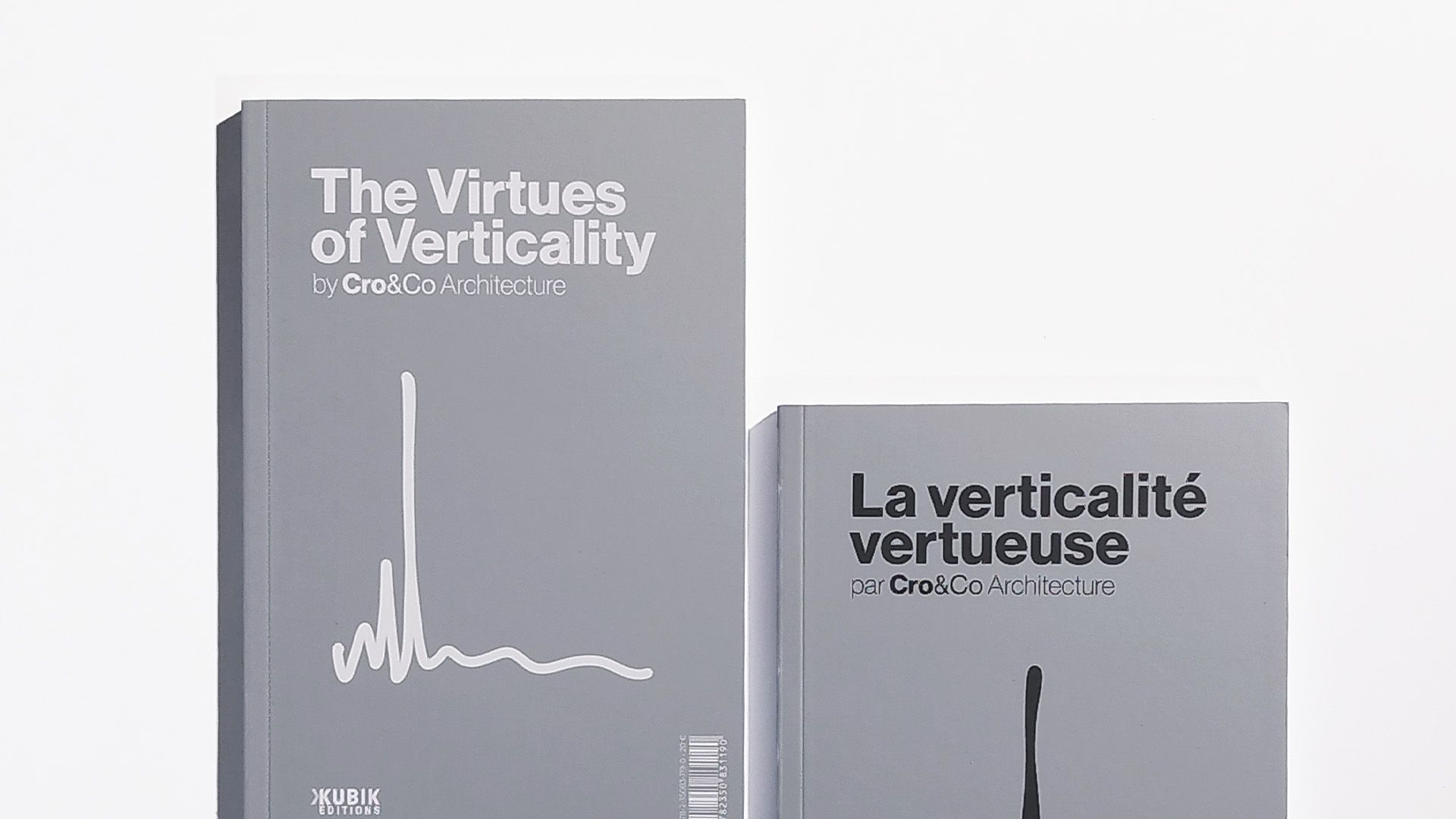
Who do you hope to reach with this book, and what’s next on the horizon?
This book is an invitation to all stakeholders and residents of our cities to take part in the debate on high-rise buildings. We are using the book to create opportunities for exchanges, events, discussions, and more.
Everyone can benefit from a greater understanding of the urban dynamics covered in The Virtues of Verticality, including:
Thanks for your time Jean-Luc and Nayla!
You can purchase The Virtues of Verticality on Amazon HERE.
Or you can request a free sample chapter and purchase the book directly from Cro&Co by emailing: [email protected]
(Links to products on this page are provided for convenience only. The GRI Institute does not receive any commission or compensation for any purchases made.)
Drawing on their extensive experience in high-profile projects that include The Shard in London and Trinity Tower in Paris, they explore how verticality can address pressing urban challenges like environmental sustainability, social value, and the growing demand for mixed-use spaces.
The book also offers insights from their in-house research and development efforts, tackling common misconceptions surrounding tower construction and providing a roadmap for designing buildings that contribute positively to cities and their inhabitants.
In this discussion, we cover the book's key themes, the firms' approach to innovative tower design, and the future of high-rise buildings in urban planning.
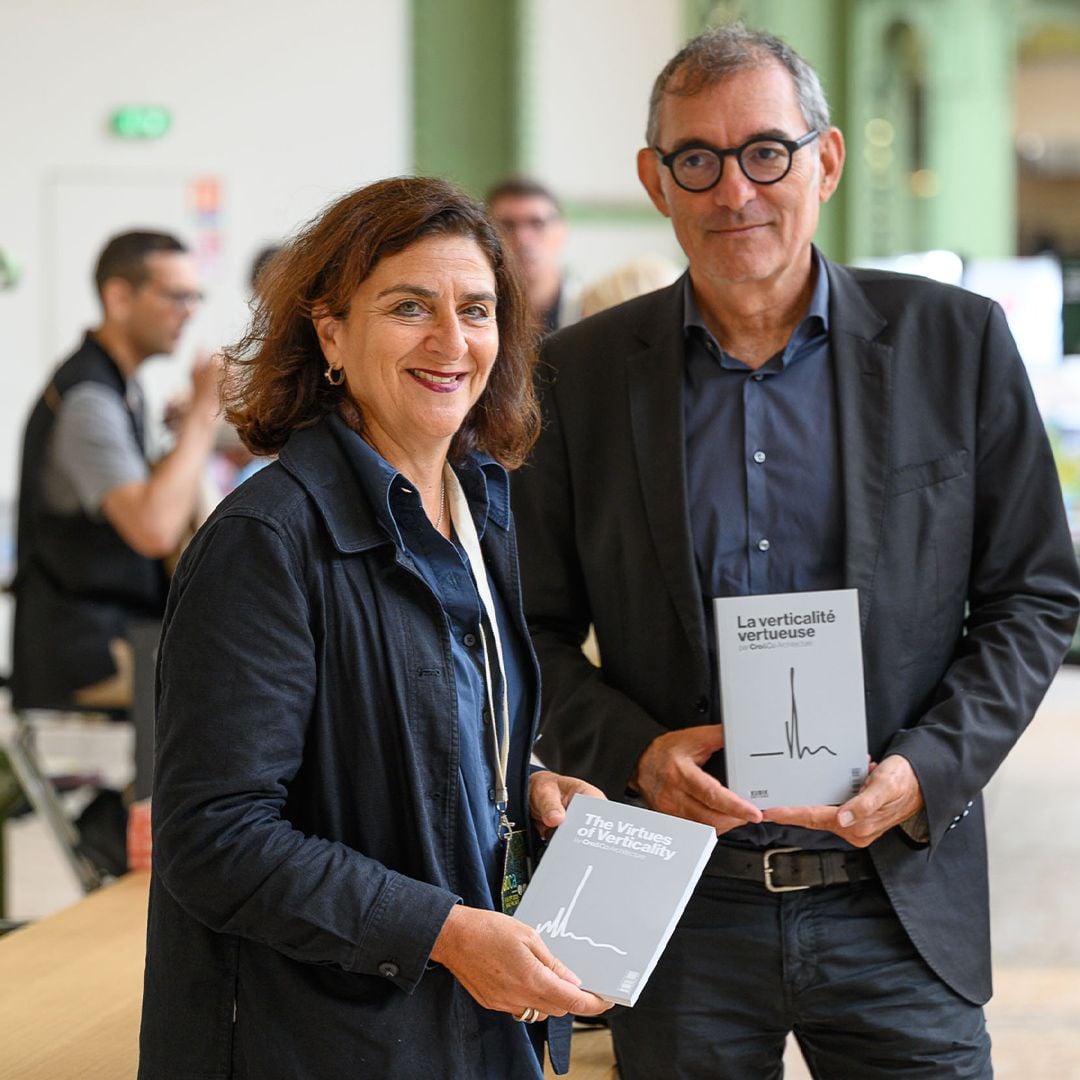
Cro&Co’s Jean-Luc Crochon and CroMe Studio’s Nayla Mecattaf with their new book, The Virtues of Verticality. (© Sylvain Renard, Sibca)
Introduction
Could you please introduce yourselves, your practice, and the path that led you to creating The Virtues of Verticality, highlighting the ideas, projects, and turning points that have shaped your view of towers?Based in Paris, our architecture firm consists of two branches: Cro&Co, led by Jean-Luc Crochon, with projects in France, and CroMe Studio, led by Nayla Mecattaf, with an international focus.
On both sides, we have approached verticality through concrete experiences.
Nayla has led high-rise projects in Europe, including The Shard in London, Belvedere in Vienna, and Potsdamerplatz in Berlin when she was partner at Renzo Piano Building Workshop, while Jean-Luc has designed the Trinity Tower in France (completed in 2020) and is currently restructuring the Mirabeau Tower.
Together, we are now developing the Odyssey trio of towers in Paris La Défense.
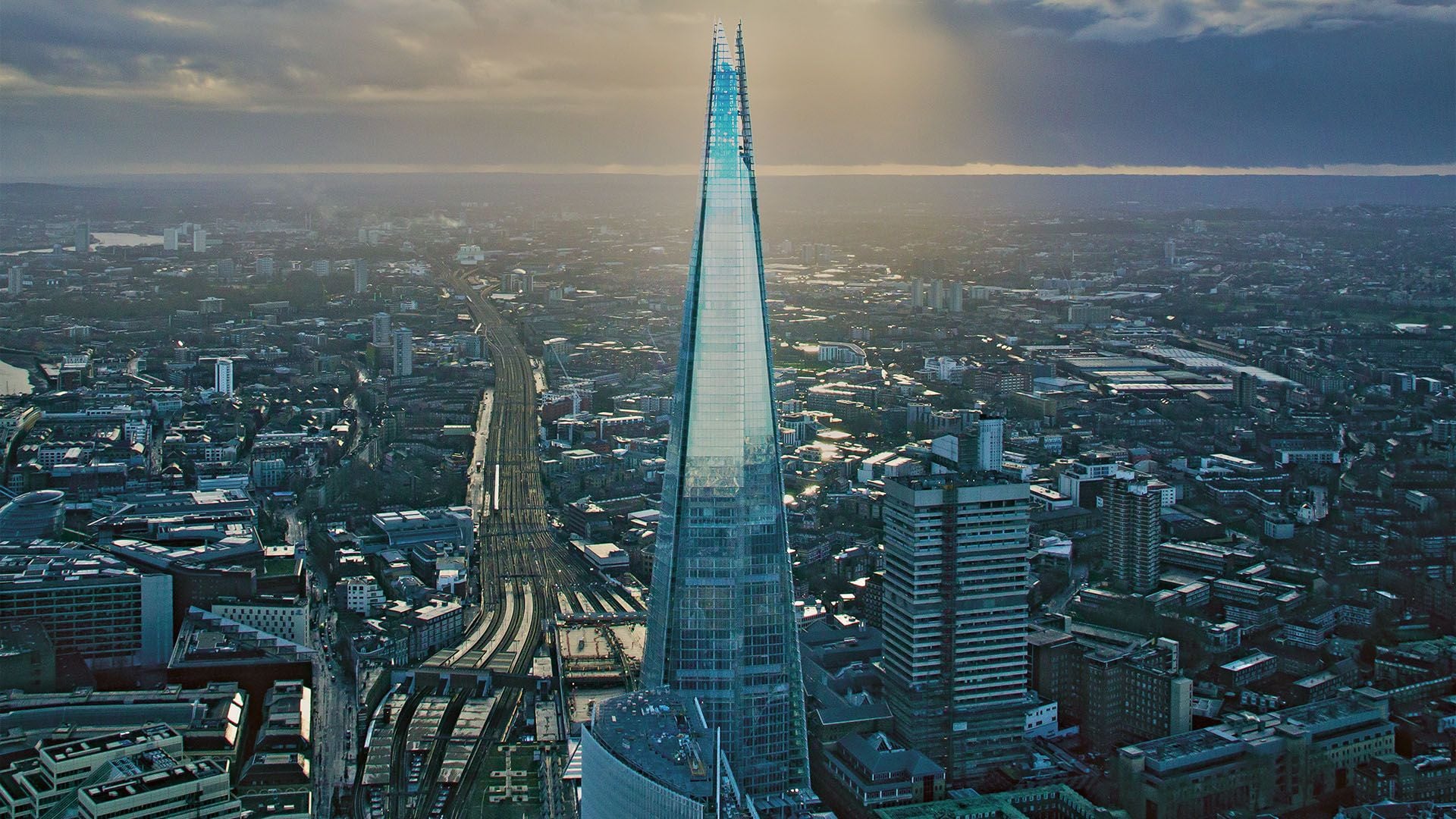
Designed in the early 2000s, The Shard already foreshadowed several environmental virtues: a prime location on a transport hub, the reuse of already impermeable land, a coherent vertical mixed-use alignment, public amenities at height, such as the summit view point and restaurant, and ground and lower levels open to the public.
The Trinity Tower in France, from its conception in the 2010s, also offered a host of advantages, including a strategic location, occupation of already impermeable ground, amenities on the top floors, green terraces, and a light-filled core.
Based on our experiences, we have highlighted the virtues of towers and acquired the expertise to design them.
Since the early 2000s, Nayla Mecattaf has led high-rise projects in Europe, including The Shard in London, that foreshadowed several virtues of verticality. (© Chris Martin - The Shard)
Tower Tensions
With the current perceptions of office towers in France that you discuss in the book, why focus on the tower model today, and which assumptions about verticality did you most want to test?Today, towers do not always get good press. This urban form sometimes suffers from irrational prejudices, and current French regulations severely restrict towers - even calling their existence into question. Yet never before have so many towers been built around the world!
We therefore believe it is necessary to reflect on this subject in a constructive and dispassionate manner in order to fuel the debate. We want to open up the discussion and participate in it.
The tower model is sometimes judged as a symbol, without considering the context and urban environment in which it is built.
This is why it is so important to put the urban context into perspective, particularly with regard to issues such as urban density, the fight against land artificialisation, and the carbon footprint generated by transport, heat islands, etc., to which virtuous towers can provide possible options.
Research & Development
How did you structure your in-house R&D on verticality, and how does it change live decisions on projects?Our R&D department was born out of our experience in the field.
While working on towers, we naturally began to question the preconceptions surrounding high-rise buildings, and we wanted to explore this topic in greater depth. That's why we set up an internal workshop with the members of our team who were most interested in the subject, to devote time to fundamental research.
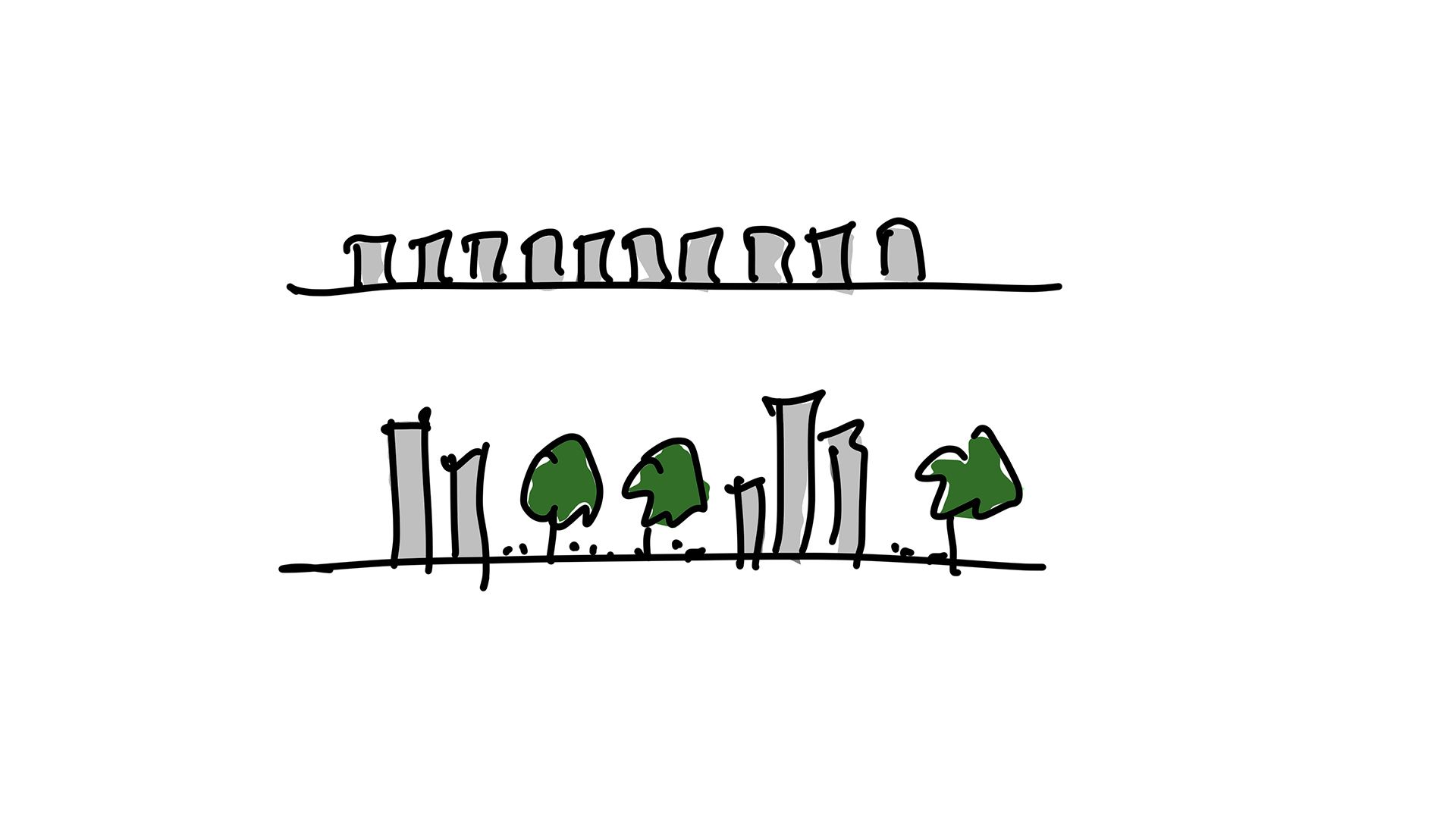
We then conducted a comparative study of the carbon footprint of a high-rise building versus a group of five low-rise buildings with the same surface area. Although the results did show, unsurprisingly, that the construction of the high-rise building represented a greater carbon footprint, it also offered significant advantages - such as the smaller footprints of these towers freeing up space with unspoiled ground where vegetation can be planted to create islands of coolness and benefit the local community.
In practical terms, the research carried out enables us to make concrete decisions when designing projects, whether it be to design the core of a tower more efficiently, optimise vertical traffic, better plan the structure, or select the most virtuous materials.
Above all, it allows us to lay the foundations: location in relation to transport links, mixed-use functionality, and intensity of use.
For each project, we start with the context and the people: we support our clients in choosing programs, we analyse the site, and, if there is already an existing building, we assess its qualities to determine whether it can be restructured or whether demolition and reconstruction makes more sense.
The smaller footprints of high-rise towers frees up space with unspoiled ground where vegetation can be planted to create cooling islands. (© Cro&Co)
Planning & Regulation
From your international work, what feels distinctively French about towers in planning, regulation, or public reception, and what travels well?Currently, there is a certain contradiction within French regulations which prevents the construction of towers. This includes fire regulations which do not allow timber to be used in the construction of high-rise buildings, despite the fact that the new energy and carbon regulations (RE2020, in force since 2022) include targets that cannot be met without the use of a wooden structure.
As a result, towers are currently unable to obtain building permits. However, this may change, particularly with the prospect of decarbonisation of all materials led by the building industry.
It has also been observed that high-rise buildings are better accepted when they are located in specific neighbourhoods designated for this purpose, rather than when they appear unexpectedly surrounded by lower buildings.
Another distinctive feature of France is the lack of systematic use of sprinklers (automatic water extinguishing systems) to fight fires. This makes the thermal mass of the materials used, both on the facade and inside the towers, extremely important, hence the need for in-depth research with the choice of materials.
Furthermore, towers sometimes suffer from a negative perception in France, a sentiment that may have been fueled by certain examples of "unsightly" or "unappealing" structures.
The collective imagination has rejected the image of the sealed-off office tower, like an aquarium, with no access to the open air, lack of spaces for sociability (due to ultra-protected horizontal circulation) and whose connection to the ground does not maintain a real relationship with the environment.
To be desirable, the virtuous tower must erase this perception and reconnect users with their environment.
In France, as elsewhere, we encourage the fundamentals of virtuous verticality. These are based on the universal values of quality of use: user well-being and common sense.
Trinity Tower Lessons
Trinity Tower, designed and built between 2010 and 2020, was named ‘Best Office Tower in the World’ in 2022 2022 by the CTBUH. (© Luc Boegly - Trinity Tower)
Named ‘Best Office Tower in the World’ in 2022, what lessons did you learn from the construction of Trinity Tower, and what would you approach differently now?
Designed and built between 2010 and 2020 above a highway in La Défense, the Trinity Tower was a landmark building for us, allowing us to implement the values of virtuous verticality:
- Ideal location, close to a transportation hub, reducing its carbon footprint by avoiding users arriving by car.
- Connection and adaptation to its environment and greening - 3,500 square metres of planted urban links reconnecting two neighbourhoods.
- Light, vegetation, and a connection to outside (operable windows, loggias, balconies, and green terraces).
- Spaces designed on a human scale and meeting places to encourage social encounters.
- Shared amenities on the ground and upper floors for all users.
Today, it is 100% occupied and in use, which means 100% useful carbon. Its qualities have won over and convinced users, which for us is the best proof of its desirability.
To take virtuous verticality even further, we want to encourage diversity within buildings by combining office space with other functions such as hotels, residential, services, and retail. Increasing the number of services allows us to integrate virtuous chronotopic uses.
Trinity Tower incorporates the values of virtuous verticality, including spaces designed on a human scale and meeting places to encourage social encounters. (© Luc Boegly - Trinity Tower)
Vertical Value
Where do towers most credibly deliver environmental and social value today, for example location, cooling-island potential, mixed-use, or intensity of use?Vertical towers enable all of this at once. Due to their size, the possibilities, opportunities, and impact can be multiplied significantly.
- The location of a tower (close to a transport hub) is the first factor to consider, since carbon emissions from transport are much higher than those from construction.
- The space freed up on the ground allows for the development of open-ground planting and the preservation of permeable soils, rather than using artificial soils that cause flooding problems.
- Cool islands, such as green outdoor spaces at height, provide temperature regulation, add permeable soils, and are assets for the development of tomorrow's cities, with benefits that are felt both at a city level and on the lower floors of the tower. This is much more of a structuring issue than decarbonisation, which is already underway.
- Intensity of use is a key virtue. Just think: how many visitors has the Eiffel Tower had since its creation, despite having only three floors?
- Mixed use and intensity of use are encouraged within towers thanks to the scale of these buildings. The combination of multiple uses allows for better service efficiency, such as elevators, technical equipment, and foundations, all with more extensive use throughout the day, week, and year.
Due to their size, vertical towers enable the possibilities, opportunities, and impact to be multiplied significantly. (© L’Autre Image - Renovation of Mirabeau Tower))
Certifications
What does the acronym you registered, HQhE, mean in practice, and how do you evidence desirability and well-being over time?In France, “HQE” is the most widely used environmental certification, which stands for “Haute Qualité Environnementale”, and means “High Environmental Quality.”
We decided to add an “H” for “Human” because we believe that certifications are important and help to develop environmental values.
However, common sense should also be used as the primary decision-making factor, which means that, above all, the most important thing is to place people at the centre of the project and to use our intuition to design.
Our HQhE® label (registered trademark) is therefore a reference and a manifesto to our desire to reconnect people with the environment, giving both equal importance.
The Virtues of Verticality
The new book “The Virtues of Verticality by Cro&Co Architecture” is being used to create opportunities for exchanges, events, and discussions to ensure the development of international dialogue on high-rise buildings. (© Cro&Co)
Who do you hope to reach with this book, and what’s next on the horizon?
This book is an invitation to all stakeholders and residents of our cities to take part in the debate on high-rise buildings. We are using the book to create opportunities for exchanges, events, discussions, and more.
Everyone can benefit from a greater understanding of the urban dynamics covered in The Virtues of Verticality, including:
- Elected officials and politicians, who can change regulations for the better by adding factors related to location, intensity of use, etc;
- Urban planners, who can combat urban sprawl by introducing minimum height limits, where appropriate, in order to increase the density of certain well-located areas, while freeing up permeable land elsewhere;
- Clients, who can encourage the construction of desirable towers;
- Architects and students, who can share and contribute to these discussions; and
- The general public, who can voice their criteria for evaluating towers and make them more popular.
Thanks for your time Jean-Luc and Nayla!
You can purchase The Virtues of Verticality on Amazon HERE.
Or you can request a free sample chapter and purchase the book directly from Cro&Co by emailing: [email protected]
(Links to products on this page are provided for convenience only. The GRI Institute does not receive any commission or compensation for any purchases made.)