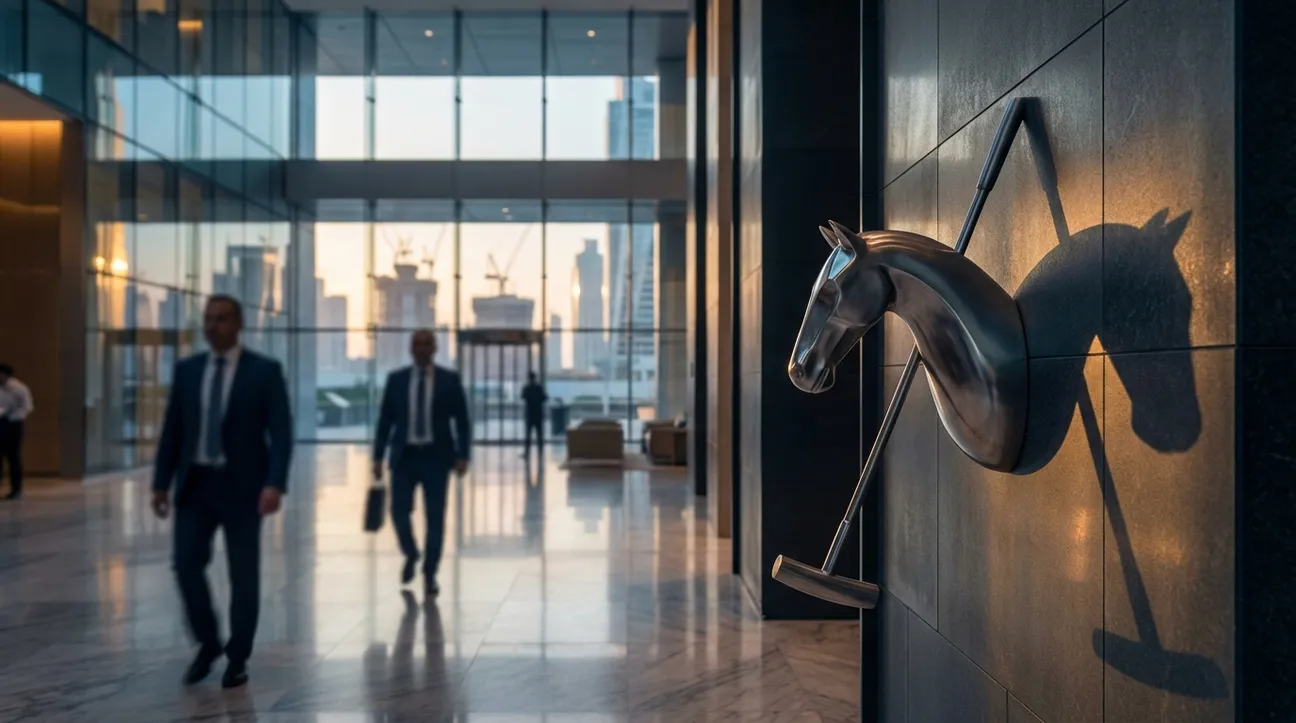
Sport-lifestyle brands reshape GCC branded residences beyond hospitality and fashion
From Beverly Hills Polo Club to Emaar's Grand Polo Club, equestrian and heritage club licensing opens a new front in Gulf real estate branding.
Executive Summary
Key Takeaways
- Sport-lifestyle branding (polo, equestrian, club culture) is emerging as a third GCC branded-residence category alongside hospitality and fashion.
- Beverly Hills Polo Club (owned by Lifestyle Equities C.V.) and Emaar's Grand Polo Club & Resort are distinct entities with fundamentally different licensing and ownership models.
- Developer-owned IP eliminates royalty fees and grants full creative control, potentially yielding stronger risk-adjusted returns.
- Sport-lifestyle brands target a broader affluent demographic prioritizing community identity over label recognition.
- Saudi Arabia's 2026 foreign ownership reform expands the eligible buyer pool for branded residences.
- Specialized intermediaries signal the segment is maturing toward institutional-grade distribution.
Emaar Properties launched Grand Polo Club & Resort in Dubai earlier this year, a 60-million-square-foot equestrian-themed master community that signals the arrival of a distinct sub-category in Gulf branded real estate: sport-lifestyle branding. The project, alongside rising search interest in the Beverly Hills Polo Club brand and its ownership structure, reveals a market segment with its own economics, demographic logic, and competitive dynamics, separate from both hotel-operator branding and fashion-house licensing.
The GCC branded residence market has long been defined by two pillars: hospitality operators extending their flags into residential towers, and luxury fashion houses lending cachet to ultra-premium developments. A third category, anchored in sport, equestrian heritage, and club culture, is now emerging with increasing velocity. Understanding its structure is essential for investors, developers, and capital allocators evaluating the next phase of branded pipeline growth in the Gulf.
Who owns Beverly Hills Polo Club, and what does its licensing model mean for GCC real estate?
The Beverly Hills Polo Club brand is owned by Lifestyle Equities C.V., a corporate entity distinct from the real estate developers it may partner with, according to analysis by GRI Institute and Fieldfisher (2024-2025). This distinction matters. BHPC operates primarily as a fashion and lifestyle retail brand with a substantial footprint across the GCC through Apparel Group, but its real estate licensing activity in the region remains unconfirmed by any specific, signed development agreement in public records.
The frequent conflation of Beverly Hills Polo Club with Emaar's Grand Polo Club & Resort stems from shared nomenclature and identical lifestyle positioning. However, the two represent fundamentally different models. Emaar's project is a developer-owned intellectual property, conceived and branded internally. BHPC, by contrast, is a licensable brand whose value proposition rests on recognition, aspiration, and the cultural signifiers of polo and club membership.
This distinction carries direct implications for deal structure. Developer-owned IP eliminates recurring licensing fees and grants full creative control over positioning, pricing, and community management. Licensed sport-lifestyle brands, on the other hand, offer instant recognition and a pre-existing consumer base, but introduce ongoing royalty obligations and brand governance constraints. For investors researching the ownership behind BHPC, the critical takeaway is that Lifestyle Equities C.V. controls the brand's licensing decisions, and any GCC real estate partnership would flow through that entity.
How does the sport-lifestyle segment differ from traditional branded residences in pricing and positioning?
Branded residences in Dubai commanded a significant price premium over non-branded stock in comparable locations during the first half of 2025, according to data from Morgan's International Realty and Spear's Magazine. Total transaction value for branded residences in Dubai surged year-on-year, reflecting a shift toward higher-value trophy assets rather than volume alone (Zawya / Morgan's International Realty, 2026).
Within this broader premium, the sport-lifestyle segment occupies a strategically distinct position. Where hotel-branded residences trade on service infrastructure and fashion-branded units target ultra-high-net-worth buyers, sport and heritage club concepts appeal to a broader affluent demographic. The equestrian lifestyle, with its associations of open space, exclusivity, and active leisure, targets buyers who prioritize community identity and experiential living over label recognition.
Emaar's Grand Polo Club & Resort exemplifies this positioning. At 60 million square feet, the project is conceived as a master community rather than a single tower or compound, embedding the sport-lifestyle narrative into urban planning itself. The scale suggests a mid-luxury-to-luxury price band designed to attract families, end-users, and lifestyle-driven investors, a cohort that may be underserved by the ultra-premium branded tower segment.
Standalone lifestyle-branded residences, spanning fashion, automotive, and sport categories, are projected to grow significantly as a share of the total branded pipeline by 2030, according to Knight Frank and GRI Hub research. This trajectory suggests the sport-lifestyle niche will account for a material portion of new branded supply across the GCC within the next five years.
The operators and intermediaries shaping this segment
Several figures surfacing in search data around this topic illuminate the commercial ecosystem forming around sport-lifestyle real estate in the Gulf.
Amr Aboushaban, CEO of Allegiance Real Estate and a former Investor Relations officer at DAMAC, specializes in marketing sports lifestyle and luxury assets, according to Property Time and JamesEdition. His brokerage activity positions him at the distribution layer of this segment, connecting developers of equestrian and sport-themed projects with international buyers seeking yield and lifestyle value. The search interest around his name reflects a market where intermediaries with fluency in sport-lifestyle positioning are becoming as relevant as the developers themselves.
Abdulla Bin Habtoor, CEO of Shamal Holding and the developer behind Baccarat Hotel & Residences Dubai, represents the competing standalone lifestyle brand segment, according to Forbes Middle East and GRI Institute (2025). Baccarat, a crystal and luxury heritage brand, demonstrates how non-hospitality lifestyle names can anchor premium residential projects. The competitive tension between heritage luxury brands like Baccarat and sport-lifestyle concepts like polo clubs is defining the frontier of GCC branded development.
The interplay between these operators reveals a market that is segmenting rapidly. Developers must now choose not only between hotel branding and lifestyle licensing, but between distinct lifestyle verticals, each with different buyer profiles, pricing ceilings, and operational requirements.
Regulatory tailwinds across the GCC
Regulatory frameworks are evolving to accommodate the influx of branded and lifestyle-led development. Saudi Arabia's new Law on Real Estate Ownership by Non-Saudis, effective as of January 21, 2026, replaces the 2000 Foreign Ownership Law and allows non-Saudi individuals and entities to own real estate in designated zones across the Kingdom, including areas in Makkah and Madinah subject to specific restrictions. This reform directly supports the viability of branded residential concepts in Saudi Arabia by expanding the eligible buyer pool to include international investors who are often the primary demand base for branded product.
The GCC real estate market is projected to reach a substantial valuation by 2034, driven by the influx of branded and lifestyle-led developments, according to IMARC Group. As Vision 2030 programs in Saudi Arabia and diversification agendas across the Gulf continue to channel capital into real estate, the regulatory environment is becoming increasingly permissive toward the foreign ownership structures that branded residences depend on.
What this means for capital allocation and development strategy
The emergence of sport-lifestyle branding as a distinct real estate category carries three strategic implications for GCC market participants.
First, licensing economics in this sub-segment differ materially from hotel-operator deals. Sport and heritage club brands typically operate with lower licensing fees and broader demographic appeal than ultra-luxury fashion or hospitality names, potentially delivering stronger risk-adjusted returns for developers targeting the mid-luxury segment.
Second, developer-created IP, as Emaar has demonstrated with Grand Polo Club & Resort, offers an alternative to licensed partnerships entirely. The success of this model could encourage other major developers to build proprietary sport-lifestyle brands rather than pay royalties to external licensors.
Third, the growing sophistication of intermediaries and brokerages in this niche, exemplified by operators like Allegiance Real Estate, suggests the segment is maturing toward institutional-grade distribution. As GRI Institute members have discussed at recent Gulf-focused gatherings, the branded residence market is no longer a single asset class but a spectrum of brand categories, each demanding specialized underwriting and marketing expertise.
The sport-lifestyle branding wave in GCC real estate is still in its early chapters. The distinction between licensed brands like Beverly Hills Polo Club and developer-owned concepts like Emaar's Grand Polo Club will determine which projects capture lasting value and which remain marketing exercises. For investors and developers, the priority is clear: understand the ownership structure behind the brand before committing capital to the lifestyle it promises.