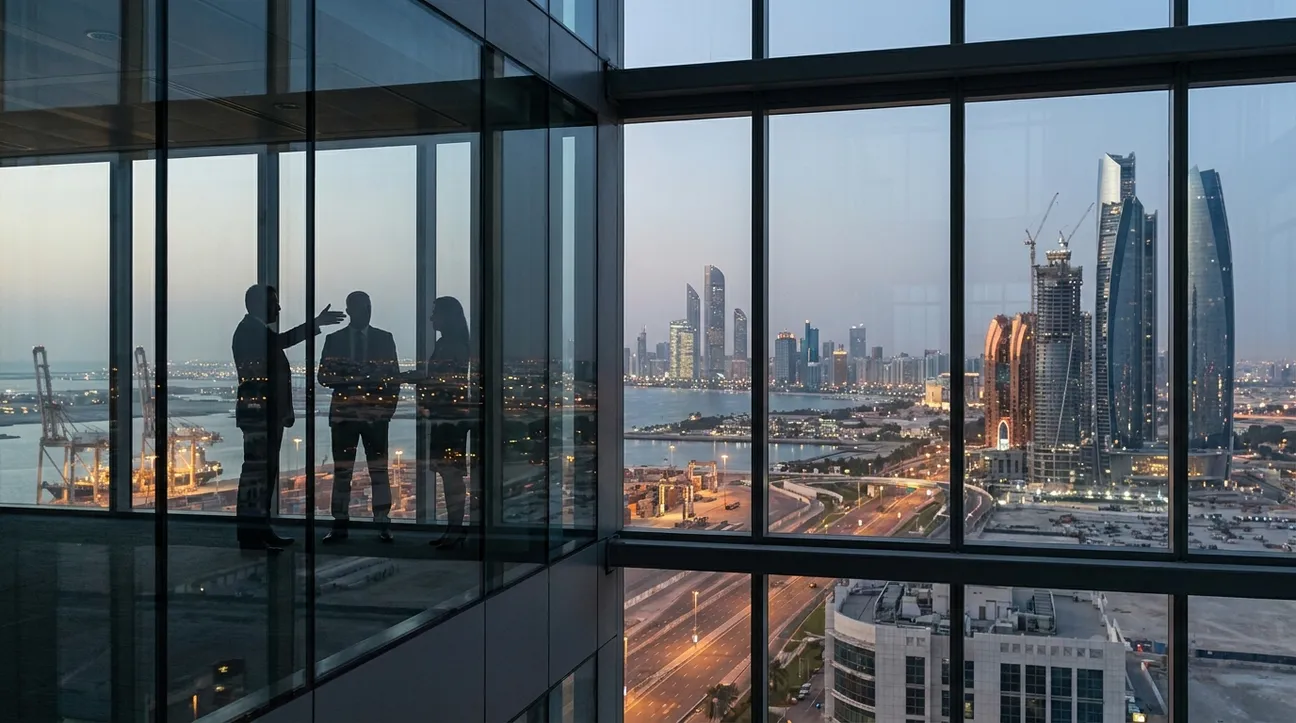
Sovereign-trained Indian dealmakers are reshaping GCC real estate capital flows from Abu Dhabi
A new cohort of operators, from Ankit Sreen at Eastdil Secured to Pawan Chindalia at Emaar, is embedding institutional Indian capital into Gulf property markets.
Executive Summary
Key Takeaways
- Indian-origin dealmakers trained in sovereign wealth ecosystems are assuming capital-facing roles across GCC real estate, reshaping how cross-border flows are structured.
- Nisus Finance is building a Dubai platform targeting USD 1 billion in AUM, channelling Indian institutional capital into Gulf real estate debt.
- The GCC real estate market, valued at USD 141.2 billion in 2025, is projected to reach USD 260.3 billion by 2034 at a 7.03% CAGR.
- Key appointments include Ankit Sreen at Eastdil Secured and Pawan Chindalia as Group Head of Finance at Emaar Properties.
- UAE regulatory modernisation is reinforcing institutional investor confidence in Gulf property markets.
The GCC real estate market, valued at USD 141.2 billion in 2025 according to IMARC Group, is projected to reach USD 260.3 billion by 2034 at a compound annual growth rate of 7.03%. Behind these headline figures lies a structural shift in how capital is sourced, structured, and deployed across the Gulf. A generation of Indian-origin dealmakers, trained within sovereign wealth ecosystems and global investment banks, is building dedicated real estate mandates that connect South Asian institutional capital with Gulf property assets. Their rise represents a fundamental evolution in the region's capital architecture.
Ankit Sreen, Head of Middle East & SEO for Investor Coverage & Capital Raising at Eastdil Secured in Abu Dhabi, exemplifies this emerging cohort. Positioned at the intersection of sovereign capital advisory and institutional real estate brokerage, Sreen operates within a firm whose global mandate revolves around large-scale property transactions and capital placement. His Abu Dhabi base places him at the geographic centre of a capital corridor that is rapidly deepening between India and the GCC.
Sreen is part of a broader pattern. Across the Gulf, Indian-origin professionals with training in sovereign fund structures, global banking, and institutional asset management are assuming roles that give them direct influence over capital allocation in real estate. This trend is visible in both operator and investor roles, and it is accelerating.
Who are the sovereign-trained Indian operators redefining GCC real estate dealmaking?
The term "sovereign-trained" describes professionals who have built their careers within or adjacent to sovereign wealth fund ecosystems, absorbing the institutional rigour, governance frameworks, and long-horizon investment discipline that define these entities. In the GCC context, Abu Dhabi and Riyadh serve as the primary training grounds, with entities like ADIA, Mubadala, and PIF providing the institutional backdrop.
What distinguishes the current cohort is that these operators are moving beyond sovereign fund employment into positions where they actively structure cross-border capital flows. Ankit Sreen's role at Eastdil Secured is illustrative. The firm specialises in real estate investment banking, advising on acquisitions, dispositions, recapitalisations, and debt placements. Sreen's coverage of the Middle East investor base positions him as a conduit between Gulf institutional capital and global property opportunities.
Pawan Chindalia's appointment as Group Head of Finance at Emaar Properties, reported by Gulf News in May 2026, represents another dimension of this trend. Emaar is the developer behind the Burj Khalifa and one of the Gulf's most prominent listed real estate companies. Chindalia's elevation to this role following the departure of Hesham Heikal places an Indian-origin executive at the financial helm of a company whose branded residence and luxury hospitality pipeline spans the GCC and beyond.
These appointments are significant because they sit at the structural layer of the market. Capital raising, financial strategy, and investor coverage are the functions that determine which projects attract institutional backing, at what terms, and from which geographies. When professionals with deep familiarity in both Indian and Gulf institutional norms occupy these roles, the capital corridors between the two regions become more efficient and more durable.
How is Indian institutional capital embedding itself in Gulf real estate?
The operator trend runs parallel to a capital deployment story that is equally consequential. Amit Goenka's Nisus Finance is building a Dubai platform targeting USD 1 billion in assets under management, channelling Indian institutional capital into Gulf real estate debt, according to reporting by GRI Institute in February 2026. This is a structured, dedicated mandate, designed to provide Indian institutional investors with access to GCC property markets through debt instruments rather than direct equity exposure.
Nisus Finance's commitment is already tangible. According to BSE Corporate Announcements from February 2026, the firm invested INR 247 crore, approximately AED 100 million, in residential apartments at Majan in Dubai, bringing its total UAE investment to over USD 145 million. The scale of this deployment signals that Indian institutional capital is moving beyond exploratory allocations into committed, recurring investment programmes in Gulf real estate.
The India-GCC capital corridor extends beyond real estate into infrastructure, further reinforcing the institutional ties. Nitu Samra's appointment as interim Chief Executive Officer of Noida International Airport in April 2026, transitioning from her role as CFO, highlights the depth of Indian leadership in major infrastructure projects that serve as connective tissue between the two regions. Airport infrastructure, in particular, functions as a physical enabler of the capital and talent flows that underpin Gulf real estate demand.
The residential segment is the primary beneficiary of these cross-border flows. The GCC residential real estate market is estimated to reach USD 152.0 billion by 2034, exhibiting a CAGR of 7.35%, according to IMARC Group. Branded residences, luxury hospitality-linked developments, and institutional-grade rental portfolios are the asset classes where Indian capital and Gulf development expertise converge most naturally.
What structural conditions are enabling this capital corridor to deepen?
Several regulatory and market conditions are creating a favourable environment for the continued deepening of India-GCC real estate capital flows.
The UAE's Federal Decree-Law No. 25 of 2025, which lowered the legal age of majority from 21 to 18 and became effective on June 1, 2026, expands the pool of individuals who can legally own, buy, and sign for property. While this change is primarily domestic in scope, it reflects the broader regulatory modernisation that makes the UAE attractive to international institutional investors seeking legal clarity and market depth.
Dubai's Law No. (4) of 2026, issued in February 2026 and effective from September 2026, regulates the occupancy and management of shared housing to ensure the rights of landlords and occupants while eliminating overcrowding. This kind of regulatory maturation addresses the operational risk concerns that institutional investors, including Indian debt funds like Nisus Finance, weigh when underwriting Gulf residential assets.
The structural conditions also include the professional networks that facilitate deal origination and capital placement. GRI Institute's membership community, which convenes senior real estate and infrastructure leaders across global markets, provides a platform where operators like Sreen, Chindalia, and Goenka can engage with counterparts from Gulf sovereign funds, global pension funds, and family offices. These interactions, which occur across GRI Institute's programme of conferences and closed-door meetings, often serve as the origination point for the cross-border mandates that are reshaping capital flows.
The combination of regulatory modernisation, institutional capital commitments, and a growing cohort of culturally fluent operators creates a self-reinforcing cycle. As more sovereign-trained Indian professionals assume capital-facing roles in GCC real estate, the comfort level of Indian institutional investors with Gulf property markets increases, which in turn creates demand for more sophisticated advisory and structuring capabilities.
The dealmaker layer that markets overlook
Market analysis tends to focus on the endpoints of capital flows, the sovereign funds deploying capital and the developers receiving it. The layer in between, the dealmakers who structure mandates, raise capital, and manage investor relationships, receives comparatively little attention. Yet this intermediary layer is where the efficiency and durability of cross-border capital corridors are determined.
Ankit Sreen's position at Eastdil Secured in Abu Dhabi places him squarely in this intermediary layer. Pawan Chindalia's role at Emaar gives him influence over the financial strategy of one of the Gulf's largest developers. Amit Goenka's Nisus Finance is building the investment vehicles that allow Indian institutions to access Gulf real estate. Each of these individuals operates at a different point in the capital value chain, but together they represent a coherent structural trend.
Indian-origin professionals are building the institutional plumbing that connects South Asian capital with Gulf real estate assets. This is a quiet transformation, measured in mandates won and capital deployed rather than in headlines. Its consequences, however, are likely to define the next phase of GCC real estate market development.
As the GCC real estate market charts its course toward an estimated USD 260.3 billion by 2034, the role of these sovereign-trained dealmakers will become increasingly central to how capital is allocated across the region. The professionals shaping these flows today are constructing the architecture through which billions of dollars will move in the decade ahead.
GRI Institute continues to track this evolving landscape through its research, events, and member community, providing senior leaders with the intelligence and relationships required to navigate the GCC's most consequential capital corridors.