Sandeep Runwal's operational blueprint: how dual leadership is engineering Mumbai's largest retail-residential platform
The Runwal Group's division of strategic authority between Sandeep and Subodh Runwal offers a replicable model for scaling integrated urban ecosystems in India's largest residential market.
Executive Summary
Key Takeaways
- Runwal Group splits leadership: Sandeep oversees retail malls, construction execution, and asset integration; Subodh handles land acquisition and capital markets.
- Retail-residential integration creates a feedback loop where retail footfall boosts residential premiums and residential density sustains retail revenue.
- Mumbai accounts for 35.4% of India's ultra-high-net-worth population, making it the prime market for this platform model.
- The model's scalability hinges on institutionalizing operational excellence beyond founding leadership.
- Family-led dual-leadership can compete with institutional governance if authority is clearly delineated and accountability enforced.
The architecture of divided command
In a market where 97,188 homes were sold in 2025 alone, according to Knight Frank, Mumbai demands a particular kind of developer: one capable of operating simultaneously across asset classes at metropolitan scale. The Runwal Group has answered this demand through a dual-leadership model that splits operational authority between two brothers, each governing distinct but complementary segments of a vertically integrated real estate platform.
Sandeep Runwal, Managing Director and IIM Bangalore alumnus, oversees the group's retail mall operations, construction execution, and the integration of commercial and residential assets into unified urban ecosystems. His brother Subodh Runwal steers land acquisition and capital markets strategy. The division is structural, not ceremonial. It determines how projects are conceived, financed, built, and operated across the group's portfolio of 35 delivered projects encompassing 11.22 million sq ft, according to Runwal Realty.
This arrangement raises a question increasingly relevant to institutional investors and industry leaders within the GRI Institute community: can the family-led dual-leadership model scale to meet the capital intensity and operational complexity that India's real estate trajectory now requires?
What defines Sandeep Runwal's operational role within the group?
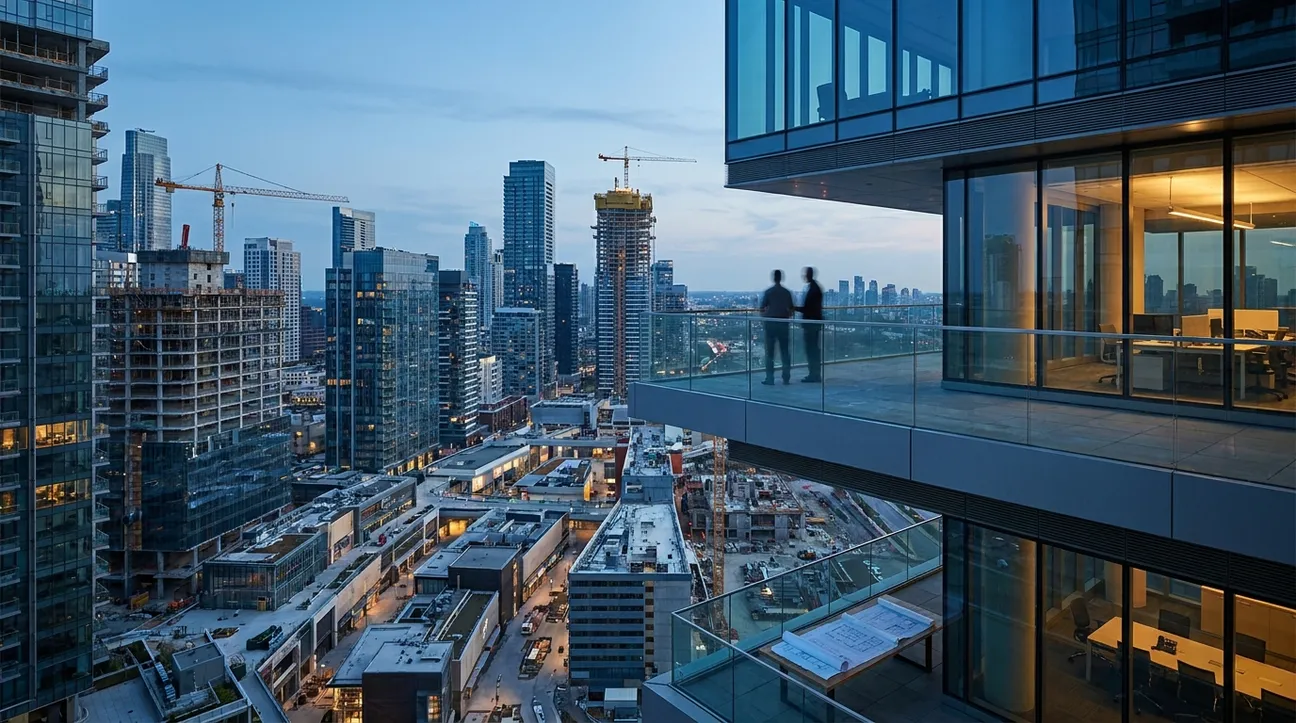
Sandeep Runwal's domain is execution and integration. His direct oversight covers Mumbai's largest retail mall chain, including R City Mall, R Mall Mulund, and R Mall Thane, each designed as anchors for adjacent or integrated residential developments. The model creates self-sustaining urban ecosystems where retail footfall supports residential premium, and residential density sustains retail revenue, a feedback loop that few Indian developers have attempted at this scale.
The operational logic is precise. Rather than treating malls and housing as separate verticals requiring separate management philosophies, Sandeep Runwal's architecture treats them as components of a single platform. Construction timelines for residential towers are synchronized with retail fitout schedules. Leasing strategies for commercial tenants are calibrated to the demographic profile of surrounding residential buyers. The result is a development philosophy where the value of one asset class actively compounds the value of another.
This integration model is particularly significant in the context of premium housing demand. JLL data shows that premium housing sales above INR 10 million in India increased 6% year-on-year in 2025. Mumbai, which accounts for 35.4% of India's ultra-high-net-worth population according to the Knight Frank Wealth Report 2026, is the epicentre of this trend. Sandeep Runwal's retail-residential platform directly targets this buyer segment, offering lifestyle-oriented environments that go beyond conventional apartment developments.
The operational complexity of this model should not be understated. Managing a retail mall is a fundamentally different discipline from delivering residential towers. Tenant mix optimization, footfall analytics, and consumer experience design require capabilities that most residential developers never develop. Sandeep Runwal's ability to hold both competencies within a single operational framework represents a distinctive competitive advantage.
How does the dual-leadership model compare to institutional governance structures?
The question confronting investors and analysts is whether a family-based division of authority can sustain performance as the Indian real estate sector enters a new phase of capital intensity. ANAROCK Capital projects that India's real estate sector will require nearly Rs 50 lakh crore of capital over the next decade to support its growth into a $1 trillion market by 2030. That scale of capital mobilization traditionally favours institutionally governed platforms with independent boards, professional management layers, and transparent reporting structures.
The Runwal Group's model occupies an intermediate position. The division between Sandeep and Subodh is functionally equivalent to a COO/CFO split in a publicly listed corporation, with Sandeep controlling operations, construction, and asset management while Subodh manages capital allocation and market-facing strategy. The difference lies in accountability structures. In a publicly listed entity, these roles report to an independent board. In a family-led group, accountability runs through familial trust and shared ownership, a structure that can be either more agile or more opaque depending on how it is executed.
For the institutional capital increasingly entering Indian real estate, this distinction matters. Discussions among GRI Institute members at recent India-focused conferences have consistently surfaced governance architecture as a threshold criterion for capital deployment. The question is whether family-led developers can demonstrate institutional-grade transparency while preserving the decision-making speed that gives them an edge in land acquisition and project approvals.
Maharashtra's evolving regulatory environment adds another layer of complexity to this governance conversation. MahaRERA Circular 50/2025, now active, allows the regulator to appoint an officer to execute cancellation deeds on behalf of non-compliant allottees, streamlining encumbrance clearance and improving project cash flow for developers. The Maharashtra Ownership Flats (Amendment and Validation) Bill, 2025, introduced in the state legislative assembly, proposes restructuring the interface between MOFA and RERA by explicitly excluding most MOFA provisions from RERA-registered projects while preserving unilateral deemed conveyance. Both developments enhance the operating environment for compliant, well-governed developers, and potentially widen the gap between institutionally rigorous operators and those with weaker governance frameworks.
The urbanization thesis behind retail-residential integration
Sandeep Runwal's platform model rests on a macroeconomic foundation that extends well beyond Mumbai. India's urban population is expected to exceed 40% by 2030, according to the Government of India Economic Survey 2023-24, driving demand across both residential and commercial segments. TechSci Research projects the India Residential Real Estate Market to reach USD 44.37 trillion by 2030, reflecting a CAGR of 3.38%.
These projections suggest that the integrated urban ecosystem model, where retail, residential, and commercial functions coexist within walkable, amenity-rich environments, will become a preferred development typology for India's expanding urban middle class and ultra-high-net-worth segments alike. Mumbai, with its severe land constraints and high density, is the laboratory. But the model's replicability across Tier I and Tier II cities will determine its ultimate scale.
Sandeep Runwal's operational focus on construction execution and retail management positions him as the architect of this replicability. Land acquisition and capital raising, Subodh's domain, enable expansion. Operational excellence in delivery and integration, Sandeep's domain, determines whether expansion produces value or merely volume.
The distinction is critical. India's real estate history is littered with developers who acquired aggressively but delivered poorly. The Runwal Group's dual-leadership structure, by assigning accountability for execution to a dedicated leader with distinct authority, is designed to prevent that failure mode. Every mall that opens on schedule, every residential tower that meets quality specifications, every tenant mix that drives footfall, these outcomes trace back to the operational architecture that Sandeep Runwal governs.
What does this model signal for the future of Indian real estate leadership?
The broader implication of the Runwal Group's structure extends beyond one company. As India's real estate sector professionalizes and the capital requirements for sustained growth multiply, the leadership architectures that developers adopt will increasingly determine their access to institutional capital, their ability to attract talent, and their capacity to execute at scale.
Family-led developers who clearly delineate authority, assign accountability, and demonstrate operational rigour can compete with institutionally governed platforms, and may even outperform them in markets where speed and local knowledge are decisive advantages. Sandeep Runwal's defined operational mandate within the Runwal Group is an example of how this delineation can work in practice.
However, the model's durability will be tested as the group scales. The integration of retail, residential, and commercial assets at greater volume will require delegation beyond the founding leadership, the development of professional management layers that can replicate Sandeep Runwal's operational standards without his direct involvement in every project.
For GRI Institute members tracking India's real estate evolution, the Runwal Group's dual-leadership architecture offers a case study in how operational structure shapes competitive positioning. In a market defined by urbanization, wealth concentration, and regulatory modernization, the developers who build the most effective leadership platforms, not merely the largest land banks, will capture disproportionate value.
The retail-residential integration model that Sandeep Runwal has engineered in Mumbai is a proof of concept. Its next chapter will reveal whether operational excellence can be institutionalized at scale, or whether it remains dependent on the leader who designed it.