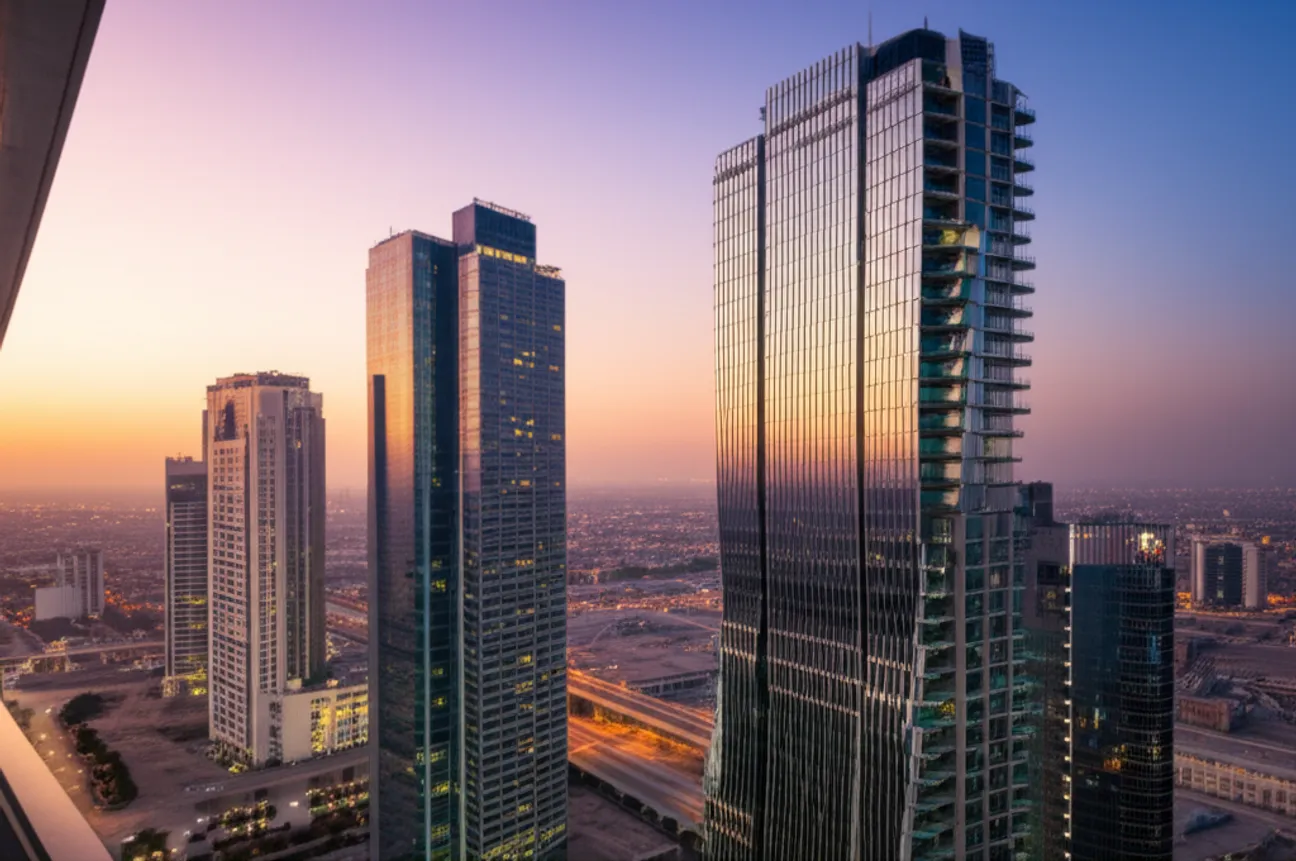
Puneet Kataria and the PropTech operating layer reshaping GCC real estate management
A new generation of platform builders and institutional capital allocators is creating the digital infrastructure that luxury and commercial real estate in the
Executive Summary
Key Takeaways
The Gulf Cooperation Council's real estate sector has entered a phase where technology adoption is no longer a differentiator. It is a prerequisite for institutional capital. The GCC PropTech market, estimated at $711.76 million in 2024 according to Market Research Future, is projected to reach $3.75 billion by 2035 at a compound annual growth rate of 16.3%. Behind these figures lies a structural transformation: the emergence of an operating layer, a stratum of SaaS platforms, data infrastructure, and tenant-experience systems, that sits between physical assets and the capital that funds them.
Professionals such as Puneet Kataria, Global Head of Real Estate Investments at Gulf Islamic Investments (GII), represent the convergence of institutional investment discipline and technology fluency that this operating layer requires. Leaders like Adil Taqi, Chief Executive Officer of BEYOND, the luxury real estate subsidiary of Dubai-based OMNIYAT Group, and Ajay Rajendran, Founder and Chairman of Meraki Group, a Dubai-based conglomerate spanning real estate, education, and construction, represent the operational and developmental counterparts building the physical product. Together, these profiles illustrate an ecosystem in which capital allocation, asset development, and technology infrastructure are becoming inseparable.
Who is building the institutional operating layer for GCC real estate?
The concept of an operating layer in real estate refers to the digital systems that manage the lifecycle of an asset after construction: property management platforms, tenant onboarding and communication tools, facilities management automation, escrow and payment processing, and investor reporting dashboards. In mature markets such as the United States and Western Europe, this layer has been institutionalized over the past decade through companies like Yardi, MRI Software, and RealPage. In the GCC, the layer is still forming, and the leaders shaping it come from both the technology and investment sides of the industry.
Puneet Kataria's trajectory is instructive. Before his current role overseeing GII's global real estate portfolio, Kataria founded CustomerSuccessBox, a SaaS platform focused on customer retention analytics. This combination of enterprise software experience and institutional real estate capital management positions him at a critical junction. GII, as an asset management firm deploying capital into real estate across multiple geographies, requires the kind of data-driven portfolio oversight that only robust technology infrastructure can deliver. The institutional investor's demand for transparency, standardized reporting, and operational efficiency creates a direct pull for PropTech solutions at the management layer.
Adil Taqi's role at BEYOND, operating under the OMNIYAT umbrella, addresses a different dimension of the same challenge. Luxury real estate in the GCC, particularly in Dubai, competes on experience. Branded residences, curated amenities, and concierge-level property management define the product. Delivering these experiences at scale demands technology systems that integrate building operations, resident services, and brand standards into a unified platform. The operating layer, in this context, becomes the mechanism through which luxury developers protect their brand equity after handover.
Ajay Rajendran's Meraki Group, with its diversified presence across real estate, education, and construction, exemplifies the conglomerate model common in the Gulf. For such groups, the operating layer serves a consolidation function, bringing disparate asset classes and business units onto shared digital infrastructure that enables centralized oversight and cross-portfolio analytics.
The operating layer is where institutional capital requirements meet operational reality in GCC real estate. Without it, the region's ambitions for transparency and global capital attraction remain aspirational.
Why does the GCC PropTech market demand a management-focused thesis?
Much of the discourse around PropTech in the Gulf has centered on transaction-layer innovations: digital brokerage, tokenized ownership, and blockchain-based title registries. These are important. Yet the more consequential transformation is happening at the management layer, where technology determines whether an asset performs to its underwritten returns over a holding period of five, ten, or twenty years.
The regulatory environment in the GCC is evolving to reinforce this focus. Dubai's Law No. (6) of 2019 adjusted the rules governing service fees for jointly owned properties, mandating fee collection transparency through the Real Estate Regulatory Agency (RERA). RERA's escrow account regulations further require developers to deposit at least 70% of collected buyer funds into escrow accounts tied exclusively to project-related expenses, with withdrawals linked to construction milestones. These frameworks create a compliance infrastructure that favors technology-enabled management. Manual processes cannot deliver the auditability and real-time reporting that such regulations implicitly demand.
The scale of the opportunity reinforces the thesis. The broader Middle East and Africa PropTech market is projected to reach $2.14 billion by 2030 at a 12.8% CAGR, according to estimates compiled by PropTechJobs and Zion Market Research. Within the GCC specifically, Market Research Future projects growth from $827.78 million in 2025 to $3.75 billion by 2035. A significant share of this growth will flow to platforms that solve the management and operations challenge, because that is where recurring revenue models align with institutional holding strategies.
For investors deploying Sharia-compliant capital, as GII does, the operating layer carries additional significance. Transparent fund flows, milestone-linked disbursements, and auditable expense tracking are not merely best practices. They are structural requirements of Islamic finance. Technology platforms that embed these features into their architecture become enabling infrastructure for an entire capital allocation model.
How are capital allocators and developers converging around technology infrastructure?
The traditional separation between capital allocators (investors and fund managers) and operators (developers and property managers) is dissolving in the GCC. This convergence is most visible in the way firms are staffing their leadership teams.
Puneet Kataria's profile, combining SaaS entrepreneurship with institutional investment oversight, would have been unusual in GCC real estate a decade ago. Today it reflects a recognized need. Institutional investors want leaders who understand both the financial engineering of a real estate fund and the technology stack that supports asset-level performance. Similarly, Adil Taqi's mandate at BEYOND extends beyond conventional development into the creation of a lifestyle and service platform that requires continuous technology investment.
The convergence of capital and technology expertise in GCC real estate leadership signals that the region's property markets are entering an institutional maturity phase. This has direct implications for how international investors evaluate Gulf real estate opportunities. A market with standardized, technology-enabled management infrastructure is a market that can absorb larger volumes of cross-border capital with lower operational risk.
GRI Institute's engagement with leaders across the GCC real estate ecosystem, through its club events, strategic research, and member interactions, has consistently surfaced this theme. Conversations among GRI members point to a growing consensus: the next wave of value creation in Gulf real estate will be driven less by land acquisition and construction velocity than by the quality of the operating infrastructure wrapped around completed assets.
This perspective reframes the PropTech investment thesis. Rather than viewing technology as an add-on that enhances marketing or speeds transactions, institutional participants increasingly treat it as core infrastructure, analogous to the mechanical, electrical, and plumbing systems of a building. An asset without a robust technology operating layer is, in this view, functionally incomplete.
The path forward
The GCC's real estate sector stands at an inflection point. The physical product, from ultra-luxury towers in Dubai to giga-projects in Saudi Arabia, is world-class. The capital, both regional and international, is abundant. The regulatory frameworks, while still evolving, are establishing the transparency standards that institutional investors require.
What remains to be built at scale is the operating layer: the integrated technology infrastructure that connects capital to operations, tenants to services, and regulators to data. Professionals like Puneet Kataria, Adil Taqi, and Ajay Rajendran, each from a different vantage point within the ecosystem, are contributing to this construction.
The firms and platforms that establish themselves as the default operating layer for GCC real estate will capture a disproportionate share of the market's projected growth toward $3.75 billion by 2035. More importantly, they will define the standards by which the region's property markets are judged by global institutional capital.
GRI Institute continues to track this evolution through its research initiatives and member community across the Gulf. As the operating layer thesis matures, the distinction between real estate companies and technology companies in the GCC will become increasingly difficult to draw. That convergence, already visible in the careers and strategies of the region's leading practitioners, may prove to be the defining feature of the Gulf's next real estate cycle.