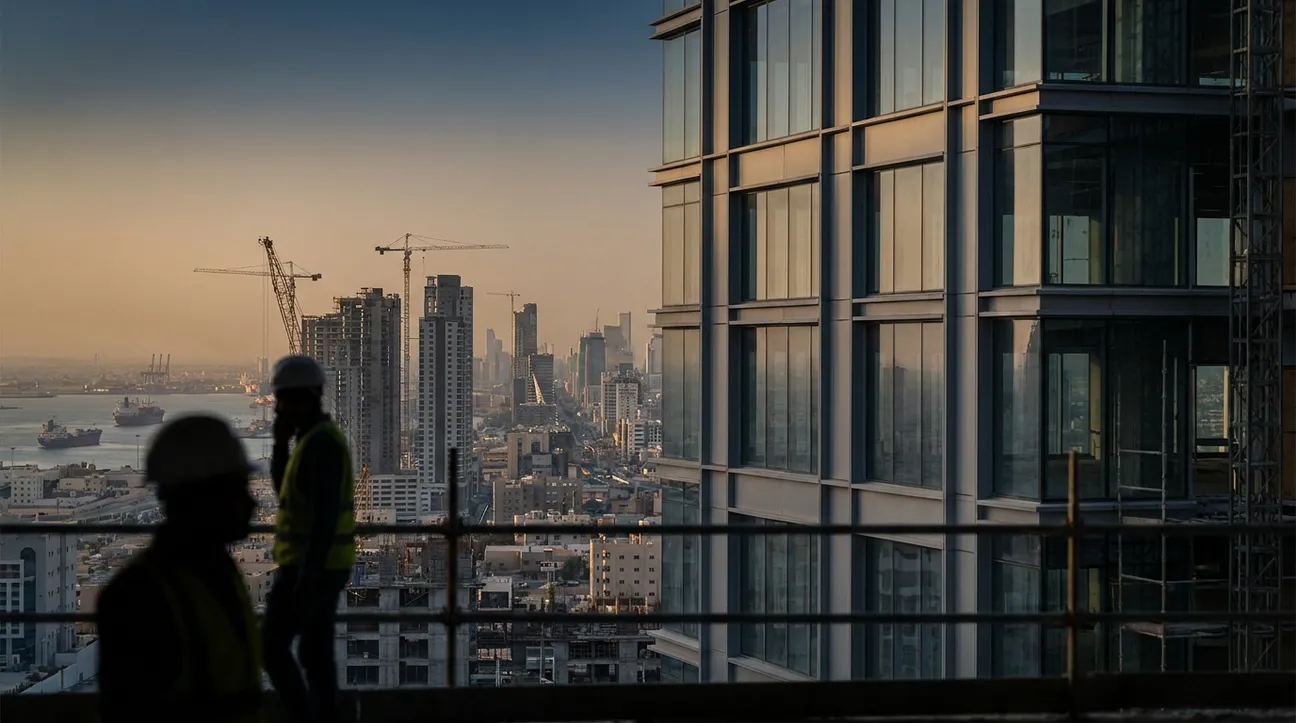
Kinan Real Estate and the Saudi mid-market developers scaling mixed-use portfolios beyond the giga-project shadow
Private Saudi developers address 72% of unmet housing demand as the kingdom's real estate market heads toward USD 141.6 billion by 2034.
Executive Summary
Key Takeaways
- Mid-market apartments (USD 133K–400K) represent 72% of unmet housing demand in Saudi Arabia, creating a structural opportunity for private developers.
- Saudi Arabia's real estate market is projected to grow from USD 77.2B (2025) to USD 141.6B (2034).
- Kinan Real Estate operates 10 commercial centres across six cities and is developing 6 million sqm of residential projects.
- A new foreign ownership law effective January 2026 could unlock USD 6.3B in private capital, particularly for Makkah and Madinah.
- Mortgage penetration at just 18% of GDP signals significant untapped financing-driven demand.
Mid-market apartments priced between USD 133,000 and USD 400,000 represent 72% of unmet housing demand in Saudi Arabia, according to Mordor Intelligence. That single data point reframes the kingdom's real estate narrative. While sovereign-backed platforms command global attention, a parallel ecosystem of privately held developers is quietly assembling the mixed-use portfolios that will determine whether Saudi Arabia meets its housing targets.
Kinan Real Estate sits at the centre of this cohort. The Jeddah-headquartered developer operates 10 commercial centres across six cities and is developing 6 million square metres of residential projects in Riyadh and Jeddah, according to Gulf Construction. Its geographic diversification and asset-class breadth position it as a case study for how non-sovereign Saudi developers compete for capital, land, and tenants in a market projected to grow from USD 77.2 billion in 2025 to USD 141.6 billion by 2034, per IMARC Group.
A market defined by structural undersupply
Saudi Arabia's homeownership rate reached 65.4%, yet mortgage penetration remains at just 18% of GDP, roughly half the emerging-market norm, according to Mordor Intelligence. The gap between aspiration and access creates a structural opportunity for developers who can deliver product at the right price point. Sovereign-backed entities like ROSHN target volume at scale, but the sheer size of unmet demand means no single platform can absorb it.
Privately held developers fill this gap by operating in secondary cities and building diversified portfolios that blend commercial, retail, and residential assets. Kinan Real Estate's footprint across six cities illustrates this approach. Rather than concentrating resources in a single giga-project corridor, the company distributes risk across geographies and income segments. This model generates recurring revenue from commercial centres while residential development captures capital appreciation.
The economics of this strategy depend on land cost differentials. Jeddah, Makkah, and the Eastern Province offer materially lower land acquisition costs than Riyadh's northern expansion zones, where sovereign-backed projects have compressed yields. For mid-market developers, secondary cities provide the margin headroom necessary to price residential units within the USD 133,000 to USD 400,000 band that constitutes the bulk of demand.
How does Kinan Real Estate compare to sovereign-backed developers?
The distinction between Kinan Real Estate and PIF-backed platforms is structural, not merely one of scale. The Public Investment Fund, headquartered in Al-Nakheel District, Riyadh, deploys sovereign capital through entities designed to execute Vision 2030 mandates. These platforms benefit from preferential land allocation, subsidised infrastructure, and balance-sheet capacity that private developers cannot replicate.
Kinan operates under different constraints and incentives. Without sovereign backing, the company must generate returns attractive enough to secure private debt and equity. Its 10 commercial centres function as stabilised, income-producing assets that underwrite development risk on the residential side. This self-financing logic mirrors the capital structures of established mixed-use developers in the UAE and wider Gulf region, where recurring income from retail and office assets cross-subsidises residential pipelines.
The company's 6 million square metres of residential development in Riyadh and Jeddah, as reported by Gulf Construction, represents a significant pipeline by any measure. For context, that quantum of development requires phased capital deployment, pre-sales discipline, and municipal coordination that tests the institutional capacity of any privately held firm.
Industry leaders who convene at GRI Institute events have consistently noted that Saudi Arabia's housing challenge will be solved by a combination of sovereign scale and private-sector agility. Kinan Real Estate exemplifies the latter.
Who is shaping the Saudi principal class beyond sovereign vehicles?
The Saudi real estate ecosystem extends beyond developers to include a principal class of investors and operators deploying capital through private vehicles. Abdulaziz Albassam, CEO of AIMS Investment and Investment Committee Director for real estate investment platform Stake, represents this emerging cohort, according to GRI Institute and Stake.
These principals operate independently of PIF's sovereign architecture. They allocate personal and institutional capital into real estate platforms that target specific asset classes, geographies, or return profiles. The growth of this principal class reflects a maturing capital market in which family offices, private equity sponsors, and high-net-worth individuals seek direct exposure to Saudi real estate without routing through sovereign intermediaries.
The significance of this trend extends beyond individual transactions. As more Saudi principals build track records in mixed-use development and real estate investment, they create a bench of experienced operators who can partner with international capital. GRI Institute members across the Gulf region have observed that the depth of this private operator class will ultimately determine Saudi Arabia's ability to attract and deploy the volumes of institutional capital required to meet Vision 2030 targets.
New foreign ownership law reshapes capital flows
Effective January 2026, Saudi Arabia's new Property Ownership Law enables foreign buyers to purchase homes, land, and agricultural farms across the kingdom. Makkah and Madinah remain restricted to Muslim buyers, a carve-out that channels a specific capital pool toward two of the kingdom's most supply-constrained markets.
Knight Frank's Destination Saudi 2026 report estimates that nearly USD 6.3 billion in potential private capital could enter the market from global high-net-worth individuals interested in Makkah and Madinah real estate. For developers with existing portfolios in these cities, the legislation creates a demand catalyst that did not exist 12 months ago.
Kinan Real Estate's multi-city footprint positions it to capture some portion of this inflow. The company's commercial centres in secondary cities provide the local market knowledge and municipal relationships that foreign capital requires. International investors entering Saudi Arabia for the first time typically seek operating partners with established track records, and developers with stabilised commercial assets offer a level of institutional credibility that pure-play residential builders often lack.
The foreign ownership reform also reinforces the competitive position of mid-market developers relative to sovereign platforms. PIF-backed entities focus primarily on Riyadh and the giga-project corridors. Secondary cities and religious hubs represent a distinct opportunity set where private developers hold geographic and operational advantages.
The path to USD 141.6 billion
IMARC Group's projection that Saudi Arabia's real estate market will reach USD 141.6 billion by 2034, up from USD 77.2 billion in 2025, implies a compound annual growth rate that demands sustained capital formation across all segments. Sovereign platforms will capture a significant share, but the 72% of unmet demand concentrated in the mid-market segment ensures that privately held developers remain essential to market equilibrium.
Several structural factors support this trajectory. Mortgage penetration at 18% of GDP has significant room to expand, particularly as Saudi banks develop securitisation capabilities and regulatory frameworks mature. Every percentage point increase in mortgage penetration unlocks incremental demand for the precise product type that mid-market developers build.
The maturation of Saudi Arabia's private developer ecosystem also creates opportunities for cross-border capital deployment. Gulf-based real estate investors, many of whom participate in GRI Institute's regional convenings, increasingly evaluate Saudi mid-market exposure as a complement to UAE and Qatari portfolios. Developers like Kinan Real Estate, Dar Al Arkan, and Raidah represent distinct risk-return profiles that allow institutional allocators to construct diversified Saudi positions.
What does the data tell institutional investors?
Three data points frame the institutional case for Saudi mid-market real estate. First, the 72% unmet demand concentration in the USD 133,000 to USD 400,000 price band, as quantified by Mordor Intelligence, defines the addressable market. Second, mortgage penetration at 18% of GDP signals that demand currently constrained by financing will unlock as credit markets deepen. Third, the new Property Ownership Law effective January 2026 removes a structural barrier to foreign capital participation.
Taken together, these indicators point toward a market where privately held developers with diversified, multi-city portfolios hold a durable competitive advantage. Kinan Real Estate's combination of stabilised commercial assets, a 6 million square metre residential pipeline, and geographic presence across six cities positions it as a representative platform for this thesis.
The Saudi real estate story is evolving from a sovereign-led construction narrative into a market-driven investment thesis. The developers, principals, and capital allocators who understand this shift will define the next phase of growth.
GRI Institute convenes senior real estate and infrastructure leaders across the Gulf region to exchange intelligence on market dynamics, capital flows, and operational strategy. Members engage directly with the principals and developers shaping Saudi Arabia's real estate trajectory.