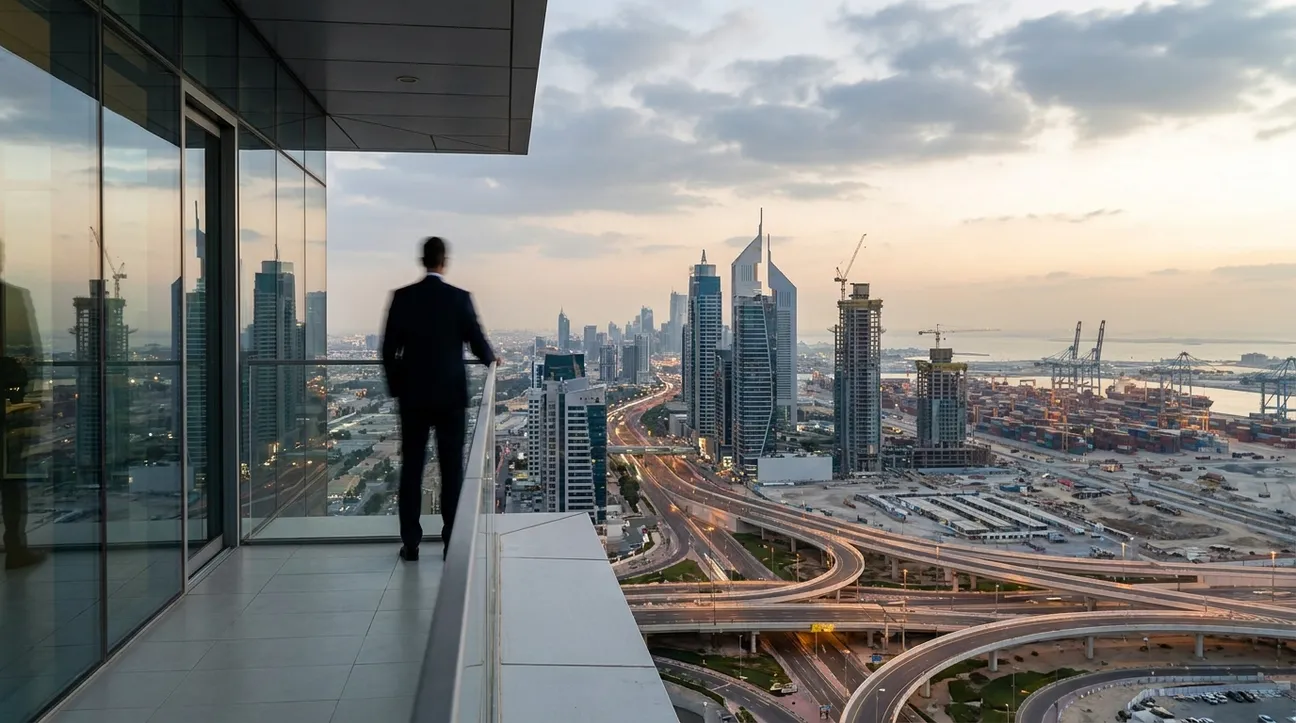
Jason Kow and the Southeast Asian-trained dealmakers building institutional real estate bridges into the GCC
A new generation of cross-border operators is structuring proprietary platforms to channel institutional capital into a USD 141.2 billion market projected to nearly double by 2034.
Executive Summary
Key Takeaways
- The GCC real estate market, valued at USD 141.2 billion in 2025, is projected to reach USD 260.3 billion by 2034 at a 7.03% CAGR.
- Southeast Asian-trained dealmakers like Jason Kow are building proprietary origination platforms rather than relying on intermediated brokerage.
- Sovereign wealth funds (PIF, Mubadala) are creating co-investment frameworks that partner with private international operators.
- Saudi Arabia's Royal Decree No. M/14, effective January 2026, enables broader foreign ownership of Saudi real estate.
- 56% of global investors intend to expand UAE real estate investments, making it the top destination globally.
GCC real estate reaches USD 141.2 billion as cross-border dealmakers sharpen their institutional edge
The GCC real estate market was valued at USD 141.2 billion in 2025, according to IMARC Group. It is projected to reach USD 260.3 billion by 2034, exhibiting a compound annual growth rate of 7.03% over the period. Within that expanding landscape, a specific cohort of dealmakers, many of them trained in the competitive institutional environments of Southeast Asia, London, and cross-border capital markets, is building the origination platforms that connect global investors with Gulf opportunities.
Jason Kow, founder and CEO of Queensgate Investments, stands at the centre of this cohort. Queensgate advises and manages around GBP 3.0 billion in assets, according to the firm's own disclosures. Kow's track record in hospitality-focused real estate, built through large-format acquisitions across the United Kingdom and continental Europe, has positioned him as one of the private market operators whose institutional approach is now finding natural application in the GCC's next growth cycle.
The trajectory is not unique to one individual. Figures such as Henry Makeham, who serves as Head of International Real Estate and Infrastructure at Saudi Arabia's Public Investment Fund (PIF), and Omar Rifai, Principal for Real Estate and Infrastructure Investments at Mubadala Investment Company in Abu Dhabi, represent the sovereign capital side of the same structural shift. Brett Palos, through Thackeray Group, adds another dimension, linking Anglo-African capital networks to Gulf real estate vehicles. Together, they form a layer of institutional dealmakers whose activities define the 2026 vintage of GCC real estate capital formation.
Who is Jason Kow and why does his dealmaking model matter for GCC real estate?
Jason Kow built Queensgate Investments into a platform managing approximately GBP 3.0 billion in assets by focusing on a specific thesis: acquiring institutional-grade hospitality and mixed-use real estate assets and repositioning them through operational improvements, not financial engineering alone. The firm's portfolio has concentrated on large branded hotels and serviced residences in gateway cities, a strategy that translates directly to the GCC's hospitality-led development cycle.
The relevance of Kow's model to the Gulf lies in three structural factors. First, the GCC's luxury hospitality pipeline continues to expand as sovereign wealth funds and master developers accelerate tourism-linked real estate. Second, institutional investors globally are seeking operators who can source proprietary deals rather than compete in broadly marketed auction processes. Third, the regulatory environment is actively widening the aperture for foreign capital deployment.
Kow's approach represents a broader generational shift in how capital reaches GCC real estate. The previous decade was characterised by intermediated transactions where international brokerages connected buyers and sellers across borders. The current cycle rewards operators who can originate, structure, and manage assets directly, reducing the friction between capital source and asset.
Queensgate's hospitality focus aligns precisely with the asset class that is drawing the most cross-border institutional attention in the Gulf. The UAE real estate market alone is forecast to reach AED 2.98 trillion, equivalent to approximately USD 811.44 billion, by 2031, according to Statista Market Insights. Within that headline figure, branded residences and hospitality-linked assets constitute a disproportionate share of international investment interest.
How are sovereign wealth funds shaping the institutional infrastructure for cross-border capital?
The dealmakers structuring capital flows into GCC real estate operate within an ecosystem shaped significantly by sovereign wealth funds. Henry Makeham's role at PIF, where he leads international real estate and infrastructure, illustrates how the Kingdom's flagship investment vehicle is building bilateral capital relationships with global institutional partners. PIF's mandate extends well beyond domestic asset accumulation; it serves as a platform for co-investment structures that bring external operators and capital into Saudi Arabia's real estate transformation.
On the Abu Dhabi side, Omar Rifai's position at Mubadala Investment Company reflects a parallel dynamic. Mubadala's real estate and infrastructure portfolio operates as both a direct investor and a co-investment partner for international institutional capital. The presence of professionals like Rifai, with deep cross-border structuring experience, signals that sovereign funds are actively building the internal capability to evaluate and execute alongside private operators such as Queensgate.
This sovereign-private interplay is a defining characteristic of the 2026 GCC real estate cycle. Institutional capital no longer flows through a single channel. It moves through co-investment platforms, joint ventures with sovereign entities, and fund structures that allow international operators to access assets that were previously available only to domestic players.
What regulatory shifts are accelerating foreign institutional participation?
The regulatory framework underpinning this capital formation is evolving rapidly. Saudi Arabia's Royal Decree No. M/14, the Law of Real Estate Ownership and Investment by Non-Saudis, took effect on January 22, 2026. Accompanied by Capital Market Authority controls, the decree establishes a comprehensive framework allowing broader foreign ownership of real estate in Saudi Arabia, including fund-based structures for assets in Makkah and Madinah.
This legislative milestone changes the calculus for international dealmakers. Previously, foreign institutional participation in Saudi real estate required complex structuring through local partnerships or limited free-zone frameworks. The new law creates direct pathways for fund vehicles to hold Saudi real estate assets, a structural prerequisite for operators like Queensgate, Thackeray Group, and their institutional peers to deploy capital at scale.
The UAE continues to reinforce its position as the world's leading destination for real estate investment capital. According to a Penta Group and ARADA survey published in June 2026, 56% of global investors intend to expand their investments in the UAE real estate sector, making it the top real estate investment destination globally. That statistic reflects both the maturity of the UAE's regulatory framework and the depth of its institutional infrastructure.
The shift from transactional brokerage to proprietary origination
The operators profiled here share a common characteristic: they build proprietary origination platforms rather than relying on intermediated deal flow. This distinction carries significant implications for how GCC real estate markets develop over the next decade.
Proprietary origination means that firms like Queensgate identify, structure, and execute transactions through direct relationships with asset owners, sovereign entities, and development partners. The approach demands deep local market knowledge combined with institutional-grade underwriting, capabilities that Southeast Asian-trained professionals have honed in some of the world's most complex cross-border investment environments.
Brett Palos, through Thackeray Group, exemplifies another variant of this model. His networks bridge Southern African and Anglo-African capital pools with Gulf real estate opportunities, creating a corridor that operates outside the traditional London-to-Dubai brokerage axis. The diversification of capital sources into the GCC, from Southeast Asia, Southern Africa, and other emerging markets, adds resilience to the market and reduces concentration risk.
Regional residential supply in the GCC is expected to increase from approximately 6.26 million units in 2025 to 7.28 million units by 2030, according to Alpen Capital. Absorbing that supply growth requires sophisticated capital deployment, the kind that institutional dealmakers with cross-border origination capabilities are best positioned to provide.
A structural layer for a structural cycle
The GCC's real estate expansion is structural, driven by economic diversification mandates, tourism growth strategies, and demographic shifts. The operators channelling institutional capital into this expansion are equally structural. They represent permanent platforms, not opportunistic entrants.
Jason Kow's Queensgate, managing approximately GBP 3.0 billion in assets, operates at a scale that demands institutional discipline. Henry Makeham at PIF and Omar Rifai at Mubadala bring sovereign-grade rigour to the co-investment frameworks that international operators access. Brett Palos adds geographic diversification to the capital base.
GRI Institute tracks these dealmaker dynamics through its leadership engagement across the Gulf region, where senior executives from sovereign funds, private investment firms, and development platforms convene to shape the next phase of institutional capital deployment. The convergence of regulatory reform, sovereign co-investment capacity, and operator-level sophistication defines a market cycle where the quality of dealmakers matters as much as the volume of capital.
With the GCC real estate market on a trajectory toward USD 260.3 billion by 2034, according to IMARC Group, the institutional bridges being built today will determine which capital sources, and which operators, capture the next decade of growth.