 Michela D'Ippolito
Italia GRI 2018 - Is Italy back in flavour?
Italia GRI discussed the investment appetite for the Italian market, against a backdrop of political uncertainty.
June 6, 2018Real Estate
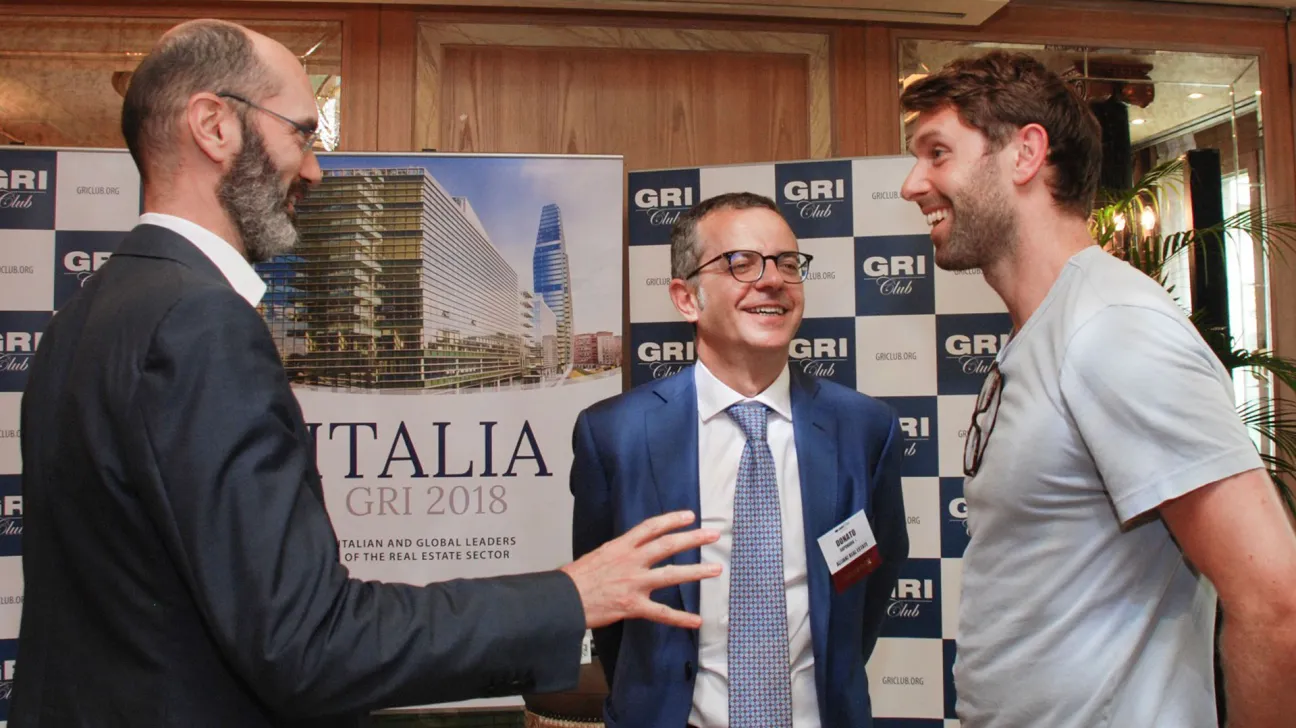
This year’s Italia GRI saw over 130 global and local investors, lenders and developers gather in Milan on 5th and 6th June, for 12 closed-door sessions reflecting on market trends, value-add strategies and the likely direction of the new political establishment. Against a backdrop of political uncertainty, participants discussed the current strength of investment appetite for the Italian market.
Participants expressed optimism for the real estate market outside Milan, caution with regard to overpriced, core assets, and interest in alternative models for offices, retail and residential. Any concerns that the new Italian government might slow down global capital flows into Italy were quickly dismissed - it is expected to be ‘business as usual’ in Italy.
Milan and beyond
The future of Milan, and how to achieve its potential, dominated discussions. Most participants consider Milan, with its large-scale projects, to be a promising investment destination. Pierfrancesco Maran, Deputy Mayor for Urban Planning, Milan, highlighted some of the top spots to invest. Some participants questioned whether the investment landscape was still more global than local, with the domestic market being pushed out to secondary locations or alternative asset classes.
However, the majority agreed that Milan on its own cannot relaunch the whole real estate Italian sector: the industry needs brave pioneers able to create value in the rest of Italy. Could it be Rome? Perhaps, but the eternal city continues to divide investor opinion.
Co-working: game changer?
Patrick Nelson of WeWork challenged the participants to re-imagine the future of offices and working together. This picture, of a brave new world of ‘millennial communities’, inspired a special plenary discussion in which investors, developers and asset managers alike were able to truly understand what it means to develop, own and operate in a way that fits today’s customer demand. What’s next for this disruptive force and for how long will it continue in the current property cycle?
Conclusion
Italia GRI’s sessions on retail, logistics, e-commerce, hospitality and senior & student housing allowed for dynamic debate on how the real estate industry can satisfy future occupier demands when it comes to living, working, shopping and play.
It was clear that there are opportunities to be found across all of Italy’s cities. However, the question remains whether Italy is truly back as a real estate powerhouse, with Milan leading the race against Madrid, Paris and Poland, or will a lack of product and sensible yields cause a swing in the wrong direction?
Participants expressed optimism for the real estate market outside Milan, caution with regard to overpriced, core assets, and interest in alternative models for offices, retail and residential. Any concerns that the new Italian government might slow down global capital flows into Italy were quickly dismissed - it is expected to be ‘business as usual’ in Italy.
Milan and beyond
The future of Milan, and how to achieve its potential, dominated discussions. Most participants consider Milan, with its large-scale projects, to be a promising investment destination. Pierfrancesco Maran, Deputy Mayor for Urban Planning, Milan, highlighted some of the top spots to invest. Some participants questioned whether the investment landscape was still more global than local, with the domestic market being pushed out to secondary locations or alternative asset classes.
However, the majority agreed that Milan on its own cannot relaunch the whole real estate Italian sector: the industry needs brave pioneers able to create value in the rest of Italy. Could it be Rome? Perhaps, but the eternal city continues to divide investor opinion.
Co-working: game changer?
Patrick Nelson of WeWork challenged the participants to re-imagine the future of offices and working together. This picture, of a brave new world of ‘millennial communities’, inspired a special plenary discussion in which investors, developers and asset managers alike were able to truly understand what it means to develop, own and operate in a way that fits today’s customer demand. What’s next for this disruptive force and for how long will it continue in the current property cycle?
Conclusion
Italia GRI’s sessions on retail, logistics, e-commerce, hospitality and senior & student housing allowed for dynamic debate on how the real estate industry can satisfy future occupier demands when it comes to living, working, shopping and play.
It was clear that there are opportunities to be found across all of Italy’s cities. However, the question remains whether Italy is truly back as a real estate powerhouse, with Milan leading the race against Madrid, Paris and Poland, or will a lack of product and sensible yields cause a swing in the wrong direction?