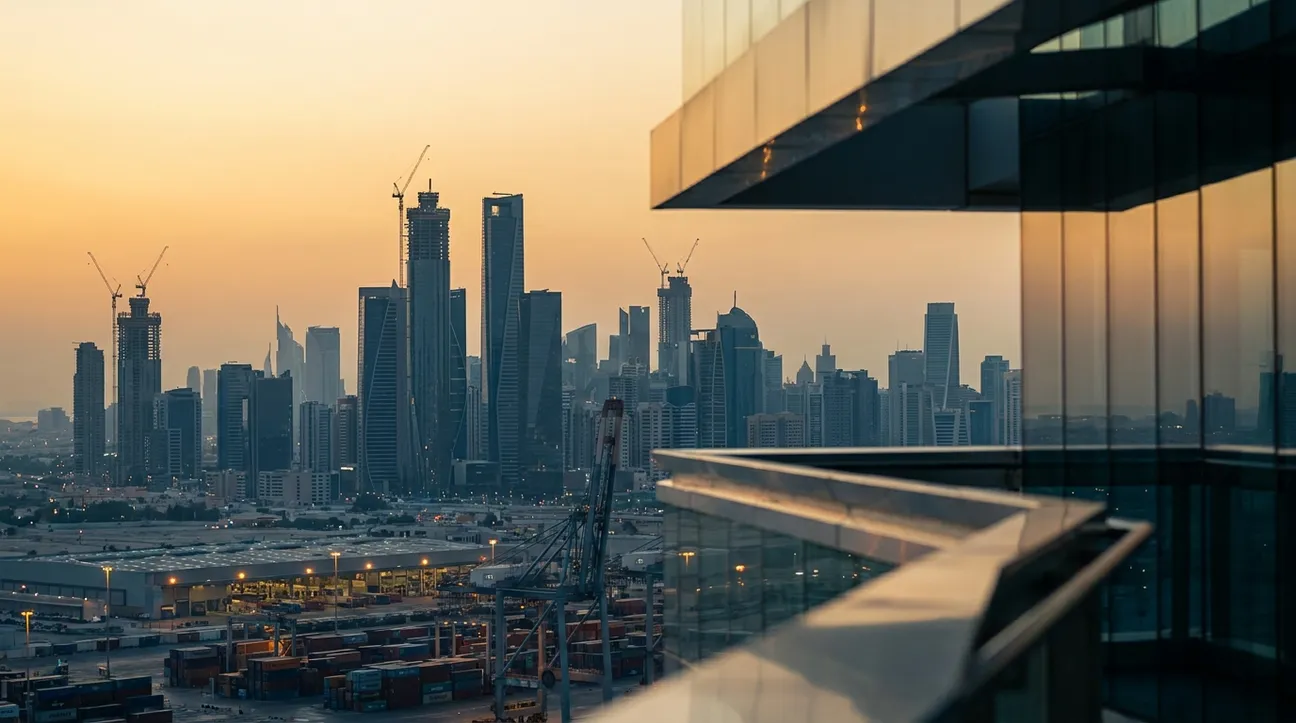
Indian industrialist dynasties are rewriting the GCC luxury real estate playbook with manufacturing-era capital
From Yash Birla to Raju Shroff, legacy conglomerate families bring distinct governance structures and patient capital to a market projected to reach USD 970 billion by 2030.
Executive Summary
Key Takeaways
- Indian manufacturing dynasties (Birla, Shroff) are entering GCC real estate with patient, platform-oriented capital distinct from tech/pharma wealth.
- These families prioritize structured co-investment vehicles and institutional governance over trophy asset purchases.
- Raju Shroff's W Residences Dubai and Nisus Finance's USD 1 billion AUM target exemplify this platform-building approach.
- Dubai regulatory reforms—residence visa changes, new Civil Code, shared housing law—align with dynastic multi-generational wealth structuring.
- The GCC real estate market is projected to reach USD 970 billion by 2030, attracting long-duration industrial capital.
A different class of Indian capital arrives in the Gulf
The migration of Indian wealth into GCC real estate is well documented. Pharma dynasties, tech entrepreneurs, and trading families have all established visible positions across Dubai, Abu Dhabi, and Riyadh. Yet a distinct and arguably more consequential capital class has entered the arena with far less fanfare: the Indian manufacturing and industrial conglomerate dynasties whose wealth was forged in steel, textiles, chemicals, and heavy industry over multiple generations.
Names like Yash Birla, Raju Shroff, and the broader ecosystem of Birla-adjacent industrial families represent a fundamentally different investor archetype. Their capital structures are rooted in decades of asset-heavy balance sheets, their governance models reflect multi-generational succession planning, and their risk appetites diverge sharply from the high-velocity deployment patterns of tech-era wealth. Understanding this distinction is critical for anyone seeking to map the evolving ownership landscape of GCC luxury real estate.
Dubai real estate transactions surged by 31% in the first quarter of 2026, reaching a total value of AED 252 billion, according to UAE Experts HUB. This extraordinary momentum is attracting every category of global capital. But the entry of Indian industrial dynasties signals something structural, a long-duration commitment to the region that mirrors how these families have historically approached domestic manufacturing: with patience, with governance rigor, and with an eye toward generational wealth preservation rather than short-term arbitrage.
Why are manufacturing dynasties deploying capital differently from tech and pharma families?
The pharma and tech wealth flowing into GCC real estate over the past five years has tended to follow a recognizable pattern: concentrated bets on trophy assets, branded penthouses, and high-profile developments that serve dual purposes of lifestyle and portfolio diversification. The manufacturing dynasties operate from a different playbook entirely.
Industrial conglomerate families carry institutional memory shaped by commodity cycles, regulatory complexity, and the operational demands of running factories and supply chains across multiple jurisdictions. This experience translates into real estate strategies that prioritize structured platforms over individual asset purchases, and that favor co-investment vehicles with institutional governance over direct ownership of vanity properties.
Raju Shroff's Signature Developers offers a case in point. The launch of W Residences Dubai in Jumeirah Lake Towers, featuring over 180 luxury apartments, as reported by Hotelier Middle East, represents a developer-operator model rather than a passive investment thesis. Shroff, whose family roots lie in chemicals and industrial manufacturing, has pivoted into branded residences with the operational discipline of someone accustomed to managing complex production ecosystems. The W Residences project integrates hospitality branding, residential development, and asset management into a single platform, a structure that reflects manufacturing-era thinking applied to luxury real estate.
This platform-oriented approach is equally visible in the institutional capital space. Nisus Finance, led by Amit Goenka, deployed nearly USD 150 million in UAE real estate within 15 months, including a recent ₹247 crore investment in Majan, Dubai, according to Zawya and GRI Hub News. Goenka's firm is building a Dubai real estate platform targeting USD 1 billion in assets under management, as reported by GRI Hub News. The scale and speed of deployment reflect an institutional mandate that draws on the governance frameworks familiar to India's industrial conglomerate ecosystem.
Manufacturing-era capital brings operational governance to real estate in ways that purely financial capital rarely does. These families and their associated fund managers think in terms of platforms, not transactions, and in decades, not quarters.
What regulatory shifts are accelerating this capital migration?
Dubai's maturing regulatory environment has played a decisive role in attracting this class of investor. The 2026 update to Dubai residence visa rules eliminated the AED 750,000 minimum property value requirement for sole owners applying for a two-year investor residency visa. This change, while seemingly incremental, removes a threshold barrier that previously channeled smaller-ticket investors toward specific asset classes. For industrial dynasties deploying capital across multiple family members and generational branches, the removal of this floor enables more flexible portfolio construction.
Federal Law No (25) of 2025, the new UAE Civil Code effective June 1, 2026, introduces another structural enabler by lowering the legal age of majority from 21 to 18. This reform allows younger members of dynastic families to hold property independently, facilitating the kind of multi-generational wealth structuring that industrial families have perfected in India over decades. For families accustomed to distributing industrial assets across trusts, holding companies, and family members from an early age, the new Civil Code aligns GCC property law with their existing governance architectures.
Dubai Law No. 4/2026, which regulates the occupancy and management of shared housing in Dubai, adds another layer of regulatory clarity. By establishing a structured system for the allocation, leasing, and management of shared residential units, this legislation provides the operational transparency that institutional and family-office capital demands before committing to multi-asset platforms.
These regulatory developments, taken together, create an environment that is increasingly hospitable to the kind of patient, structured, governance-heavy capital that industrial dynasties deploy. The regulatory trajectory signals that Dubai is building legal infrastructure designed for institutional permanence, a quality that resonates deeply with families whose domestic operations span generations.
How does the Yash Birla ecosystem fit into the broader capital flow?
Yash Birla represents a specific category within India's industrial landscape: the scion of a storied conglomerate family who has navigated the complexities of legacy business restructuring while exploring new asset classes. The Birla name carries weight that extends far beyond any single company or investment. It signals a tradition of capital allocation rooted in manufacturing, infrastructure, and long-horizon planning.
While exact capital deployment figures for the Yash Birla Group into GCC real estate are not publicly available, the broader pattern is unmistakable. Industrial dynasty families are establishing positions in GCC markets through a combination of direct investments, family-office allocations, and participation in structured platforms managed by professionals from their ecosystem.
The appointment of Ami Momaya as Managing Director and Head of Infrastructure for India at Blackstone, the firm's first dedicated infrastructure hire in the Asia Pacific region as reported by The Economic Times, illustrates how the talent and expertise cultivated within India's industrial ecosystem is now being absorbed into global institutional platforms with significant GCC exposure. The convergence of Indian industrial expertise and global institutional capital creates a new axis of investment influence in GCC real estate markets.
This convergence is further reinforced by the complementary dynamics between Indian and GCC real estate markets. India will need approximately 93 million additional urban homes by 2036, according to ET Edge Insights. This domestic demand creates a strategic backdrop for Indian industrialists who view GCC investments as part of a dual-market portfolio, capturing luxury and branded-residence upside in Dubai while maintaining exposure to India's massive housing deficit.
The GCC real estate market, projected to reach USD 970 billion by 2030 according to GRI Hub News, offers a scale of opportunity that justifies the kind of platform-building approach that industrial dynasties favor. These are families that built businesses worth billions through patient capital deployment over decades. A market approaching a trillion dollars in value is precisely the kind of arena where their institutional strengths translate most effectively.
The strategic imperative for market participants
For developers, asset managers, and institutional investors operating in GCC luxury real estate, the arrival of Indian manufacturing dynasties represents both a capital opportunity and a structural shift in market dynamics. These families bring governance expectations, due diligence standards, and co-investment preferences that differ materially from the high-net-worth individuals who have historically driven luxury transactions in Dubai and Abu Dhabi.
GRI Institute's ongoing research into cross-border capital flows and its convening of senior leaders across the GCC and South Asian real estate markets provides a critical platform for understanding these shifts. The conversations taking place within the GRI community, at events bringing together C-level executives from development firms, sovereign wealth vehicles, and family offices, are precisely where the contours of this new capital landscape are being defined.
The industrial dynasties are here. They are building platforms, not buying penthouses. And their presence will reshape the ownership structure of GCC luxury real estate for a generation to come.