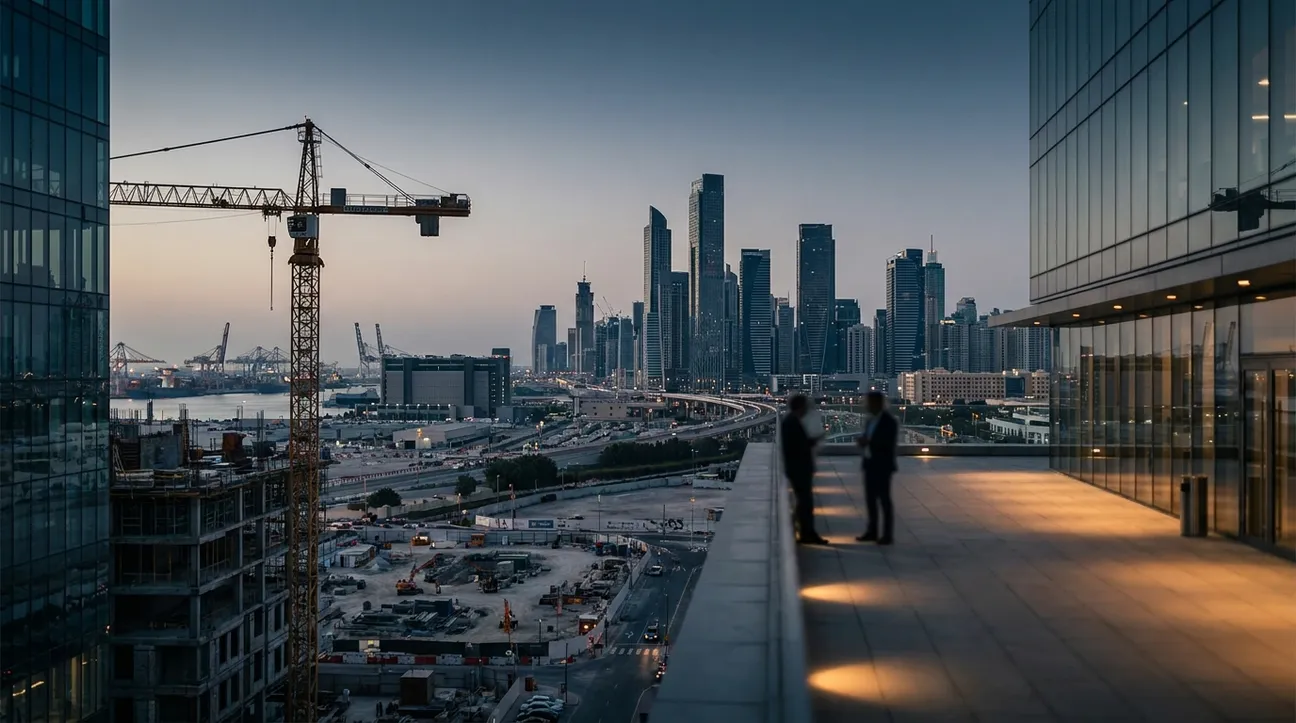
Indian capital allocators reshape GCC real estate from within as market targets USD 260 billion by 2034
A new generation of India-born institutional operators is building platforms inside Gulf real estate structures, moving beyond traditional family office deployments.
Executive Summary
Key Takeaways
- Indian investors channeled ₹85,000–95,000 crore into Dubai property in 2025, comprising 20–22% of international transactions.
- The GCC real estate market is projected to grow from USD 141.2 billion (2025) to USD 260.3 billion by 2034 at a 7.03% CAGR.
- A new cohort of Indian-origin professionals trained at global firms like BlackRock is embedding within GCC structures as institutional allocators and platform builders.
- Dubai's evolving regulatory framework, including eased investor visa requirements, accelerates permanent institutional presence.
- Indian-origin operators are shifting from deploying family capital to building repeatable fund vehicles and development platforms.
Indian investors channeled between ₹85,000 and ₹95,000 crore into Dubai property in 2025, accounting for approximately 20–22% of international real estate transactions in the emirate, according to Anarock. But the more consequential shift may be structural: a cohort of Indian-origin professionals is embedding directly within GCC-headquartered real estate vehicles, operating as institutional allocators, fund managers, and platform builders rather than deploying inbound family capital.
The GCC real estate market, valued at USD 141.2 billion in 2025 according to IMARC Group, is projected to reach USD 260.3 billion by 2034, exhibiting a compound annual growth rate of 7.03% from 2026 to 2034. Saudi Arabia's property market alone is expected to hit USD 101.62 billion by 2029, reflecting a projected CAGR of 8% from 2024, per data from the Real Estate General Authority cited by Kuwait Financial Center/Markaz. Within this expanding landscape, Indian-origin operators are transitioning from capital suppliers to capital architects.
From inbound flows to institutional infrastructure
The traditional narrative of Indian capital in the Gulf has centered on high-net-worth families, trading dynasties, and retail buyers acquiring residential units in Dubai's freehold zones. That story remains relevant, but it increasingly coexists with a more sophisticated chapter: professionals with institutional training who are constructing the platforms through which capital is deployed.
Amit Goenka, who leads Nisus Finance, exemplifies this institutional approach. Nisus Finance expanded its UAE real estate portfolio with an investment of approximately INR 247 crore (AED 100 million) in Majan, Dubai, bringing the fund's total UAE investment past USD 145 million, according to BSE corporate announcements filed in February 2026. The structure is notable. Nisus operates as a regulated financial platform channeling pooled institutional capital into Gulf real estate, a fundamentally different model from the single-family deployment that characterized earlier waves of Indian investment in the region.
This platform-building tendency extends across the value chain. Ajay Rajendran, the Founder and Chairman of Meraki Group, has built a Dubai-based enterprise spanning luxury real estate development and premium education, completing over 100 major projects across the UAE, as reported by Entrepreneur Middle East in January 2026. Raju Shroff, Chairman of Regal Group and Director of Signature Developers, is co-developing the W Residences Dubai in Jumeirah Lake Towers, featuring over 180 apartments, according to Commercial Interior Design. These operators have constructed permanent institutional presences in the Gulf, with decision-making authority, development pipelines, and capital allocation frameworks rooted in GCC jurisdictions.
How are next-generation Indian allocators different from earlier waves?
The distinction lies in professional formation. Earlier generations of Indian capital in the GCC typically comprised entrepreneurs who built businesses in trade, manufacturing, or commodities and subsequently allocated profits into real estate. The emerging cohort brings institutional investment discipline acquired at global asset managers, private equity firms, and structured credit platforms.
Dhruva Agarwal, whose profile has attracted significant organic search interest among GRI Institute's GCC membership base, represents this trajectory. Agarwal served as BlackRock's director for private credit in India for four years before departing in March 2024, according to The Economic Times. Professionals with this caliber of institutional training carry frameworks for risk assessment, portfolio construction, and capital structuring that differ materially from entrepreneurial real estate allocation.
The significance of this generational shift extends beyond individual career moves. When professionals trained at the world's largest asset managers transition into GCC real estate platforms, they bring institutional standards for due diligence, governance, and reporting that elevate the sophistication of the entire market. They function as translators between global institutional capital and Gulf real estate opportunities, capable of structuring products that meet the compliance and return requirements of pension funds, sovereign wealth vehicles, and insurance allocators.
Indian-origin institutional allocators embedded within GCC structures represent a qualitative upgrade in the region's real estate capital markets infrastructure. Their presence signals that the Gulf is maturing beyond a destination for deployed capital into a jurisdiction where capital allocation strategies are originated and managed.
What regulatory shifts are accelerating this trend?
Dubai's regulatory framework has evolved to accommodate precisely this kind of institutional embedding. Law No. 7 of 2006 concerning Real Property Registration in the Emirate of Dubai established the foundation by enabling foreign property ownership through freehold, usufruct, or long-term leases up to 99 years in designated areas. This framework created the legal architecture that allowed Indian-origin operators to build permanent platforms in the emirate.
More recently, Dubai removed the AED 750,000 minimum property value requirement for sole owners applying for the two-year real estate investor visa, effective April 2026. While this change directly benefits retail investors, its strategic importance for institutional operators is equally significant. By lowering barriers to residency through real estate ownership, Dubai reinforces its position as a jurisdiction where Indian-origin professionals can establish long-term operational bases. The policy signals a regulatory environment that actively encourages the kind of permanent institutional presence that next-generation allocators require.
The regulatory trajectory across the broader GCC points in the same direction. Saudi Arabia's ambitious development agenda, anchored by giga-projects and a property market projected to reach USD 101.62 billion by 2029, creates demand for the institutional capital allocation expertise that Indian-origin professionals bring. The convergence of regulatory openness in the UAE with expanding opportunity sets across the Gulf creates structural incentives for institutional allocators to build within GCC frameworks rather than deploy capital from external bases.
The platform economy in GCC real estate
The transition from capital deployment to platform building represents a fundamental evolution in how Indian capital interacts with GCC real estate. Platform builders create repeatable institutional vehicles, fund structures, development pipelines, and asset management frameworks, that can absorb capital from multiple sources over extended time horizons.
Nisus Finance's trajectory illustrates this dynamic. With total UAE investments exceeding USD 145 million and a structured fund framework that enables continued capital deployment, the platform has moved beyond opportunistic transactions into systematic market participation. Meraki Group's completion of over 100 major projects across the UAE reflects a similar institutionalization, where scale and repeatability replace episodic deal-making.
The branded residential segment offers a particularly instructive example. The W Residences Dubai development that Raju Shroff's Signature Developers is co-developing demonstrates how Indian-origin operators are accessing premium product segments that require sophisticated relationships with global hospitality brands, structured development finance, and institutional marketing capabilities. These are platform competencies that transcend the deployment of individual capital pools.
Why this matters for GCC real estate's institutional maturation
The embedding of Indian-origin institutional allocators within GCC real estate platforms is both a consequence and a driver of the region's capital markets maturation. As the GCC real estate market grows toward its projected USD 260.3 billion valuation by 2034, according to IMARC Group, the complexity of capital allocation increases correspondingly. Markets of this scale require institutional infrastructure: regulated fund vehicles, structured credit platforms, professional asset management, and transparent governance frameworks.
Indian-origin professionals bring a distinctive combination of advantages to this process. They offer familiarity with one of the GCC's largest source markets for real estate capital, institutional training from global platforms, cultural fluency across both Indian and Gulf business environments, and the professional networks to connect GCC opportunities with global institutional capital.
GRI Institute's membership data reflects growing engagement with this cohort. Organic search traffic to profiles of Indian-origin GCC operators, combined with strong interest in India-focused real estate events, suggests that the institutional real estate community recognizes this trend as strategically significant. The convergence of Indian institutional expertise with GCC market expansion creates conditions for a deeper, more sophisticated capital relationship between two of the world's most dynamic real estate ecosystems.
The next phase of Indian capital in the Gulf will be defined by those who build the platforms through which capital flows, shaping the institutional architecture of a USD 260 billion market from within.